
Conclusion
Maritime Pictograms are an essential tool for promoting safety and efficiency in the maritime industry. By providing a standardized visual language, these symbols help to overcome linguistic barriers and ensure that critical information is easily understood by all personnel.
From navigation and cargo handling to emergency situations, Maritime Pictograms play a vital role in preventing accidents and protecting workers from injury. By following best practices for their implementation and use, the maritime industry can create a safer and more efficient working environment for everyone.
The maritime industry relies on clear and concise communication to ensure the safety of personnel, vessels, and cargo. In the complex and often hazardous environments of ports and sea routes, standardized visual communication becomes essential for conveying critical information quickly and accurately. Maritime Pictograms serve this purpose, providing a universal language that transcends linguistic barriers and promotes a safer operational environment.
These visual symbols are designed to communicate safety-related information, warnings, and instructions to anyone working in or around maritime settings. Understanding and adhering to these symbols can significantly reduce the risk of accidents and improve overall safety in the maritime sector.
This article will explore the significance of Maritime Pictograms, their common applications, and best practices for their effective use. We will look at how these symbols enhance safety and efficiency in various maritime operations.
The Role of Pictograms in Maritime Safety
Maritime Pictograms are crucial for maintaining safety standards in the maritime industry. They provide a consistent and easily understandable means of communication, regardless of language or literacy levels.
In the fast-paced and often noisy environment of a port or ship, visual cues can be more effective than verbal instructions. These symbols quickly convey essential information about potential hazards, safety procedures, and emergency protocols.
The use of standardized Maritime Pictograms helps to minimize confusion and reduce the risk of human error. This is particularly important in emergency situations where quick and decisive action is required to prevent accidents or mitigate their impact.
Additionally, Maritime Pictograms play a vital role in training and education programs for maritime personnel. By familiarizing workers with these symbols, companies can ensure that everyone understands the safety protocols and procedures necessary to maintain a safe working environment.
The effectiveness of maritime pictograms also extends to visitors and temporary workers who may not be familiar with the specific operations of a port or vessel. Their presence ensures that everyone on site can quickly grasp essential safety information. This is especially important in areas with high traffic or diverse workforces.
Furthermore, the consistent use of pictograms across different vessels and ports facilitates seamless transitions for maritime workers who move between various locations. This uniformity reduces the learning curve and ensures that safety protocols are consistently understood and followed, regardless of the specific environment.
The implementation of maritime pictograms also contributes to a culture of safety within the maritime industry. By prominently displaying these symbols, companies demonstrate their commitment to protecting their employees and preventing accidents. This proactive approach to safety helps to foster a sense of responsibility and awareness among all personnel.
Moreover, Maritime Pictograms can be easily integrated into existing safety management systems and procedures. They serve as a visual reminder of key safety protocols and can be used to reinforce training messages. This integration ensures that safety remains a top priority in all maritime operations.
Common Maritime Pictograms and Their Meanings
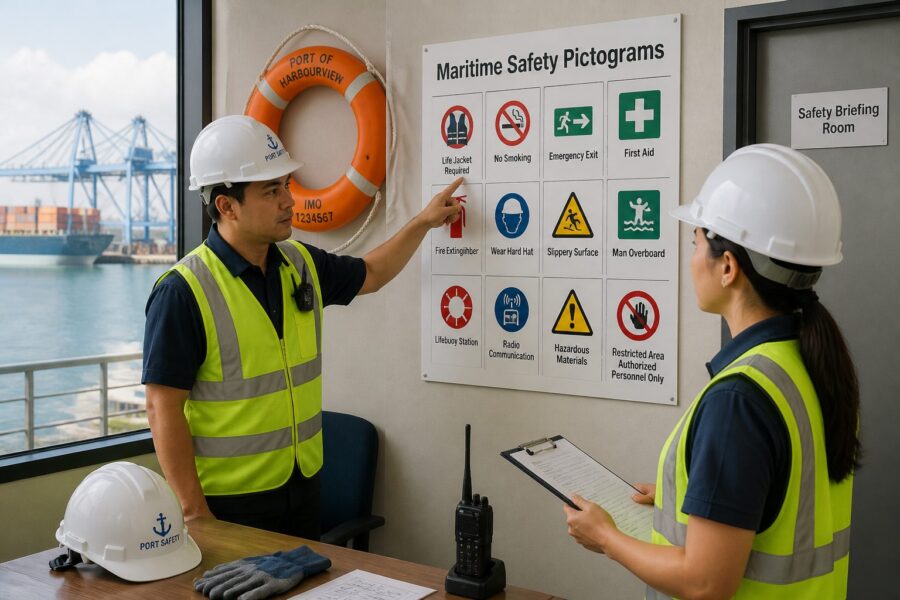
A wide range of Maritime Pictograms are used to convey different types of information, from warnings about hazardous materials to instructions on how to use safety equipment. Some of the most common symbols include those related to fire safety, personal protective equipment, and dangerous substances.
For example, a pictogram depicting a flame indicates the presence of flammable materials or a fire hazard, while a symbol showing a person wearing a hard hat and safety goggles indicates the requirement to use personal protective equipment. Symbols indicating the presence of corrosive materials or toxic substances are also common, alerting workers to the need for extra caution and specific handling procedures.
Understanding these common Maritime Pictograms is essential for all personnel working in the maritime industry. Proper interpretation of these symbols can prevent accidents and ensure compliance with safety regulations.
Regular training and refresher courses can help workers stay up-to-date on the meanings of different symbols and their appropriate responses in various situations. This knowledge is crucial for maintaining a safe and efficient working environment in the maritime sector.
Beyond the basics, many pictograms are tailored to specific hazards and equipment found in maritime environments. For instance, symbols might indicate the location of emergency shut-off valves, the presence of high-voltage equipment, or the designated areas for specific types of waste disposal.
Some pictograms are also used to communicate mandatory actions, such as wearing hearing protection in noisy areas or using fall protection when working at heights. These symbols reinforce safety protocols and help to ensure that workers are taking the necessary precautions to protect themselves from potential hazards.
The design of maritime pictograms is carefully considered to ensure that they are easily recognizable and understandable, even from a distance or in poor lighting conditions. The use of bold colors and simple shapes helps to convey the intended message quickly and effectively.
International organizations such as the International Maritime Organization (IMO) play a key role in standardizing maritime pictograms and promoting their use throughout the global maritime industry. This standardization ensures that workers can understand safety information regardless of the vessel or port they are working in.
Pictograms for Navigation
Navigation Pictograms are a specific category of Maritime Pictograms used to guide vessels and provide essential information about waterways. These symbols are critical for safe navigation, helping mariners avoid hazards and follow designated routes.
These pictograms often appear on nautical charts, buoys, and navigational aids, providing visual cues about water depth, channel markers, and potential obstacles. Mariners rely on these symbols to make informed decisions about course and speed, ensuring the safe passage of their vessels.
| Symbol | Meaning | Application |
|---|---|---|
| Lateral Buoy (Port) | Indicates the port (left) side of a channel when entering from seaward. | Marking navigable channels |
| Lateral Buoy (Starboard) | Indicates the starboard (right) side of a channel when entering from seaward. | Marking navigable channels |
| Cardinal Mark (North) | Indicates that the safest water is to the north of the mark. | Marking hazards or channel junctions |
| Cardinal Mark (East) | Indicates that the safest water is to the east of the mark. | Marking hazards or channel junctions |
| Isolated Danger Mark | Indicates an isolated danger that has navigable water all around it. | Marking isolated hazards |
Accurate interpretation of navigation Maritime Pictograms is essential for preventing groundings, collisions, and other navigational accidents. Mariners must be trained to recognize and understand these symbols to ensure the safety of their vessels and crew.
Regular updates to nautical charts and navigational aids are also crucial, as changes in waterways and the introduction of new hazards can render outdated information unreliable. Staying informed about the latest navigational information is a key responsibility for all mariners.
These pictograms are not limited to physical markers; they are also integrated into electronic navigation systems, providing real-time information to mariners on digital displays. This integration enhances situational awareness and allows for more informed decision-making.
The use of radar and Automatic Identification System (AIS) technologies further complements the information provided by navigational pictograms. These technologies allow mariners to detect and track other vessels and potential hazards, even in poor visibility conditions.
Moreover, some navigational pictograms are used to indicate areas with specific regulations or restrictions, such as speed limits, anchoring restrictions, or environmentally sensitive zones. These symbols help mariners to comply with local regulations and protect the marine environment.
The continuous improvement of navigational pictograms and technologies is essential for ensuring the safety and efficiency of maritime transportation. Ongoing research and development efforts are focused on enhancing the accuracy, reliability, and usability of these tools.
Pictograms for Cargo Handling
Cargo handling in the maritime industry involves the movement of goods from ships to shore and vice versa. This process can be hazardous if not carried out correctly, making the use of Maritime Pictograms essential for ensuring safety and efficiency.
Cargo handling Maritime Pictograms provide clear instructions on how to handle different types of cargo, including hazardous materials. These symbols indicate the appropriate lifting techniques, the need for special equipment, and any specific precautions that must be taken to prevent accidents or damage to the cargo.
For example, a pictogram showing a glass being broken indicates that the cargo is fragile and must be handled with care, while a symbol depicting a stack of boxes with an arrow pointing upwards indicates the correct orientation for storage. Symbols indicating the presence of explosive materials or radioactive substances are also common, alerting workers to the need for extra caution and specialized handling procedures.
Proper training on cargo handling Maritime Pictograms is essential for all personnel involved in the movement of goods in the maritime industry. This knowledge helps to prevent accidents, protect workers from injury, and ensure the safe and efficient handling of cargo.
Specific pictograms often detail the types of personal protective equipment required when handling certain cargoes, such as gloves, respirators, or protective suits. These symbols ensure that workers are adequately protected from potential exposure to hazardous substances.
Some pictograms also provide information on the proper storage and segregation of different types of cargo. This is particularly important for hazardous materials, which must be stored in accordance with strict regulations to prevent accidents or environmental damage.
In addition to safety information, cargo handling pictograms can also provide instructions on the proper use of equipment, such as cranes, forklifts, and other lifting devices. These symbols help to ensure that equipment is operated safely and efficiently, minimizing the risk of accidents or damage.
The use of technology, such as barcode scanners and mobile devices, can further enhance the effectiveness of cargo handling pictograms. These tools allow workers to quickly access detailed information about the cargo they are handling, including safety data sheets and handling instructions.
Pictograms for Emergency Situations
Emergency situations in the maritime industry can range from fires and collisions to medical emergencies and security threats. In these critical situations, clear and immediate communication is essential for ensuring the safety of personnel and minimizing damage.
Maritime Pictograms play a vital role in conveying emergency information quickly and effectively. These symbols indicate the location of emergency equipment, evacuation routes, and assembly points, as well as providing instructions on how to respond to different types of emergencies.
For example, a pictogram showing a running person indicates the direction of the nearest emergency exit, while a symbol depicting a fire extinguisher indicates the location of fire suppression equipment. Symbols indicating the location of life rafts, first aid kits, and emergency telephones are also common, providing essential information for responding to various types of emergencies.
Regular drills and training exercises are essential for ensuring that all personnel are familiar with emergency Maritime Pictograms and know how to respond appropriately in different situations. This preparation can save lives and minimize damage in the event of an emergency.
Emergency pictograms are often designed to be highly visible, even in low-light conditions or during periods of reduced visibility. This may involve the use of reflective materials or illuminated signs to ensure that the symbols are easily seen.
Some pictograms provide specific instructions on how to activate emergency equipment, such as fire alarms or emergency shutdown systems. These symbols help to ensure that equipment is used correctly and effectively in emergency situations.
In addition to physical pictograms, emergency information may also be displayed on electronic screens or communicated through public address systems. This multi-faceted approach helps to ensure that everyone on board is aware of the emergency and knows how to respond.
The use of standardized emergency pictograms is particularly important in international waters, where personnel from different countries and cultures may be working together. These symbols provide a common language for communicating essential safety information.
Best Practices for Using Maritime Pictograms
To maximize the effectiveness of Maritime Pictograms, it is important to follow best practices for their implementation and use. This includes ensuring that symbols are clearly visible, properly maintained, and consistently applied across all maritime facilities and vessels.
Regular training and education programs are also essential for ensuring that all personnel understand the meanings of different symbols and how to respond appropriately in various situations. Consistent enforcement of safety regulations and procedures is also crucial for maintaining a safe working environment.
- Ensure pictograms are well-lit and easy to see
- Use standardized symbols to avoid confusion
- Regularly inspect and maintain pictograms
- Provide training on the meaning of each symbol
- Incorporate pictograms into safety management systems
By following these best practices, the maritime industry can create a safer and more efficient working environment for all personnel. This proactive approach to safety can help to prevent accidents, protect workers from injury, and minimize damage to property and the environment.
Effective use of port safety pictograms contributes significantly to overall safety in port operations. These visual aids are an integral part of a comprehensive safety strategy.
Regular audits of pictogram placement and condition should be conducted to ensure ongoing compliance with safety standards. This includes checking for faded or damaged symbols and replacing them promptly.
Feedback from maritime workers should be actively solicited to identify any potential improvements to pictogram design or placement. This input can help to ensure that the symbols are as clear and effective as possible.
The use of multilingual pictograms can be beneficial in areas with diverse workforces. This ensures that everyone can understand the safety information, regardless of their native language.
Pictograms should be integrated into safety briefings and toolbox talks to reinforce their importance and ensure that workers are aware of the latest safety information. This helps to create a culture of safety and promote proactive risk management.
The Importance of Standardized Ship Symbols
Standardized ship symbols are vital for clear communication and efficient operations within the maritime industry. These symbols provide a universal language that transcends cultural and linguistic differences, ensuring that critical information is easily understood by all personnel involved in ship operations.
The use of standardized ship symbols enhances safety by reducing the risk of misinterpretation and errors. Whether it’s identifying the location of safety equipment, understanding emergency procedures, or navigating through complex ship layouts, these symbols play a crucial role in promoting a safe and secure maritime environment.
Standardization also streamlines training processes, as personnel only need to learn one set of symbols that are universally recognized. This saves time and resources while ensuring that everyone is on the same page when it comes to understanding ship-related information.
Moreover, standardized ship symbols facilitate efficient communication between different departments and teams on board a vessel. From the bridge to the engine room, these symbols provide a common language for conveying essential information, contributing to smoother and more coordinated operations.
These symbols are particularly important in complex spaces such as engine rooms where equipment is densely packed. Clear labeling with standardized symbols can prevent errors during maintenance or emergency repairs.
Standardization also applies to symbols used in firefighting plans and safety diagrams. Consistent use of these symbols ensures that all crew members can quickly understand the layout of the ship and the location of critical safety equipment.
International regulations and conventions, such as those established by the IMO, play a crucial role in promoting the use of standardized ship symbols. These regulations help to ensure that all vessels comply with the same safety standards.
The adoption of digital technologies, such as electronic charting systems and mobile apps, has further enhanced the use of standardized ship symbols. These technologies provide easy access to safety information and help to improve situational awareness.
Staying Updated on Sea Hazard Signs
The maritime environment is constantly evolving, with new technologies, regulations, and potential hazards emerging regularly. Therefore, it is crucial for maritime professionals to stay updated on the latest sea hazard signs and safety protocols.
Regular training and refresher courses are essential for ensuring that personnel are familiar with the most current symbols and procedures. This includes staying informed about changes to international maritime regulations, as well as updates to local port and vessel safety guidelines.
Participating in industry conferences and workshops can also provide valuable opportunities to learn about emerging hazards and best practices for mitigating risks. Networking with other maritime professionals can help to share knowledge and experiences, contributing to a safer and more informed maritime community.
Additionally, utilizing digital resources such as online databases and mobile apps can provide quick and easy access to information about sea hazard signs and safety procedures. These tools can be particularly useful in emergency situations where time is of the essence.
Staying informed about changes in weather patterns and environmental conditions is also crucial for maritime safety. This includes monitoring weather forecasts, sea state reports, and other relevant information.
Regularly reviewing accident reports and safety alerts can help to identify potential hazards and learn from past mistakes. This proactive approach to safety can help to prevent similar incidents from occurring in the future.
Engaging with regulatory bodies and industry organizations can provide access to the latest safety information and guidance. This includes participating in consultations and providing feedback on proposed regulations.
Promoting a culture of continuous learning and improvement is essential for ensuring that maritime professionals are always up-to-date on the latest safety information. This includes encouraging personnel to seek out training opportunities and share their knowledge with others.
Conclusion
Maritime Pictograms are an essential tool for promoting safety and efficiency in the maritime industry. By providing a standardized visual language, these symbols help to overcome linguistic barriers and ensure that critical information is easily understood by all personnel.
From navigation and cargo handling to emergency situations, Maritime Pictograms play a vital role in preventing accidents and protecting workers from injury. By following best practices for their implementation and use, the maritime industry can create a safer and more efficient working environment for everyone.