
Achieving compliance with ergonomic safety regulations and implementing best practices is a continuous journey for any organization. This commitment involves more than just displaying ergonomics pictograms; it requires a holistic approach to workplace design, training, and ongoing assessment. A proactive stance is essential for sustained safety.
Companies must regularly review national and international standards, such as those from OSHA, EN standards, and ISO, to ensure their ergonomic safety programs remain current. Regulations can change, and staying informed prevents non-compliance and potential penalties. Continuous monitoring is a key best practice.
Conducting periodic ergonomic assessments of workstations and manual handling tasks helps identify potential hazards before they lead to injuries. These assessments should involve input from workers, as they often have the most direct insight into daily challenges. Their feedback is invaluable for improving safety.
Beyond just labeling, investing in ergonomic tools and equipment, such as lift assists, adjustable workstations, and proper personal protective equipment, significantly reduces physical strain. These engineering controls complement the guidance provided by ergonomics pictograms. They create a safer working environment.
Establishing clear reporting mechanisms for near misses and ergonomic concerns allows for early intervention and continuous improvement. When workers feel safe reporting issues, companies can address problems proactively before they escalate into serious incidents. This open feedback loop is crucial for a robust safety program.
Ultimately, a culture of safety where every employee takes ownership of ergonomic practices represents the pinnacle of best practice. When ergonomics pictograms are understood, respected, and integrated into daily routines, a workplace becomes inherently safer and more productive. This collective responsibility drives superior safety outcomes.
Training and Awareness: Ensuring Pictogram Comprehension
Even the most perfectly designed ergonomics pictograms are ineffective if workers do not understand their meaning and importance. Comprehensive training and ongoing awareness programs are absolutely essential to ensure that every employee can correctly interpret and act upon these visual safety cues. Training bridges the gap between symbol design and practical application.
Initial onboarding for new employees must include dedicated sessions on safety symbology, covering all relevant manual handling and weight limit pictograms. This foundational training sets the expectation for safe work practices from day one. It establishes a baseline understanding for all personnel.
Regular refresher training sessions are equally important, especially when new symbols are introduced or existing procedures are updated. These sessions help reinforce knowledge, address any misunderstandings, and keep safety protocols top of mind for all workers. Continuous learning is vital for maintaining high safety standards.
Training should not be limited to theoretical explanations; it must incorporate practical demonstrations and interactive exercises. Workers should have opportunities to identify symbols, explain their meanings, and demonstrate correct handling techniques. This hands-on approach solidifies understanding and builds confidence.
Creating an environment where employees feel comfortable asking questions about ergonomics pictograms fosters better comprehension and compliance. Safety managers should actively encourage dialogue and provide clear answers to ensure no ambiguity remains. Open communication strengthens the safety culture.
Beyond formal training, ongoing awareness campaigns through posters, digital displays, and team meetings can reinforce the importance of these symbols. Consistent messaging ensures that ergonomics pictograms remain a visible and understood part of daily operations. This continuous reinforcement helps embed safety into the workplace culture.
Future Trends in Ergonomics Pictogram Development
The field of ergonomics pictograms is not static; it continually evolves to meet new industrial challenges and technological advancements. Future trends will likely focus on even greater clarity, adaptability, and integration with smart technologies. These developments promise to enhance workplace safety further.
One significant trend involves the development of more dynamic and interactive safety symbology. Imagine pictograms that change color or animate based on real-time sensor data, indicating, for example, if a load’s weight is approaching its limit. This level of responsiveness offers immediate, context-aware safety alerts.
Integration with augmented reality (AR) and virtual reality (VR) training platforms is another exciting prospect. Workers could practice manual handling tasks in simulated environments where ergonomics pictograms appear dynamically, providing instant feedback on safe practices. This immersive training offers unparalleled learning experiences.
There is also a push for even more universally understood symbols that transcend cultural nuances, minimizing any potential for misinterpretation. Research into cognitive psychology and visual perception helps design pictograms that are inherently intuitive across diverse populations. The goal is truly global comprehension.
Standardization bodies like ISO will continue to play a crucial role in validating and disseminating these new generations of ergonomics pictograms. Their rigorous testing and consensus-building processes ensure that new symbols are effective and widely adopted. This collaborative effort drives progress in safety symbology.
Finally, the increasing complexity of goods and logistics processes will necessitate more specialized and granular pictograms. As automation grows, symbols might also guide human-robot collaboration, ensuring safe interaction between workers and machinery. The future of ergonomics pictograms is dynamic and highly responsive to evolving workplace needs.
Compliance and Best Practices for Ergonomic Safety
Achieving compliance with ergonomic safety regulations and implementing best practices is a continuous journey for any organization. This commitment involves more than just displaying ergonomics pictograms; it requires a holistic approach to workplace design, training, and ongoing assessment. A proactive stance is essential for sustained safety.
Companies must regularly review national and international standards, such as those from OSHA, EN standards, and ISO, to ensure their ergonomic safety programs remain current. Regulations can change, and staying informed prevents non-compliance and potential penalties. Continuous monitoring is a key best practice.
Conducting periodic ergonomic assessments of workstations and manual handling tasks helps identify potential hazards before they lead to injuries. These assessments should involve input from workers, as they often have the most direct insight into daily challenges. Their feedback is invaluable for improving safety.
Beyond just labeling, investing in ergonomic tools and equipment, such as lift assists, adjustable workstations, and proper personal protective equipment, significantly reduces physical strain. These engineering controls complement the guidance provided by ergonomics pictograms. They create a safer working environment.
Establishing clear reporting mechanisms for near misses and ergonomic concerns allows for early intervention and continuous improvement. When workers feel safe reporting issues, companies can address problems proactively before they escalate into serious incidents. This open feedback loop is crucial for a robust safety program.
Ultimately, a culture of safety where every employee takes ownership of ergonomic practices represents the pinnacle of best practice. When ergonomics pictograms are understood, respected, and integrated into daily routines, a workplace becomes inherently safer and more productive. This collective responsibility drives superior safety outcomes.
Training and Awareness: Ensuring Pictogram Comprehension
Even the most perfectly designed ergonomics pictograms are ineffective if workers do not understand their meaning and importance. Comprehensive training and ongoing awareness programs are absolutely essential to ensure that every employee can correctly interpret and act upon these visual safety cues. Training bridges the gap between symbol design and practical application.
Initial onboarding for new employees must include dedicated sessions on safety symbology, covering all relevant manual handling and weight limit pictograms. This foundational training sets the expectation for safe work practices from day one. It establishes a baseline understanding for all personnel.
Regular refresher training sessions are equally important, especially when new symbols are introduced or existing procedures are updated. These sessions help reinforce knowledge, address any misunderstandings, and keep safety protocols top of mind for all workers. Continuous learning is vital for maintaining high safety standards.
Training should not be limited to theoretical explanations; it must incorporate practical demonstrations and interactive exercises. Workers should have opportunities to identify symbols, explain their meanings, and demonstrate correct handling techniques. This hands-on approach solidifies understanding and builds confidence.
Creating an environment where employees feel comfortable asking questions about ergonomics pictograms fosters better comprehension and compliance. Safety managers should actively encourage dialogue and provide clear answers to ensure no ambiguity remains. Open communication strengthens the safety culture.
Beyond formal training, ongoing awareness campaigns through posters, digital displays, and team meetings can reinforce the importance of these symbols. Consistent messaging ensures that ergonomics pictograms remain a visible and understood part of daily operations. This continuous reinforcement helps embed safety into the workplace culture.
Future Trends in Ergonomics Pictogram Development
The field of ergonomics pictograms is not static; it continually evolves to meet new industrial challenges and technological advancements. Future trends will likely focus on even greater clarity, adaptability, and integration with smart technologies. These developments promise to enhance workplace safety further.
One significant trend involves the development of more dynamic and interactive safety symbology. Imagine pictograms that change color or animate based on real-time sensor data, indicating, for example, if a load’s weight is approaching its limit. This level of responsiveness offers immediate, context-aware safety alerts.
Integration with augmented reality (AR) and virtual reality (VR) training platforms is another exciting prospect. Workers could practice manual handling tasks in simulated environments where ergonomics pictograms appear dynamically, providing instant feedback on safe practices. This immersive training offers unparalleled learning experiences.
There is also a push for even more universally understood symbols that transcend cultural nuances, minimizing any potential for misinterpretation. Research into cognitive psychology and visual perception helps design pictograms that are inherently intuitive across diverse populations. The goal is truly global comprehension.
Standardization bodies like ISO will continue to play a crucial role in validating and disseminating these new generations of ergonomics pictograms. Their rigorous testing and consensus-building processes ensure that new symbols are effective and widely adopted. This collaborative effort drives progress in safety symbology.
Finally, the increasing complexity of goods and logistics processes will necessitate more specialized and granular pictograms. As automation grows, symbols might also guide human-robot collaboration, ensuring safe interaction between workers and machinery. The future of ergonomics pictograms is dynamic and highly responsive to evolving workplace needs.
Compliance and Best Practices for Ergonomic Safety
Achieving compliance with ergonomic safety regulations and implementing best practices is a continuous journey for any organization. This commitment involves more than just displaying ergonomics pictograms; it requires a holistic approach to workplace design, training, and ongoing assessment. A proactive stance is essential for sustained safety.
Companies must regularly review national and international standards, such as those from OSHA, EN standards, and ISO, to ensure their ergonomic safety programs remain current. Regulations can change, and staying informed prevents non-compliance and potential penalties. Continuous monitoring is a key best practice.
Conducting periodic ergonomic assessments of workstations and manual handling tasks helps identify potential hazards before they lead to injuries. These assessments should involve input from workers, as they often have the most direct insight into daily challenges. Their feedback is invaluable for improving safety.
Beyond just labeling, investing in ergonomic tools and equipment, such as lift assists, adjustable workstations, and proper personal protective equipment, significantly reduces physical strain. These engineering controls complement the guidance provided by ergonomics pictograms. They create a safer working environment.
Establishing clear reporting mechanisms for near misses and ergonomic concerns allows for early intervention and continuous improvement. When workers feel safe reporting issues, companies can address problems proactively before they escalate into serious incidents. This open feedback loop is crucial for a robust safety program.
Ultimately, a culture of safety where every employee takes ownership of ergonomic practices represents the pinnacle of best practice. When ergonomics pictograms are understood, respected, and integrated into daily routines, a workplace becomes inherently safer and more productive. This collective responsibility drives superior safety outcomes.
These symbols are not just for individual items; they also apply to storage solutions like shelving units, pallets, and mezzanines. Exceeding these structural weight limits can lead to catastrophic collapses, endangering lives and causing immense property damage. Proper weight limit labeling is therefore critical for structural integrity.
Companies must ensure that all employees understand the implications of these weight limit symbols, not just the numbers themselves. Training should cover how to read these symbols, what to do if a load exceeds personal or equipment limits, and where to find mechanical aids. Comprehensive understanding drives compliance.
Implementing a robust system of weight limit symbols demonstrates a strong commitment to safety and regulatory compliance. This commitment protects employees from harm and shields the company from potential legal liabilities and financial losses. Clear weight limits are a non-negotiable aspect of modern safety standards.
Beyond the Basics: Specialized Ergonomic Symbols in Logistics
While general manual handling and weight limit symbols are common, the logistics industry often requires more specialized ergonomics pictograms. These advanced symbols address unique challenges like handling fragile items, temperature-sensitive goods, or items requiring specific orientation. Such specialized labeling ensures comprehensive safety and product integrity.
For instance, symbols indicating “fragile,” “this way up,” or “keep dry” indirectly contribute to ergonomic safety by guiding proper handling. Mishandling fragile items often leads to awkward postures or sudden movements to prevent damage, increasing injury risk. Clear instructions minimize these reactive, unsafe actions.
Other specialized symbols might instruct workers to use specific equipment, such as “use a forklift” or “use a pallet jack,” for certain types of loads. These pictograms prevent workers from attempting to manually lift items that are too heavy or cumbersome for safe human handling. They promote the use of mechanical aids.
Some symbols might also denote specific environmental precautions relevant to handling, like “handle with gloves” for items with sharp edges or “wear protective footwear.” While not strictly manual handling, these precautions directly impact the safety of the person performing the ergonomic task. They are part of a holistic safety approach.
The complexity of modern supply chains demands a nuanced approach to safety symbology. Integrating these specialized ergonomics pictograms into labeling systems ensures that every potential hazard and required precaution is clearly communicated. This level of detail is critical for preventing both personal injury and product loss.
Companies in specialized logistics sectors, such as pharmaceuticals or electronics, often develop internal standards that complement international ISO symbols. These tailored symbols address industry-specific handling requirements, ensuring that even the most unique items are moved safely and efficiently. Continuous adaptation of symbology is key to evolving safety needs.
Implementing Effective Ergonomic Labeling in Your Warehouse
Implementing effective ergonomic labeling in a warehouse environment requires careful planning and consistent execution to maximize safety benefits. Simply slapping on a few stickers will not suffice; a strategic approach ensures that all relevant information is clearly visible and understood. This systematic application of symbols is crucial for accident prevention.
The placement and visibility of ergonomics pictograms are just as important as the symbols themselves. Labels must be affixed in prominent locations on packages, equipment, and storage areas, ensuring they are easily seen before a handling task begins. Poorly placed or obscured labels render even the best symbols useless.
- Conduct a comprehensive risk assessment of all manual handling tasks
- Identify all items requiring specific ergonomics pictograms
- Ensure all labels comply with ISO and local safety standards
- Use durable, high-visibility labels suitable for the warehouse environment
- Train all personnel on the meaning and importance of each symbol
- Regularly inspect and replace damaged or faded labels
- Integrate pictogram use into daily safety briefings
- Standardize labeling practices across all facilities
The Economic Impact of Clear Ergonomic Symbology
The economic impact of clear ergonomics pictograms extends far beyond mere compliance; it directly influences a company’s bottom line. Investing in effective safety symbology yields significant returns by reducing costs associated with workplace injuries and improving operational efficiency. This financial benefit makes safety a smart business decision.
Workplace injuries, particularly those related to manual handling, result in substantial direct and indirect costs. Direct costs include medical expenses, worker’s compensation claims, and legal fees. Indirect costs encompass lost productivity, training new staff, administrative time, and damage to company reputation, all of which are significantly reduced by proper safety measures.
By preventing injuries, clear ergonomics pictograms help maintain a stable and experienced workforce. High employee turnover due to injuries disrupts operations and incurs considerable expenses in recruitment and training. A healthy workforce is a productive and cost-effective one.
Furthermore, an excellent safety record, bolstered by effective symbology, can lead to lower insurance premiums. Insurance companies often offer reduced rates to businesses that demonstrate a proactive approach to risk management and injury prevention. This financial incentive directly rewards companies for their safety efforts.
Improved efficiency is another often-overlooked economic benefit. When workers are confident in handling tasks safely, they perform their duties more quickly and accurately. This reduced hesitation and fewer errors translate into faster processing times and smoother logistics operations.
Finally, a strong safety culture, visibly supported by clear ergonomics pictograms, enhances a company’s brand image and attracts top talent. Employees prefer to work for organizations that prioritize their well-being, leading to better employee retention and a more engaged workforce. These intangible benefits translate into long-term economic advantages.
Training and Awareness: Ensuring Pictogram Comprehension
Even the most perfectly designed ergonomics pictograms are ineffective if workers do not understand their meaning and importance. Comprehensive training and ongoing awareness programs are absolutely essential to ensure that every employee can correctly interpret and act upon these visual safety cues. Training bridges the gap between symbol design and practical application.
Initial onboarding for new employees must include dedicated sessions on safety symbology, covering all relevant manual handling and weight limit pictograms. This foundational training sets the expectation for safe work practices from day one. It establishes a baseline understanding for all personnel.
Regular refresher training sessions are equally important, especially when new symbols are introduced or existing procedures are updated. These sessions help reinforce knowledge, address any misunderstandings, and keep safety protocols top of mind for all workers. Continuous learning is vital for maintaining high safety standards.
Training should not be limited to theoretical explanations; it must incorporate practical demonstrations and interactive exercises. Workers should have opportunities to identify symbols, explain their meanings, and demonstrate correct handling techniques. This hands-on approach solidifies understanding and builds confidence.
Creating an environment where employees feel comfortable asking questions about ergonomics pictograms fosters better comprehension and compliance. Safety managers should actively encourage dialogue and provide clear answers to ensure no ambiguity remains. Open communication strengthens the safety culture.
Beyond formal training, ongoing awareness campaigns through posters, digital displays, and team meetings can reinforce the importance of these symbols. Consistent messaging ensures that ergonomics pictograms remain a visible and understood part of daily operations. This continuous reinforcement helps embed safety into the workplace culture.
Future Trends in Ergonomics Pictogram Development
The field of ergonomics pictograms is not static; it continually evolves to meet new industrial challenges and technological advancements. Future trends will likely focus on even greater clarity, adaptability, and integration with smart technologies. These developments promise to enhance workplace safety further.
One significant trend involves the development of more dynamic and interactive safety symbology. Imagine pictograms that change color or animate based on real-time sensor data, indicating, for example, if a load’s weight is approaching its limit. This level of responsiveness offers immediate, context-aware safety alerts.
Integration with augmented reality (AR) and virtual reality (VR) training platforms is another exciting prospect. Workers could practice manual handling tasks in simulated environments where ergonomics pictograms appear dynamically, providing instant feedback on safe practices. This immersive training offers unparalleled learning experiences.
There is also a push for even more universally understood symbols that transcend cultural nuances, minimizing any potential for misinterpretation. Research into cognitive psychology and visual perception helps design pictograms that are inherently intuitive across diverse populations. The goal is truly global comprehension.
Standardization bodies like ISO will continue to play a crucial role in validating and disseminating these new generations of ergonomics pictograms. Their rigorous testing and consensus-building processes ensure that new symbols are effective and widely adopted. This collaborative effort drives progress in safety symbology.
Finally, the increasing complexity of goods and logistics processes will necessitate more specialized and granular pictograms. As automation grows, symbols might also guide human-robot collaboration, ensuring safe interaction between workers and machinery. The future of ergonomics pictograms is dynamic and highly responsive to evolving workplace needs.
Compliance and Best Practices for Ergonomic Safety
Achieving compliance with ergonomic safety regulations and implementing best practices is a continuous journey for any organization. This commitment involves more than just displaying ergonomics pictograms; it requires a holistic approach to workplace design, training, and ongoing assessment. A proactive stance is essential for sustained safety.
Companies must regularly review national and international standards, such as those from OSHA, EN standards, and ISO, to ensure their ergonomic safety programs remain current. Regulations can change, and staying informed prevents non-compliance and potential penalties. Continuous monitoring is a key best practice.
Conducting periodic ergonomic assessments of workstations and manual handling tasks helps identify potential hazards before they lead to injuries. These assessments should involve input from workers, as they often have the most direct insight into daily challenges. Their feedback is invaluable for improving safety.
Beyond just labeling, investing in ergonomic tools and equipment, such as lift assists, adjustable workstations, and proper personal protective equipment, significantly reduces physical strain. These engineering controls complement the guidance provided by ergonomics pictograms. They create a safer working environment.
Establishing clear reporting mechanisms for near misses and ergonomic concerns allows for early intervention and continuous improvement. When workers feel safe reporting issues, companies can address problems proactively before they escalate into serious incidents. This open feedback loop is crucial for a robust safety program.
Ultimately, a culture of safety where every employee takes ownership of ergonomic practices represents the pinnacle of best practice. When ergonomics pictograms are understood, respected, and integrated into daily routines, a workplace becomes inherently safer and more productive. This collective responsibility drives superior safety outcomes.
These symbols are not just for individual items; they also apply to storage solutions like shelving units, pallets, and mezzanines. Exceeding these structural weight limits can lead to catastrophic collapses, endangering lives and causing immense property damage. Proper weight limit labeling is therefore critical for structural integrity.
Companies must ensure that all employees understand the implications of these weight limit symbols, not just the numbers themselves. Training should cover how to read these symbols, what to do if a load exceeds personal or equipment limits, and where to find mechanical aids. Comprehensive understanding drives compliance.
Implementing a robust system of weight limit symbols demonstrates a strong commitment to safety and regulatory compliance. This commitment protects employees from harm and shields the company from potential legal liabilities and financial losses. Clear weight limits are a non-negotiable aspect of modern safety standards.
Beyond the Basics: Specialized Ergonomic Symbols in Logistics
While general manual handling and weight limit symbols are common, the logistics industry often requires more specialized ergonomics pictograms. These advanced symbols address unique challenges like handling fragile items, temperature-sensitive goods, or items requiring specific orientation. Such specialized labeling ensures comprehensive safety and product integrity.
For instance, symbols indicating “fragile,” “this way up,” or “keep dry” indirectly contribute to ergonomic safety by guiding proper handling. Mishandling fragile items often leads to awkward postures or sudden movements to prevent damage, increasing injury risk. Clear instructions minimize these reactive, unsafe actions.
Other specialized symbols might instruct workers to use specific equipment, such as “use a forklift” or “use a pallet jack,” for certain types of loads. These pictograms prevent workers from attempting to manually lift items that are too heavy or cumbersome for safe human handling. They promote the use of mechanical aids.
Some symbols might also denote specific environmental precautions relevant to handling, like “handle with gloves” for items with sharp edges or “wear protective footwear.” While not strictly manual handling, these precautions directly impact the safety of the person performing the ergonomic task. They are part of a holistic safety approach.
The complexity of modern supply chains demands a nuanced approach to safety symbology. Integrating these specialized ergonomics pictograms into labeling systems ensures that every potential hazard and required precaution is clearly communicated. This level of detail is critical for preventing both personal injury and product loss.
Companies in specialized logistics sectors, such as pharmaceuticals or electronics, often develop internal standards that complement international ISO symbols. These tailored symbols address industry-specific handling requirements, ensuring that even the most unique items are moved safely and efficiently. Continuous adaptation of symbology is key to evolving safety needs.
Implementing Effective Ergonomic Labeling in Your Warehouse
Implementing effective ergonomic labeling in a warehouse environment requires careful planning and consistent execution to maximize safety benefits. Simply slapping on a few stickers will not suffice; a strategic approach ensures that all relevant information is clearly visible and understood. This systematic application of symbols is crucial for accident prevention.
The placement and visibility of ergonomics pictograms are just as important as the symbols themselves. Labels must be affixed in prominent locations on packages, equipment, and storage areas, ensuring they are easily seen before a handling task begins. Poorly placed or obscured labels render even the best symbols useless.
- Conduct a comprehensive risk assessment of all manual handling tasks
- Identify all items requiring specific ergonomics pictograms
- Ensure all labels comply with ISO and local safety standards
- Use durable, high-visibility labels suitable for the warehouse environment
- Train all personnel on the meaning and importance of each symbol
- Regularly inspect and replace damaged or faded labels
- Integrate pictogram use into daily safety briefings
- Standardize labeling practices across all facilities
The Economic Impact of Clear Ergonomic Symbology
The economic impact of clear ergonomics pictograms extends far beyond mere compliance; it directly influences a company’s bottom line. Investing in effective safety symbology yields significant returns by reducing costs associated with workplace injuries and improving operational efficiency. This financial benefit makes safety a smart business decision.
Workplace injuries, particularly those related to manual handling, result in substantial direct and indirect costs. Direct costs include medical expenses, worker’s compensation claims, and legal fees. Indirect costs encompass lost productivity, training new staff, administrative time, and damage to company reputation, all of which are significantly reduced by proper safety measures.
By preventing injuries, clear ergonomics pictograms help maintain a stable and experienced workforce. High employee turnover due to injuries disrupts operations and incurs considerable expenses in recruitment and training. A healthy workforce is a productive and cost-effective one.
Furthermore, an excellent safety record, bolstered by effective symbology, can lead to lower insurance premiums. Insurance companies often offer reduced rates to businesses that demonstrate a proactive approach to risk management and injury prevention. This financial incentive directly rewards companies for their safety efforts.
Improved efficiency is another often-overlooked economic benefit. When workers are confident in handling tasks safely, they perform their duties more quickly and accurately. This reduced hesitation and fewer errors translate into faster processing times and smoother logistics operations.
Finally, a strong safety culture, visibly supported by clear ergonomics pictograms, enhances a company’s brand image and attracts top talent. Employees prefer to work for organizations that prioritize their well-being, leading to better employee retention and a more engaged workforce. These intangible benefits translate into long-term economic advantages.
Training and Awareness: Ensuring Pictogram Comprehension
Even the most perfectly designed ergonomics pictograms are ineffective if workers do not understand their meaning and importance. Comprehensive training and ongoing awareness programs are absolutely essential to ensure that every employee can correctly interpret and act upon these visual safety cues. Training bridges the gap between symbol design and practical application.
Initial onboarding for new employees must include dedicated sessions on safety symbology, covering all relevant manual handling and weight limit pictograms. This foundational training sets the expectation for safe work practices from day one. It establishes a baseline understanding for all personnel.
Regular refresher training sessions are equally important, especially when new symbols are introduced or existing procedures are updated. These sessions help reinforce knowledge, address any misunderstandings, and keep safety protocols top of mind for all workers. Continuous learning is vital for maintaining high safety standards.
Training should not be limited to theoretical explanations; it must incorporate practical demonstrations and interactive exercises. Workers should have opportunities to identify symbols, explain their meanings, and demonstrate correct handling techniques. This hands-on approach solidifies understanding and builds confidence.
Creating an environment where employees feel comfortable asking questions about ergonomics pictograms fosters better comprehension and compliance. Safety managers should actively encourage dialogue and provide clear answers to ensure no ambiguity remains. Open communication strengthens the safety culture.
Beyond formal training, ongoing awareness campaigns through posters, digital displays, and team meetings can reinforce the importance of these symbols. Consistent messaging ensures that ergonomics pictograms remain a visible and understood part of daily operations. This continuous reinforcement helps embed safety into the workplace culture.
Future Trends in Ergonomics Pictogram Development
The field of ergonomics pictograms is not static; it continually evolves to meet new industrial challenges and technological advancements. Future trends will likely focus on even greater clarity, adaptability, and integration with smart technologies. These developments promise to enhance workplace safety further.
One significant trend involves the development of more dynamic and interactive safety symbology. Imagine pictograms that change color or animate based on real-time sensor data, indicating, for example, if a load’s weight is approaching its limit. This level of responsiveness offers immediate, context-aware safety alerts.
Integration with augmented reality (AR) and virtual reality (VR) training platforms is another exciting prospect. Workers could practice manual handling tasks in simulated environments where ergonomics pictograms appear dynamically, providing instant feedback on safe practices. This immersive training offers unparalleled learning experiences.
There is also a push for even more universally understood symbols that transcend cultural nuances, minimizing any potential for misinterpretation. Research into cognitive psychology and visual perception helps design pictograms that are inherently intuitive across diverse populations. The goal is truly global comprehension.
Standardization bodies like ISO will continue to play a crucial role in validating and disseminating these new generations of ergonomics pictograms. Their rigorous testing and consensus-building processes ensure that new symbols are effective and widely adopted. This collaborative effort drives progress in safety symbology.
Finally, the increasing complexity of goods and logistics processes will necessitate more specialized and granular pictograms. As automation grows, symbols might also guide human-robot collaboration, ensuring safe interaction between workers and machinery. The future of ergonomics pictograms is dynamic and highly responsive to evolving workplace needs.
Compliance and Best Practices for Ergonomic Safety
Achieving compliance with ergonomic safety regulations and implementing best practices is a continuous journey for any organization. This commitment involves more than just displaying ergonomics pictograms; it requires a holistic approach to workplace design, training, and ongoing assessment. A proactive stance is essential for sustained safety.
Companies must regularly review national and international standards, such as those from OSHA, EN standards, and ISO, to ensure their ergonomic safety programs remain current. Regulations can change, and staying informed prevents non-compliance and potential penalties. Continuous monitoring is a key best practice.
Conducting periodic ergonomic assessments of workstations and manual handling tasks helps identify potential hazards before they lead to injuries. These assessments should involve input from workers, as they often have the most direct insight into daily challenges. Their feedback is invaluable for improving safety.
Beyond just labeling, investing in ergonomic tools and equipment, such as lift assists, adjustable workstations, and proper personal protective equipment, significantly reduces physical strain. These engineering controls complement the guidance provided by ergonomics pictograms. They create a safer working environment.
Establishing clear reporting mechanisms for near misses and ergonomic concerns allows for early intervention and continuous improvement. When workers feel safe reporting issues, companies can address problems proactively before they escalate into serious incidents. This open feedback loop is crucial for a robust safety program.
Ultimately, a culture of safety where every employee takes ownership of ergonomic practices represents the pinnacle of best practice. When ergonomics pictograms are understood, respected, and integrated into daily routines, a workplace becomes inherently safer and more productive. This collective responsibility drives superior safety outcomes.
The clarity of a weight limit pictogram leaves no room for misinterpretation, which is essential in dynamic work environments. A simple number followed by a unit of measurement, often accompanied by a visual of a person or object, communicates the precise boundary. This direct communication is a cornerstone of effective safety labeling.
Overexertion injuries, such as muscle strains, sprains, and even hernias, are incredibly common and costly in workplaces without clear weight guidelines. By prominently displaying weight limits, companies empower workers to assess loads accurately and seek assistance when necessary. This proactive measure significantly reduces the incidence of such injuries.
These symbols are not just for individual items; they also apply to storage solutions like shelving units, pallets, and mezzanines. Exceeding these structural weight limits can lead to catastrophic collapses, endangering lives and causing immense property damage. Proper weight limit labeling is therefore critical for structural integrity.
Companies must ensure that all employees understand the implications of these weight limit symbols, not just the numbers themselves. Training should cover how to read these symbols, what to do if a load exceeds personal or equipment limits, and where to find mechanical aids. Comprehensive understanding drives compliance.
Implementing a robust system of weight limit symbols demonstrates a strong commitment to safety and regulatory compliance. This commitment protects employees from harm and shields the company from potential legal liabilities and financial losses. Clear weight limits are a non-negotiable aspect of modern safety standards.
Beyond the Basics: Specialized Ergonomic Symbols in Logistics
While general manual handling and weight limit symbols are common, the logistics industry often requires more specialized ergonomics pictograms. These advanced symbols address unique challenges like handling fragile items, temperature-sensitive goods, or items requiring specific orientation. Such specialized labeling ensures comprehensive safety and product integrity.
For instance, symbols indicating “fragile,” “this way up,” or “keep dry” indirectly contribute to ergonomic safety by guiding proper handling. Mishandling fragile items often leads to awkward postures or sudden movements to prevent damage, increasing injury risk. Clear instructions minimize these reactive, unsafe actions.
Other specialized symbols might instruct workers to use specific equipment, such as “use a forklift” or “use a pallet jack,” for certain types of loads. These pictograms prevent workers from attempting to manually lift items that are too heavy or cumbersome for safe human handling. They promote the use of mechanical aids.
Some symbols might also denote specific environmental precautions relevant to handling, like “handle with gloves” for items with sharp edges or “wear protective footwear.” While not strictly manual handling, these precautions directly impact the safety of the person performing the ergonomic task. They are part of a holistic safety approach.
The complexity of modern supply chains demands a nuanced approach to safety symbology. Integrating these specialized ergonomics pictograms into labeling systems ensures that every potential hazard and required precaution is clearly communicated. This level of detail is critical for preventing both personal injury and product loss.
Companies in specialized logistics sectors, such as pharmaceuticals or electronics, often develop internal standards that complement international ISO symbols. These tailored symbols address industry-specific handling requirements, ensuring that even the most unique items are moved safely and efficiently. Continuous adaptation of symbology is key to evolving safety needs.
Implementing Effective Ergonomic Labeling in Your Warehouse
Implementing effective ergonomic labeling in a warehouse environment requires careful planning and consistent execution to maximize safety benefits. Simply slapping on a few stickers will not suffice; a strategic approach ensures that all relevant information is clearly visible and understood. This systematic application of symbols is crucial for accident prevention.
The placement and visibility of ergonomics pictograms are just as important as the symbols themselves. Labels must be affixed in prominent locations on packages, equipment, and storage areas, ensuring they are easily seen before a handling task begins. Poorly placed or obscured labels render even the best symbols useless.
- Conduct a comprehensive risk assessment of all manual handling tasks
- Identify all items requiring specific ergonomics pictograms
- Ensure all labels comply with ISO and local safety standards
- Use durable, high-visibility labels suitable for the warehouse environment
- Train all personnel on the meaning and importance of each symbol
- Regularly inspect and replace damaged or faded labels
- Integrate pictogram use into daily safety briefings
- Standardize labeling practices across all facilities
The Economic Impact of Clear Ergonomic Symbology
The economic impact of clear ergonomics pictograms extends far beyond mere compliance; it directly influences a company’s bottom line. Investing in effective safety symbology yields significant returns by reducing costs associated with workplace injuries and improving operational efficiency. This financial benefit makes safety a smart business decision.
Workplace injuries, particularly those related to manual handling, result in substantial direct and indirect costs. Direct costs include medical expenses, worker’s compensation claims, and legal fees. Indirect costs encompass lost productivity, training new staff, administrative time, and damage to company reputation, all of which are significantly reduced by proper safety measures.
By preventing injuries, clear ergonomics pictograms help maintain a stable and experienced workforce. High employee turnover due to injuries disrupts operations and incurs considerable expenses in recruitment and training. A healthy workforce is a productive and cost-effective one.
Furthermore, an excellent safety record, bolstered by effective symbology, can lead to lower insurance premiums. Insurance companies often offer reduced rates to businesses that demonstrate a proactive approach to risk management and injury prevention. This financial incentive directly rewards companies for their safety efforts.
Improved efficiency is another often-overlooked economic benefit. When workers are confident in handling tasks safely, they perform their duties more quickly and accurately. This reduced hesitation and fewer errors translate into faster processing times and smoother logistics operations.
Finally, a strong safety culture, visibly supported by clear ergonomics pictograms, enhances a company’s brand image and attracts top talent. Employees prefer to work for organizations that prioritize their well-being, leading to better employee retention and a more engaged workforce. These intangible benefits translate into long-term economic advantages.
Training and Awareness: Ensuring Pictogram Comprehension
Even the most perfectly designed ergonomics pictograms are ineffective if workers do not understand their meaning and importance. Comprehensive training and ongoing awareness programs are absolutely essential to ensure that every employee can correctly interpret and act upon these visual safety cues. Training bridges the gap between symbol design and practical application.
Initial onboarding for new employees must include dedicated sessions on safety symbology, covering all relevant manual handling and weight limit pictograms. This foundational training sets the expectation for safe work practices from day one. It establishes a baseline understanding for all personnel.
Regular refresher training sessions are equally important, especially when new symbols are introduced or existing procedures are updated. These sessions help reinforce knowledge, address any misunderstandings, and keep safety protocols top of mind for all workers. Continuous learning is vital for maintaining high safety standards.
Training should not be limited to theoretical explanations; it must incorporate practical demonstrations and interactive exercises. Workers should have opportunities to identify symbols, explain their meanings, and demonstrate correct handling techniques. This hands-on approach solidifies understanding and builds confidence.
Creating an environment where employees feel comfortable asking questions about ergonomics pictograms fosters better comprehension and compliance. Safety managers should actively encourage dialogue and provide clear answers to ensure no ambiguity remains. Open communication strengthens the safety culture.
Beyond formal training, ongoing awareness campaigns through posters, digital displays, and team meetings can reinforce the importance of these symbols. Consistent messaging ensures that ergonomics pictograms remain a visible and understood part of daily operations. This continuous reinforcement helps embed safety into the workplace culture.
Future Trends in Ergonomics Pictogram Development
The field of ergonomics pictograms is not static; it continually evolves to meet new industrial challenges and technological advancements. Future trends will likely focus on even greater clarity, adaptability, and integration with smart technologies. These developments promise to enhance workplace safety further.
One significant trend involves the development of more dynamic and interactive safety symbology. Imagine pictograms that change color or animate based on real-time sensor data, indicating, for example, if a load’s weight is approaching its limit. This level of responsiveness offers immediate, context-aware safety alerts.
Integration with augmented reality (AR) and virtual reality (VR) training platforms is another exciting prospect. Workers could practice manual handling tasks in simulated environments where ergonomics pictograms appear dynamically, providing instant feedback on safe practices. This immersive training offers unparalleled learning experiences.
There is also a push for even more universally understood symbols that transcend cultural nuances, minimizing any potential for misinterpretation. Research into cognitive psychology and visual perception helps design pictograms that are inherently intuitive across diverse populations. The goal is truly global comprehension.
Standardization bodies like ISO will continue to play a crucial role in validating and disseminating these new generations of ergonomics pictograms. Their rigorous testing and consensus-building processes ensure that new symbols are effective and widely adopted. This collaborative effort drives progress in safety symbology.
Finally, the increasing complexity of goods and logistics processes will necessitate more specialized and granular pictograms. As automation grows, symbols might also guide human-robot collaboration, ensuring safe interaction between workers and machinery. The future of ergonomics pictograms is dynamic and highly responsive to evolving workplace needs.
Compliance and Best Practices for Ergonomic Safety
Achieving compliance with ergonomic safety regulations and implementing best practices is a continuous journey for any organization. This commitment involves more than just displaying ergonomics pictograms; it requires a holistic approach to workplace design, training, and ongoing assessment. A proactive stance is essential for sustained safety.
Companies must regularly review national and international standards, such as those from OSHA, EN standards, and ISO, to ensure their ergonomic safety programs remain current. Regulations can change, and staying informed prevents non-compliance and potential penalties. Continuous monitoring is a key best practice.
Conducting periodic ergonomic assessments of workstations and manual handling tasks helps identify potential hazards before they lead to injuries. These assessments should involve input from workers, as they often have the most direct insight into daily challenges. Their feedback is invaluable for improving safety.
Beyond just labeling, investing in ergonomic tools and equipment, such as lift assists, adjustable workstations, and proper personal protective equipment, significantly reduces physical strain. These engineering controls complement the guidance provided by ergonomics pictograms. They create a safer working environment.
Establishing clear reporting mechanisms for near misses and ergonomic concerns allows for early intervention and continuous improvement. When workers feel safe reporting issues, companies can address problems proactively before they escalate into serious incidents. This open feedback loop is crucial for a robust safety program.
Ultimately, a culture of safety where every employee takes ownership of ergonomic practices represents the pinnacle of best practice. When ergonomics pictograms are understood, respected, and integrated into daily routines, a workplace becomes inherently safer and more productive. This collective responsibility drives superior safety outcomes.
Workplace safety relies heavily on clear, unambiguous communication, especially when it comes to tasks involving physical exertion. Ergonomics pictograms provide an immediate visual language that transcends literacy and language barriers. These critical symbols guide workers on safe manual handling techniques and indicate crucial weight limits, directly preventing injuries in diverse industrial settings.
Implementing standardized ergonomics pictograms is not merely a suggestion; it is a fundamental requirement for modern logistics and manufacturing operations. Proper labeling ensures that everyone, from seasoned warehouse personnel to new hires, understands the inherent risks and necessary precautions. Such visual cues are indispensable tools for fostering a culture of safety across global supply chains.
The consistent application of these symbols helps companies comply with international safety standards and reduces the incidence of musculoskeletal disorders. By making safety information universally accessible, ergonomics pictograms play a pivotal role in protecting workers and optimizing operational efficiency. They are the silent guardians of ergonomic safety in every facility.
The Critical Role of Ergonomics Pictograms in Workplace Safety
Ergonomics pictograms are more than just pretty pictures; they are essential safety tools that prevent injuries daily. These symbols convey complex information about safe lifting, carrying, and handling practices without needing extensive text. They offer immediate guidance to anyone interacting with packages or equipment.
The primary goal of these pictograms is to mitigate risks associated with manual handling tasks, which are a leading cause of workplace injuries. By visually instructing workers on proper body mechanics, these symbols help reduce strains, sprains, and more severe musculoskeletal disorders. This proactive approach to safety saves companies significant costs related to worker’s compensation and lost productivity.
In a fast-paced warehouse environment, workers often make split-second decisions about how to move items. Ergonomics pictograms provide a quick reference, ensuring that these decisions prioritize safety. They reinforce training and serve as constant reminders of best practices for lifting and moving various loads.
These crucial symbols standardize safety communication across different departments and even international borders. Whether you are in a distribution center in Europe or a manufacturing plant in Asia, the message conveyed by an ergonomics pictogram remains consistent. This universal understanding is vital for global logistics operations.
Effective use of these symbols also enhances overall operational efficiency by reducing errors and incidents. When workers clearly understand how to handle items safely, they work more confidently and productively. This direct link between safety and efficiency makes ergonomics pictograms an invaluable asset.
Ultimately, investing in clear and consistent ergonomics pictograms demonstrates a company’s commitment to its employees’ well-being. It fosters a robust safety culture where every worker feels empowered to perform their tasks correctly and without unnecessary risk. These visual cues are fundamental to a proactive safety management system.
Understanding ISO Standards for Ergonomic Symbols
The International Organization for Standardization (ISO) plays a crucial role in establishing universally recognized ergonomics pictograms. These standards ensure that safety symbols have consistent meanings worldwide, preventing confusion and enhancing safety communication. Adherence to ISO standards is paramount for any organization involved in international trade or operations.
ISO 7000, “Graphical symbols for use on equipment,” and ISO 7010, “Graphical symbols — Safety colours and safety signs — Registered safety signs,” are particularly relevant to ergonomics pictograms. These documents specify the design principles, colors, and shapes for safety signs, including those related to manual handling and weight limits. Following these guidelines ensures immediate recognition and comprehension.
These international standards contribute significantly to global safety by providing a common visual language. Without such harmonization, different regions might use conflicting symbols, leading to dangerous misunderstandings in multinational workplaces. ISO’s work prevents this fragmentation and promotes a unified approach to safety labeling.
The development of these standards involves extensive research and collaboration among experts from various countries and industries. This rigorous process ensures that the symbols are easily understood, culturally neutral, and effective in conveying their intended message. The symbols undergo testing to confirm their clarity and impact.
Compliance with ISO standards is not just about avoiding legal penalties; it is about genuinely protecting people. Companies that adopt these standardized ergonomics pictograms demonstrate a commitment to best practices in occupational health and safety. This commitment builds trust among employees and partners.
Furthermore, using ISO-compliant symbols simplifies the design and procurement of safety signage and product labeling. Manufacturers can produce signs knowing they will be understood globally, streamlining production and distribution processes. This standardization benefits the entire supply chain, from production to end-user.
Decoding Manual Handling Pictograms: What They Mean for You
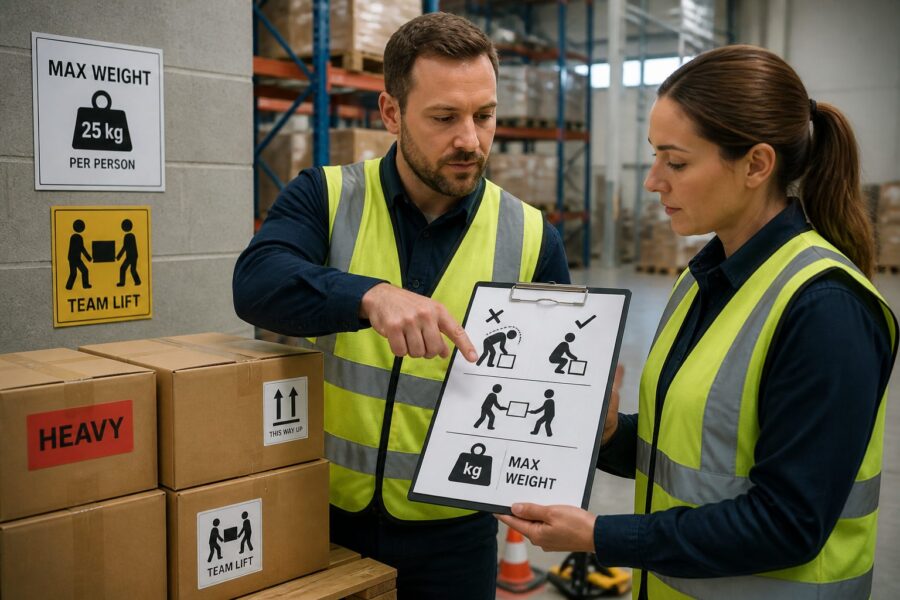
Manual handling pictograms are specifically designed to guide workers through safe lifting and moving procedures, minimizing the risk of injury. These symbols offer immediate, actionable advice that helps prevent back strains and other musculoskeletal issues. Understanding each pictogram’s specific meaning is vital for workplace safety.
These visual cues often depict a person in various postures, indicating correct lifting techniques or highlighting potential hazards. They serve as a quick educational tool, reinforcing training on proper body mechanics and load assessment. Workers rely on these symbols daily to make informed decisions about handling diverse items.
| Pictogram Example | Common Meaning | Safety Implication |
|---|---|---|
| Person lifting with bent knees | Lift with legs, not back | Prevents back strains and herniated discs |
| Two people lifting a box | Team lift required | Distributes weight, prevents single-person overload |
| Person pushing/pulling a cart | Push or pull heavy loads | Reduces direct lifting, utilizes mechanical advantage |
| Person with a straight back, bent knees | Maintain proper posture | Minimizes spinal stress during lifting |
| Person in an awkward posture (crossed out) | Avoid awkward positions | Warns against unsafe twisting or bending |
Weight Limit Symbols: Preventing Overexertion Injuries
Weight limit symbols are among the most direct and crucial ergonomics pictograms used in logistics and manufacturing. These symbols explicitly state the maximum safe weight for an item, a shelf, or a piece of equipment. Ignoring these limits leads directly to overexertion injuries and potential structural failures.
The clarity of a weight limit pictogram leaves no room for misinterpretation, which is essential in dynamic work environments. A simple number followed by a unit of measurement, often accompanied by a visual of a person or object, communicates the precise boundary. This direct communication is a cornerstone of effective safety labeling.
Overexertion injuries, such as muscle strains, sprains, and even hernias, are incredibly common and costly in workplaces without clear weight guidelines. By prominently displaying weight limits, companies empower workers to assess loads accurately and seek assistance when necessary. This proactive measure significantly reduces the incidence of such injuries.
These symbols are not just for individual items; they also apply to storage solutions like shelving units, pallets, and mezzanines. Exceeding these structural weight limits can lead to catastrophic collapses, endangering lives and causing immense property damage. Proper weight limit labeling is therefore critical for structural integrity.
Companies must ensure that all employees understand the implications of these weight limit symbols, not just the numbers themselves. Training should cover how to read these symbols, what to do if a load exceeds personal or equipment limits, and where to find mechanical aids. Comprehensive understanding drives compliance.
Implementing a robust system of weight limit symbols demonstrates a strong commitment to safety and regulatory compliance. This commitment protects employees from harm and shields the company from potential legal liabilities and financial losses. Clear weight limits are a non-negotiable aspect of modern safety standards.
Beyond the Basics: Specialized Ergonomic Symbols in Logistics
While general manual handling and weight limit symbols are common, the logistics industry often requires more specialized ergonomics pictograms. These advanced symbols address unique challenges like handling fragile items, temperature-sensitive goods, or items requiring specific orientation. Such specialized labeling ensures comprehensive safety and product integrity.
For instance, symbols indicating “fragile,” “this way up,” or “keep dry” indirectly contribute to ergonomic safety by guiding proper handling. Mishandling fragile items often leads to awkward postures or sudden movements to prevent damage, increasing injury risk. Clear instructions minimize these reactive, unsafe actions.
Other specialized symbols might instruct workers to use specific equipment, such as “use a forklift” or “use a pallet jack,” for certain types of loads. These pictograms prevent workers from attempting to manually lift items that are too heavy or cumbersome for safe human handling. They promote the use of mechanical aids.
Some symbols might also denote specific environmental precautions relevant to handling, like “handle with gloves” for items with sharp edges or “wear protective footwear.” While not strictly manual handling, these precautions directly impact the safety of the person performing the ergonomic task. They are part of a holistic safety approach.
The complexity of modern supply chains demands a nuanced approach to safety symbology. Integrating these specialized ergonomics pictograms into labeling systems ensures that every potential hazard and required precaution is clearly communicated. This level of detail is critical for preventing both personal injury and product loss.
Companies in specialized logistics sectors, such as pharmaceuticals or electronics, often develop internal standards that complement international ISO symbols. These tailored symbols address industry-specific handling requirements, ensuring that even the most unique items are moved safely and efficiently. Continuous adaptation of symbology is key to evolving safety needs.
Implementing Effective Ergonomic Labeling in Your Warehouse
Implementing effective ergonomic labeling in a warehouse environment requires careful planning and consistent execution to maximize safety benefits. Simply slapping on a few stickers will not suffice; a strategic approach ensures that all relevant information is clearly visible and understood. This systematic application of symbols is crucial for accident prevention.
The placement and visibility of ergonomics pictograms are just as important as the symbols themselves. Labels must be affixed in prominent locations on packages, equipment, and storage areas, ensuring they are easily seen before a handling task begins. Poorly placed or obscured labels render even the best symbols useless.
- Conduct a comprehensive risk assessment of all manual handling tasks
- Identify all items requiring specific ergonomics pictograms
- Ensure all labels comply with ISO and local safety standards
- Use durable, high-visibility labels suitable for the warehouse environment
- Train all personnel on the meaning and importance of each symbol
- Regularly inspect and replace damaged or faded labels
- Integrate pictogram use into daily safety briefings
- Standardize labeling practices across all facilities
The Economic Impact of Clear Ergonomic Symbology
The economic impact of clear ergonomics pictograms extends far beyond mere compliance; it directly influences a company’s bottom line. Investing in effective safety symbology yields significant returns by reducing costs associated with workplace injuries and improving operational efficiency. This financial benefit makes safety a smart business decision.
Workplace injuries, particularly those related to manual handling, result in substantial direct and indirect costs. Direct costs include medical expenses, worker’s compensation claims, and legal fees. Indirect costs encompass lost productivity, training new staff, administrative time, and damage to company reputation, all of which are significantly reduced by proper safety measures.
By preventing injuries, clear ergonomics pictograms help maintain a stable and experienced workforce. High employee turnover due to injuries disrupts operations and incurs considerable expenses in recruitment and training. A healthy workforce is a productive and cost-effective one.
Furthermore, an excellent safety record, bolstered by effective symbology, can lead to lower insurance premiums. Insurance companies often offer reduced rates to businesses that demonstrate a proactive approach to risk management and injury prevention. This financial incentive directly rewards companies for their safety efforts.
Improved efficiency is another often-overlooked economic benefit. When workers are confident in handling tasks safely, they perform their duties more quickly and accurately. This reduced hesitation and fewer errors translate into faster processing times and smoother logistics operations.
Finally, a strong safety culture, visibly supported by clear ergonomics pictograms, enhances a company’s brand image and attracts top talent. Employees prefer to work for organizations that prioritize their well-being, leading to better employee retention and a more engaged workforce. These intangible benefits translate into long-term economic advantages.
Training and Awareness: Ensuring Pictogram Comprehension
Even the most perfectly designed ergonomics pictograms are ineffective if workers do not understand their meaning and importance. Comprehensive training and ongoing awareness programs are absolutely essential to ensure that every employee can correctly interpret and act upon these visual safety cues. Training bridges the gap between symbol design and practical application.
Initial onboarding for new employees must include dedicated sessions on safety symbology, covering all relevant manual handling and weight limit pictograms. This foundational training sets the expectation for safe work practices from day one. It establishes a baseline understanding for all personnel.
Regular refresher training sessions are equally important, especially when new symbols are introduced or existing procedures are updated. These sessions help reinforce knowledge, address any misunderstandings, and keep safety protocols top of mind for all workers. Continuous learning is vital for maintaining high safety standards.
Training should not be limited to theoretical explanations; it must incorporate practical demonstrations and interactive exercises. Workers should have opportunities to identify symbols, explain their meanings, and demonstrate correct handling techniques. This hands-on approach solidifies understanding and builds confidence.
Creating an environment where employees feel comfortable asking questions about ergonomics pictograms fosters better comprehension and compliance. Safety managers should actively encourage dialogue and provide clear answers to ensure no ambiguity remains. Open communication strengthens the safety culture.
Beyond formal training, ongoing awareness campaigns through posters, digital displays, and team meetings can reinforce the importance of these symbols. Consistent messaging ensures that ergonomics pictograms remain a visible and understood part of daily operations. This continuous reinforcement helps embed safety into the workplace culture.
Future Trends in Ergonomics Pictogram Development
The field of ergonomics pictograms is not static; it continually evolves to meet new industrial challenges and technological advancements. Future trends will likely focus on even greater clarity, adaptability, and integration with smart technologies. These developments promise to enhance workplace safety further.
One significant trend involves the development of more dynamic and interactive safety symbology. Imagine pictograms that change color or animate based on real-time sensor data, indicating, for example, if a load’s weight is approaching its limit. This level of responsiveness offers immediate, context-aware safety alerts.
Integration with augmented reality (AR) and virtual reality (VR) training platforms is another exciting prospect. Workers could practice manual handling tasks in simulated environments where ergonomics pictograms appear dynamically, providing instant feedback on safe practices. This immersive training offers unparalleled learning experiences.
There is also a push for even more universally understood symbols that transcend cultural nuances, minimizing any potential for misinterpretation. Research into cognitive psychology and visual perception helps design pictograms that are inherently intuitive across diverse populations. The goal is truly global comprehension.
Standardization bodies like ISO will continue to play a crucial role in validating and disseminating these new generations of ergonomics pictograms. Their rigorous testing and consensus-building processes ensure that new symbols are effective and widely adopted. This collaborative effort drives progress in safety symbology.
Finally, the increasing complexity of goods and logistics processes will necessitate more specialized and granular pictograms. As automation grows, symbols might also guide human-robot collaboration, ensuring safe interaction between workers and machinery. The future of ergonomics pictograms is dynamic and highly responsive to evolving workplace needs.
Compliance and Best Practices for Ergonomic Safety
Achieving compliance with ergonomic safety regulations and implementing best practices is a continuous journey for any organization. This commitment involves more than just displaying ergonomics pictograms; it requires a holistic approach to workplace design, training, and ongoing assessment. A proactive stance is essential for sustained safety.
Companies must regularly review national and international standards, such as those from OSHA, EN standards, and ISO, to ensure their ergonomic safety programs remain current. Regulations can change, and staying informed prevents non-compliance and potential penalties. Continuous monitoring is a key best practice.
Conducting periodic ergonomic assessments of workstations and manual handling tasks helps identify potential hazards before they lead to injuries. These assessments should involve input from workers, as they often have the most direct insight into daily challenges. Their feedback is invaluable for improving safety.
Beyond just labeling, investing in ergonomic tools and equipment, such as lift assists, adjustable workstations, and proper personal protective equipment, significantly reduces physical strain. These engineering controls complement the guidance provided by ergonomics pictograms. They create a safer working environment.
Establishing clear reporting mechanisms for near misses and ergonomic concerns allows for early intervention and continuous improvement. When workers feel safe reporting issues, companies can address problems proactively before they escalate into serious incidents. This open feedback loop is crucial for a robust safety program.
Ultimately, a culture of safety where every employee takes ownership of ergonomic practices represents the pinnacle of best practice. When ergonomics pictograms are understood, respected, and integrated into daily routines, a workplace becomes inherently safer and more productive. This collective responsibility drives superior safety outcomes.