
Conclusion
Food safety pictograms are a simple yet effective way to promote a culture of safety in any food-related business. By providing clear, visual reminders of important safety procedures, these symbols help to prevent foodborne illnesses, reduce accidents, and ensure compliance with regulations.
From handwashing to cooking temperatures to safe storage, food safety pictograms cover a wide range of critical topics. By using these symbols strategically and integrating them into training programs, businesses can create a safer and more hygienic environment for staff and customers alike.
In the food industry, maintaining the highest standards of safety is non-negotiable. Clear and universally understood communication is essential for preventing accidents, ensuring proper food handling, and protecting consumers. That’s where food safety pictograms come into play.
These simple yet powerful visuals transcend language barriers and provide instant guidance on critical safety procedures. This guide will provide a quick overview of food safety pictograms and how they contribute to a safer food handling environment.
We’ll explore the most common food handling symbols, hygiene pictograms, and kitchen safety signs. You’ll learn how to use them effectively to promote a culture of safety in your food-related business.
Why Food Safety Pictograms Matter
Food safety pictograms are more than just decorations; they are crucial tools for preventing foodborne illnesses and ensuring compliance with safety regulations. They provide immediate, visual instructions that can be easily understood by everyone, regardless of their language skills or literacy level.
In a fast-paced kitchen environment, quick and clear communication is essential. Food safety pictograms offer that instant clarity, reminding staff of important hygiene practices and safety protocols.
These pictograms also help to reinforce training and promote a consistent approach to food safety. By displaying these symbols prominently, businesses can create a culture of safety awareness and accountability.
Moreover, the use of standardized food handling symbols can help businesses meet regulatory requirements. Many food safety standards and certifications require the use of clear and accessible signage to communicate important safety information.
Food safety pictograms are especially important in diverse workplaces where employees may speak different languages. Pictograms offer a universal language, ensuring everyone understands crucial safety messages. This visual communication helps bridge the gap created by language barriers.
Consider the cost of foodborne illnesses, both in terms of human suffering and financial losses for businesses. Implementing and utilizing food safety pictograms is a relatively inexpensive way to mitigate these risks. It’s an investment in the health and safety of both employees and customers.
Beyond preventing immediate health risks, consistent use of pictograms fosters a long-term commitment to food safety. It creates a workplace culture where safety is always top of mind. This proactive approach can lead to improved employee morale and a stronger reputation for the business.
Furthermore, food safety pictograms can be easily adapted to address specific hazards or concerns within a particular food establishment. Custom pictograms can be created to highlight unique risks or reinforce specific procedures. This adaptability makes them a valuable tool for any food-related business.
Key Food Safety Pictograms Explained
Understanding the meaning of different food safety pictograms is essential for their effective use. These symbols cover a wide range of topics, from handwashing to cooking temperatures, and each one plays a specific role in promoting food safety.
Let’s take a look at some of the most common and important food handling symbols. Knowing these symbols can help you identify potential hazards and take appropriate precautions.
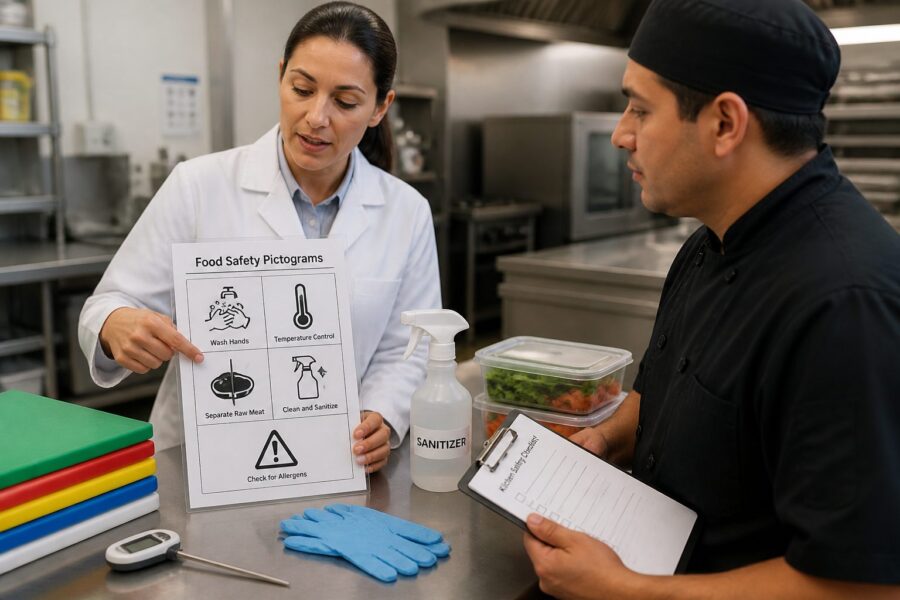
One of the most frequently seen hygiene pictograms is the handwashing symbol. This typically depicts hands being washed under running water, often accompanied by a bar of soap.
It serves as a constant reminder to staff to wash their hands thoroughly and frequently, especially after handling raw foods, using the restroom, or touching contaminated surfaces. Another common pictogram is the “No Smoking” symbol, which is crucial for maintaining a clean and hygienic food preparation environment.
Another crucial pictogram is the one indicating the proper use of gloves. This symbol often shows a hand wearing a glove, reminding employees to wear gloves when handling ready-to-eat foods or performing tasks that require barrier protection. It also reinforces the importance of changing gloves frequently to prevent cross-contamination.
Pictograms illustrating proper food storage techniques are also vital. These symbols often depict food containers labeled with dates and temperatures, reminding staff to follow FIFO (First In, First Out) principles and maintain appropriate refrigeration temperatures. Proper food storage is essential for preventing bacterial growth and spoilage.
Symbols denoting the safe handling of specific allergens are becoming increasingly important. These pictograms help prevent cross-contamination of allergens like peanuts, gluten, and dairy. They often depict separate cutting boards, utensils, and storage areas for allergen-containing foods.
Don’t overlook pictograms that address cleaning and sanitizing procedures. These symbols illustrate the proper steps for cleaning and sanitizing surfaces, equipment, and utensils. Regular cleaning and sanitizing are crucial for eliminating harmful bacteria and preventing foodborne illnesses.
Pictograms for Cooking Temperatures
Ensuring that food is cooked to the correct internal temperature is critical for killing harmful bacteria. Food safety pictograms can be used to clearly communicate these temperature requirements to kitchen staff.
These pictograms often feature a thermometer alongside an image of the food being cooked, with the target temperature clearly indicated. For example, a pictogram might show a chicken with a thermometer reading 165°F (74°C), which is the recommended internal temperature for poultry.
| Food Item | Minimum Internal Temperature | Pictogram Description |
|---|---|---|
| Poultry (Chicken, Turkey) | 165°F (74°C) | Chicken with thermometer reading 165°F |
| Ground Meat (Beef, Pork) | 160°F (71°C) | Burger patty with thermometer reading 160°F |
| Pork | 145°F (63°C) | Pork chop with thermometer reading 145°F |
| Seafood | 145°F (63°C) | Fish fillet with thermometer reading 145°F |
Using these pictograms helps to eliminate any confusion about safe cooking temperatures. Staff can quickly and easily reference the symbols to ensure that food is cooked to the appropriate temperature, reducing the risk of foodborne illness.
It’s crucial to ensure that these temperature pictograms are easily visible near cooking equipment. Placing them strategically near ovens, grills, and stovetops provides a constant reminder to check internal temperatures. This constant visual cue reinforces safe cooking practices.
Consider using color-coded pictograms to further enhance their effectiveness. For example, using a red thermometer to indicate danger zones and a green thermometer for safe temperatures can aid quick comprehension. Color coding can make the information even more accessible and memorable.
Remember to update these pictograms regularly to reflect any changes in food safety regulations or recommendations. Staying current with the latest guidelines is essential for maintaining a safe and compliant food operation. Regular updates demonstrate a commitment to food safety best practices.
It’s also beneficial to include these temperature pictograms in training materials and employee handbooks. Reinforcing the information through multiple channels ensures that staff fully understand the importance of safe cooking temperatures. Comprehensive training is key to effective pictogram implementation.
Pictograms for Preventing Cross-Contamination
Cross-contamination is a major cause of foodborne illnesses, and it occurs when harmful bacteria are transferred from one food to another. Food safety pictograms can play a vital role in preventing this from happening.
These pictograms often depict separate cutting boards and utensils for raw and cooked foods, or for different types of allergens. For example, a pictogram might show a red cutting board labeled “Raw Meat Only” and a green cutting board labeled “Vegetables Only.”
Another common pictogram illustrates the proper way to wash and sanitize cutting boards and utensils after each use. This helps to reinforce the importance of cleaning and sanitizing to prevent the spread of bacteria.
Some pictograms also address the issue of allergen cross-contamination, which is particularly important for individuals with food allergies. These symbols might show separate storage containers and preparation areas for foods containing common allergens like peanuts, gluten, or dairy.
Clear and concise pictograms are essential for effective cross-contamination prevention. The symbols should be easily recognizable and understandable at a glance. Ambiguous or confusing pictograms can lead to errors and increase the risk of contamination.
Consider using pictograms to illustrate the proper handwashing technique after handling raw foods. This reinforces the importance of thorough handwashing to remove any potential contaminants. Consistent handwashing is a critical step in preventing cross-contamination.
Pictograms can also be used to demonstrate the proper use of color-coded utensils and cutting boards. This visual aid helps staff quickly identify the appropriate tools for specific tasks. Color-coding is a simple yet effective way to prevent cross-contamination.
Regularly review and reinforce the meaning of these pictograms with staff to ensure consistent understanding and application. Periodic training sessions can help to maintain awareness and address any questions or concerns. Ongoing education is key to successful cross-contamination prevention.
Pictograms for Safe Storage
Proper food storage is essential for preventing bacterial growth and maintaining food quality. Food safety pictograms can be used to remind staff of important storage guidelines, such as temperature requirements and expiration dates.
These pictograms often feature a refrigerator with the recommended temperature range clearly indicated. For example, a pictogram might show a refrigerator with a label that reads “Keep at or below 40°F (4°C).”
Other pictograms illustrate the “First In, First Out” (FIFO) method for rotating stock. This helps to ensure that older products are used before newer ones, reducing the risk of spoilage and waste.
Additionally, some pictograms address the proper storage of specific types of food, such as raw meat, poultry, and seafood. These symbols might show these items being stored on the bottom shelves of the refrigerator to prevent drips from contaminating other foods.
Pictograms can also illustrate the importance of proper labeling of food containers with dates and contents. This helps staff easily identify and track the age of stored food items. Accurate labeling is crucial for effective FIFO implementation.
Consider using pictograms to remind staff to check the temperature of refrigerators and freezers regularly. This ensures that these appliances are functioning correctly and maintaining the proper temperature range. Consistent temperature monitoring is essential for safe food storage.
Pictograms can also depict the proper stacking and arrangement of food items in storage areas. This helps to ensure proper air circulation and prevent crushing or damage to food containers. Organized storage promotes both safety and efficiency.
Regularly inspect storage areas and update pictograms as needed to reflect any changes in storage procedures or regulations. Staying current with best practices is essential for maintaining a safe and efficient food storage system. Proactive maintenance ensures continued effectiveness.
Where to Use Food Safety Pictograms Effectively
The strategic placement of food safety pictograms is crucial for maximizing their impact. They should be placed in areas where they are easily visible and relevant to the task at hand.
For example, handwashing pictograms should be placed near sinks and handwashing stations. Cooking temperature pictograms should be displayed near cooking equipment, such as ovens, grills, and stovetops.
- Near handwashing stations
- Above cutting boards
- On refrigerators and freezers
- In storage areas
- Near cooking equipment
Pictograms related to cross-contamination should be placed near food preparation areas, especially where raw and cooked foods are handled. Storage pictograms should be displayed on refrigerators, freezers, and in storage rooms.
Consider the viewing angle and distance when placing pictograms. Ensure they are large enough and positioned at a height that is easily visible to all staff members. Optimal visibility maximizes their effectiveness.
Use durable and weather-resistant materials for pictograms placed in high-traffic areas or areas exposed to moisture or grease. This ensures they remain legible and intact over time. Durability is essential for long-term effectiveness.
Regularly check the placement of pictograms to ensure they are still visible and properly positioned. Adjust their location as needed to maintain optimal visibility and relevance. Proactive maintenance ensures continued effectiveness.
Involve staff in the placement of pictograms to get their input on the most effective locations. This can increase their sense of ownership and ensure the pictograms are placed in areas that are most helpful to them. Employee involvement enhances effectiveness.
Maintaining and Updating Pictograms
To ensure that food safety pictograms remain effective, it’s important to maintain and update them regularly. Over time, pictograms can become faded, damaged, or outdated, which can reduce their impact and effectiveness.
Regularly inspect pictograms to ensure that they are clean, legible, and in good condition. Replace any that are damaged or faded, and update them as needed to reflect changes in food safety regulations or best practices.
It’s also a good idea to involve staff in the process of maintaining and updating pictograms. Ask for their feedback on the effectiveness of the symbols and whether they have any suggestions for improvements.
This can help to create a sense of ownership and accountability, and it can also ensure that the pictograms are relevant and useful to the people who are using them every day. Consider laminating pictograms to increase their durability and make them easier to clean.
Establish a schedule for regular inspections and maintenance of all food safety pictograms. This ensures that they are consistently monitored and addressed as needed. A proactive approach prevents deterioration and obsolescence.
Keep a record of when pictograms were last updated and the reasons for any changes. This helps to track the evolution of food safety practices and ensure consistency over time. Documentation promotes accountability and continuous improvement.
Consider using digital pictograms that can be easily updated and displayed on electronic screens. This allows for quick and efficient dissemination of new information. Digital displays offer flexibility and real-time updates.
Provide staff with training on how to identify and report damaged or outdated pictograms. This empowers them to take ownership of food safety and contribute to a culture of continuous improvement. Employee involvement enhances effectiveness.
Integrating Pictograms with Training Programs
Food safety pictograms are most effective when they are integrated into comprehensive training programs. While pictograms provide a quick visual reminder, they should not be used as a substitute for proper training.
During training sessions, explain the meaning and importance of each pictogram, and provide examples of how to apply them in real-world situations. This will help staff to understand the underlying principles of food safety and to develop good habits.
Use the pictograms as a reference point during training, and encourage staff to ask questions if they are unsure about anything. This will help to reinforce the message and to ensure that everyone is on the same page.
Consider creating quizzes or exercises that test staff’s knowledge of the pictograms and their application. This can help to identify any gaps in understanding and to provide additional training as needed.
Develop training materials that specifically address the meaning and application of each food safety pictogram used in the establishment. This provides a consistent and comprehensive resource for staff to refer to. Standardized materials enhance training effectiveness.
Use real-life scenarios and case studies to illustrate how pictograms can be used to prevent food safety incidents. This helps staff to connect the symbols to practical applications and understand their importance. Practical examples reinforce learning.
Incorporate pictograms into ongoing training and refresher courses to reinforce their meaning and application. Regular reinforcement is essential for maintaining awareness and promoting consistent practices. Continuous learning promotes long-term compliance.
Solicit feedback from staff on the effectiveness of the training program and the clarity of the pictograms. This helps to identify areas for improvement and ensure that the training is meeting their needs. Employee feedback enhances training effectiveness.
The Role of Hygiene Pictograms
Hygiene pictograms are a subset of food safety pictograms that focus specifically on personal hygiene practices. These symbols are essential for preventing the spread of bacteria and viruses from food handlers to food.
The most common hygiene pictograms include those related to handwashing, glove use, and proper attire. Handwashing pictograms, as mentioned earlier, remind staff to wash their hands frequently and thoroughly.
Glove use pictograms indicate when gloves are required, such as when handling ready-to-eat foods. They also illustrate the proper way to put on and remove gloves to avoid contamination.
Attire pictograms remind staff to wear clean uniforms, hairnets, and other protective clothing. These symbols help to minimize the risk of contaminants entering the food preparation area.
Hygiene pictograms can also illustrate the proper way to cover coughs and sneezes to prevent the spread of respiratory droplets. This is especially important during flu season or other outbreaks of infectious diseases. Respiratory hygiene is crucial for preventing contamination.
Consider using pictograms to remind staff to avoid touching their face, hair, or other body parts while handling food. This helps to prevent the transfer of bacteria and viruses from their hands to the food. Minimizing contact reduces contamination risk.
Pictograms can also be used to illustrate the proper use of hand sanitizers in addition to handwashing. Hand sanitizers provide an extra layer of protection against harmful microorganisms. Supplemental sanitization enhances hygiene.
Regularly reinforce the importance of personal hygiene practices and the meaning of hygiene pictograms with staff. Consistent messaging helps to create a culture of hygiene and promote consistent adherence to best practices. Repetition reinforces understanding.
Kitchen Safety Signs: Beyond Food
While food safety pictograms focus on preventing foodborne illnesses, kitchen safety signs address a broader range of hazards in the kitchen environment. These signs help to prevent accidents, injuries, and other safety incidents.
Common kitchen safety signs include those related to wet floors, hot surfaces, and sharp objects. Wet floor signs warn staff and customers about slippery surfaces, reducing the risk of falls.
Hot surface signs alert people to the presence of hot equipment, such as ovens, stoves, and deep fryers. Sharp object signs remind staff to handle knives and other sharp tools with care.
These signs also include instructions on how to use equipment safely and how to respond in the event of an emergency. Fire safety signs indicate the location of fire extinguishers and emergency exits.
Signs indicating the location of first aid kits and emergency contact information are also crucial. These signs ensure that staff can quickly access medical assistance in the event of an injury. Prompt access to aid is essential.
Consider using signs to remind staff to wear appropriate personal protective equipment (PPE), such as safety glasses or gloves, when performing certain tasks. This helps to prevent injuries from chemicals, hot liquids, or sharp objects. PPE protects against workplace hazards.
Signs illustrating the proper lifting techniques can help to prevent back injuries. Lifting heavy objects improperly is a common cause of workplace injuries. Proper technique minimizes risk.
Regularly review and update kitchen safety signs to reflect any changes in equipment, procedures, or regulations. Staying current with safety standards is essential for maintaining a safe working environment. Proactive maintenance ensures continued safety.
Conclusion
Food safety pictograms are a simple yet effective way to promote a culture of safety in any food-related business. By providing clear, visual reminders of important safety procedures, these symbols help to prevent foodborne illnesses, reduce accidents, and ensure compliance with regulations.
From handwashing to cooking temperatures to safe storage, food safety pictograms cover a wide range of critical topics. By using these symbols strategically and integrating them into training programs, businesses can create a safer and more hygienic environment for staff and customers alike.