
Proper labeling for medical waste is not merely a procedural formality; it’s a critical component of healthcare safety and regulatory compliance. Without clear and standardized labeling, the risks associated with handling and disposing of infectious and hazardous materials increase exponentially.
Misidentification can lead to accidental exposure, improper treatment, and environmental contamination, all of which can have severe consequences. This article examines the essential elements of medical waste labeling, ensuring that healthcare facilities, waste management companies, and regulatory bodies adhere to the highest standards of safety and responsibility.
The goal is to provide a comprehensive guide to understanding and implementing effective labeling for medical waste, promoting a safer and healthier environment for everyone. By understanding the specific requirements and best practices, organizations can minimize risks, protect their employees, and maintain compliance with applicable laws.
Understanding Medical Waste Labeling Requirements
Medical waste, due to its potential to cause infection or injury, requires strict controls from generation to final disposal. Proper labeling for medical waste is a cornerstone of these controls, ensuring that all handlers are aware of the contents and associated hazards.
The primary purpose of biohazard labels is to immediately communicate the presence of potentially infectious materials. This visual warning allows personnel to take necessary precautions, reducing the likelihood of accidental exposure and subsequent health risks.
Effective labeling for medical waste also facilitates proper segregation and treatment of different waste streams. By clearly identifying the type of waste, labels ensure that it is directed to the appropriate disposal method, whether it be incineration, autoclaving, or chemical disinfection.
This segregation is crucial for optimizing waste treatment processes and minimizing environmental impact. Ultimately, comprehensive labeling for medical waste is an investment in public health, environmental protection, and workplace safety.
The absence of proper labeling can lead to severe consequences, including the spread of infectious diseases and environmental damage. Therefore, a thorough understanding of the labeling requirements is essential for all healthcare professionals and waste management personnel.
These requirements are not static; they evolve with advancements in medical science and changes in regulatory standards. Staying informed about the latest updates and best practices is crucial for maintaining compliance and ensuring the safety of all stakeholders.
Furthermore, proper labeling contributes to a culture of safety within healthcare facilities. It reinforces the importance of responsible waste management and promotes a proactive approach to preventing accidents and incidents.
By investing in comprehensive labeling for medical waste, healthcare organizations demonstrate their commitment to protecting the health and well-being of their employees, patients, and the community at large. This commitment can also enhance the organization’s reputation and build trust with stakeholders.
Required Information on Medical Waste Labels
A compliant labeling for medical waste system goes beyond simply affixing a biohazard label to a container. It involves providing specific information that enables handlers to quickly assess the risks and take appropriate actions.
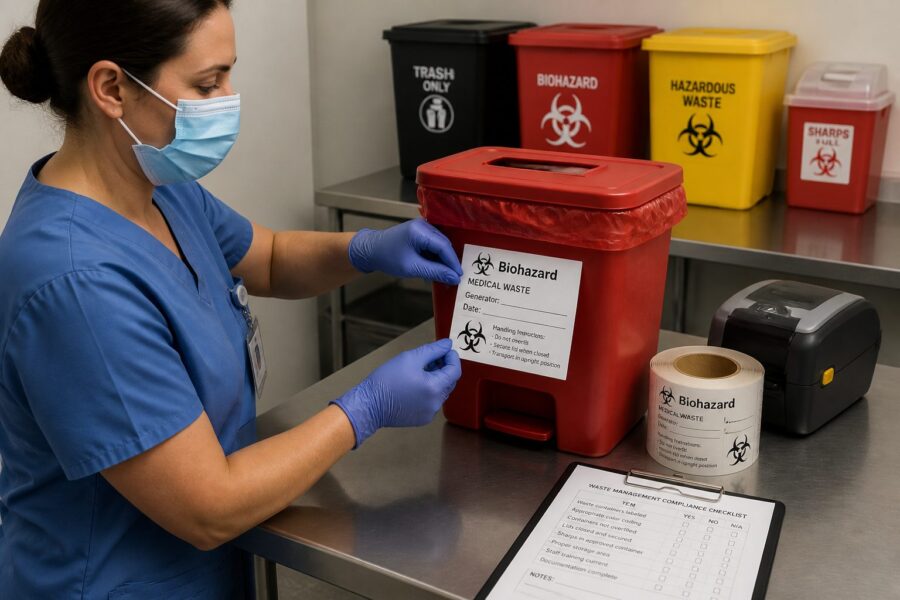
At a minimum, every medical waste label should include the universal biohazard symbol, which is instantly recognizable and serves as a clear warning. In addition to the symbol, the label must clearly state the type of waste contained within the container.
This could include descriptions such as “sharps waste,” “pathological waste,” or “infectious waste.” The generating facility’s name and address must also be prominently displayed on the label, allowing for traceability in case of spills or other incidents.
Furthermore, the date the waste was collected and the waste generator’s contact information should be included. This level of detail ensures that handlers can quickly identify the source of the waste and seek additional information if needed.
The inclusion of the waste generator’s contact information is particularly important in cases where further clarification is needed regarding the contents of the container. This allows for prompt communication and resolution of any uncertainties.
In some cases, additional information may be required depending on the specific type of waste and the applicable regulations. For example, chemotherapy waste may require additional labeling to indicate the presence of cytotoxic drugs.
It is also important to ensure that the information on the label is legible and durable. Labels should be printed with waterproof ink and made of a material that can withstand the rigors of handling and transportation.
Regularly checking the labels to ensure they are intact and legible is a crucial part of maintaining a compliant labeling for medical waste system. Damaged or illegible labels should be replaced immediately to prevent confusion and potential hazards.
Biohazard Symbols and Their Meaning
The biohazard symbol is a universally recognized image used to indicate the presence of potentially infectious materials. Its distinctive three-pronged design is intended to be immediately noticeable, even from a distance.
The symbol was developed in 1966 by the Dow Chemical Company as a way to standardize the identification of biological hazards. Before its introduction, various symbols were used, leading to confusion and inconsistent safety practices.
| Symbol Element | Meaning | Application |
|---|---|---|
| Three Prongs | Represent different classes of biological hazards | Used to indicate the presence of infectious agents |
| Circular Shape | Warning of potential danger | Draws attention to the hazardous nature of the material |
| Color (Typically Orange or Red) | High visibility and alert signal | Ensures quick recognition and caution |
| Placement | Prominently displayed on containers and storage areas | Alerts personnel to potential biohazards |
The biohazard symbol is now mandated by numerous regulatory agencies worldwide, including OSHA in the United States. Its consistent use across different industries and countries helps to ensure a common understanding of potential risks.
The selection of orange or red as the typical color for the biohazard symbol was intentional. These colors are known for their high visibility and ability to quickly capture attention, even in environments with poor lighting.
The three prongs of the symbol do not represent specific types of biological hazards, but rather serve as a general warning of potential danger. This allows the symbol to be used for a wide range of infectious agents, including bacteria, viruses, and fungi.
It is important to note that the biohazard symbol is not intended to be a substitute for proper training and education. Healthcare workers and waste management personnel must be thoroughly trained on the specific hazards associated with the materials they handle.
The consistent use of the biohazard symbol helps to create a visual language that promotes safety and awareness. This visual language is essential for preventing accidents and protecting the health of workers and the public.
Proper Label Placement on Waste Containers
The effectiveness of labeling for medical waste depends not only on the information contained in the label but also on its placement on the waste container. Labels must be positioned in a location where they are easily visible and readable to anyone handling the container.
For rigid containers, such as sharps containers or biohazard bins, labels should be affixed to the front and sides of the container. This ensures that the label is visible regardless of the container’s orientation.
If the container has a lid, a label should also be placed on the top to provide a clear warning when the container is accessed. For bags used to collect medical waste, labels should be securely attached to the bag using adhesive or tags.
It is also important to ensure that the label is protected from damage or obscuration during handling and transportation. Using durable, waterproof labels can help to maintain legibility and prevent the information from being compromised.
The size of the label should also be appropriate for the size of the container. A small label on a large container may be difficult to see, while a large label on a small container may be impractical.
Labels should be placed on a clean, dry surface to ensure proper adhesion. Avoid placing labels over seams or other irregularities that could cause them to peel off.
Regularly inspect the labels to ensure they are securely attached and legible. Replace any labels that are damaged, faded, or peeling off.
Consider using color-coded labels to further differentiate between different types of medical waste. This can help to simplify the segregation process and reduce the risk of errors.
Transportation and Handling Considerations
Labeling for medical waste is especially important during transportation and handling, as the waste may pass through multiple hands and locations. Clear and compliant labels ensure that all personnel involved in the process are aware of the potential hazards and take appropriate precautions.
In addition to the standard biohazard labels, transportation regulations may require additional markings and information. This could include the proper shipping name, UN identification number, and hazard class, depending on the type and quantity of waste being transported.
- Use rigid, leak-proof containers
- Secure lids and closures to prevent spills
- Train personnel on proper handling procedures
- Provide appropriate personal protective equipment (PPE)
- Develop and implement spill response plans
It is also crucial to ensure that the transport vehicle is properly placarded with the appropriate hazard symbols. This alerts other drivers and emergency responders to the presence of hazardous materials, reducing the risk of accidents and minimizing potential harm.
The use of tracking systems, such as GPS, can help to monitor the location of medical waste during transportation. This allows for quick response in the event of an accident or spill.
Transportation personnel should be trained on the proper procedures for handling medical waste, including how to respond to spills and emergencies. This training should be documented and regularly updated.
It is important to comply with all applicable regulations regarding the transportation of medical waste, including those related to packaging, labeling, and documentation. Failure to comply with these regulations can result in significant penalties.
Proper communication between the generating facility, the transportation company, and the disposal facility is essential for ensuring the safe and efficient handling of medical waste. This communication should include information about the type and quantity of waste being transported, as well as any special handling requirements.
Compliance with State and Federal Regulations
Labeling for medical waste is subject to a complex web of state and federal regulations. These regulations are designed to protect public health and the environment by ensuring the safe handling and disposal of potentially infectious materials.
In the United States, OSHA sets standards for workplace safety, including requirements for biohazard labels and training. The EPA regulates the disposal of certain types of medical waste, while the DOT sets rules for the transportation of hazardous materials.
State regulations may be even more stringent, with some states having specific requirements for labeling for medical waste, treatment, and disposal. Healthcare facilities and waste management companies must stay up-to-date on all applicable regulations and ensure that their practices are in compliance.
Failure to comply with these regulations can result in significant penalties, including fines, legal action, and damage to reputation. Regular audits and training programs can help organizations maintain compliance and minimize the risk of violations.
It is crucial to designate a responsible individual or team to oversee medical waste management and ensure compliance with all applicable regulations. This individual or team should have the necessary expertise and authority to implement and enforce the organization’s waste management policies.
Regularly review and update the organization’s waste management policies and procedures to reflect changes in regulations or best practices. This will help to ensure that the organization remains in compliance and continues to improve its waste management practices.
Maintain accurate records of all medical waste generated, treated, and disposed of. These records should include information about the type and quantity of waste, the date of disposal, and the name of the disposal facility.
Conduct regular audits of the organization’s medical waste management practices to identify any areas for improvement. These audits should be conducted by qualified individuals who are familiar with the applicable regulations and best practices.
Best Practices for Medical Waste Management
Beyond regulatory compliance, implementing best practices for medical waste management can further enhance safety and efficiency. This includes developing comprehensive waste management plans, providing ongoing training to employees, and regularly auditing waste handling procedures.
Proper segregation of medical waste at the point of generation is also crucial. This minimizes the volume of waste that requires special handling and reduces the risk of cross-contamination.
Using color-coded containers and labels can further simplify the segregation process. For example, red bags and containers are typically used for infectious waste, while yellow containers are used for chemotherapy waste.
Implementing a tracking system to monitor the movement of medical waste from generation to disposal can also improve accountability and ensure proper handling. This can involve using barcode scanners or other technologies to track the waste at each stage of the process.
Consider implementing a waste minimization program to reduce the amount of medical waste generated in the first place. This can involve using reusable products, such as sharps containers, and implementing strategies to reduce the amount of packaging waste.
Regularly review and update the organization’s waste management plan to reflect changes in regulations or best practices. This will help to ensure that the plan remains effective and relevant.
Provide regular feedback to employees on their waste management performance. This can help to motivate them to follow best practices and identify any areas where they need additional training or support.
Encourage employee participation in the organization’s waste management program. This can involve soliciting their input on ways to improve the program and recognizing their contributions to waste reduction and recycling efforts.
The Role of Technology in Improving Labeling
Technology is playing an increasingly important role in improving the accuracy and efficiency of labeling for medical waste. Digital labeling systems can help to automate the process, reducing the risk of human error and ensuring compliance with regulatory requirements.
These systems can generate labels with the required information, including biohazard symbols, waste type, facility information, and tracking codes. They can also integrate with waste management databases to provide real-time tracking and reporting.
Some systems even use mobile devices to scan barcodes or QR codes on waste containers, providing instant access to information about the waste and its handling requirements. This can be particularly useful for transportation and disposal personnel.
Additionally, cloud-based platforms can facilitate collaboration and communication between healthcare facilities, waste management companies, and regulatory agencies. This allows for seamless sharing of information and improved oversight of the entire medical waste management process.
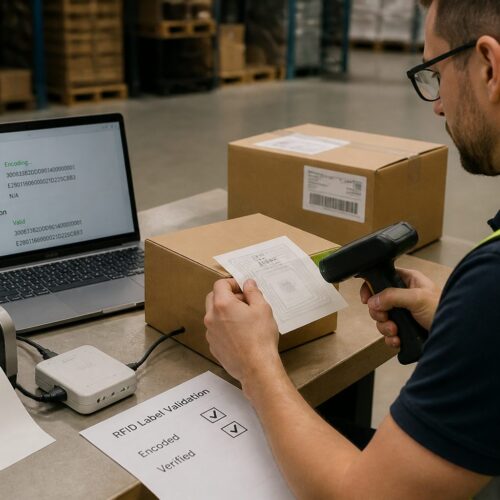
The use of RFID (Radio-Frequency Identification) technology can further enhance tracking and tracing capabilities. RFID tags can be attached to waste containers to provide real-time location and status information.
Artificial intelligence (AI) can be used to analyze data from labeling and tracking systems to identify patterns and trends. This can help to improve waste management efficiency and identify potential risks.
Blockchain technology can be used to create a secure and transparent record of medical waste management activities. This can help to improve accountability and prevent fraud.
Virtual reality (VR) and augmented reality (AR) can be used to train healthcare workers on proper labeling and handling procedures. This can provide a more engaging and effective learning experience.
Training and Education for Healthcare Workers
Effective labeling for medical waste is only as good as the training and education provided to healthcare workers. All personnel who handle medical waste must be properly trained on the identification, segregation, and labeling of different waste streams.
Training programs should cover the requirements of state and federal regulations, as well as the facility’s own waste management policies. They should also emphasize the importance of using proper personal protective equipment (PPE) and following safe handling procedures.
Regular refresher courses can help to reinforce key concepts and ensure that employees stay up-to-date on any changes to regulations or best practices. Training should also be documented to demonstrate compliance with regulatory requirements.
In addition to formal training, providing clear and accessible resources, such as posters and quick reference guides, can help to reinforce key messages. These resources should be placed in areas where medical waste is generated and handled.
Training should be tailored to the specific roles and responsibilities of different healthcare workers. For example, nurses may need more detailed training on the segregation of different types of medical waste, while housekeeping staff may need more training on the proper cleaning and disinfection of waste containers.
Training should be interactive and engaging, using a variety of methods, such as lectures, demonstrations, and hands-on exercises. This will help to ensure that employees understand and retain the information.
Training should be conducted by qualified individuals who have expertise in medical waste management and regulatory compliance. These individuals should be able to answer employee questions and provide guidance on best practices.
Training should be evaluated to assess its effectiveness. This can involve using quizzes, surveys, and observation of employee performance. The results of the evaluation should be used to improve the training program.
Conclusion
Effective labeling for medical waste is a critical component of a comprehensive waste management program. It ensures that all handlers are aware of the potential hazards and take appropriate precautions, minimizing the risk of exposure and environmental contamination.
By understanding the regulatory requirements, implementing best practices, and leveraging technology, healthcare facilities and waste management companies can improve the safety and efficiency of their operations. Consistent labeling for medical waste is key for a safer and healthier environment for all.
The benefits of proper labeling for medical waste extend beyond regulatory compliance and risk reduction. It also contributes to a more sustainable healthcare system by promoting responsible waste management practices.
As technology continues to evolve, new and innovative solutions for labeling for medical waste will emerge. Healthcare facilities and waste management companies should be proactive in exploring and adopting these solutions to further improve their waste management practices.
Ultimately, the goal of labeling for medical waste is to protect the health and safety of workers, the public, and the environment. By working together to implement effective labeling practices, we can create a safer and healthier world for all.