
In the complex world of global commerce, ensuring the safety and quality of goods is paramount. This is particularly true for perishable items, where degradation can occur rapidly, posing risks to consumers and businesses alike. Effective labeling for perishable goods is therefore not just a regulatory requirement, but a critical component of maintaining product integrity and consumer trust.
Understanding and implementing best practices in perishable goods labeling is essential for all stakeholders in the supply chain. Clear, accurate, and standardized information enables proper handling, storage, and transportation, ultimately reducing waste and preventing health hazards.
This article will provide a comprehensive overview of the key aspects of labeling for perishable goods. We’ll cover everything from required information to the use of color codes, ensuring that you have the knowledge to navigate this important area effectively.
The Importance of Labeling Perishable Goods
Labeling for perishable goods is more than just a formality; it’s a crucial safeguard for public health and economic stability. Without proper labeling, the risk of spoilage increases, leading to potential foodborne illnesses and significant financial losses for producers and retailers.
Accurate and comprehensive perishable labels empower consumers to make informed decisions about the products they purchase. This includes understanding how to store and handle items to maintain their quality and safety.
For businesses, effective labeling is essential for compliance with regulatory requirements. It also demonstrates a commitment to quality and safety, building trust with customers and partners.
Furthermore, proper labeling facilitates traceability throughout the supply chain. In the event of a recall, clear and accurate labeling enables quick identification and removal of affected products, minimizing potential harm.
The impact of incorrect or missing labels can be devastating. Imagine a scenario where a batch of contaminated spinach isn’t properly labeled with a production date or source information.
This lack of information would make it nearly impossible to trace the source of the contamination. As a result, the outbreak could spread widely, affecting numerous consumers and causing significant damage to the spinach industry.
Beyond food safety, proper labeling also plays a vital role in preventing economic losses. Perishable goods, by their very nature, have a limited shelf life.
Without clear expiration dates and storage instructions, retailers may unknowingly sell expired or spoiled products. This leads to customer dissatisfaction, product returns, and ultimately, financial losses for the business.
Furthermore, accurate labeling helps to optimize inventory management. By knowing the shelf life of different products, retailers can implement efficient stock rotation strategies, ensuring that older items are sold before they expire.
This minimizes waste and maximizes profits. In essence, labeling is an investment in both public health and economic sustainability.
Consider the consumer perspective as well. Clear and informative labels empower individuals to make responsible purchasing decisions.
They can choose products that align with their dietary needs, preferences, and ethical values. For example, someone with a dairy allergy can easily identify products that contain milk thanks to accurate ingredient labeling.
Similarly, consumers who are concerned about sustainability can look for labels that indicate the product’s origin or production methods. This transparency builds trust between consumers and brands.
It fosters a sense of accountability, which is essential for long-term customer loyalty. Therefore, prioritizing effective labeling is not just a legal obligation, but a strategic advantage for businesses.
Required Information on Perishable Goods Labels
The specific information required on perishable labels can vary depending on the type of product and the regulations of the country or region where it’s being sold. However, there are some common elements that are typically mandatory.
These include the product name, a list of ingredients (if applicable), the net weight or volume, and the name and address of the manufacturer or distributor. It’s also crucial to include the country of origin and any relevant allergen information.
Another essential component is the “use-by” or “expiration” date, which indicates the date after which the product may no longer be safe or of acceptable quality. This date must be clearly visible and easily understood by consumers.
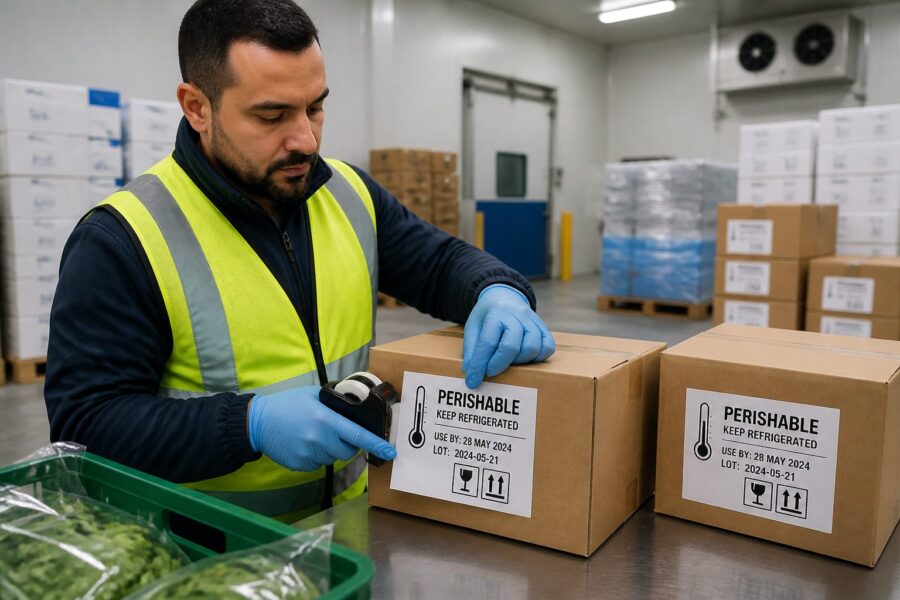
Finally, labels must include any necessary storage instructions, such as “keep refrigerated” or “store in a cool, dry place.” These instructions are critical for maintaining the product’s quality and preventing spoilage.
Let’s delve deeper into the specifics of each required element, starting with the product name. This seems straightforward, but it’s crucial that the name accurately reflects what the product is.
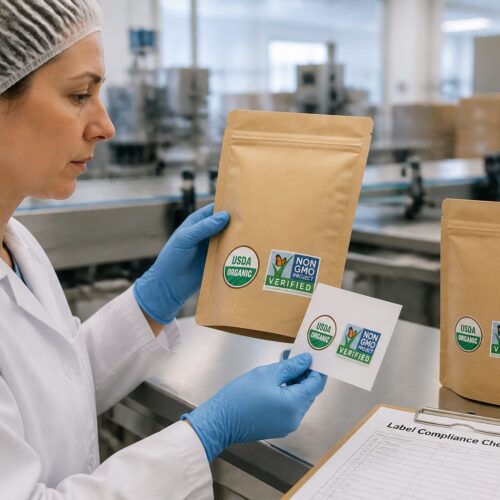
Misleading or ambiguous product names can confuse consumers and even violate labeling regulations. For instance, a product labeled as “organic” must meet specific certification standards to ensure its authenticity.
The ingredient list is equally important, especially for consumers with allergies or dietary restrictions. Ingredients must be listed in descending order of predominance by weight.
This allows consumers to quickly identify potential allergens or ingredients they wish to avoid. Clear and accurate ingredient labeling is essential for preventing allergic reactions and promoting informed food choices.
Net weight or volume provides consumers with information about the quantity of product they are purchasing. This information must be accurate and clearly displayed on the label.
The manufacturer or distributor’s name and address are required for traceability purposes. In the event of a product recall or safety concern, consumers need to be able to easily identify and contact the responsible party.
The country of origin is another important piece of information, particularly for consumers who are concerned about supporting local producers or understanding the product’s journey. Certain countries may also have specific regulations regarding the labeling of imported goods.
Allergen information is critical for individuals with food allergies. Common allergens, such as milk, eggs, peanuts, tree nuts, soy, wheat, fish, and shellfish, must be clearly identified on the label, often in bold or highlighted text.
Finally, storage instructions are essential for maintaining the quality and safety of perishable goods. These instructions should be clear, concise, and easy to follow, ensuring that consumers store the product properly to prevent spoilage.
Expiration Date Standards
Understanding expiration date standards is crucial for both manufacturers and consumers. These dates are not always indicators of safety, but rather of optimal quality as determined by the manufacturer.
There are several types of dates that may appear on perishable labels, each with a slightly different meaning. These include “sell-by” dates, “use-by” dates, and “best-before” dates, each guiding the consumer in different ways.
| Date Type | Definition | Implication |
|---|---|---|
| Sell-By Date | The date by which a store should sell the product. | The product should be safe to consume after this date if stored properly, but quality may decline. |
| Use-By Date | The date by which the product should be consumed for optimal quality. | The product may still be safe to consume after this date, but quality will likely be significantly diminished. |
| Best-Before Date | The date by which the product should be consumed for best flavor and texture. | The product is likely safe to consume after this date, but the quality may not be as good. |
| Expiration Date | The date after which the product should not be consumed. | Consuming the product after this date may pose a health risk. |
Manufacturers determine these dates based on a variety of factors, including the product’s ingredients, processing methods, and packaging. They conduct testing to assess how the product’s quality changes over time under different storage conditions.
Consumers should pay close attention to these dates and follow storage instructions carefully. While some products may still be safe to consume after the “sell-by” or “best-before” date, their quality may have declined.
It’s important to emphasize the distinction between “use-by” and “best-before” dates. “Use-by” dates are generally associated with food safety, particularly for highly perishable items like raw meat or dairy products.
Consuming these products after the “use-by” date may pose a health risk due to the potential growth of harmful bacteria. On the other hand, “best-before” dates are primarily concerned with food quality.
Products may still be safe to consume after the “best-before” date, but their flavor, texture, or nutritional value may have diminished. This is often the case with packaged goods like cereals or canned foods.
The determination of expiration dates is a complex process that involves scientific testing and risk assessment. Manufacturers conduct shelf-life studies to evaluate how the product’s quality changes over time under different storage conditions.
These studies take into account factors such as temperature, humidity, light exposure, and packaging materials. The results of these studies are used to establish the expiration date that guarantees the product’s safety and quality.
However, it’s important to note that expiration dates are not foolproof. They are based on the assumption that the product has been stored and handled properly throughout its shelf life.
If a product has been exposed to improper storage conditions, such as high temperatures or humidity, it may spoil before the expiration date. Therefore, it’s always important to use your senses to assess the quality of perishable goods before consuming them.
Look for signs of spoilage, such as unusual odors, discoloration, or changes in texture. If you have any doubts about the safety of a product, it’s best to err on the side of caution and discard it.
Furthermore, it’s worth noting that there is ongoing debate about the standardization of expiration date labeling. Some organizations advocate for a more simplified system that would reduce consumer confusion and food waste.
For example, some propose using a single “expiration date” for all perishable goods, regardless of whether it’s related to safety or quality. This would make it easier for consumers to understand and interpret the information on labels.
Temperature and Storage Instructions
Maintaining the correct temperature is critical for preserving the quality and safety of perishable goods. Different products require different temperature ranges, and deviations can lead to spoilage and the growth of harmful bacteria.
Perishable labels must clearly indicate the recommended storage temperature. This may include specific temperature ranges (e.g., 34-40°F) or general instructions (e.g., “keep refrigerated”).
In addition to temperature, humidity levels can also affect the shelf life of some perishable items. For example, some fruits and vegetables require high humidity to prevent wilting, while others need low humidity to prevent mold growth.
Proper storage techniques, such as using airtight containers or storing products away from direct sunlight, can also help extend shelf life. These techniques should be clearly communicated on the perishable labels whenever relevant.
Let’s explore the specific temperature requirements for different categories of perishable goods. Dairy products, such as milk, cheese, and yogurt, should be stored at temperatures between 34°F and 40°F (1°C and 4°C).
These temperatures inhibit the growth of bacteria that can cause spoilage and foodborne illnesses. Raw meats, poultry, and seafood are even more sensitive to temperature fluctuations and should be stored at temperatures below 40°F (4°C).
Ideally, these items should be stored in the coldest part of the refrigerator, typically the bottom shelf. Fruits and vegetables have varying temperature requirements depending on the type.
Some fruits, like bananas and tomatoes, are best stored at room temperature, while others, like berries and leafy greens, should be refrigerated. The label should clearly indicate the optimal storage temperature for each specific fruit or vegetable.
Beyond temperature, humidity plays a crucial role in preserving the quality of certain perishable goods. High humidity can promote mold growth and spoilage in some products, while low humidity can cause others to dry out and wilt.
For example, leafy greens like lettuce and spinach benefit from high humidity, which helps to keep them crisp and hydrated. On the other hand, onions and potatoes should be stored in a dry environment to prevent sprouting and rotting.
The use of airtight containers can also significantly extend the shelf life of perishable goods. Airtight containers prevent exposure to oxygen, which can cause oxidation and spoilage.
They also help to maintain the proper humidity levels and prevent the absorption of odors from other foods in the refrigerator. Storing perishable goods away from direct sunlight is another important storage technique.
Sunlight can accelerate the degradation of certain vitamins and nutrients and can also cause the product to overheat. Therefore, it’s best to store perishable goods in a cool, dark place.
Finally, it’s important to remember that proper storage is only one part of the equation. Handling perishable goods carefully and following proper hygiene practices are also essential for preventing spoilage and foodborne illnesses.
Handling Instructions for Perishable Items
In addition to proper storage, careful handling is essential for maintaining the quality and safety of perishable items. This includes minimizing physical damage, preventing cross-contamination, and ensuring proper hygiene.
Perishable labels should provide clear instructions on how to handle the product safely. This may include instructions such as “handle with care,” “do not drop,” or “keep away from raw meat.”
For products that are susceptible to cross-contamination, labels should advise consumers to wash their hands and surfaces thoroughly after handling. They should also provide guidance on how to prevent the spread of bacteria to other foods.
For example, labels on raw poultry or seafood should instruct consumers to use separate cutting boards and utensils and to cook the product to a safe internal temperature. These instructions are vital for preventing foodborne illnesses.
Minimizing physical damage is crucial, especially for delicate fruits and vegetables. Bruising or crushing can break down cell walls, leading to faster spoilage and increased susceptibility to microbial growth.
Labels should advise consumers to handle these items gently and avoid stacking heavy objects on top of them. Preventing cross-contamination is another critical aspect of safe handling.
Raw meats, poultry, and seafood can harbor harmful bacteria that can easily spread to other foods if proper precautions are not taken. Labels should instruct consumers to keep these items separate from other foods in the refrigerator and to use separate cutting boards and utensils when preparing them.
Thorough handwashing is essential before and after handling any perishable goods. Labels should remind consumers to wash their hands with soap and water for at least 20 seconds to remove any potential contaminants.
This is particularly important after handling raw meats, poultry, or seafood. Cooking perishable goods to a safe internal temperature is crucial for killing harmful bacteria.
Labels should provide clear instructions on the recommended cooking temperature for each specific type of food. A food thermometer should be used to ensure that the food has reached the proper temperature.
For example, poultry should be cooked to an internal temperature of 165°F (74°C), while ground beef should be cooked to 160°F (71°C). Proper cooling of leftovers is also important for preventing bacterial growth.
Labels should advise consumers to cool leftovers quickly and refrigerate them within two hours of cooking. Leftovers should be stored in shallow containers to facilitate rapid cooling.
Furthermore, labels can provide guidance on how to properly wash fruits and vegetables. Washing produce under running water can help to remove dirt, pesticides, and other contaminants.
A vegetable brush can be used to scrub firm-skinned produce, such as potatoes and carrots. However, it’s important to avoid using soap or detergent, as these can leave harmful residues.
Using Color Codes for Perishable Goods
Color codes can be a useful tool for quickly identifying the type and storage requirements of perishable goods. By assigning specific colors to different categories of products, businesses can streamline their operations and reduce the risk of errors.
However, it’s important to note that there are no universally standardized color codes for perishable goods. Each company or organization must develop its own system and ensure that it’s clearly communicated to all employees and customers.
- Red for raw meats
- Yellow for poultry
- Blue for seafood
- Green for produce
- Orange for dairy products
When implementing a color-coding system, it’s important to consider cultural factors and potential color blindness. Some colors may have different meanings in different cultures, and some individuals may have difficulty distinguishing between certain colors.
Therefore, it’s best to use a combination of color codes and clear written instructions. This will ensure that everyone can easily understand the labeling information, regardless of their background or visual abilities.
Let’s examine the potential benefits and drawbacks of using color codes in more detail. One of the main advantages is that color codes can provide a quick and visual way to identify different categories of perishable goods.
This can be particularly helpful in busy environments, such as grocery stores or restaurant kitchens, where employees need to quickly locate and retrieve specific items. Color codes can also reduce the risk of errors, such as accidentally using the wrong ingredient or storing a product in the wrong location.
However, there are also some potential drawbacks to consider. As mentioned earlier, there are no universally standardized color codes for perishable goods.
This means that each company or organization must develop its own system and ensure that it’s clearly communicated to all employees and customers. This can be time-consuming and expensive, especially for large organizations with multiple locations.
Furthermore, color codes may not be effective for individuals who are colorblind. Color blindness affects a significant portion of the population, particularly men, and can make it difficult to distinguish between certain colors.
Therefore, it’s important to choose colors that are easily distinguishable by people with color blindness. It’s also essential to use a combination of color codes and clear written instructions to ensure that everyone can understand the labeling information.
When designing a color-coding system, it’s important to consider cultural factors. Some colors may have different meanings in different cultures, and it’s important to avoid using colors that could be offensive or confusing.
For example, in some cultures, red is associated with danger or warning, while in others, it’s associated with good luck or prosperity. Therefore, it’s important to research the cultural significance of different colors before implementing a color-coding system.
In addition to color codes, other visual cues can also be used to identify perishable goods. For example, different shapes or symbols can be used to represent different categories of products.
This can be particularly helpful for individuals who have difficulty distinguishing between colors. Ultimately, the best approach is to use a combination of visual cues and clear written instructions to ensure that everyone can easily understand the labeling information.
Best Practices for Label Application
The effectiveness of perishable labels depends not only on the information they contain but also on how they are applied. Labels that are poorly applied or easily damaged can become illegible, defeating their purpose.
When applying labels, it’s important to ensure that they are securely attached to the product and that the entire label is visible. Avoid placing labels over seams or edges, as this can cause them to peel off.
Use labels that are made of durable materials that can withstand the conditions in which the product will be stored and transported. For example, labels for refrigerated products should be resistant to moisture and cold temperatures.
Consider using tamper-evident labels, which will show if the product has been opened or altered. This can help prevent contamination and ensure consumer safety, especially for high-risk items.
The choice of adhesive is critical for ensuring that labels remain securely attached to perishable goods. Different types of adhesives are designed for different surfaces and environmental conditions.
For example, labels for refrigerated products should use a cold-temperature adhesive that will not lose its tackiness in cold and humid environments. Labels for frozen products require even more specialized adhesives that can withstand extremely low temperatures.
The application method also plays a role in label adhesion. Labels should be applied to a clean, dry surface to ensure optimal bonding. Avoid applying labels to surfaces that are oily, dusty, or wet.
The use of an automated label applicator can help to ensure consistent and accurate label placement. Automated applicators can also apply labels more quickly and efficiently than manual application.
The material used for the label itself is also important. Labels should be made of a durable material that can withstand abrasion, moisture, and temperature fluctuations.
Paper labels are generally not suitable for perishable goods, as they can easily tear or become damaged in wet or humid environments. Synthetic labels, such as polypropylene or polyester, are more durable and resistant to moisture and abrasion.
Tamper-evident labels can provide an extra layer of security and protection for perishable goods. These labels are designed to show if the product has been opened or altered, which can help to prevent contamination and ensure consumer safety.
Tamper-evident labels come in a variety of styles, including those that leave a visible residue when removed and those that are designed to break apart if tampered with. The choice of tamper-evident label will depend on the specific needs of the product and the level of security required.
Finally, it’s important to regularly inspect labels to ensure that they are still securely attached and legible. Damaged or illegible labels should be replaced immediately to prevent confusion and ensure that consumers have access to accurate information.
The Role of Technology in Labeling for Perishable Goods
Technology is playing an increasingly important role in labeling for perishable goods. From advanced printing techniques to smart labels with sensors, new tools are emerging that can enhance the accuracy, efficiency, and effectiveness of labeling.
One example is the use of variable data printing, which allows businesses to print unique information on each label, such as batch numbers, production dates, and expiration dates. This can improve traceability and reduce the risk of errors.
Another promising technology is the use of smart labels with sensors that can monitor temperature, humidity, and other environmental conditions. These labels can alert businesses and consumers if the product has been exposed to conditions that could compromise its quality or safety.
Furthermore, mobile apps and QR codes can provide consumers with additional information about the product, such as its origin, nutritional content, and handling instructions. This can empower consumers to make more informed decisions and reduce food waste.
Variable data printing (VDP) is a powerful technology that enables the printing of unique information on each label. This can include batch numbers, production dates, expiration dates, and even personalized messages.
VDP can significantly improve traceability by allowing businesses to track products throughout the supply chain. It can also reduce the risk of errors by ensuring that each label contains accurate and up-to-date information.
Smart labels with sensors are another promising technology that can revolutionize the way perishable goods are labeled. These labels are equipped with sensors that can monitor temperature, humidity, and other environmental conditions.
The data collected by these sensors can be transmitted wirelessly to a central monitoring system, allowing businesses to track the condition of their products in real time. If a product is exposed to conditions that could compromise its quality or safety, the system can send an alert, allowing businesses to take corrective action.
Mobile apps and QR codes can provide consumers with access to a wealth of information about perishable goods. By scanning a QR code on the label with their smartphone, consumers can access information about the product’s origin, nutritional content, handling instructions, and even recipes.
This can empower consumers to make more informed decisions about the products they purchase and reduce food waste by providing them with tips on how to properly store and prepare perishable goods.
Blockchain technology is also emerging as a potential tool for enhancing the traceability of perishable goods. Blockchain is a distributed ledger technology that can be used to track the movement of products throughout the supply chain.
By recording each transaction on a blockchain, businesses can create a permanent and transparent record of the product’s journey from farm to table. This can help to improve food safety and reduce the risk of fraud.
Artificial intelligence (AI) is also being used to improve the accuracy and efficiency of labeling for perishable goods. AI algorithms can analyze data from sensors and other sources to predict the shelf life of products and optimize storage conditions.
AI can also be used to automate the process of label design and printing, reducing the risk of errors and improving efficiency. As technology continues to evolve, it will undoubtedly play an even greater role in labeling for perishable goods.
Regulatory Compliance and Standards
Labeling for perishable goods is subject to a variety of regulations and standards at both the national and international levels. These regulations are designed to protect consumers and ensure fair trade practices.
In the United States, the Food and Drug Administration (FDA) regulates the labeling of most food products, including perishable items. The FDA requires that labels include specific information, such as the product name, net weight, ingredient list, and nutrition facts.
The European Union (EU) has its own set of labeling regulations, which are similar to those in the United States. The EU also requires that labels include information about allergens and the country of origin.
Businesses that export perishable goods must comply with the labeling regulations of the countries to which they are exporting. This can be a complex process, as regulations can vary significantly from one country to another, but it’s essential for avoiding legal issues and maintaining market access.
In the United States, the FDA’s labeling requirements are outlined in the Code of Federal Regulations (CFR). These regulations cover a wide range of topics, including the format and content of labels, the use of nutrient content claims, and the labeling of allergens.
The FDA also has specific labeling requirements for certain types of perishable goods, such as seafood and dietary supplements. In the European Union, the labeling of food products is regulated by Regulation (EU) No 1169/2011.
This regulation sets out the general principles and requirements for food labeling, including the mandatory information that must be included on labels. The EU also has specific labeling requirements for certain types of perishable goods, such as organic products and genetically modified foods.
In addition to national and international regulations, there are also a number of voluntary labeling standards that businesses can choose to adopt. These standards are often developed by industry associations or non-governmental organizations.
For example, the Global Food Safety Initiative (GFSI) is a non-profit organization that sets standards for food safety management systems. Businesses that are certified to GFSI standards are often required to meet certain labeling requirements.
Complying with labeling regulations and standards can be a complex and challenging task, particularly for businesses that operate in multiple countries. It’s important to stay up-to-date on the latest regulations and standards and to ensure that labels are accurate and compliant.
Failure to comply with labeling regulations can result in fines, product recalls, and damage to a company’s reputation. Therefore, it’s essential to invest in proper labeling practices and to seek expert advice when needed.
One of the key challenges in complying with labeling regulations is the constantly evolving landscape. Regulations are often updated or amended to reflect new scientific findings or changing consumer preferences.
Therefore, it’s important to have a system in place for monitoring changes in regulations and updating labels accordingly. This may involve working with a regulatory consultant or using software that automatically tracks changes in labeling requirements.
Conclusion
Effective labeling for perishable goods is essential for maintaining product quality, ensuring consumer safety, and complying with regulatory requirements. By following best practices in label design, application, and technology, businesses can minimize waste