
REACH Compliance Labeling is where EU chemical regulations stop being paperwork and start showing up on the packaging, the invoice, and the warehouse shelf. If your labels are vague or wrong, customs holds shipments, customers lose trust, and regulators have an easy target.
I have seen companies treat REACH labels like a one time design job, then wonder why audits turn messy six months later. REACH changes, suppliers change, and your product mix changes, so labeling has to keep up.
This article focuses on what REACH requires, what it does not, and where businesses usually trip. The goal is practical EU compliance, not theory, because chemical regulations punish assumptions.
What is REACH and why is it important?
REACH is the EU Regulation (EC) No 1907/2006 that governs Registration, Evaluation, Authorisation and Restriction of Chemicals. It applies to substances on their own, in mixtures, and in articles, which is why it shows up in so many supply chains.
REACH matters because it flips the burden of proof onto industry instead of government. If you place chemicals on the EU market, you must know what you sell and communicate hazards and safe use through the right documents and labels.
People often mix up REACH with CLP, the EU’s classification and labeling regulation based on the GHS system. They work together, but REACH is about data, restrictions, and communication duties, while CLP controls the hazard symbols and wording on many chemical labels.
REACH is also not just for chemical manufacturers, because importers and downstream users inherit duties through the chain. A company that only repackages, blends, or private labels can still end up responsible for getting the compliance story right.
Registration is the part most people have heard of, but it is only one pillar of the system. Evaluation, authorisation, and restriction are where the EU can tighten controls over time, which is why yesterday’s “acceptable” product can become tomorrow’s problem.

From an operations view, REACH is a supply chain discipline problem as much as a regulatory one. When purchasing cannot get substance identities or concentration ranges, REACH Compliance Labeling becomes guesswork and guesswork becomes liability.
REACH is important because it forces consistency across documents that different departments touch. If sales promises one use case, engineering designs for another, and compliance writes the SDS for a third, labeling becomes the first place those contradictions become visible.
It also matters because enforcement is not theoretical, especially at borders and in customer audits. A single missing data point can trigger a chain reaction of questions that consumes weeks of staff time.
Companies that treat REACH as a one-off registration event often miss the ongoing communication duties. The daily reality is that REACH is maintained through updates, checks, and controlled changes, not through a binder on a shelf.
Labeling requirements under REACH
REACH itself does not provide a single universal label template, and that surprises people. The labeling you see on chemical containers is usually driven by CLP, but REACH triggers what information must be known and passed along.
That difference matters because teams sometimes search REACH for pictogram rules and come up empty. The practical approach is to treat REACH as the source of substance status and use conditions, and CLP as the rulebook for the actual label elements on mixtures and substances.
Where REACH hits labeling hardest is when restrictions, authorizations, or specific risk management measures apply. If a substance has a restriction under Annex XVII, your packaging and instructions must match the allowed uses and any conditions.
Restrictions can be narrow and easy to miss, like a concentration limit in a consumer product category. If your label implies a consumer use that is restricted, you can create noncompliance even if the product could have been sold legally for a different use.
Authorization is another trigger that changes how you communicate, because it ties legality to a specific authorized use and often to a specific supply chain. When authorization is involved, you need a way to ensure the label and accompanying documents do not encourage off-scope uses.
REACH labels also show up indirectly through article communication duties, especially when SVHCs exceed the 0.1% weight by weight threshold. That duty may not force a hazard pictogram, but it can force clear consumer and professional communication that ends up on packaging or product inserts.
In practice, many companies implement this as a standardized “safe use” statement and a reference to where more information can be obtained. The key is that the statement must be accurate for the specific article and the specific SVHC, not a generic disclaimer pasted everywhere.
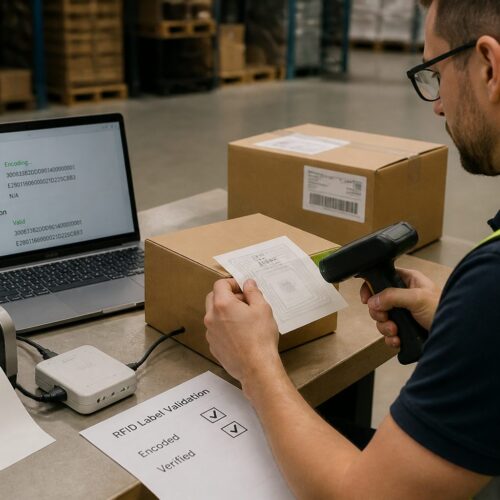
REACH also influences labeling through traceability expectations, even when the law does not spell out a label field. If you cannot link a batch to an SDS revision and a supplier formulation, you will struggle to defend your labeling decisions during an inspection.
Another area where REACH impacts what ends up on packaging is the communication of conditions of safe use from exposure scenarios. If the SDS says “use only with local exhaust ventilation” and your product is sold with no instructions, you have a communication gap.
For many businesses, the most honest approach is to treat REACH labels as a system, not a sticker. You need traceable links between the label content, the SDS, the exposure scenario if one exists, and the supplier data that supports it.
A system approach also means deciding which channels carry which messages, because not everything belongs on the primary container label. Sometimes the right solution is a label plus an insert, or a label plus a QR code that points to controlled documents, as long as the core legal elements remain present where required.
Do not ignore packaging formats, because a drum, an aerosol can, and a small bottle have different space and durability constraints. If you design for the marketing mockup and forget the warehouse reality, your “compliant” label can become unreadable by the time the customer sees it.
Finally, remember that labeling is also about who is responsible for what in the EU. The legal entity placing the product on the EU market must be correctly identified, and that detail often gets lost when global templates are reused without review.
Substances of very high concern (SVHCs)
SVHCs are substances identified under REACH Article 57 and placed on the Candidate List, which ECHA updates about twice a year. Once an SVHC is in your product, communication duties can kick in fast, even if your product is an article and not a chemical mixture.
Many teams underestimate how quickly the Candidate List can affect commercial relationships. Large customers often treat Candidate List presence as a contractual trigger, not just a legal one, and they will ask for declarations long before regulators do.
The SVHC rules are where REACH Compliance Labeling becomes a coordination test between engineering, purchasing, and compliance. If you cannot identify the SVHC and its concentration, you cannot answer customer requests within the legal timelines.
This is also where “we don’t know what’s in it” stops being acceptable as a business posture. If your suppliers will not disclose substance information, you may need to change suppliers or redesign products, because the customer questions will not stop.
SVHC communication is not only about the name of the substance, but also about safe use information that is meaningful. A statement that does not help the recipient handle, install, or dispose of the article safely is unlikely to satisfy sophisticated customers.
Companies also get tripped up by the 0.1% w/w threshold because it applies at the article level, and interpretation can be complex for assembled products. If you sell a complex product, you need a defensible method for calculating and documenting where the threshold applies.
Another operational issue is timing, because Candidate List updates can create sudden work spikes. If you do not have a process to review the list, check your portfolio, and update communications, you end up reacting under deadline pressure.
SVHCs are also a warning sign for future controls, because some Candidate List substances may later move to Annex XIV authorization or become restricted. If you track SVHCs only as a customer questionnaire problem, you miss the strategic signal about product sustainability and long-term availability.
| SVHC trigger | Who must act | What must be communicated |
|---|---|---|
| Candidate List substance in an article above 0.1% w/w | Suppliers of articles | Safe use information to professional recipients, and to consumers on request within 45 days |
| SVHC in articles above 0.1% w/w and total SVHC over 1 tonne per year | EU producers and importers of articles | Possible notification to ECHA unless exposure can be excluded |
| SVHC moves toward Annex XIV authorization | Manufacturers, importers, downstream users | Use may require authorization, and supply chain must track authorized uses |
| SVHC subject to restriction under Annex XVII | Anyone placing on the EU market | Compliance with use limits, concentration limits, and any labeling or instruction conditions |
Beyond the table, you should also be aware of the SCIP database obligations under the Waste Framework Directive, which often travel alongside SVHC conversations. Even when SCIP is not “labeling,” it influences what information customers expect you to have ready.
If you decide to put SVHC-related messaging on packaging, keep it controlled and consistent with your formal declarations. A casual statement on a box can create legal and reputational risk if it contradicts what you later disclose in writing.
The best SVHC programs treat communication as a repeatable workflow with templates, review, and approvals. That way, when the Candidate List changes, you update content once and propagate it across labels, inserts, and customer responses without improvising.
Safety Data Sheets (SDS) and REACH
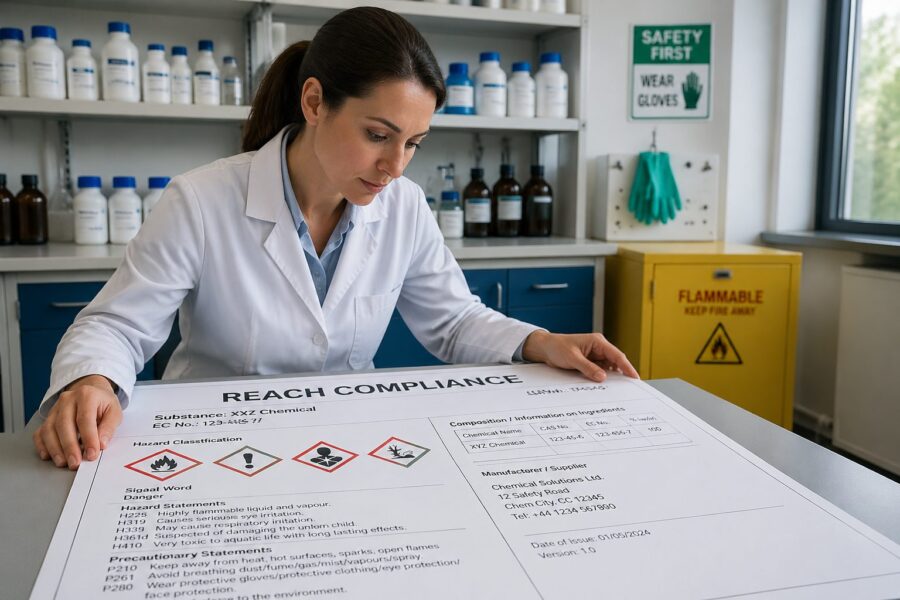
The SDS is the workhorse document for chemical regulations in the EU, and REACH defines when you must provide one and what it must contain. If your SDS is sloppy, your REACH labels tend to be sloppy too, because the label usually borrows core identifiers and hazard communication from the same source.
A lot of label failures start upstream with incomplete SDS inputs from suppliers. If the SDS does not clearly state composition, classification, or risk management measures, your internal teams will fill the gaps with assumptions.
A compliant SDS under REACH follows the 16 section format and uses EU specific content like exposure scenarios when required. When exposure scenarios apply, your downstream users must follow the described conditions of use, or they must prepare their own downstream user chemical safety report.
Exposure scenarios are often treated as “extra pages,” but they are where operational controls are spelled out. If the exposure scenario requires certain PPE, ventilation, or process temperatures, those conditions may need to be reflected in instructions and training, not just filed away.
Downstream user obligations are another area where companies get surprised. If you use a substance in a way not covered by the supplier’s identified uses, you may need to communicate up the chain or document your own assessment.
One common failure is treating the SDS as a static PDF that lives in a shared folder. If your supplier updates a classification, changes a registration status, or adds an SVHC, your SDS and any related REACH labels need a controlled update process.
Controlled updates mean you can answer basic questions like which customers received which SDS version and when. If you cannot show distribution history, you may struggle to prove that you met your communication duties.
Another failure is forgetting language and country requirements for the SDS. If you ship into Germany, France, and Italy, you need SDS versions in the right languages, and your labeling and packaging text should not contradict them.
Language control is not just translation quality, but also version control across languages. If the English SDS is updated and the French one lags behind, you can end up shipping with inconsistent hazard communication depending on destination.
Pay attention to Section 1 and Section 3 details, because they drive identity and composition and therefore drive labeling consistency. Even small differences in product identifiers can create confusion in warehouses and at customer sites.
Also watch Section 2 and Section 15, because classification and regulatory information are where changes tend to show up first. A change in classification can trigger a CLP label change, and a change in regulatory status can trigger REACH-driven messaging or use limitations.
If you repackage or relabel products, you need to make sure your SDS reflects your role and your supply chain. A repacker might not change the chemistry, but they can change the contact details, emergency phone information, and distribution footprint, which affects compliance expectations.
Finally, do not ignore the link between SDS quality and customer confidence. When customers see a clean, consistent SDS, they assume your REACH Compliance Labeling is equally disciplined, and that assumption helps sales as much as it helps compliance.
Ensuring compliance with REACH labeling
Start with substance identity and composition, because you cannot label what you cannot define. I prefer to see CAS numbers, EC numbers, and clear concentration ranges collected at onboarding, not after the first customer questionnaire arrives.
Identity work also includes verifying that trade names map to consistent formulations. If the same product name is used for different regional versions, your labels can quietly diverge until someone notices during an audit.
Next, map each product to its regulatory drivers, since REACH labels often depend on restrictions, SVHC status, and intended use. A cleaning solvent sold to industrial users has different communication needs than the same solvent repackaged for consumers.
This mapping should be documented, not just remembered by one person. When staff changes, undocumented logic is where compliance programs start to decay.
Then audit the label content against the SDS and against CLP where applicable, because mismatches are easy for inspectors to spot. If the SDS lists a hazard classification and the container label lacks the right signal word or pictograms, you have a problem that looks careless.
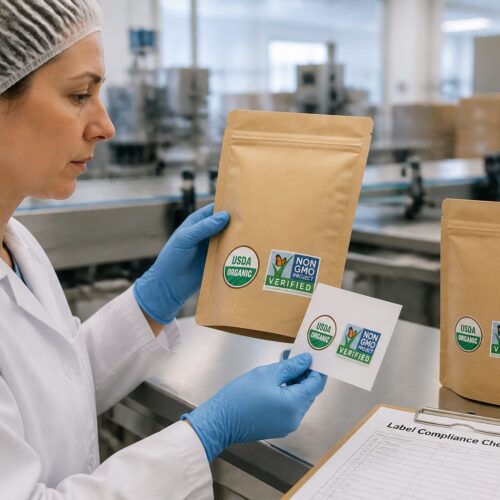
Audits should include physical checks, not just artwork reviews. A label can be correct in the file and wrong on the line if the printer settings, material, or application process are inconsistent.
Include checks for durability and adhesion, because chemical products tend to be stored in harsh conditions. A label that peels off in a cold warehouse or smears when exposed to product residue is a predictable failure.
Also review how labels behave across packaging sizes, because scaling down can destroy legibility. If you cannot fit required elements on a small container, you need a compliant strategy such as fold-out labels where permitted.
Finally, treat packaging changes as compliance changes, not marketing changes. When marketing swaps a bottle size, adds a multilingual panel, or changes a label vendor, you need a check that the REACH Compliance Labeling content stays accurate and legible.
Change control should include a clear approval path and a record of what was reviewed. If you are ever questioned, being able to show a simple trail of decisions is often the difference between a quick closeout and a prolonged investigation.
Training is part of ensuring compliance, because labels are applied by people who may not know the regulatory stakes. A short training that teaches staff what to look for, and what to quarantine, prevents small errors from becoming shipped errors.
It also helps to run periodic “mock shipment” checks where you verify label, SDS availability, and packaging against destination requirements. These drills expose weak points in a controlled way instead of during a real customer escalation.
When you find an issue, treat it as a system defect, not a one-off mistake. Correct the label, but also correct the upstream data, the review checklist, or the supplier requirement that allowed the issue to exist.
Substance tracking and supply chain communication
REACH lives and dies on supply chain communication, and that includes the boring parts like part numbers and revision control. If your ERP shows “adhesive A” but procurement buys three different formulations under that name, your REACH labels drift out of date.
The same risk appears when suppliers change raw materials without changing the trade name. If you do not have contractual requirements for notification, your first hint may be a new SDS classification that no one connects to existing label artwork.
Good systems tie each finished good to a bill of substances, not just a bill of materials. When the Candidate List updates, you can run an impact check and decide whether you need updated REACH labels, customer notifications, or both.
A bill of substances does not need to be perfect on day one, but it must be structured and maintainable. Even a partial list with clear confidence levels is better than a spreadsheet that no one trusts.
Supply chain communication also means understanding your role, because “manufacturer,” “importer,” and “downstream user” are legal roles with different duties. If you import into the EU, you cannot rely on a non-EU supplier to have met EU registration obligations unless you have a proper Only Representative arrangement.
Customer communication should be standardized so that sales does not improvise technical answers. If you have a controlled SVHC declaration process and a controlled SDS distribution process, you reduce the chance of conflicting statements.
Internally, communication between compliance and product teams needs to be scheduled, not ad hoc. A quarterly review of regulatory changes, supplier changes, and product changes catches issues before they become labeling emergencies.
- Collect CAS and EC identifiers at supplier onboarding
- Require updated SDS on a defined schedule and after formulation changes
- Run Candidate List impact checks after each ECHA update
- Document Annex XVII restriction checks by product and use
- Link label artwork versions to SDS revision numbers
- Train warehouse staff to quarantine unlabeled or mismatched stock
Those bullets work best when they are backed by ownership and deadlines. If no one owns the Candidate List check, it will be skipped the first time the team gets busy.
It also helps to define what “complete supplier data” means in your purchasing terms. If you require SDS, composition disclosure to a defined level, and notification of changes, you can enforce the discipline that REACH expects.
For complex products, consider using standardized data exchange formats where possible. Even if you do not implement full digital product passports, structured data reduces manual errors that later show up as label inconsistencies.
Warehouse controls are part of supply chain communication too, because the warehouse is where mismatches are caught or shipped. A simple receiving checklist that compares label identifiers to purchase orders and SDS can prevent expensive returns.
Finally, keep an eye on subcontractors like repackers and third-party logistics providers. If they apply labels or handle relabeling, your compliance program must extend to their processes and training, not just your internal SOPs.
Common labeling mistakes that trigger audits
The fastest way to invite scrutiny is to ship products with inconsistent identifiers across the label, SDS, and invoice. Inspectors and customers notice when the trade name changes, the UFI is missing where required under CLP, or the supplier name does not match the legal entity on the SDS.
Inconsistency also shows up in small details like address formats, phone numbers, and emergency contacts. If the label points to one entity and the SDS points to another, it looks like you do not know who is responsible.
Another frequent mistake is assuming that “industrial use only” language fixes everything. If the product is sold in a way that reaches consumers, or if your distribution chain is messy, that assumption collapses under basic questions.
Even in purely industrial channels, “industrial use only” does not replace proper hazard communication. Regulators and customers expect the label and SDS to stand on their own, not to hide behind a broad limitation statement.
Companies also forget that legibility is compliance, not aesthetics. Tiny fonts, low contrast printing, and labels that smear when exposed to solvents can make an otherwise correct REACH Compliance Labeling program look noncompliant in practice.
Legibility failures often come from cost-driven material choices. If the label stock is not compatible with the container surface or the environment, the best text in the world will not survive shipping and storage.
Another mistake is using outdated hazard classifications after a supplier update. If your SDS has moved to a new classification and your label has not, you have created a visible contradiction that invites follow-up questions.
Teams also confuse “not required” with “not needed,” especially for article communication. Even when a pictogram is not required, customers may still expect SVHC information to be readily available and consistent across channels.
The last mistake is failing to control translations and local requirements. A rushed translation can change meaning, and a wrong precautionary statement can conflict with the SDS, which is the kind of inconsistency that makes regulators dig deeper.
Translation control includes proofreading by someone who understands chemical terminology, not just language. A technically wrong translation can be worse than no translation because it misleads the user.
Another audit trigger is missing documentation for why you made a labeling decision. If you cannot show how you checked Annex XVII restrictions or how you confirmed SVHC status, auditors may assume you did not check at all.
Finally, companies sometimes forget to align e-commerce listings with physical labels. If your online description suggests a restricted use or omits key warnings, it can undermine your compliance position even if the container label is correct.
Resources for REACH compliance
The best public starting point is the European Chemicals Agency (ECHA) website, because it hosts the Candidate List, Annex XIV, and guidance documents. When you build EU compliance procedures, you should link directly to ECHA pages so staff members always land on current information.
ECHA also provides search tools and summaries that help you confirm substance identities and regulatory status. Those tools are not a substitute for expert review, but they are a practical way to avoid relying on outdated supplier claims.
ECHA’s guidance on requirements for substances in articles is especially useful for teams that sell electronics, packaging, tools, or furniture. It helps you decide when customer communication is enough and when you may need to notify ECHA.
Guidance documents are long, but they are often clearer than informal advice passed around internally. If you build your internal checklists around specific ECHA guidance sections, you make your process easier to defend.
For labeling and hazard communication, you also need CLP resources, since many “REACH labels” are really CLP labels informed by REACH data. National helpdesks in EU member states can be surprisingly direct when you ask narrow questions about language, enforcement habits, and local expectations.
It is also useful to monitor official updates and newsletters, because regulatory changes rarely arrive without warning. A simple monthly review habit can prevent last-minute scrambles when a new restriction or Candidate List update lands.
Outside government sources, trade associations and competent consultants can help, but you should demand traceability. If someone tells you a rule, ask for the article number, annex reference, or ECHA guidance section, because chemical regulations do not reward hand waving.
If you use consultants, make sure they understand your product reality, not just the regulation text. The best advice connects legal requirements to packaging constraints, distribution channels, and how your teams actually work.
Finally, invest in internal documentation, because your own records become a resource over time. A well-maintained archive of SDS revisions, label versions, and restriction checks can answer most questions faster than any external search.
Conclusion
REACH Compliance Labeling works when it is tied to substance data, controlled documents, and disciplined change management. When companies treat REACH labels as a last minute print job, the gaps show up quickly in audits and customer questionnaires.
Good compliance is mostly routine work done consistently, not heroic fixes done under pressure. If you build a repeatable process, you reduce both regulatory risk and operational noise.
If you want steady EU compliance, build a loop between supplier inputs, SDS updates, and label artwork control, then test it with real shipments and real warehouse handling. That approach is not glamorous, but it prevents the avoidable mistakes that make chemical regulations expensive.
When the loop is working, you can respond to customer SVHC requests, restriction questions, and audit inquiries with the same controlled set of facts. That consistency is what turns REACH from a recurring fire drill into a manageable business process.