
In the hustle and bustle of warehouse operations, forklift-pedestrian interactions pose a significant risk that often goes unnoticed in the day-to-day activities of many workers. Understanding the dynamics of these interactions is crucial to improving safety protocols and minimizing accidents that could lead to serious injuries or even fatalities among employees.
Many workers may underestimate the dangers associated with moving vehicles in confined spaces, often assuming that they are safe in their designated areas. Increasing awareness of these hazards can lead to safer practices, more conscientious behavior, and ultimately a reduction in workplace injuries that can disrupt operations and impact the workforce.
Effective communication through visual symbols is one of the most effective strategies for enhancing pedestrian safety in environments where forklifts operate. Utilizing internationally recognized standards for hazard identification can significantly improve hazard awareness in shared zones, making it easier for both pedestrians and operators to navigate their surroundings safely.
The Hidden Risk of Forklift-Pedestrian Interactions in Warehouses
Forklift-pedestrian interactions are a critical area of concern in warehouse environments where the flow of goods is constant and often chaotic. The presence of moving vehicles creates a unique set of risks that can lead to severe accidents if not properly managed, underscoring the importance of robust safety protocols and awareness campaigns.
With the increasing demand for efficient logistics and rapid fulfillment, more forklifts are being used in close proximity to workers than ever before. This heightened activity raises the stakes for potential accidents, emphasizing the need for effective safety measures that can mitigate risks and protect employees on the ground.
Many accidents occur simply because pedestrians are unaware of their surroundings or the potential dangers posed by moving equipment. It is essential to foster a culture of safety where both drivers and pedestrians remain vigilant and proactive in recognizing and responding to potential hazards as they arise.
Regular training and awareness programs can help reduce the risks associated with these interactions by educating employees about the specific dangers present in their work environment. By emphasizing the importance of recognizing hazards and practicing safe behaviors, organizations can create a safer working environment that prioritizes employee well-being.
Implementing suitable safety measures, such as clear signage and visual cues, can significantly decrease accident rates in areas where forklifts and pedestrians coexist. For instance, using forklift hazard pictograms and pedestrian safety symbols can enhance awareness and encourage caution among workers navigating shared spaces.
ISO 7010 Symbols Relevant to Forklift and Moving Vehicle Zones
The ISO 7010 standard provides a variety of symbols designed to enhance safety in industrial environments by creating a universal language that transcends language barriers. These symbols serve as visual cues that ensure that everyone, regardless of their native language, understands the potential hazards present in their surroundings.
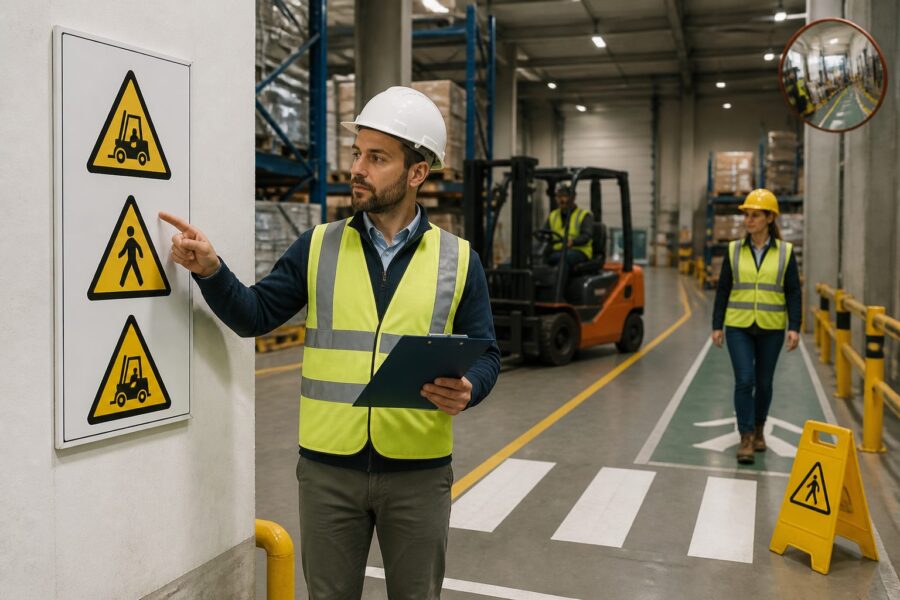
Among the most relevant symbols for forklift and moving vehicle zones are those indicating pedestrian crossings and warning signs that alert workers to the presence of vehicles. These pictograms play a crucial role in alerting workers and helping them to navigate safely through high-traffic areas where forklifts operate.
ISO 7010 symbols are designed with specific characteristics that enhance their visibility and comprehension, making them effective tools for conveying important safety information. Their standardized shapes and colors help ensure that the intended message is conveyed quickly and effectively, reducing the risk of misunderstandings in busy warehouse environments.
Incorporating these symbols into warehouse safety protocols can minimize misunderstandings and heighten awareness among employees regarding their surroundings. Workers trained to recognize these standard symbols are better equipped to navigate potential hazards and respond appropriately to risks they may encounter.
Additionally, the use of ISO 7010 symbols can help organizations comply with safety regulations and standards mandated by governing bodies. Compliance not only protects workers but also enhances overall operational efficiency by reducing the likelihood of accidents that can disrupt workflow and lead to costly downtime.
Designing Custom Forklift Hazard Pictograms Within ISO Guidelines
Custom forklift hazard pictograms can be designed to address specific risks unique to each warehouse environment, allowing organizations to tailor their safety communications. However, it is essential that these designs adhere to ISO guidelines to maintain clarity and consistency, which is critical for ensuring that all employees understand the hazards they may encounter.
When creating custom pictograms, consider factors such as color, size, and shape to optimize their visibility and effectiveness. Following ISO specifications ensures that the symbols are easily recognizable and convey the intended message effectively, facilitating better understanding and response from workers.
| Design Element | ISO Specification | Importance |
|---|---|---|
| Color | Standardized colors (e.g., red for danger) | Enhances visibility |
| Size | Minimum dimensions for legibility | Ensures quick recognition |
| Shape | Consistent shapes (e.g., triangles for warnings) | Facilitates understanding |
| Font | Legible typefaces | Improves clarity |
Involving workers in the design process can also enhance the effectiveness of the pictograms, as their insights can provide valuable feedback on what symbols are most understandable and actionable. By incorporating the perspectives of those who will be using the signs, organizations can create more relevant and impactful safety communications.
Where to Place Forklift Warning Pictograms for Maximum Visibility
Strategic placement of forklift warning pictograms is crucial for maximizing their effectiveness in preventing accidents and ensuring pedestrian safety. Signs should be positioned at eye level and in high-traffic areas to ensure they capture attention and are easily seen by both pedestrians and forklift operators alike.
Consider placing pictograms near entrances to shared zones, as well as at intersections where pedestrian and forklift paths cross to reinforce safety messages in critical areas. This proactive approach helps establish clear expectations and increases awareness of potential hazards, fostering a culture of safety throughout the workplace.
Additionally, ensure that the signs are free from obstructions and well-lit to enhance visibility. Poor visibility can be caused by clutter or inadequate lighting, which diminishes the signs’ impact and may lead to dangerous situations that could have been avoided with proper signage.
Conducting regular audits of sign placement can help identify areas needing improvement and adjustments to signage strategies. Adjusting the locations of warning pictograms based on observations and feedback can enhance overall safety and ensure that the signage remains effective over time.
Effective communication through signage fosters a culture of safety in which all workers feel informed and empowered. Making forklift warning symbols easily accessible encourages workers to remain vigilant in shared zones, reducing the chances of accidents and injuries.
Combining Floor Markings with Wall-Mounted Pictogram Signs
Integrating floor markings with wall-mounted pictogram signs creates a comprehensive safety strategy that addresses visual communication from multiple angles. This combination helps reinforce safety messages in both horizontal and vertical spaces, ensuring that workers can easily identify safe pathways and potential hazards.
Floor markings can delineate pedestrian pathways and forklift routes, while wall-mounted signs provide additional warnings and guidance. Together, these elements create a visual hierarchy that enhances safety awareness and supports workers in making informed decisions as they navigate the warehouse.
- Clearly marked pedestrian paths that guide foot traffic safely
- Designated forklift-only zones to minimize conflicts
- Warning symbols at intersections to alert workers to potential dangers
- Color-coded zones for clarity and easy navigation
- Directional arrows for indicating movement to reduce confusion
Regularly updating floor markings and signs is essential to maintain their effectiveness in promoting safety and awareness. Over time, wear and tear can diminish their visibility, reducing their impact on safety and increasing the risk of accidents if not addressed promptly.
By creating a cohesive visual safety strategy that combines floor markings with wall-mounted signs, organizations can significantly reduce risks associated with forklift operations. This proactive approach fosters a culture of safety where everyone is aware of their surroundings and actively engaged in maintaining a safe working environment.
Pedestrian Crossing Pictograms: Dimensions and Viewing Angles
Pedestrian crossing pictograms must be designed with specific dimensions and viewing angles to ensure maximum visibility and effectiveness. The size of these signs should be large enough to be seen from a distance, allowing for quick recognition and comprehension by pedestrians in motion.
Optimal viewing angles are also crucial; signs should be placed to avoid obstructions from machinery or structural elements that could hinder visibility. Ensuring clear lines of sight can significantly enhance their effectiveness, making it easier for pedestrians to identify hazards and safely navigate shared spaces.
Standard dimensions typically recommend a minimum height of 12 inches for pedestrian crossing signs to ensure that they are easily visible, even in busy environments where multiple activities are occurring. This height helps guarantee that the signs stand out and attract attention from both pedestrians and forklift operators alike.
Furthermore, the angle of the sign should be adjusted based on common lines of sight within the warehouse, taking into account the typical paths workers take as they move throughout the space. This consideration can help enhance recognition for pedestrians approaching from various directions, promoting a safer environment for everyone.
Regular inspections of sign placement can help maintain optimal visibility and ensure that signs are positioned correctly over time. Adjusting the height and angle of the pictograms based on feedback from workers can further improve pedestrian safety and enhance overall awareness of potential hazards.
Multi-Hazard Panels for Zones Where Forklifts and People Both Operate
Multi-hazard panels offer a comprehensive approach to safety in areas where forklifts and pedestrians operate simultaneously, providing a consolidated visual aid that communicates multiple risks. These panels consolidate various warnings into a single visual aid, making it easier for workers to identify multiple hazards and take appropriate precautions to protect themselves and their colleagues.
By using a combination of symbols, including forklift warning symbols and pedestrian hazard pictograms, organizations can effectively communicate the presence of multiple hazards in a clear and concise manner. This approach enhances overall situational awareness and helps workers make informed decisions about their movements in shared spaces.
When designing multi-hazard panels, it is essential to ensure that all symbols are clearly visible and legible, utilizing contrasting colors to help different warnings stand out. This strategic use of color and design can make the panels more effective in capturing attention and conveying critical information quickly.
Regular evaluations of the effectiveness of these panels are essential to maintaining safety standards and ensuring that they communicate hazards effectively. Gathering feedback from workers can provide valuable insights into how well the panels are understood and what adjustments may be needed to enhance their clarity and impact.
Creating a culture of safety through effective visual communication is vital for reducing accidents in the workplace. Multi-hazard panels can significantly contribute to this goal by clearly displaying essential safety information that helps workers navigate shared zones with confidence.
Auditing Pictogram Effectiveness After a Near-Miss Event
Conducting audits of pictogram effectiveness after a near-miss event is crucial for improving safety protocols and minimizing risks in the workplace. These audits help identify any shortcomings in visual communication and provide opportunities for improvement in signage and training programs.
By analyzing the circumstances surrounding a near-miss, organizations can determine if existing pictograms were visible and understood by workers at the time of the incident. This evaluation can help address any gaps in safety measures and inform adjustments that could prevent similar occurrences in the future.
Engaging workers in the audit process can also yield valuable insights, as their firsthand experiences can highlight areas where pictograms may need enhancement or additional clarification. Their feedback can be instrumental in developing more effective safety communications that resonate with employees and promote safer behaviors.
After identifying areas for improvement, organizations can adjust their signage and training programs accordingly to address any identified issues. This proactive approach fosters a culture of continuous safety improvement, encouraging employees to remain vigilant and proactive in their safety practices.
Regularly scheduled audits can help ensure that pictograms remain relevant and effective, adapting to changes in the workplace environment or operational procedures. By maintaining a focus on safety, organizations can significantly reduce the risk of future incidents and create a safer work environment for everyone involved.
Training Workers to Recognize and Respond to Forklift Zone Symbols
Training workers to recognize and respond to forklift zone symbols is a vital component of workplace safety that should not be overlooked. Effective training programs enhance awareness and promote proactive safety behaviors among employees, ensuring they understand the importance of adhering to safety protocols.
Incorporating real-life scenarios and interactive elements into training can help reinforce the importance of recognizing forklift hazard pictograms and pedestrian safety signage. This engagement ensures that workers understand the significance of these symbols in their daily tasks and empowers them to make informed decisions while navigating the warehouse.
Regular refresher courses can also help maintain awareness over time and reinforce key safety messages. Keeping safety topics fresh in employees’ minds encourages them to remain vigilant in shared zones and fosters a culture where safety is prioritized across all levels of the organization.
Additionally, fostering an open dialogue about safety concerns can empower workers to voice their observations and experiences related to workplace safety. This feedback loop can lead to continuous improvements in safety practices as organizations adapt to the needs and insights of their employees.
By investing in thorough training programs focused on recognizing and responding to forklift zone symbols, organizations can create a safer working environment for all. This proactive approach ultimately leads to a reduction in accidents and injuries in the workplace, supporting the well-being of employees and the overall efficiency of operations.