
In today’s demanding industrial workplaces, safety is paramount for both employers and employees alike. One crucial aspect of ensuring worker protection is understanding relevant standards like ISO 11612, which focuses specifically on protective clothing against heat and flame hazards, aiming to establish a baseline for safety gear that can safeguard workers in high-risk environments.
ISO 11612 outlines the requirements for clothing designed to protect against heat and flame hazards, detailing the performance characteristics that garments must meet to be deemed suitable for use in such conditions. By adhering to these standards, employers can significantly enhance worker safety and compliance in hazardous environments, thus fostering a culture of safety and responsibility within the workforce.
This article delves into the details surrounding ISO 11612 protective clothing labels, making it easier for you to grasp their importance and relevance in various industrial sectors. We’ll explore everything from performance ratings to label durability, ensuring you are well-informed and equipped to make the best choices for your safety needs.
What ISO 11612 Covers and Why It Matters for Industrial Workplaces
ISO 11612 specifies the performance requirements for protective garments against heat and flame hazards, establishing a set of criteria that must be met for clothing to be considered effective. This standard is essential for industries where workers are exposed to potential fire risks and thermal hazards, as it provides a framework for evaluating garment safety.
By meeting these rigorous standards, manufacturers ensure that their protective clothing provides adequate thermal protection and flame resistance, which is crucial for minimizing the risk of injuries in high-heat environments. Each garment that complies with ISO 11612 can be relied upon to offer a certain level of safety, thereby enhancing worker confidence and performance in potentially dangerous tasks.
Compliance with ISO 11612 helps organizations fulfill regulatory requirements while enhancing the overall safety culture within their operations. Workers equipped with appropriate protective gear are not only more likely to perform safely and efficiently but also contribute to a proactive approach to workplace safety that can lead to fewer accidents and incidents.
The standard also encourages continuous improvement in garment design and technology, pushing manufacturers to innovate and enhance the performance of protective clothing. This results in the development of innovative materials that offer better protection, comfort, and mobility for the wearer, which are essential features for those working in demanding conditions.
Ultimately, ISO 11612 is a vital component of workplace safety, as it sets the benchmark for protective clothing that can withstand exposure to heat and flames. Understanding this standard empowers both employers and workers to make informed decisions regarding safety gear, ensuring that everyone is equipped with the right tools to safeguard their health and well-being.
Breaking Down the Performance Letters on ISO 11612 Labels
ISO 11612 labels feature performance letters that indicate the garment’s resistance to various hazards, providing a clear and concise way to assess the garment’s protective capabilities. Each letter corresponds to specific tests related to thermal protection, ensuring a comprehensive understanding of what the garment can endure under real-world conditions.
The performance letters may include A, B, C, and D, each representing different heat and flame resistance criteria that garments must meet. Familiarizing yourself with these letters not only helps in selecting the appropriate protective clothing for specific job tasks but also aids in understanding the level of protection afforded by various garments.
For example, the letter ‘A’ signifies resistance to contact heat, meaning that the garment can withstand direct contact with hot surfaces without igniting. Meanwhile, ‘B’ indicates protection against convective heat, which is crucial in environments where workers may be exposed to hot gases or flames.
Understanding these distinctions is crucial for ensuring optimal safety in hazardous environments, as the right garment can mean the difference between serious injury and safe, effective performance. Moreover, the letters can also signify the garment’s resistance to molten metal splashes and flame spread, providing a well-rounded overview of the garment’s capabilities.
This comprehensive labelling system simplifies the selection process for safety managers and workers alike, allowing them to make informed decisions based on their specific needs and risks. Employers are encouraged to invest the time in educating employees about these performance letters, as this knowledge can significantly impact overall workplace safety and reduce the likelihood of accidents.
How Thermal Protection Ratings Are Tested and Verified
Testing for thermal protection ratings involves a series of rigorous assessments to ensure compliance with ISO 11612 standards, which can include various heat sources and exposure conditions. These tests evaluate how well the protective garment can withstand different forms of heat and flame, providing a reliable measure of its performance.
One of the primary tests conducted is the “Heat Transfer Test,” which measures how quickly heat penetrates the garment through controlled conditions. This is crucial for determining the effectiveness of the fabric in protecting the wearer from harmful thermal exposure, as rapid heat transfer can lead to serious injuries.
| Test Type | Measurement Method | Rating Scale |
|---|---|---|
| Heat Transfer Test | Thermal imaging | Class 1 to Class 4 |
| Flame Spread Test | Vertical flame test | Class A to Class D |
| Molten Metal Splash Test | Test with molten aluminum | Class 1 to Class 3 |
| Convective Heat Test | Wind tunnel test | Class 1 to Class 3 |
Each test is meticulously controlled to ensure reliability and accuracy in results, which is vital for establishing trust in the protective clothing being used. Once garments pass these tests, they are awarded a thermal protection rating, signifying their ability to protect against thermal hazards and providing peace of mind to both employers and employees.
Understanding how these ratings are determined helps consumers make informed decisions when selecting flame-resistant clothing marking, allowing them to choose garments that best fit their operational needs. It also underscores the importance of using compliant garments in various industrial settings, as non-compliance can lead to devastating consequences.
Where to Find the ISO 11612 Label on Protective Garments
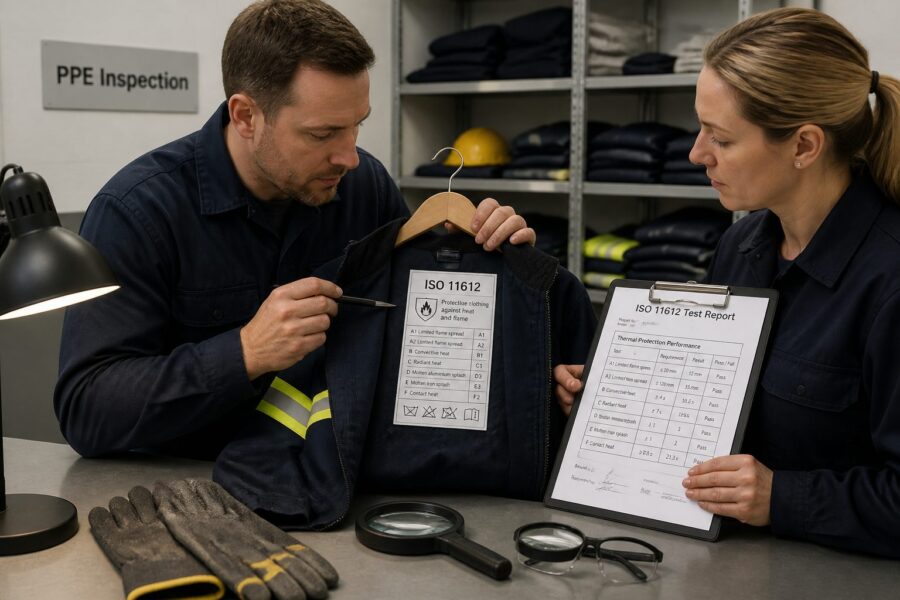
Locating the ISO 11612 label on protective garments is essential for verifying compliance and understanding performance capabilities, providing a quick reference for important safety information. Typically, the label can be found sewn into the inside seam or along the neckline of the garment, ensuring that it is both accessible and prominently displayed for inspection.
It is vital to ensure that the label is easily accessible for inspection and identification, as this can aid in compliance checks and garment evaluations. Workers should be trained to recognize these labels and understand their significance in enhancing safety, creating an informed workforce that prioritizes their well-being.
The label is not only a mark of compliance but also provides crucial information about the garment’s thermal protection rating label, outlining the specific performance letters and care instructions that are essential for maintaining the garment’s protective properties. Additionally, it often includes manufacturer details, which can be important for warranty claims and product recalls.
Regularly checking the visibility and legibility of these labels is important for maintaining safety standards, as a worn label may not provide the necessary information for effective protective gear. If a label becomes worn or illegible, it may no longer serve its purpose of providing critical safety information, potentially putting workers at risk.
Employers should implement a routine inspection process to ensure all garments are compliant and properly labeled, which helps uphold workplace safety and ensures that employees are adequately protected. By fostering a culture of safety and accountability, organizations can enhance their operational effectiveness and employee morale.
Common Pitfalls When Reading Thermal Protection Markings
Reading thermal protection markings on ISO 11612 labels can be confusing if you are not familiar with the terminology and the implications of each marking. One common pitfall is misinterpreting the performance letters, which can lead to inadequate protection and put workers in harm’s way if they choose the wrong gear for their tasks.
Another issue arises when workers overlook the importance of the garment’s entire label, focusing only on one aspect, such as the performance letters, and neglecting other critical information. A comprehensive understanding of all the markings is crucial for ensuring maximum safety in the workplace, as every detail contributes to the overall effectiveness of the protective clothing.
Many users may also fail to recognize the significance of the class ratings associated with each performance letter, which indicate the level of protection offered by the garment. Understanding these classes is essential for selecting garments that meet specific environmental challenges and hazards, ensuring workers are appropriately outfitted for their responsibilities.
Furthermore, some individuals may mistakenly assume that all flame-resistant clothing marking provides the same level of protection, leading to potentially dangerous situations. This misconception can put workers at risk if they rely on inadequate gear that does not meet the specific requirements of their job role or environment.
Lastly, failing to consider the care instructions associated with the label can lead to diminished effectiveness over time, as improper maintenance can degrade the protective qualities of the garment. Proper maintenance is vital for ensuring that protective clothing retains its intended performance capabilities, making it essential for organizations to prioritize education on garment care.
Comparing ISO 11612 to NFPA 2112 and Other Flame Resistance Standards
ISO 11612 is often compared to other flame resistance standards, such as NFPA 2112, as both aim to protect workers from thermal hazards but through different approaches. While both standards share the common goal of enhancing worker safety, their testing methodologies and performance criteria can differ significantly, which is important for industry professionals to understand.
NFPA 2112 focuses primarily on the performance of flame-resistant garments in the oil and gas industry, emphasizing the unique risks associated with that sector. In contrast, ISO 11612 encompasses a broader range of industries with varying thermal hazards, making it applicable to many workplaces beyond just oil and gas.
- ISO 11612: General thermal protection applicable across multiple industries.
- NFPA 2112: Oil and gas specific, addressing unique industry challenges.
- ASTM F1506: Focused on electrical arc protection, catering to electrical workers.
- EN 469: Specifically designed for firefighters’ protective clothing to withstand extreme conditions.
- EN 1149: Targets anti-static clothing to prevent ignition in hazardous environments.
While ISO 11612 provides a comprehensive approach to thermal protection, it’s important to choose the right standard based on specific industry needs and the nature of the hazards faced. Understanding these differences helps employers select the most appropriate protective clothing for their workforce, ensuring that all employees are adequately protected against the risks they may encounter.
Care Instructions and Label Durability for Protective Clothing
Proper care and maintenance of protective clothing are crucial for ensuring its longevity and effectiveness, as neglecting these aspects can significantly diminish the garment’s protective capabilities. Each ISO 11612 label includes specific care instructions that must be followed to maintain the garment’s protective qualities and ensure optimal performance.
Failure to adhere to these instructions can lead to premature wear and tear, ultimately reducing the garment’s thermal protection rating label and rendering it less effective in hazardous situations. Regular inspections should also be conducted to assess the durability of the labels themselves, ensuring that they remain clear and legible over time.
For instance, garments may require specific washing temperatures or detergents to avoid degrading the fabric, which is critical for maintaining their protective attributes. Understanding these requirements helps protect your investment in safety gear and ensures that garments can withstand the rigors of the workplace.
Employers should implement training programs to educate employees on proper garment care and maintenance, reinforcing the importance of following the label’s instructions. This proactive approach ensures that protective clothing remains effective throughout its lifecycle and minimizes the risk of accidents related to garment failure.
Additionally, labeling materials should be durable enough to withstand repeated washing and wear, as this is essential for maintaining legibility and compliance over time. Ensuring label durability is crucial for retaining important safety information that workers need to make informed decisions about their protective gear.
Verifying Supplier Compliance Through Label Inspection
Verifying supplier compliance with ISO 11612 standards is an essential step in ensuring workplace safety and protecting workers from thermal hazards. Regular label inspections provide a straightforward method for checking whether protective garments meet required performance criteria, allowing employers to maintain high safety standards.
Employers should establish a routine inspection process, focusing on label visibility and legibility, as these factors are critical for ensuring compliance. This practice allows for timely identification of non-compliant items within the workforce, preventing potential safety issues before they arise.
During inspections, look for the ISO 11612 protective clothing labels that indicate compliance with established standards, taking note of the specific performance letters and class ratings. Ensure that these markings are clear and readable for effective assessment, as any ambiguity can lead to misinterpretation and increased risk.
It’s also important to verify that the labels haven’t been removed or altered in any way, as changes to the labels can compromise the garment’s integrity and the safety of the wearer. By conducting thorough inspections, companies can uphold their commitment to worker safety and minimize the risk of incidents related to thermal hazards.
A continuous focus on compliance fosters a culture of safety in the workplace, encouraging everyone to prioritize their safety and that of their colleagues. This proactive approach benefits not only the employees but also the organization as a whole, promoting a safer and more productive work environment.
Maintaining Label Legibility Over the Garment Lifecycle
Maintaining label legibility is crucial for ensuring that protective garments continue to provide adequate safety information throughout their use. Over time, labels can fade or become worn due to repeated washing and exposure to harsh environments, making it difficult to determine compliance and garment effectiveness.
Employers should establish guidelines for inspecting label conditions regularly, ensuring that labels remain legible and informative. This proactive approach helps identify any issues before they compromise the garment’s effectiveness, safeguarding workers against potential hazards.
Additionally, proper garment care, as outlined on the ISO 11612 label, plays a significant role in maintaining label durability over time. Following these care instructions can extend the life of both the garment and its labels, preserving crucial safety information.
Training employees to recognize the importance of label legibility is equally important, as it empowers workers to take an active role in their safety. Educating staff ensures they understand the role of labels in their safety gear and encourages them to advocate for their own protection.
Ultimately, a commitment to maintaining label legibility contributes to an overall culture of safety within the workplace, reinforcing the idea that safety is a shared responsibility. By prioritizing this aspect, companies can better protect their workforce against thermal hazards and foster an environment where safety is valued by all.