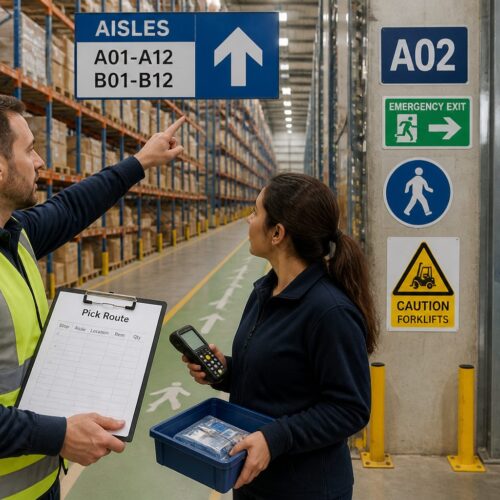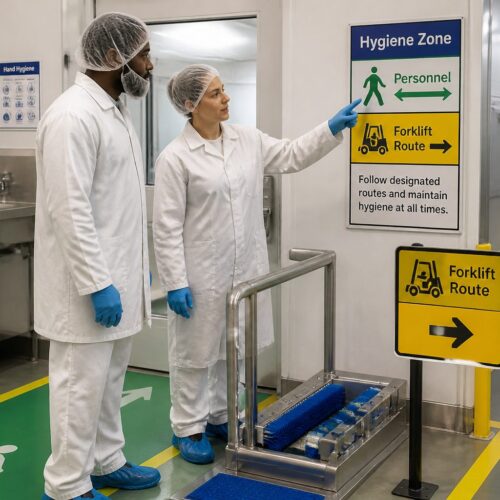

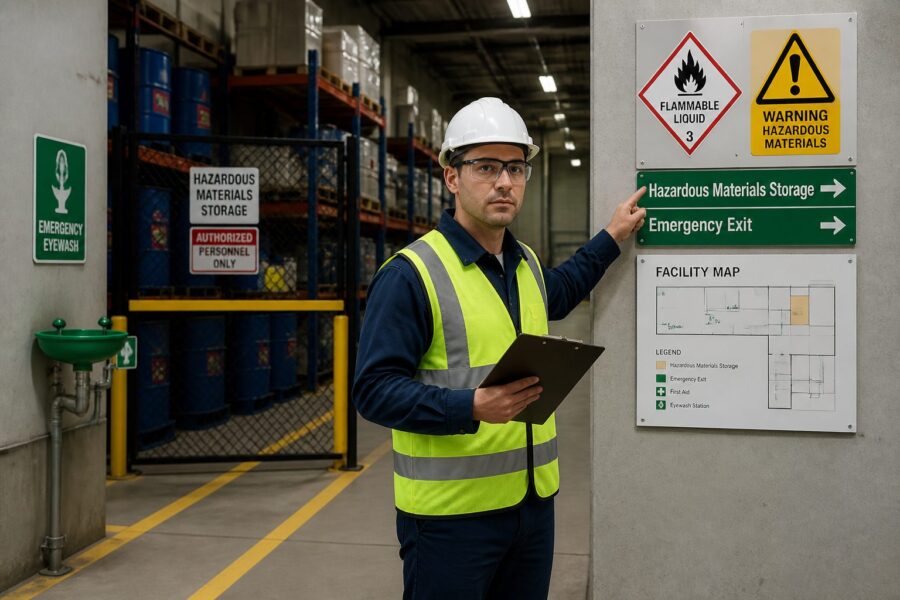
Contrast plays a significant role in legibility; safety colors like red, yellow, and green should stand out clearly against their backgrounds. The size of the symbol and text must correspond to the expected viewing distance, ensuring readability in various operational contexts. We must account for the dynamic nature of a warehouse environment.
Consistency in labeling across an entire facility reinforces the message and builds user familiarity. Using the same style of arrow for exits or the same hazard symbol for a specific chemical throughout a site prevents confusion. This uniformity strengthens the overall safety culture and improves logistics flow.
Beyond static signs, consider incorporating floor markings, overhead banners, and even digital displays for dynamic information. A multi-modal approach ensures that critical wayfinding information reaches personnel through various channels. This layered strategy enhances the robustness of the entire system.
Technology’s Role: Digital Aids and Smart Signage
Modern technology offers exciting advancements in improving wayfinding for hazardous material zones, moving beyond static signs. Digital aids and smart signage provide dynamic, real-time information that enhances traditional methods. These innovations offer unprecedented levels of responsiveness and adaptability.
Digital displays can update hazard information instantly, reflecting changes in material locations, spills, or evacuation routes. This capability is invaluable during an evolving emergency, providing immediate, accurate guidance. Static signs simply cannot match this level of flexibility.
Augmented reality (AR) applications can overlay wayfinding information onto a user’s view through smart glasses or mobile devices. This technology provides contextual guidance, highlighting safe paths, emergency exits, or specific hazard locations. It transforms how personnel interact with their environment.
IoT (Internet of Things) sensors can monitor environmental conditions like gas leaks or temperature fluctuations, triggering automated alerts and updating digital signs. This integration creates a responsive safety ecosystem that actively informs and protects. The system becomes an active participant in hazard mitigation.
GPS and indoor positioning systems (IPS) can provide precise location data, guiding personnel or autonomous vehicles through complex warehouse layouts. This technology is particularly useful for large facilities where traditional signage might be overwhelming or insufficient. It enhances both safety and operational logistics.
While technology offers powerful tools, it should augment, not replace, fundamental safety signs and labeling. A hybrid approach combining robust physical signage with intelligent digital overlays provides the most comprehensive and resilient wayfinding for hazardous material zones. We should leverage technology to enhance, not complicate, safety.
Training and Compliance: Ensuring Everyone Understands the Message
Even the most meticulously designed wayfinding for hazardous material zones fails without proper training and a strong compliance culture. Signs and symbols are only effective if everyone understands their meaning and significance. Training bridges the gap between static information and dynamic human action.
Regular training sessions must educate all personnel on the specific symbology, labeling conventions, and emergency procedures relevant to their facility. This includes understanding ISO standards, GHS pictograms, and site-specific safety protocols. Knowledge empowers individuals to act correctly when it matters most.
- Introduce new hires to all safety signs
- Conduct annual refresher courses on hazmat symbols
- Practice emergency evacuation drills regularly
- Test comprehension of safety labeling
- Provide multilingual training materials
- Review incident reports for wayfinding failures
- Involve all levels of staff in safety discussions
Beyond the Sign: Integrating Wayfinding into Emergency Response Plans
Effective wayfinding for hazardous material zones extends far beyond merely posting signs; it must be deeply integrated into the facility’s overall emergency response plan. The signs are the visual cues, but the plan provides the actionable framework. This holistic approach ensures a seamless transition from identification to action.
Emergency plans should explicitly reference the wayfinding system, detailing how personnel and responders use signs and labels during an incident. This includes procedures for evacuation routes, muster points, and the location of safety equipment. The wayfinding system becomes a living part of the emergency strategy.
Drills and exercises must regularly test the effectiveness of the wayfinding system under simulated emergency conditions. This practice helps identify any ambiguities or shortcomings in signage or personnel understanding. Real-world scenarios expose weaknesses that theoretical planning might miss.
First responders, including fire departments and hazmat teams, should receive briefings on the facility’s specific wayfinding and labeling systems. Providing them with site maps that highlight hazard zones and emergency routes before an incident occurs is invaluable. This proactive sharing of information saves critical time.
The integration also means that wayfinding elements, like emergency exit signs, must remain functional even during power outages. Self-luminous or photoluminescent signs ensure visibility in darkened conditions. We must anticipate worst-case scenarios and design for resilience.
Ultimately, a robust emergency response plan leverages wayfinding for hazardous material zones as a critical communication tool during crises. It transforms static information into dynamic guidance, protecting lives and minimizing damage. This synergy between signs and plans is non-negotiable for true safety.
Challenges and Future Trends in Hazmat Wayfinding
Implementing and maintaining effective wayfinding for hazardous material zones presents ongoing challenges, even with established standards. Dynamic environments, evolving regulations, and the sheer volume of materials handled require constant vigilance and adaptation. We must continuously refine our approach to safety and logistics.
One significant challenge involves keeping signage and labeling updated as materials change, processes evolve, or facility layouts are modified. Outdated information is misleading and potentially dangerous, undermining the entire wayfinding system. A robust change management process is absolutely necessary.
Ensuring consistency across large, multi-site organizations or complex supply chains also poses difficulties. Harmonizing different local regulations with international standards requires careful planning and execution. The goal is uniformity without compromising local compliance requirements.
Future trends point towards greater integration of digital technologies, moving towards “smart” wayfinding systems. Expect more widespread use of IoT sensors, AI-powered analytics, and augmented reality to provide real-time, personalized guidance. These innovations promise to make wayfinding even more responsive and intelligent.
The development of more intuitive and universally understandable symbols will continue, driven by research into cognitive psychology and human factors. Simplicity and clarity will remain paramount, ensuring that information is processed quickly and accurately. We constantly strive for optimal communication efficiency.
Another trend involves greater emphasis on predictive analytics for identifying potential hazard zones before incidents occur. By combining material inventory data with environmental monitoring, wayfinding systems can proactively highlight areas of elevated risk. This proactive stance moves us closer to preventing incidents rather than just responding to them.
The Economic Impact of Robust Wayfinding Systems
While often viewed as a cost, investing in comprehensive wayfinding for hazardous material zones actually yields significant economic benefits. These systems contribute to a safer, more efficient operation, directly impacting a company’s bottom line. We should consider them an investment, not an expense.
Reduced incident rates translate directly into lower costs associated with injuries, property damage, and regulatory fines. Every prevented accident saves substantial resources that would otherwise be spent on investigations, clean-up, and recovery. Safety directly correlates with financial stability.
Improved operational efficiency stems from clearer logistics and reduced confusion within a warehouse or facility. Workers spend less time searching for materials or correct pathways, leading to faster turnaround times and increased productivity. This optimization of movement impacts profitability.
A strong safety record, bolstered by effective wayfinding, enhances a company’s reputation and can reduce insurance premiums. Insurers recognize and reward organizations that proactively manage risks. This positive perception extends to customers and investors, building trust and confidence.
Compliance with international standards and local regulations avoids costly penalties and legal challenges. Proactive adherence to standards for labeling and symbols ensures a smoother relationship with regulatory bodies. Staying compliant is far cheaper than facing enforcement actions.
Finally, a safer workplace leads to higher employee morale and retention, reducing recruitment and training costs. Employees feel valued and protected when their employer prioritizes their safety. This positive work environment fosters loyalty and dedication, making robust wayfinding for hazardous material zones a truly smart business decision.
Implementing a Comprehensive Wayfinding Strategy for Your Facility
Developing a truly effective wayfinding for hazardous material zones requires a systematic and thorough approach, not a piecemeal effort. It involves careful planning, adherence to standards, and ongoing maintenance. We must treat this as a critical infrastructure project for safety.
Start with a detailed audit of your existing facility to identify all hazardous material locations, potential risks, and current signage deficiencies. This initial assessment forms the baseline for your improvement plan. Understanding your current state is the first step towards a safer future.
Consult relevant international standards, such as ISO 7010 and GHS, to ensure all new labeling and symbols meet universal recognition requirements. Consistency across your facility and with global best practices is paramount. Do not reinvent the wheel when proven standards exist.
Design a clear, logical hierarchy for your wayfinding information, prioritizing immediate hazards and emergency routes. Use contrasting colors, appropriate sizing, and strategic placement to maximize visibility and comprehension. Every sign should serve a clear purpose and be easily seen.
Implement a robust maintenance schedule for all signs, labels, and digital wayfinding components. Regularly inspect for damage, fading, or obstructions, and promptly replace or repair any compromised elements. An outdated or damaged sign is a liability, not an asset.
Finally, integrate your wayfinding strategy with comprehensive employee training and emergency response plans. Ensure that all personnel understand the system and participate in regular drills. A well-designed system is only as good as the people who use and maintain it, making consistent education vital for wayfinding for hazardous material zones.
Navigating environments containing hazardous materials demands absolute clarity and precision. Clear communication is not merely a convenience; it dictates the immediate safety of personnel and the broader community. Effective wayfinding for hazardous material zones is the silent guardian, guiding individuals safely through complex or dangerous areas.
This critical function ensures that workers, emergency responders, and even visitors understand where they are, what dangers exist, and how to proceed or evacuate. Without robust and internationally recognized standards for labeling and symbols, chaos and confusion would inevitably lead to tragic incidents. We must focus on creating systems where safety information is instantly digestible and universally understood.
Implementing a comprehensive wayfinding strategy reduces risks significantly in any industrial or warehouse setting. It integrates seamlessly with overall logistics operations, ensuring that the movement of materials and people remains safe and efficient. This article explores the vital components of effective wayfinding for hazardous material zones.
The Criticality of Clear Navigation in Hazmat Environments
Every facility handling dangerous substances faces inherent risks that demand proactive management. Effective wayfinding for hazardous material zones acts as the first line of defense, preventing accidental exposures and ensuring rapid response. This system guides individuals through potentially complex layouts, especially during high-stress situations.
Imagine an emergency where seconds count, and smoke obscures vision; clear, tactile, or illuminated signs become life-saving beacons. Poorly designed or absent signage can lead to misdirection, delaying crucial evacuation or emergency response efforts. We cannot afford ambiguity when lives hang in the balance.
Properly implemented wayfinding systems reduce the likelihood of personnel entering restricted or contaminated areas unknowingly. They provide essential information about the type of hazard present, the necessary personal protective equipment, and the nearest safety exits. This upfront knowledge empowers individuals to make informed decisions quickly.
Beyond immediate safety, robust wayfinding contributes to operational efficiency within a warehouse or industrial complex. It streamlines the movement of goods and personnel, minimizing delays caused by confusion or incorrect routes. Clear logistics pathways are as important as clear safety pathways.
The absence of standardized symbols and labeling creates a significant barrier to effective communication, particularly for diverse workforces. International standards address this challenge by providing universally recognizable visual cues. This consistency removes language barriers and cultural interpretations, ensuring everyone understands the message.
Ultimately, investing in superior wayfinding for hazardous material zones protects human life and safeguards valuable assets. It demonstrates a commitment to safety that resonates throughout an organization and with external stakeholders. Prioritizing clear navigation is a fundamental responsibility for any entity managing hazardous substances.
Understanding the “Why”: The Human Factor in Hazmat Incidents
Human error remains a primary contributor to incidents involving hazardous materials, often stemming from poor information access or interpretation. People naturally seek clarity, especially when facing potential danger or unfamiliar environments. Effective wayfinding for hazardous material zones directly addresses this innate human need for clear guidance.
Fatigue, stress, and lack of familiarity with a facility’s layout can significantly impair decision-making abilities. A well-designed wayfinding system mitigates these factors by providing unambiguous directions and hazard warnings. It acts as a cognitive offload, reducing the mental burden on individuals.
Consider emergency responders arriving at an unfamiliar site; they rely heavily on external cues to quickly assess risks and locate critical areas. Standardized symbols and clear pathways allow them to navigate efficiently, saving precious time during an unfolding crisis. Their ability to act decisively depends on the clarity of the surrounding information.
Even trained personnel can make mistakes if labeling is inconsistent or signs are hidden or damaged. Regular maintenance and clear placement of safety signs are just as important as their initial design. We must ensure that the information remains visible and legible at all times.
The psychological impact of clear wayfinding cannot be overstated; it instills confidence and reduces panic in emergency situations. When people feel they understand their environment and know where to go, they are more likely to respond calmly and effectively. This sense of control is invaluable during an incident.
Ultimately, understanding the human element guides the design of all effective safety systems, including wayfinding for hazardous material zones. We build these systems not just for machines or processes, but for the people who interact with them daily. Prioritizing human understanding leads to truly resilient safety protocols.
International Standards: The Backbone of Effective Hazmat Wayfinding
The adoption of international standards is absolutely essential for creating universally understood safety and logistics symbology. These standards provide a common language for identifying hazards and directing actions, transcending linguistic and cultural barriers. They form the bedrock of reliable wayfinding for hazardous material zones.
Organizations like ISO (International Organization for Standardization) and the UN (United Nations) play pivotal roles in developing these harmonized guidelines. Their work ensures that a hazard symbol seen in one country carries the same meaning in another, which is critical for global supply chains and international emergency response. Consistent labeling protects everyone involved.
| Standard/Regulation | Primary Focus | Relevance to Wayfinding |
|---|---|---|
| ISO 7010 | Graphical symbols — Safety colours and safety signs | Defines universally recognizable safety symbols for emergency exits, fire safety, mandatory actions, and warnings. |
| GHS (Globally Harmonized System) | Classification and labeling of chemicals | Standardizes hazard pictograms, signal words, and hazard statements on chemical containers and Safety Data Sheets (SDS). |
| NFPA 704 | Standard System for the Identification of the Hazards of Materials for Emergency Response | Uses a diamond-shaped placard with color-coded sections indicating health, flammability, instability, and special hazards. |
| DOT (Department of Transportation) Placards | Hazardous materials transportation | Mandates specific placards and labels for vehicles and containers transporting dangerous goods, critical for logistics and roadside safety. |
| ISO 3864 | Graphical symbols — Safety colours and safety signs — Design principles | Establishes principles for the design of safety signs and markings, ensuring visual effectiveness and clarity. |
Designing for Clarity: Principles of Effective Symbology and Placement
Effective wayfinding for hazardous material zones relies heavily on thoughtful design and strategic placement of signs and symbols. The goal is instant recognition and unambiguous interpretation, even under less-than-ideal conditions. Design principles must prioritize visibility, simplicity, and consistency across all elements.
Symbols should be intuitive, using universally recognized shapes and colors as defined by ISO standards. A simple pictogram often communicates more effectively and faster than text, especially in urgent situations or across language barriers. The visual language must be clear and direct, leaving no room for misinterpretation.
Placement is equally critical; signs must be visible from appropriate distances and angles, free from obstructions. Consider the viewing height, ambient lighting, and potential for glare or obstruction from equipment or stored materials. A perfectly designed sign is useless if no one can see it.
Contrast plays a significant role in legibility; safety colors like red, yellow, and green should stand out clearly against their backgrounds. The size of the symbol and text must correspond to the expected viewing distance, ensuring readability in various operational contexts. We must account for the dynamic nature of a warehouse environment.
Consistency in labeling across an entire facility reinforces the message and builds user familiarity. Using the same style of arrow for exits or the same hazard symbol for a specific chemical throughout a site prevents confusion. This uniformity strengthens the overall safety culture and improves logistics flow.
Beyond static signs, consider incorporating floor markings, overhead banners, and even digital displays for dynamic information. A multi-modal approach ensures that critical wayfinding information reaches personnel through various channels. This layered strategy enhances the robustness of the entire system.
Technology’s Role: Digital Aids and Smart Signage
Modern technology offers exciting advancements in improving wayfinding for hazardous material zones, moving beyond static signs. Digital aids and smart signage provide dynamic, real-time information that enhances traditional methods. These innovations offer unprecedented levels of responsiveness and adaptability.
Digital displays can update hazard information instantly, reflecting changes in material locations, spills, or evacuation routes. This capability is invaluable during an evolving emergency, providing immediate, accurate guidance. Static signs simply cannot match this level of flexibility.
Augmented reality (AR) applications can overlay wayfinding information onto a user’s view through smart glasses or mobile devices. This technology provides contextual guidance, highlighting safe paths, emergency exits, or specific hazard locations. It transforms how personnel interact with their environment.
IoT (Internet of Things) sensors can monitor environmental conditions like gas leaks or temperature fluctuations, triggering automated alerts and updating digital signs. This integration creates a responsive safety ecosystem that actively informs and protects. The system becomes an active participant in hazard mitigation.
GPS and indoor positioning systems (IPS) can provide precise location data, guiding personnel or autonomous vehicles through complex warehouse layouts. This technology is particularly useful for large facilities where traditional signage might be overwhelming or insufficient. It enhances both safety and operational logistics.
While technology offers powerful tools, it should augment, not replace, fundamental safety signs and labeling. A hybrid approach combining robust physical signage with intelligent digital overlays provides the most comprehensive and resilient wayfinding for hazardous material zones. We should leverage technology to enhance, not complicate, safety.
Training and Compliance: Ensuring Everyone Understands the Message
Even the most meticulously designed wayfinding for hazardous material zones fails without proper training and a strong compliance culture. Signs and symbols are only effective if everyone understands their meaning and significance. Training bridges the gap between static information and dynamic human action.
Regular training sessions must educate all personnel on the specific symbology, labeling conventions, and emergency procedures relevant to their facility. This includes understanding ISO standards, GHS pictograms, and site-specific safety protocols. Knowledge empowers individuals to act correctly when it matters most.
- Introduce new hires to all safety signs
- Conduct annual refresher courses on hazmat symbols
- Practice emergency evacuation drills regularly
- Test comprehension of safety labeling
- Provide multilingual training materials
- Review incident reports for wayfinding failures
- Involve all levels of staff in safety discussions
Beyond the Sign: Integrating Wayfinding into Emergency Response Plans
Effective wayfinding for hazardous material zones extends far beyond merely posting signs; it must be deeply integrated into the facility’s overall emergency response plan. The signs are the visual cues, but the plan provides the actionable framework. This holistic approach ensures a seamless transition from identification to action.
Emergency plans should explicitly reference the wayfinding system, detailing how personnel and responders use signs and labels during an incident. This includes procedures for evacuation routes, muster points, and the location of safety equipment. The wayfinding system becomes a living part of the emergency strategy.
Drills and exercises must regularly test the effectiveness of the wayfinding system under simulated emergency conditions. This practice helps identify any ambiguities or shortcomings in signage or personnel understanding. Real-world scenarios expose weaknesses that theoretical planning might miss.
First responders, including fire departments and hazmat teams, should receive briefings on the facility’s specific wayfinding and labeling systems. Providing them with site maps that highlight hazard zones and emergency routes before an incident occurs is invaluable. This proactive sharing of information saves critical time.
The integration also means that wayfinding elements, like emergency exit signs, must remain functional even during power outages. Self-luminous or photoluminescent signs ensure visibility in darkened conditions. We must anticipate worst-case scenarios and design for resilience.
Ultimately, a robust emergency response plan leverages wayfinding for hazardous material zones as a critical communication tool during crises. It transforms static information into dynamic guidance, protecting lives and minimizing damage. This synergy between signs and plans is non-negotiable for true safety.
Challenges and Future Trends in Hazmat Wayfinding
Implementing and maintaining effective wayfinding for hazardous material zones presents ongoing challenges, even with established standards. Dynamic environments, evolving regulations, and the sheer volume of materials handled require constant vigilance and adaptation. We must continuously refine our approach to safety and logistics.
One significant challenge involves keeping signage and labeling updated as materials change, processes evolve, or facility layouts are modified. Outdated information is misleading and potentially dangerous, undermining the entire wayfinding system. A robust change management process is absolutely necessary.
Ensuring consistency across large, multi-site organizations or complex supply chains also poses difficulties. Harmonizing different local regulations with international standards requires careful planning and execution. The goal is uniformity without compromising local compliance requirements.
Future trends point towards greater integration of digital technologies, moving towards “smart” wayfinding systems. Expect more widespread use of IoT sensors, AI-powered analytics, and augmented reality to provide real-time, personalized guidance. These innovations promise to make wayfinding even more responsive and intelligent.
The development of more intuitive and universally understandable symbols will continue, driven by research into cognitive psychology and human factors. Simplicity and clarity will remain paramount, ensuring that information is processed quickly and accurately. We constantly strive for optimal communication efficiency.
Another trend involves greater emphasis on predictive analytics for identifying potential hazard zones before incidents occur. By combining material inventory data with environmental monitoring, wayfinding systems can proactively highlight areas of elevated risk. This proactive stance moves us closer to preventing incidents rather than just responding to them.
The Economic Impact of Robust Wayfinding Systems
While often viewed as a cost, investing in comprehensive wayfinding for hazardous material zones actually yields significant economic benefits. These systems contribute to a safer, more efficient operation, directly impacting a company’s bottom line. We should consider them an investment, not an expense.
Reduced incident rates translate directly into lower costs associated with injuries, property damage, and regulatory fines. Every prevented accident saves substantial resources that would otherwise be spent on investigations, clean-up, and recovery. Safety directly correlates with financial stability.
Improved operational efficiency stems from clearer logistics and reduced confusion within a warehouse or facility. Workers spend less time searching for materials or correct pathways, leading to faster turnaround times and increased productivity. This optimization of movement impacts profitability.
A strong safety record, bolstered by effective wayfinding, enhances a company’s reputation and can reduce insurance premiums. Insurers recognize and reward organizations that proactively manage risks. This positive perception extends to customers and investors, building trust and confidence.
Compliance with international standards and local regulations avoids costly penalties and legal challenges. Proactive adherence to standards for labeling and symbols ensures a smoother relationship with regulatory bodies. Staying compliant is far cheaper than facing enforcement actions.
Finally, a safer workplace leads to higher employee morale and retention, reducing recruitment and training costs. Employees feel valued and protected when their employer prioritizes their safety. This positive work environment fosters loyalty and dedication, making robust wayfinding for hazardous material zones a truly smart business decision.
Implementing a Comprehensive Wayfinding Strategy for Your Facility
Developing a truly effective wayfinding for hazardous material zones requires a systematic and thorough approach, not a piecemeal effort. It involves careful planning, adherence to standards, and ongoing maintenance. We must treat this as a critical infrastructure project for safety.
Start with a detailed audit of your existing facility to identify all hazardous material locations, potential risks, and current signage deficiencies. This initial assessment forms the baseline for your improvement plan. Understanding your current state is the first step towards a safer future.
Consult relevant international standards, such as ISO 7010 and GHS, to ensure all new labeling and symbols meet universal recognition requirements. Consistency across your facility and with global best practices is paramount. Do not reinvent the wheel when proven standards exist.
Design a clear, logical hierarchy for your wayfinding information, prioritizing immediate hazards and emergency routes. Use contrasting colors, appropriate sizing, and strategic placement to maximize visibility and comprehension. Every sign should serve a clear purpose and be easily seen.
Implement a robust maintenance schedule for all signs, labels, and digital wayfinding components. Regularly inspect for damage, fading, or obstructions, and promptly replace or repair any compromised elements. An outdated or damaged sign is a liability, not an asset.
Finally, integrate your wayfinding strategy with comprehensive employee training and emergency response plans. Ensure that all personnel understand the system and participate in regular drills. A well-designed system is only as good as the people who use and maintain it, making consistent education vital for wayfinding for hazardous material zones.