

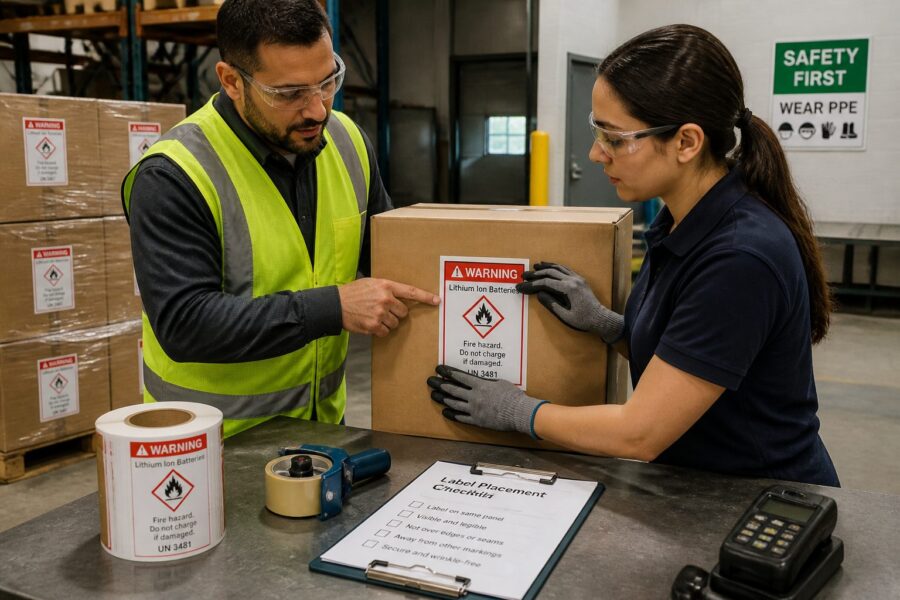
Warning labels are an essential part of product safety. Their effectiveness hinges not only on the clarity of the message but also on appropriate placement. Poorly placed labels can easily be missed, rendering them useless and potentially leading to accidents or injuries. This article provides comprehensive warning label placement guidelines to help manufacturers and distributors ensure their products meet safety standards and protect consumers.
These guidelines cover general principles, specific tips for different product types, and readability considerations. Following these Warning Label Placement Guidelines will help you achieve compliance and, more importantly, contribute to a safer environment for everyone.
By understanding and implementing these best practices for label placement, businesses can minimize risks and demonstrate a commitment to safety. Let’s examine the critical aspects of effective warning label placement and how it impacts safety and compliance.
Why Proper Label Placement is Crucial
Effective warning labels are more than just a regulatory requirement. They are a direct line of communication that informs users about potential hazards associated with a product. When labels are correctly placed, they immediately grab the user’s attention, prompting them to read and understand the safety information.
Conversely, a misplaced label might go unnoticed, negating its purpose. This oversight can lead to misuse of the product, resulting in accidents, injuries, or even fatalities. The consequences of inadequate warning label placement can extend beyond physical harm.
Companies may face legal repercussions, including lawsuits and regulatory fines, due to non-compliance. Beyond the legal and financial aspects, there’s also the matter of brand reputation. A company known for prioritizing safety through clear and visible warning labels builds trust with its customers.
This trust translates into customer loyalty and positive word-of-mouth. On the other hand, a company associated with safety lapses due to poor labeling can suffer significant damage to its image. Therefore, investing in proper label placement is an investment in safety, compliance, and brand integrity.
Consider a scenario where a power tool lacks a clearly visible warning label near the blade. A user, unaware of the kickback hazard, could experience a serious injury. This incident not only causes physical harm but also opens the door to potential legal action against the manufacturer.
Furthermore, negative publicity surrounding the incident could erode consumer confidence in the brand. Proper label placement is a proactive measure to prevent such scenarios. It demonstrates a commitment to user safety and reduces the risk of costly litigation.
Moreover, well-placed labels can enhance user understanding of safe operating procedures. Clear warnings about potential hazards empower users to make informed decisions and take necessary precautions. This ultimately contributes to a safer working environment and reduces the likelihood of accidents.
In the long run, prioritizing proper label placement can save companies significant costs associated with accidents, lawsuits, and reputational damage. It is a small investment that yields substantial returns in terms of safety, compliance, and brand protection. Therefore, it should be a top priority for any organization that manufactures or distributes products.
General Guidelines for Warning Label Placement
Several overarching principles guide effective warning label placement, regardless of the specific product. First and foremost, labels should be placed in a location where they are immediately visible to the user before they begin using the product. This means avoiding hidden areas or spots that are obstructed during normal operation.
Consider the user’s natural interaction with the product. Place the label where their eyes are likely to fall as they prepare to use it. The label should also be permanently affixed to the product.
This ensures that the warning remains present throughout the product’s lifespan. Avoid using temporary adhesives or materials that can easily degrade over time. Durability is also key, particularly for products used in harsh environments.
The label material should withstand exposure to moisture, chemicals, and extreme temperatures. Additionally, the label should be positioned so that it does not interfere with the product’s functionality or create a safety hazard itself. A protruding label, for example, could become a snag point or obstruct moving parts.
Imagine a label placed on the handle of a garden tool. Over time, exposure to sunlight and rain could cause the label to fade or peel off. This renders the warning message useless, potentially leading to misuse of the tool.
Therefore, selecting a durable label material that can withstand these environmental factors is crucial. The adhesive should also be strong enough to maintain a secure bond, even under harsh conditions. Consider using UV-resistant inks and waterproof coatings to further protect the label from degradation.
Furthermore, the placement should not impede the user’s ability to grip or maneuver the tool. A label that is too large or positioned awkwardly could create discomfort or even a safety hazard. The goal is to provide clear and visible warnings without compromising the product’s usability.
In addition to durability and visibility, consider the ergonomics of label placement. Position the label where it can be easily read without requiring the user to strain or contort their body. This enhances user comfort and increases the likelihood that they will actually read and heed the warning message. Always prioritize safety and usability when determining the optimal location for warning labels.
Specific Placement Tips for Different Products
The ideal location for a warning label often depends on the nature and intended use of the product. For power tools, labels should be placed near the power switch and areas where users are likely to come into contact with moving parts. On cleaning products, labels should be prominently displayed on the front of the container, where they are immediately visible when the product is picked up.
For children’s toys, labels should be placed on the product itself and on the packaging. This ensures that both the caregiver and the child are aware of potential hazards. In the case of machinery, labels should be located near access points, control panels, and areas where maintenance is performed.
| Product Type | Recommended Label Location | Specific Considerations |
|---|---|---|
| Power Tools | Near power switch, moving parts | High visibility, durability |
| Cleaning Products | Front of container | Immediate visibility, chemical resistance |
| Children’s Toys | Product and packaging | Child-friendly language, small parts warnings |
| Machinery | Access points, control panels | Clear language, hazard-specific symbols |
| Electronics | Near power input, battery compartment | Electrical shock warnings, battery disposal |
Electronics should have labels near power inputs and battery compartments, clearly indicating electrical shock hazards and proper battery disposal methods. These product-specific examples demonstrate the importance of tailoring label placement strategies to the unique characteristics of each item.
Consider a chainsaw, for instance. A warning label about the risk of kickback should be prominently displayed near the handle and cutting bar. This ensures that the user is constantly reminded of this potential hazard while operating the tool.
Similarly, a ladder should have labels near the rungs indicating the maximum weight capacity and proper climbing techniques. These labels should be positioned where they are easily visible to the user before they begin climbing. For a microwave oven, a warning label about the risk of burns from hot food or liquids should be placed on the door or control panel.
This reminds the user to exercise caution when removing items from the microwave. The specific placement should also take into account the typical user’s height and viewing angle. Always consider the user’s perspective when determining the optimal location for warning labels on different products.
For instance, labels on heavy machinery should be large enough to be read from a distance. Labels on small electronic devices may need to be smaller and more concise. The key is to tailor the label placement and design to the specific product and its intended use.
Visibility and Readability Considerations
A well-placed label is only effective if it is easily readable. The size of the label should be proportionate to the size of the product and the amount of information it contains. Use a font size that is large enough to be easily read by the average person, even in less-than-ideal lighting conditions.
The color of the label and the text should contrast sharply with the background of the product. This contrast enhances visibility and makes the warning message stand out. Use universally recognized safety symbols to convey hazards quickly and effectively.
Symbols can often communicate a message more effectively than words, especially in situations where language barriers may exist. The language used on the label should be clear, concise, and easy to understand. Avoid jargon or technical terms that the average user may not be familiar with.
If the product is sold in multiple countries, consider including warning labels in multiple languages. This ensures that users in different regions can understand the safety information. Regular evaluation of label effectiveness is also crucial.
Imagine a warning label with small, faded text printed on a dark background. This label would be virtually unreadable, especially in low-light conditions. The message, no matter how important, would be lost.
Therefore, choosing a font size that is appropriate for the viewing distance and lighting conditions is essential. Use a sans-serif font for maximum readability. A high-contrast color scheme, such as black text on a yellow background, can further enhance visibility.
Safety symbols, such as the exclamation mark in a triangle, can quickly convey the presence of a hazard. These symbols should be used in conjunction with text to reinforce the warning message. The language used on the label should be simple and direct, avoiding ambiguity or technical jargon.
Consider using plain language principles to ensure that the warning message is easily understood by a wide range of users. Test the label with a representative sample of your target audience to assess its readability and comprehension. This will help you identify any areas for improvement and ensure that your warning labels are as effective as possible.
Avoiding Common Placement Mistakes
Several common mistakes can undermine the effectiveness of warning labels. One frequent error is placing labels on parts of the product that are likely to be removed or discarded. For example, a label on a detachable power cord is less effective than one on the main body of the device.
Another mistake is using labels that are too small or have text that is too difficult to read. Labels that are obscured by other components or packaging are also ineffective. Avoid placing labels on surfaces that are frequently touched or cleaned, as this can cause them to wear out more quickly.
- Placing labels on removable parts
- Using labels that are too small
- Obscuring labels with other components
- Using non-durable label materials
- Failing to update labels with new safety information
It’s also essential to ensure that labels are updated to reflect the latest safety standards and information. Regularly review and revise your warning labels to address any newly identified hazards or changes in regulations. By avoiding these common pitfalls, you can significantly improve the effectiveness of your warning labels.
Imagine a warning label placed on the plastic wrapping of a product. The user will likely discard the wrapping immediately, rendering the warning useless. Similarly, a label hidden behind a safety guard or underneath a removable component will not be seen by the user during normal operation.
Using a label material that is not resistant to chemicals or abrasion can also lead to premature degradation. The warning message will fade or become illegible, negating its purpose. Failing to update labels to reflect new safety information is another common mistake.
As new hazards are identified or regulations change, it’s crucial to update your warning labels accordingly. This ensures that users have access to the most current and accurate safety information. Regularly inspect your products to identify any labels that are missing, damaged, or outdated. Replace these labels promptly to maintain the effectiveness of your warning program.
Consider also the placement in relation to other markings on the product. Avoid overcrowding the area with too much information, which can make it difficult for the user to focus on the warning message. The warning label should be visually distinct and easily recognizable.
How to Ensure Long-Term Label Adhesion
The longevity of a warning label is directly related to its adhesion. To ensure that labels remain securely attached to the product over time, it’s essential to select the right adhesive for the specific material and environment. Different materials require different types of adhesives to achieve optimal bonding.
Consider factors such as surface energy, texture, and potential contaminants when choosing an adhesive. The application process also plays a crucial role. The surface should be clean and free of dust, oil, or other substances that could interfere with adhesion.
Apply the label with firm, even pressure to ensure that the adhesive makes full contact with the surface. For some materials, pre-treating the surface with a primer or adhesion promoter may be necessary. This can improve the bond strength and prevent the label from peeling or lifting.
Regularly inspect labels to identify any signs of wear or degradation. Replace any labels that are damaged or peeling to maintain their effectiveness. Proper storage of labels before application is also essential.
For example, applying a label with an acrylic adhesive to a low-surface-energy plastic, such as polyethylene, may result in poor adhesion. The label may peel off easily, especially when exposed to moisture or temperature changes. In this case, a more aggressive adhesive, such as a rubber-based adhesive, may be required.
The surface texture also plays a role. A rough or porous surface may require an adhesive with a higher coating weight to ensure adequate contact. Contaminants such as oil, grease, or dust can also interfere with adhesion. Thoroughly clean the surface with a suitable solvent before applying the label.
When applying the label, use a roller or squeegee to apply firm, even pressure. This helps to ensure that the adhesive makes full contact with the surface and eliminates any air pockets. Store labels in a cool, dry place away from direct sunlight to prevent the adhesive from drying out or degrading.
Consider the environmental conditions the label will be exposed to. If the product is used outdoors, choose a label material and adhesive that are resistant to UV radiation, moisture, and temperature extremes. Regular inspections can identify labels that are beginning to peel or fade, allowing for timely replacement and ensuring continued effectiveness.
Legal and Regulatory Compliance
Adhering to Warning Label Placement Guidelines is not just a matter of best practice, it’s often a legal requirement. Various international standards and regulations dictate the content, format, and placement of warning labels on different types of products. Compliance with these standards is essential to avoid legal penalties and ensure market access.
ISO 3864, for example, provides guidelines for safety signs and colors. Other regulations, such as those set by the Consumer Product Safety Commission (CPSC) in the United States, specify requirements for labeling hazardous products. Staying informed about the relevant regulations in your industry and target markets is crucial.
Regularly review and update your labeling practices to ensure ongoing compliance. Work with legal experts or consultants to interpret and implement the latest requirements. Document your compliance efforts to demonstrate due diligence in the event of an audit or investigation.
By prioritizing legal and regulatory compliance, you can protect your company from potential liabilities and maintain a reputation for safety and responsibility. This proactive approach not only safeguards your business but also contributes to a safer environment for consumers.
Failing to comply with these regulations can result in significant fines, product recalls, and even criminal charges. For example, the European Union’s REACH regulation requires manufacturers to provide specific information about the chemical substances in their products. Failure to comply can result in hefty fines and restrictions on market access.
Similarly, the CPSC has the authority to recall products that pose an unreasonable risk of injury. This can be a costly and damaging process for companies. Staying up-to-date on the latest regulations is an ongoing process.
Subscribe to industry newsletters, attend conferences, and consult with legal experts to stay informed. Document your compliance efforts meticulously. Maintain records of label designs, testing results, and any corrective actions taken. This documentation can be invaluable in the event of an audit or investigation.
Consider implementing a formal labeling compliance program. This program should outline the steps involved in creating, reviewing, and updating warning labels. It should also assign responsibility for compliance to specific individuals or departments. A well-designed compliance program can help you minimize the risk of non-compliance and ensure that your products meet all applicable safety standards.
The Role of User Feedback in Improving Label Effectiveness
While adhering to established guidelines and regulations is crucial, it’s also important to gather feedback from users to continually improve the effectiveness of your warning labels. User feedback can provide valuable insights into how well labels are understood and whether they are effectively communicating the intended safety message. Conduct surveys or focus groups to gather information about label readability, clarity, and overall effectiveness.
Ask users about their experiences with the product and whether they found the warning labels helpful. Analyze customer complaints or incident reports to identify any recurring issues related to labeling. Use this feedback to refine your label placement strategies and improve the design and content of your labels.
Incorporate user feedback into your regular label review process. This iterative approach ensures that your warning labels remain relevant and effective over time. By actively seeking and responding to user feedback, you can create labels that are not only compliant but also genuinely helpful in promoting safe product use.
This commitment to continuous improvement demonstrates a proactive approach to safety and strengthens your relationship with your customers. It also contributes to a culture of safety within your organization.
For example, if users consistently report that a particular warning label is difficult to understand, consider simplifying the language or using a different symbol. If users indicate that a label is not visible enough, experiment with different placement options or increase the size of the label. Analyze customer complaints and incident reports to identify any recurring issues related to labeling.
If there are a high number of incidents related to a specific hazard, it may indicate that the warning label is not effectively communicating the risk. Consider conducting a formal usability study to assess the effectiveness of your warning labels. This can involve observing users as they interact with the product and asking them questions about their understanding of the warning messages.
Use the insights gained from user feedback to develop a plan for improving your warning labels. This plan should include specific actions to address any identified issues. Track your progress and measure the impact of your changes. This will help you to ensure that your warning labels are continuously improving and effectively promoting safe product use.
Share your findings with other stakeholders, including product designers, engineers, and marketing teams. This will help to foster a culture of safety and continuous improvement throughout your organization. By actively seeking and responding to user feedback, you can create warning labels that are not only compliant but also genuinely helpful in promoting safe product use.
Training and Education for Employees
Proper warning label placement is not solely the responsibility of the design or compliance departments. It requires a coordinated effort across the entire organization. Provide training to employees involved in product design, manufacturing, and packaging to ensure they understand the importance of label placement and the relevant guidelines.
Educate employees about the different types of hazards associated with your products and the appropriate warning messages to use. Conduct regular training sessions to reinforce best practices and address any questions or concerns. Encourage employees to report any potential labeling issues or suggestions for improvement.
Create a culture of safety where employees are empowered to take ownership of the labeling process. This can lead to greater attention to detail and a higher level of compliance. By investing in training and education, you can ensure that your employees are equipped to effectively implement your warning label placement strategies.
This proactive approach not only improves the quality of your labeling but also fosters a stronger commitment to safety throughout your organization. It also helps to prevent errors and reduce the risk of non-compliance.
For example, provide training on the different types of adhesives and label materials and their suitability for various applications. Educate employees about the importance of surface preparation and the proper techniques for applying labels. Conduct regular audits to ensure that employees are following the established procedures.
Encourage employees to report any potential labeling issues or suggestions for improvement. Create a system for tracking and addressing these reports. Recognize and reward employees who demonstrate a commitment to safety and labeling compliance. This will help to foster a culture of safety and continuous improvement throughout your organization.
Involve employees in the development of warning label designs and placement strategies. This can help to ensure that the labels are practical and effective. Provide employees with access to the latest safety standards and regulations. This will help them to stay informed and make informed decisions.
Consider implementing a mentorship program where experienced employees can mentor newer employees on proper labeling practices. This can help to transfer knowledge and skills and ensure that all employees are following the established procedures. By investing in training and education, you can empower your employees to take ownership of the labeling process and contribute to a safer work environment.
Conclusion
Effective Warning Label Placement Guidelines are a cornerstone of product safety and regulatory compliance. By following the principles outlined in this article, manufacturers and distributors can significantly reduce the risk of accidents and injuries associated with their products. Remember that proper label placement involves more than just sticking a label on a product.
It requires careful consideration of visibility, readability, durability, and user interaction. It also demands ongoing attention to legal and regulatory requirements, as well as a commitment to continuous improvement. By prioritizing warning label placement, you demonstrate a commitment to protecting your customers and upholding the highest standards of safety and responsibility.