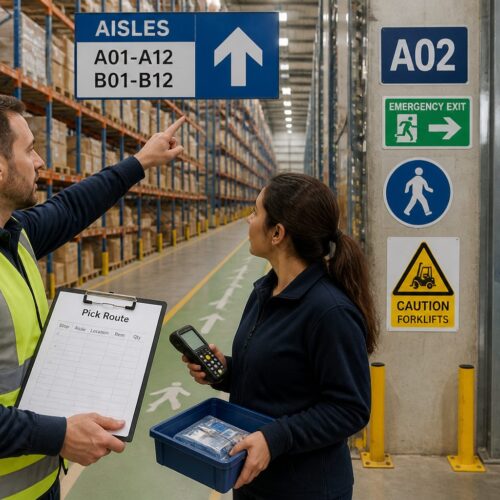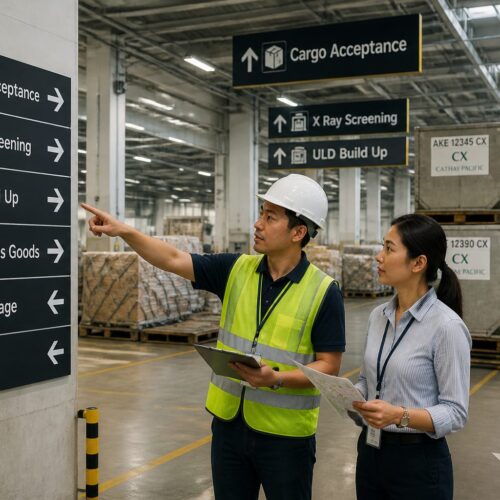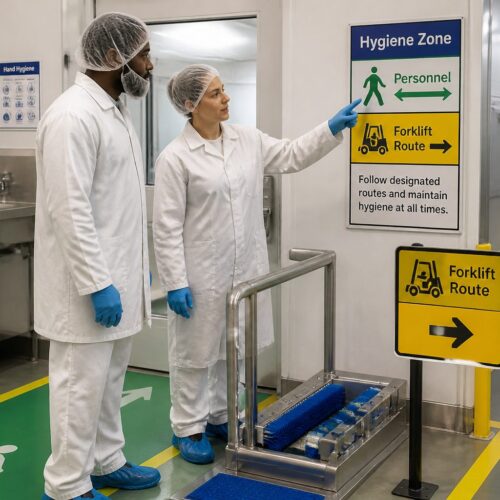

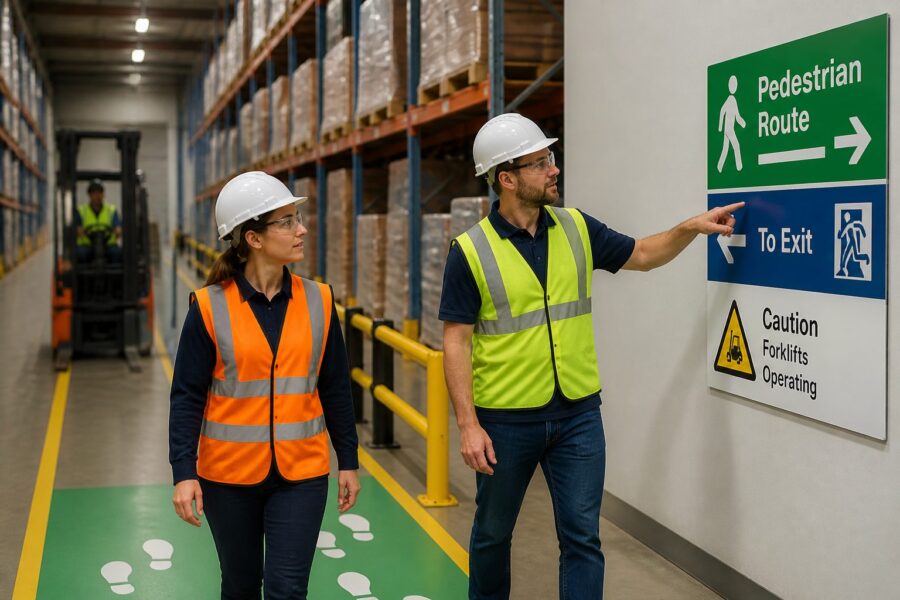
In the bustling world of warehouse operations, efficiency and safety are paramount. The smooth flow of goods and the well-being of workers depend on a carefully orchestrated environment. A key element in achieving this balance is effective pedestrian wayfinding in warehouses.
Clear and intuitive navigation for pedestrians not only reduces the risk of accidents but also improves overall productivity. By implementing robust pedestrian safety signage and designated walkways, warehouses can create a safer and more organized workspace.
This article will explore the critical aspects of pedestrian wayfinding in warehouses, focusing on how to enhance safety through strategic planning and implementation. From identifying high-risk areas to training employees on pedestrian safety protocols, we will cover the essential elements of creating a safer warehouse environment.
Identifying High-Risk Pedestrian Areas
Before implementing any wayfinding system, it is crucial to identify areas within the warehouse where pedestrians are most at risk. These high-risk zones often involve interactions between pedestrians and moving vehicles, such as forklifts and trucks.
Analyzing accident data and near-miss incidents can provide valuable insights into these hazardous locations. Regularly reviewing safety reports helps pinpoint recurring issues and areas needing immediate attention.
Areas with limited visibility, such as blind corners and intersections, also pose significant risks to pedestrians. Insufficient lighting can further exacerbate these dangers, making it harder for both pedestrians and vehicle operators to see each other.
Additionally, zones with high traffic density, where both pedestrian and vehicle movement are frequent, require careful evaluation. Identifying these high-risk areas is the first step in developing effective pedestrian safety measures.
Consider the proximity of pedestrian walkways to loading docks. These areas are often bustling with activity, increasing the likelihood of accidents. Implementing strict protocols and clear signage in these zones is crucial.
Also, pay attention to areas where inventory is stored or moved. Falling objects or collisions with stacked materials can pose significant risks to pedestrians. Proper storage practices and designated pathways are essential for mitigating these hazards.
Evaluate the layout of your warehouse to identify potential bottlenecks or areas where pedestrian and vehicle traffic converge. Re-designing these areas to separate traffic flow can significantly improve safety.
Don’t forget to assess areas near break rooms, restrooms, and other common gathering spots. These areas often see increased pedestrian traffic, requiring careful consideration for safety measures.
Regularly conduct risk assessments involving employees from various departments. Their firsthand experiences can provide valuable insights into potential hazards and areas needing improvement.
Consider using heat maps to visually represent areas with high pedestrian and vehicle traffic. This can help prioritize safety interventions and resource allocation.
Document all identified high-risk areas and the corresponding safety measures implemented. This documentation serves as a valuable reference for training and future improvements.
Remember that identifying high-risk areas is an ongoing process. Continuously monitor and reassess these zones to ensure that safety measures remain effective.
Implementing Clear and Consistent Pedestrian Routes
Once high-risk areas are identified, establishing clear and consistent pedestrian routes is essential. Designated walkways provide a safe and predictable path for pedestrians, minimizing their exposure to vehicular traffic.
These routes should be physically separated from vehicle traffic lanes whenever possible, using barriers, railings, or painted lines. Physical separation offers the best protection, reducing the likelihood of accidental collisions.
When physical separation is not feasible, clearly marked walkways with highly visible paint or tape can delineate pedestrian zones. Consistent use of color-coding can further enhance recognition and adherence to designated routes.
Ensuring that these pedestrian routes are free from obstructions and well-maintained is also crucial. Regularly inspect walkways for any hazards, such as debris or damaged surfaces, and promptly address any issues.
Consider the width of pedestrian walkways to ensure they can accommodate the expected traffic volume. Narrow walkways can lead to congestion and increase the risk of collisions.
Clearly mark pedestrian crossings at intersections with vehicle traffic lanes. Use highly visible paint or signage to alert both pedestrians and vehicle operators to the crossing point.
Install pedestrian gates or barriers at entrances to high-traffic areas. This helps to control pedestrian flow and prevent sudden entry into hazardous zones.
Use directional arrows and signage to guide pedestrians along designated routes. This is especially important in large or complex warehouses where navigation can be challenging.
Ensure that pedestrian routes are well-lit, especially in areas with limited natural light. Adequate lighting improves visibility and reduces the risk of slips, trips, and falls.
Regularly review and update pedestrian routes based on changes in warehouse layout or operations. Adapting to evolving needs ensures that the routes remain effective and safe.
Incorporate feedback from employees when designing or modifying pedestrian routes. Their input can help identify potential issues and ensure that the routes are practical and user-friendly.
Consider using tactile paving or other textured surfaces to alert visually impaired pedestrians to changes in elevation or direction. This can significantly improve accessibility and safety for all employees.
Utilizing Visual Cues to Separate Pedestrians and Vehicles
Visual cues play a significant role in enhancing pedestrian safety in warehouses. Clear markings and signage help to define pedestrian zones and alert both pedestrians and vehicle operators to potential hazards.
These cues can include floor markings, overhead signs, and strategically placed mirrors to improve visibility. Employing a combination of these visual aids creates a comprehensive system for pedestrian awareness.
Choosing Appropriate Signage for Pedestrian Awareness
Selecting the right signage is crucial for effective pedestrian wayfinding in warehouses. Signs should be easily understandable, highly visible, and strategically placed to provide maximum impact.
Use standardized symbols and pictograms to convey messages quickly and universally, regardless of language barriers. Adhering to international standards for safety and logistics symbology ensures consistency and clarity.
Consider the size and placement of signs to ensure they are easily seen from a distance and at various angles. High-contrast colors and reflective materials can further enhance visibility, especially in low-light conditions.
Regularly inspect and maintain signage to ensure it remains clean, legible, and in good condition. Damaged or faded signs can lose their effectiveness and compromise pedestrian safety.
Ensure that signage is multilingual if your workforce includes employees who speak different languages. This ensures that everyone can understand the safety messages being conveyed.
Use a variety of sign types, including warning signs, directional signs, and informational signs. This provides a comprehensive approach to pedestrian communication.
Consider using electronic signs that can display dynamic messages or alerts. This allows for real-time communication of safety information.
Place signs at eye level and in locations where they are not obstructed by equipment or inventory. This ensures that they are easily visible to pedestrians.
Use consistent font styles and colors across all signage to create a unified and recognizable system. This helps pedestrians quickly identify and understand safety messages.
Regularly review and update signage to reflect changes in warehouse layout or operations. This ensures that the signage remains accurate and relevant.
Incorporate feedback from employees when designing or modifying signage. Their input can help identify potential issues and ensure that the signage is effective.
Consider using illuminated signs in areas with low light conditions. This improves visibility and ensures that the signs are easily seen.
| Visual Cue | Description | Benefit |
|---|---|---|
| Floor Markings | Painted lines or tape to define walkways | Clearly separates pedestrian and vehicle zones |
| Overhead Signs | Signs suspended above walkways | Provides clear directions and warnings |
| Safety Mirrors | Mirrors placed at blind corners | Improves visibility and reduces collisions |
| Warning Lights | Flashing lights to indicate hazards | Alerts pedestrians and vehicle operators |
Enforcing Speed Limits and Traffic Regulations
Enforcing speed limits and traffic regulations within the warehouse is critical for pedestrian safety. Clearly posted speed limits for forklifts and other vehicles help to control the flow of traffic and reduce the risk of accidents.
Implement measures to ensure compliance with these regulations, such as regular monitoring and disciplinary actions for violations. Consider using speed governors on vehicles to prevent them from exceeding the designated limits.
Establish clear traffic flow patterns, including designated routes for vehicles and one-way traffic systems where appropriate. This helps to minimize congestion and reduce the potential for collisions between vehicles and pedestrians.
Regularly review and update traffic regulations based on changing warehouse conditions and incident reports. Adapting to evolving needs ensures that the rules remain effective and relevant.
Use speed radar guns to monitor vehicle speeds and identify areas where speeding is a problem. This allows for targeted enforcement efforts.
Implement a point system for traffic violations, with escalating penalties for repeat offenders. This provides a clear and consistent system for addressing violations.
Conduct regular safety audits to identify potential traffic hazards and areas where regulations are not being followed. This helps to proactively address safety concerns.
Use video surveillance to monitor traffic flow and identify violations. This provides a visual record of incidents and can be used for training purposes.
Implement a vehicle inspection program to ensure that all vehicles are in good working order and meet safety standards. This helps to prevent accidents caused by faulty equipment.
Regularly communicate traffic regulations to all employees, including both vehicle operators and pedestrians. This ensures that everyone is aware of the rules and their responsibilities.
Consider using physical barriers, such as speed bumps or rumble strips, to slow down vehicles in high-traffic areas. This provides a physical reminder to reduce speed.
Establish a clear process for reporting traffic violations and safety concerns. This encourages employees to take an active role in promoting safety.
Training Employees on Pedestrian Safety Protocols
Comprehensive training programs are essential for ensuring that all employees are aware of pedestrian safety protocols. Training should cover topics such as designated walkways, proper use of signage, and safe interaction with vehicles.
Regular refresher courses help to reinforce these concepts and keep safety at the forefront of employees’ minds. Emphasize the importance of situational awareness and defensive walking practices.
- Recognizing pedestrian safety signage
- Following designated walkways
- Avoiding distractions while walking
- Maintaining a safe distance from vehicles
- Reporting any safety hazards
Include practical exercises in training programs, such as simulated pedestrian crossings and vehicle operation scenarios. This allows employees to practice safety protocols in a controlled environment.
Use visual aids, such as videos and presentations, to enhance engagement and understanding. This helps to reinforce key safety messages.
Provide training in multiple languages to accommodate employees who speak different languages. This ensures that everyone has access to the necessary safety information.
Incorporate feedback from employees when designing and delivering training programs. Their input can help identify areas where the training can be improved.
Regularly evaluate the effectiveness of training programs through quizzes, surveys, and observations. This helps to ensure that the training is achieving its intended goals.
Provide specialized training for vehicle operators, covering topics such as safe loading and unloading procedures, pedestrian awareness, and hazard recognition. This helps to reduce the risk of accidents involving vehicles.
Emphasize the importance of reporting near-miss incidents, even if no one was injured. This helps to identify potential hazards and prevent future accidents.
Provide training on the proper use of personal protective equipment (PPE), such as high-visibility vests and safety shoes. This helps to protect employees from potential hazards.
Regularly update training programs to reflect changes in warehouse layout, operations, or safety regulations. This ensures that the training remains accurate and relevant.
Consider using gamification techniques to make training more engaging and interactive. This can help to improve employee retention of safety information.
Regularly Evaluating and Improving the Wayfinding System
A pedestrian wayfinding system is not a one-time project; it requires ongoing evaluation and improvement. Regularly assess the effectiveness of the system through audits and feedback from employees.
Analyze accident data and near-miss reports to identify areas where the system may be falling short. Use this information to make necessary adjustments and enhancements.
Consider conducting surveys or focus groups to gather feedback from pedestrians and vehicle operators. Their insights can provide valuable perspectives on the usability and effectiveness of the wayfinding system.
Stay informed about best practices and emerging technologies in pedestrian safety to identify potential improvements. Continuously strive to enhance the system and create a safer warehouse environment.
Establish a regular schedule for conducting safety audits of the wayfinding system. This helps to ensure that it is consistently maintained and updated.
Use a checklist to ensure that all aspects of the wayfinding system are evaluated during audits. This helps to ensure consistency and thoroughness.
Involve employees from various departments in the evaluation process. Their diverse perspectives can provide valuable insights.
Document all findings from evaluations and audits. This provides a record of progress and areas needing improvement.
Develop an action plan to address any identified deficiencies in the wayfinding system. This ensures that improvements are implemented in a timely manner.
Track the progress of improvement efforts and monitor their effectiveness. This helps to ensure that the changes are having the desired impact.
Regularly review and update the wayfinding system based on changes in warehouse layout, operations, or safety regulations. This ensures that it remains accurate and relevant.
Benchmark your wayfinding system against industry best practices to identify areas for improvement. This helps to ensure that you are providing a safe and effective environment for your employees.
Leveraging Technology to Enhance Pedestrian Safety
Technology can play a significant role in enhancing pedestrian safety in warehouses. Proximity detection systems, wearable devices, and smart lighting solutions can provide real-time alerts and improve overall awareness.
Proximity detection systems use sensors to detect when pedestrians and vehicles are in close proximity, providing warnings to both parties. These systems can be integrated into vehicles and wearable devices to create a comprehensive safety net.
Wearable devices, such as smartwatches or badges, can alert pedestrians to nearby vehicle traffic and provide navigation assistance. Smart lighting systems can automatically adjust lighting levels based on pedestrian and vehicle movement, improving visibility and reducing energy consumption.
Implementing these technologies can significantly reduce the risk of accidents and create a more proactive safety environment. However, it’s important to ensure that these systems are properly maintained and integrated into existing safety protocols.
Consider using virtual reality (VR) training simulations to provide employees with realistic safety scenarios. This allows them to practice safety protocols in a safe and controlled environment.
Implement a drone-based inspection program to identify potential safety hazards and monitor traffic flow. This provides a bird’s-eye view of the warehouse and can help to identify areas needing attention.
Use data analytics to identify patterns and trends in accident data. This can help to target safety interventions and prevent future accidents.
Implement a mobile app for reporting safety hazards and near-miss incidents. This makes it easy for employees to report concerns and helps to ensure that they are addressed promptly.
Consider using automated guided vehicles (AGVs) to reduce the need for human-operated vehicles in high-traffic areas. This can significantly reduce the risk of accidents involving pedestrians.
Implement a real-time location system (RTLS) to track the location of pedestrians and vehicles within the warehouse. This can help to improve situational awareness and prevent collisions.
Use predictive analytics to identify potential safety risks based on factors such as weather conditions, time of day, and employee fatigue. This allows for proactive safety interventions.
Consider using augmented reality (AR) to provide pedestrians with real-time safety information and navigation assistance. This can help to improve situational awareness and prevent accidents.
Creating a Culture of Safety
Effective pedestrian wayfinding is not just about implementing physical measures; it’s also about fostering a culture of safety within the warehouse. Encourage open communication and reporting of safety concerns.
Recognize and reward employees who demonstrate a commitment to safety, reinforcing positive behaviors. Lead by example, with management actively promoting and participating in safety initiatives.
Regularly communicate safety messages through toolbox talks, newsletters, and posters to keep safety top of mind. Make safety an integral part of the warehouse’s core values, ensuring that it is prioritized at all levels.
By creating a culture of safety, warehouses can foster a work environment where everyone is committed to protecting themselves and their colleagues. This proactive approach significantly reduces the risk of accidents and promotes a safer, more productive workplace.
Establish a safety committee with representatives from all departments. This provides a forum for discussing safety concerns and developing solutions.
Conduct regular safety meetings to discuss recent incidents, identify potential hazards, and review safety procedures. This helps to keep safety top of mind for all employees.
Implement a “stop work” policy that empowers employees to stop work if they identify a safety hazard. This ensures that safety is prioritized over production.
Provide employees with opportunities to participate in safety training and development programs. This helps to build their knowledge and skills in safety.
Recognize and reward employees who identify and report safety hazards. This encourages proactive safety behavior.
Regularly communicate safety performance metrics to all employees. This helps to track progress and identify areas for improvement.
Lead by example, with management actively participating in safety initiatives and demonstrating a commitment to safety. This sets the tone for the entire organization.
Foster a culture of trust and open communication, where employees feel comfortable reporting safety concerns without fear of reprisal. This is essential for creating a safe and productive work environment.
Conclusion
Implementing effective pedestrian wayfinding in warehouses is essential for enhancing safety and improving operational efficiency. By identifying high-risk areas, establishing clear pedestrian routes, and utilizing visual cues, warehouses can create a safer environment for their employees.
Choosing appropriate signage, enforcing speed limits, and providing comprehensive training further contribute to a robust pedestrian safety program. Regularly evaluating and improving the wayfinding system ensures that it remains effective and adaptable to changing warehouse conditions.