
Navigating multi-story warehouses presents unique challenges that require thoughtful wayfinding solutions to ensure smooth operations. With multiple vertical levels, employees and visitors alike need clear direction and guidance to ensure efficient movement throughout the facility, minimizing frustration and confusion.
Effective warehouse navigation systems are critical for maintaining operational efficiency while prioritizing safety. This blog explores various aspects of vertical warehouse navigation, focusing on signage and other aids that facilitate movement across complex layouts, ensuring a seamless experience for all users.
From stairwell signs to mezzanine level identification, this article will provide in-depth insights into best practices that can be deployed. By implementing these strategies, businesses can significantly enhance their multi-story warehouse wayfinding systems, making them more accessible and intuitive for employees and visitors alike.
Unique Wayfinding Challenges in Facilities With Multiple Vertical Levels
Multi-story warehouses often present distinct wayfinding challenges due to their inherent complexity and scale, which can be quite daunting. Navigating between floors can become overwhelming without proper signage and clear pathways that guide personnel through the intricate layout of the facility.
Employees may struggle to find their way, leading to delays and potential safety hazards as they attempt to locate essential items or navigate to specific departments. Therefore, it is essential to create a coherent navigation system that effectively addresses these challenges, ensuring that all individuals can move freely and confidently throughout the warehouse.
Clearly marked stairwells and lifts are crucial for facilitating safe and efficient movement between the various floors of the warehouse. Effective signage helps prevent confusion and streamlines the flow of both personnel and goods, fostering an environment where operations can proceed smoothly.
Additionally, providing continuous and consistent visual cues enhances the overall efficiency of warehouse operations, allowing employees to quickly orient themselves. This can significantly reduce the time spent searching for items or specific areas within the facility, ultimately improving productivity and satisfaction.
Ultimately, a well-designed wayfinding system not only improves navigation but also promotes safety in multi-story environments, which is of utmost importance in any warehouse setting. Investing in signage solutions is a crucial step toward achieving operational excellence and ensuring a safe working environment for all employees.
Stairwell and Lift Signs: Directing Traffic Between Warehouse Floors
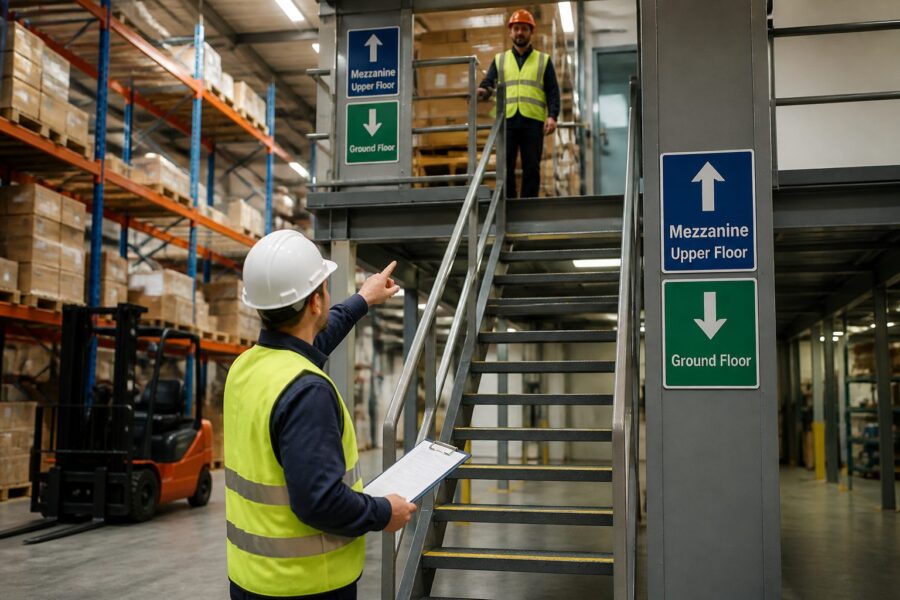
Stairwell and lift signs play a vital role in directing traffic between different levels in a warehouse, serving as essential navigational aids. Without clear signage, employees may find it difficult to locate the nearest stairwell or lift, leading to inefficiencies and potential safety issues.
Strategically placing signs at key locations ensures that personnel can quickly identify their options for vertical movement, which can significantly minimize delays. This thoughtful placement enhances the overall workflow in busy warehouse environments, allowing operations to run more smoothly and efficiently.
Additionally, the use of universally recognizable symbols can further aid in directing traffic effectively, making navigation intuitive for all. This ensures that even those who may not speak the primary language can easily understand where to go, fostering inclusivity within the workplace.
Incorporating color-coding systems for stairwells and lifts can also enhance wayfinding by providing a visual distinction between different levels. Employees can easily remember which colors correspond to specific floors, further improving navigation and reducing the likelihood of errors.
Regular assessments of stairwell and lift sign effectiveness can help identify areas for improvement, ensuring that the system remains relevant and functional as the facility evolves. Continuous enhancements to the signage system can significantly contribute to a more efficient and user-friendly warehouse environment.
Mezzanine Level Identification Signage: Number, Letter or Color Systems
Mezzanine levels are often essential components of multi-story warehouses, requiring clear identification signage to facilitate easy navigation. Effective mezzanine level signs can utilize a combination of numbering, lettering, or color systems to guide users efficiently through the complex layout of the facility.
Numbering systems are straightforward and can be easily understood by all staff, providing a logical approach to identifying levels. This approach allows for quick identification of floors, especially in large facilities where employees may need to move rapidly between levels.
| Sign Type | Description | Benefits |
|---|---|---|
| Numbered Signs | Sequential numbers identifying each level | Easy identification |
| Lettered Signs | Letters assigned to different mezzanine areas | Simple organizational structure |
| Color-Coded Signs | Colors representing different sections | Visual differentiation |
| Directional Signs | Indicate stairs/lifts to each mezzanine | Enhances navigation |
Lettered signs can provide an organized structure, especially when combined with a numbering system to create a dual approach. This method allows for a more detailed identification of areas within the warehouse, making it easier for employees to navigate complex environments.
Color systems can differentiate various levels or sections, making it easy for employees to remember where they need to go. This visual aid is particularly useful in high-traffic areas where quick decision-making is essential for maintaining efficiency.
Overhead Ceiling Signs Visible From Both Ground Level and Upper Floors
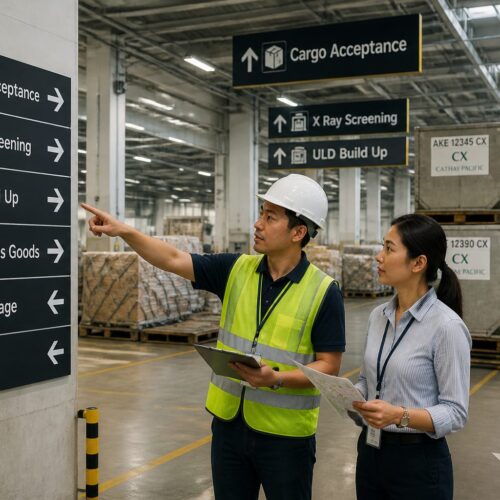
Overhead ceiling signs are excellent tools for enhancing visibility and wayfinding in multi-story warehouses, providing an additional layer of guidance. These signs can be seen from both ground level and upper floors, ensuring continuous guidance for employees navigating the facility.
Placing these signs strategically throughout the facility ensures that individuals can easily track their location and destination, which is especially beneficial in large warehouses with complex layouts. This proactive placement contributes to a more organized and efficient working environment.
These signs should be designed with clear, legible fonts and high-contrast colors for maximum visibility from a distance. This attention to design ensures that employees can navigate quickly and effectively, minimizing potential disruptions to workflow.
Additionally, incorporating symbols and pictograms can enhance understanding, especially for non-native speakers who may struggle with text. This creates an inclusive environment where everyone can feel comfortable navigating the space, regardless of their language proficiency.
Regular maintenance of overhead signs is essential to ensure they remain visible and effective over time. This commitment to upkeep helps avoid any wear and tear that could hinder their functionality, ensuring they continue to serve their purpose effectively.
Zone and Bay Reference Continuity Across Multiple Levels
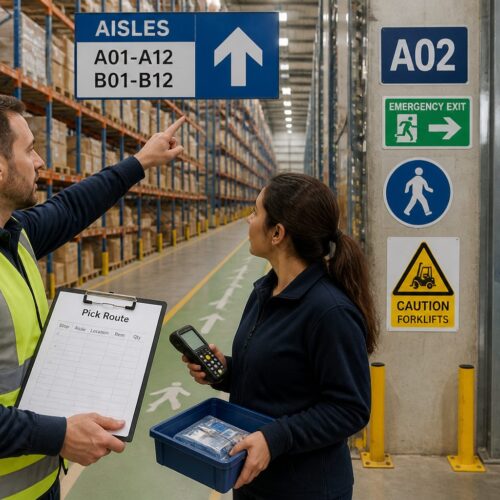
Maintaining continuity in zone and bay references across multiple levels is crucial in multi-story warehouses to streamline navigation. This approach ensures that employees can locate items quickly and efficiently, minimizing time wasted in searching for necessary products or information.
By using consistent labeling across different floors, confusion is minimized, allowing employees to rely on the same reference points regardless of the level they are on. This standardization not only enhances navigation but also contributes to a more structured and organized warehouse environment.
Implementing a systematic approach to zone and bay identification can also enhance safety by reducing the likelihood of accidents. When employees can easily find their way, the risk of injuries or delays decreases significantly, promoting a safer workplace.
Furthermore, clear zone and bay signage should be visible from various angles to ensure accessibility for all employees. This ensures that personnel can locate the necessary areas without difficulty, even in busy environments where visibility may be compromised.
- Consistent labeling helps employees navigate with ease
- Visible from multiple angles enhances accessibility
- Streamlined navigation contributes to efficiency
- Enhanced safety reduces risk of accidents
- Reduced confusion fosters a more organized workspace
Emergency Egress Signs in Multi-Story Warehouse Environments
Emergency egress signs are critical in multi-story warehouse environments to ensure safety during emergencies and facilitate efficient evacuations. These signs guide personnel toward exits quickly and effectively, enabling a swift response in critical situations.
Proper placement of emergency signs is vital to ensure visibility from all areas within the warehouse, which adds to their effectiveness. Clear and unambiguous messaging can save lives in critical situations, making it imperative that these signs are easily recognizable and understood.
Using bright colors and reflective materials enhances the visibility of emergency egress signs, ensuring that they can be seen even in low-light conditions. This attention to detail can make a significant difference during emergencies when every second counts.
Regular drills and training can help familiarize staff with emergency exit routes, reinforcing the importance of knowing how to respond in case of an emergency. This preparedness is essential for ensuring that everyone understands the quickest and safest routes to exit the facility during an urgent situation.
Additionally, signs should comply with local safety regulations to ensure effectiveness and reliability. Regular reviews of signage can help identify necessary updates or changes based on facility modifications, ensuring that safety remains a top priority.
Forklift Ramp and Goods Lift Directional Signs for Multi-Floor Layouts
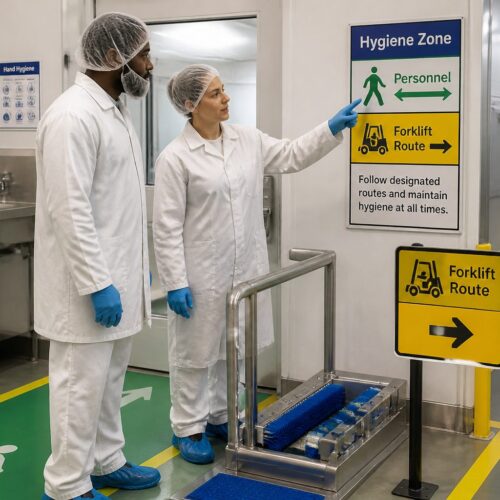
Forklift ramp and goods lift directional signs are essential in multi-floor layouts to ensure safe and efficient operation within the warehouse. These signs guide operators and pedestrians alike, helping to prevent accidents and maintain safety in busy environments where many activities occur simultaneously.
Clearly marked pathways and instructions for the use of forklifts and goods lifts help maintain order and organization among the workforce. This is especially important in multi-story warehouses where many operations and movements are taking place at the same time.
Incorporating visual symbols can enhance understanding for all users, breaking down barriers associated with language differences. This is particularly beneficial in diverse workforces, where language barriers may exist and a visual representation can aid comprehension.
Periodic reviews and updates of signage are necessary to adapt to any changes in layout or operational procedures, ensuring that all staff remain informed about the safest and most efficient routes. This ongoing commitment to clarity and safety is essential for maintaining an effective workflow.
Investing in clear and effective signage for forklift ramps and goods lifts can greatly improve safety and efficiency in the warehouse. This is a crucial aspect of effective wayfinding in multi-story warehouse environments, ultimately contributing to better overall performance.
Integrating Paper Maps and Digital Displays for Complex Multi-Level Sites
Integrating paper maps and digital displays can significantly enhance wayfinding in complex multi-level sites, creating a comprehensive navigation experience. While paper maps provide a tangible reference that can be easily accessed, digital displays offer real-time updates and interactive navigation features that cater to various needs.
Utilizing both formats allows for a comprehensive approach to navigation, catering to various preferences and learning styles among employees and visitors. This dual system can help everyone feel more confident and secure in navigating the facility, enhancing their overall experience.
Digital displays can also highlight important information, such as emergency exits or changes in layout, ensuring that users have access to the most current information while navigating the warehouse. This capability can be particularly valuable in fast-paced environments where operational conditions may change frequently.
Providing QR codes on paper maps can bridge the gap between the two systems, allowing users to scan the codes to access interactive maps or additional information via their mobile devices. This innovative approach combines the benefits of both traditional and modern navigation tools, enhancing accessibility and usability.
Regular updates to both paper maps and digital displays are necessary to ensure accuracy and relevance. This commitment to maintenance helps prevent confusion and enhances overall navigation efficiency, ensuring that all users can navigate the facility with ease.
Maintaining Vertical Wayfinding Systems Through Layout Changes
Maintaining vertical wayfinding systems is essential as layouts change in multi-story warehouses, requiring constant attention and adaptation. Regular assessments ensure that all signage remains appropriate and effective as operations evolve, adapting to the changing needs of the facility.
Updating signs and maps in response to layout changes can help sustain clarity for employees, providing them with the most relevant and useful information. This proactive approach minimizes confusion and maintains operational efficiency, ensuring that workflows are not disrupted.
Engaging employees in the wayfinding update process can provide valuable insights into what works and what doesn’t. This inclusion fosters a sense of ownership and can enhance the effectiveness of the navigation system, as employees feel more invested in their surroundings.
Additionally, conducting training sessions on new layouts and signage can further reinforce understanding among staff members. This helps ensure that everyone is aware of the most efficient routes through the facility and knows how to navigate any changes effectively.
Ultimately, a commitment to maintaining vertical wayfinding systems contributes to a safer and more efficient warehouse environment. Investing in these systems not only pays off in improved productivity and employee satisfaction but also creates a more organized and accessible workplace for all.