

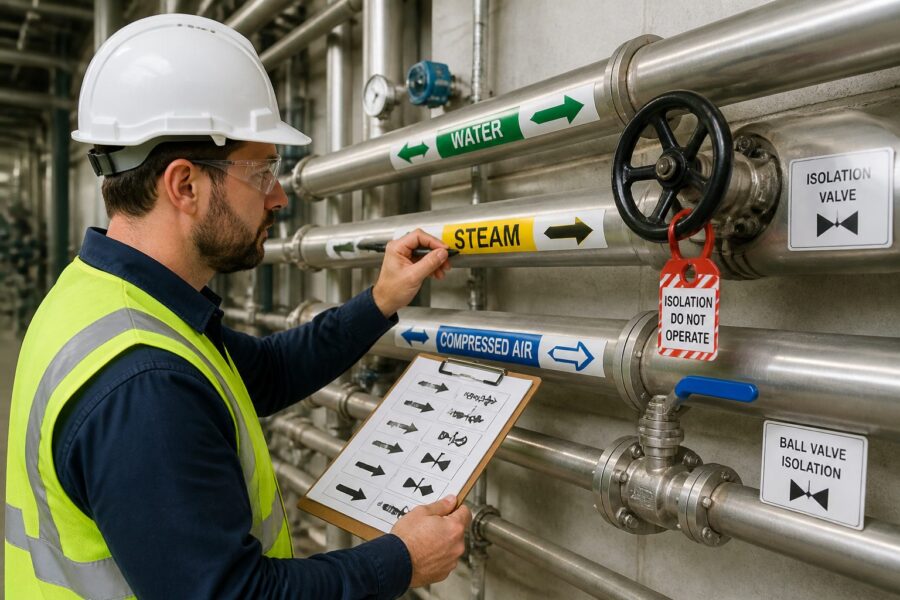
Effective maintenance and emergency response in industrial environments depend significantly on clear communication, which forms the bedrock of a well-functioning safety system. Pipeline pictograms play a pivotal role in conveying vital information about pipe contents, flow direction, and operational status, ensuring that all personnel are adequately informed and prepared for any situation that may arise.
When workers can quickly interpret these symbols, they are better equipped to respond to emergencies and perform maintenance tasks efficiently and effectively. This efficiency not only enhances safety but also minimizes downtime in operations, which can be crucial in maintaining productivity and profitability in industrial environments.
The adoption of standardized pipeline labeling systems is crucial for achieving these goals and ensuring that all employees are on the same page regarding safety protocols. In this article, we will explore the importance of pipeline pictograms and the standards that govern them, providing insights into their critical role in workplace safety.
Why Pipeline Pictograms Are Critical for Maintenance and Emergency Response
Pipeline pictograms are essential visual aids that instantly communicate information about the contents and status of pipelines, acting as a universal language among workers. They help maintenance personnel and emergency responders quickly understand the potential hazards associated with a given pipe, which is paramount for ensuring safety in high-stakes environments.
In emergencies, every second counts, and clear pictograms can guide responders in making informed decisions that can save lives and prevent further damage. By using universally recognized symbols, the likelihood of confusion is significantly reduced, enhancing overall safety and enabling a more rapid response to any incidents that may occur.
Additionally, pictograms serve as a training tool for new employees, allowing them to familiarize themselves with the system quickly and efficiently. This familiarity can prove invaluable during high-pressure situations where split-second decisions can make all the difference in the outcome of an emergency.
Furthermore, proper labeling can help prevent accidents by ensuring that workers are aware of the contents flowing through the pipes at all times. This awareness is critical in environments where toxic or flammable materials are present, as it directly impacts the safety protocols that must be followed by all personnel.
In conclusion, pipeline pictograms are not merely decorative; they are essential components of a comprehensive safety strategy within industrial operations. Their effective use can lead to improved safety outcomes and streamlined operations in various industrial settings, ultimately fostering a culture of safety that benefits everyone involved.
ASME A13.1 and ISO 14726 Pipe Identification Systems Compared
Two prominent standards for pipe identification are ASME A13.1 and ISO 14726, both of which play significant roles in ensuring safety and clarity in pipeline labeling. While both serve the same overarching purpose of identifying pipes, they differ in structure, design, and implementation, which can affect how effectively information is conveyed to workers.
ASME A13.1 primarily focuses on the identification of pipes based on their contents and flow direction, providing clear guidelines that enhance the visibility of critical information. In contrast, ISO 14726 includes provisions for identifying pipes according to their function and type as well, offering a more comprehensive approach to pipeline labeling that can be beneficial in complex systems.
In the ASME system, color-coding plays a crucial role in the identification process, where specific colors are designated for different types of materials. Meanwhile, the ISO system emphasizes the use of symbols alongside colors, which can influence how effectively information is conveyed to workers in various environments and under different conditions.
Another key difference lies in the approach to flow direction; ASME A13.1 provides clearer guidelines for incorporating flow direction symbols, which is particularly beneficial in complex piping systems where flow direction may not be immediately obvious to personnel. This clarity can be invaluable, especially in emergency situations where quick decisions need to be made regarding the flow of potentially hazardous materials.
Ultimately, the choice between ASME A13.1 and ISO 14726 may depend on the specific needs of an organization and the nature of its operations. Understanding the differences between these two standards can help companies make informed decisions about their pipeline labeling systems, which is crucial for safety compliance and operational efficiency.
Flow Direction Arrows: Standard Arrow Styles and Where to Apply Them
Flow direction arrows are critical for understanding how substances move through piping systems, acting as vital indicators for maintenance and emergency scenarios. These symbols must be clearly depicted and appropriately placed to avoid confusion, which can lead to serious accidents or operational inefficiencies.
Standard arrow styles include solid arrows, hollow arrows, and double-headed arrows, each serving a specific purpose in conveying information about flow. For example, solid arrows are used for clear directional movement, while double-headed arrows indicate bidirectional flow, ensuring that workers can quickly assess the nature of the flow in a given pipeline.
| Arrow Style | Meaning | Application |
|---|---|---|
| Solid Arrow | Indicates one-way flow | Single-direction pipelines |
| Hollow Arrow | Indicates potential for reverse flow | Systems with variable flow |
| Double-Headed Arrow | Indicates bidirectional flow | Transport lines with dual flow |
| Curved Arrow | Indicates a change in direction | Elbow joints and bends |
Proper placement of flow direction arrows is essential for their effectiveness and visibility. They should be strategically located near the ends of pipes, at valve locations, and wherever flow direction changes occur to facilitate quick recognition and understanding by all personnel.
By adhering to these guidelines, organizations can enhance the clarity of their pipeline labeling, which directly supports better communication and safety in the workplace. This commitment to clarity can also foster a culture of safety that permeates every level of the organization.
Pipe Content Pictograms: Gas, Steam, Water, Chemical and Compressed Air
Pipe content pictograms provide crucial information about the substances flowing through pipelines, acting as essential indicators for safety protocols. Understanding these symbols helps ensure that all personnel are aware of potential hazards associated with different materials, which is vital for maintaining a safe work environment.
Common pipe content identification symbols include those for gas, steam, water, chemicals, and compressed air, each of which must be standardized to ensure consistency across various facilities. This standardization is crucial for ensuring that all employees, regardless of their specific roles or responsibilities, can quickly and accurately identify the contents of a given pipe.
| Content Type | Symbol | Color Code |
|---|---|---|
| Gas | ⚠️ | Yellow |
| Steam | 🌫️ | Orange |
| Water | 💧 | Blue |
| Chemicals | ⚗️ | Green |
Using the appropriate pipe content pictograms is vital for ensuring safety and operational efficiency in industrial settings. Proper labeling ensures that workers can quickly assess risks and take appropriate actions when needed, which is essential for preventing accidents and ensuring compliance with safety regulations.
By implementing these standardized symbols, companies can create a safer work environment that prioritizes the well-being of employees. This commitment to safety is essential not only for compliance but also for fostering a culture of responsibility and awareness among all personnel.
Color Bands and Background Color Requirements for Pipe Labels
Color bands and background colors are integral to effective pipeline labeling systems, providing immediate visual cues that help workers understand the contents and hazards associated with the pipeline. The strategic use of color can significantly enhance the visibility of important information, making it easier for personnel to quickly assess their surroundings.
According to the pipeline labeling standard, specific colors are designated for different substances, ensuring that all workers can easily identify the nature of the materials they are working with. For example, red typically indicates flammable materials, while blue signifies potable water, and understanding these color codes is crucial for maintaining safety.
- Red for flammable materials
- Blue for potable water
- Green for non-flammable gases
- Yellow for toxic substances
- Orange for corrosive materials
In addition to color selection, the width and placement of color bands can significantly affect visibility and recognition. Wider bands are often more easily seen from a distance, which enhances the ability of workers to quickly identify potential hazards and respond appropriately.
Following these color requirements not only ensures compliance with safety regulations but also promotes a culture of safety within the organization that can lead to improved overall performance. This attention to detail in labeling practices reflects a commitment to employee safety and operational excellence.
Valve Tag Pictograms: Open, Closed, Lockable and Normal Position Icons
Valve tag pictograms are vital for conveying the operational status of valves in a piping system, acting as immediate visual indicators for workers. They provide crucial information regarding whether a valve is open, closed, or in a lockable position, which can significantly impact safety and operational efficiency.
Common valve pictograms include symbols for open, closed, and lockable valves, each designed to ensure that personnel can quickly assess the status of a valve. These indicators help streamline operations and reduce the risk of accidents that could occur due to misunderstandings about valve positions.
Open valves are typically marked with a specific icon that signifies flow, making it easy for workers to identify which valves are actively allowing substances to pass through. Closed valves, on the other hand, have a distinct pictogram that indicates no flow, ensuring clarity in operations and preventing potential mishaps.
Lockable valve icons indicate that the valve can be secured to prevent unauthorized access, a crucial feature in many industrial settings. Normal position icons are used to show the standard operating condition of the valve, providing workers with quick reference points to understand the expected state of the system.
By using standardized valve tag pictograms, companies can enhance safety and operational efficiency, which directly contributes to a more streamlined workflow. This practice helps mitigate the risk of accidents and ensures that proper maintenance procedures are followed consistently across the organization.
Isolation Valve and Shut-Off Point Pictograms for Emergency Systems
Isolation valve pictograms are crucial for emergency response in industrial settings, serving as key indicators that help personnel quickly identify critical control points. These symbols indicate the location of valves that can be used to isolate sections of a piping system during emergencies, which can be essential for preventing accidents and mitigating risks.
Shut-off point pictograms serve a similar purpose, providing clear guidance for quickly shutting down systems when necessary. The presence of these symbols can be life-saving in critical situations, allowing for rapid responses that can prevent extensive damage or injury.
Isolation valve icons are often placed near the actual valves to facilitate quick recognition by personnel, ensuring that they can locate them without delay. Ensuring that these pictograms are prominently displayed enhances their effectiveness, making it easier for workers to act swiftly in emergencies.
Incorporating these symbols into safety protocols reinforces the importance of rapid response in industrial environments, as every second can make a difference in an emergency. Clear identification of isolation valves and shut-off points can significantly reduce the time it takes to take necessary actions during crises.
Ultimately, the use of isolation valve and shut-off point pictograms supports overall safety in industrial environments, acting as a visual reminder of the protocols that must be followed. Their presence ensures that workers are prepared for potential emergencies, fostering a culture of safety and preparedness across the organization.
Sizing Labels for Different Pipe Diameters: ASME Guidelines
Proper sizing of labels for different pipe diameters is crucial for visibility and readability, ensuring that important information is easily accessible to all personnel. The ASME guidelines provide specific recommendations to ensure that labels are appropriately sized, enhancing their effectiveness in communicating vital information.
According to ASME, the height of letters on labels should be proportional to the pipe diameter, which means larger pipes require larger font sizes to maintain clarity from a distance. This proportionality is essential for ensuring that workers can quickly identify and read labels, especially in emergency situations where time is of the essence.
Adhering to these sizing guidelines enhances safety and operational efficiency by making information more accessible to all employees. Workers are more likely to quickly identify and read labels, which is essential in emergencies where clear communication can make a significant difference.
Incorporating the correct label sizes can also assist in compliance with safety regulations, ensuring that organizations meet industry standards for labeling practices. This attention to detail reinforces the importance of a culture of safety within the organization, contributing to a workplace environment that prioritizes employee well-being.
Ultimately, following ASME guidelines for label sizing can have a significant impact on overall safety in industrial settings. Ensuring that labels are visible and readable is a critical aspect of effective pipeline management that supports the safety and efficiency of operations.
High-Temperature and High-Pressure Pipeline Warning Symbols
High-temperature and high-pressure pipeline warning symbols are essential for ensuring safety in industrial environments, acting as vital indicators of potential hazards. These symbols alert workers to the dangers associated with extreme conditions, prompting them to take necessary precautions to avoid accidents and injuries.
Properly labeling pipelines with these warning symbols can help prevent accidents and injuries by ensuring that all personnel are aware of the risks they face. Awareness of high-temperature and high-pressure conditions is crucial for maintaining a safe workplace, as it directly impacts how employees approach their tasks.
High-temperature symbols are often depicted with bright colors to catch attention and warn personnel of the dangers that may be present. Similarly, high-pressure warning symbols must be easily recognizable to ensure that workers remain vigilant and take the appropriate actions to protect themselves and others.
By following industry standards for these warning symbols, organizations can enhance their safety protocols and demonstrate a commitment to risk management. This proactive approach to safety not only protects employees but also fosters a culture of awareness that emphasizes the importance of safety in all operations.
Ultimately, high-temperature and high-pressure pipeline warning symbols are essential components of a comprehensive safety strategy. Their presence in the workplace is a testament to an organization’s dedication to employee safety and operational excellence, ensuring that all personnel are prepared to respond appropriately to potential hazards.