
Another challenge lies in the dynamic nature of scientific and industrial processes, where new cryogenic technologies and materials are constantly emerging. Keeping standards current and ensuring new symbols are developed and adopted in a timely manner is an ongoing effort. The process of proposing, reviewing, and registering new ISO symbols can be lengthy, sometimes lagging behind technological advancements.
Furthermore, regional variations in regulatory frameworks and historical safety practices can sometimes impede the rapid global adoption of new ISO standards. While ISO aims for international consensus, national bodies or industry-specific associations might have existing symbols or preferred formats that differ slightly. Harmonizing these differences requires extensive collaboration and negotiation among stakeholders.
Ensuring compliance across a global supply chain and logistics network also poses difficulties, especially for smaller businesses or those operating in less regulated environments. The cost of updating labeling, training, and equipment to meet new standards can be substantial, creating resistance to change. Education and clear communication about the benefits of standardization are essential to overcome these financial and logistical barriers.
Finally, the inherent complexity of some cryogenic hazards, such as the combined risks of extreme cold, high pressure, and asphyxiation, can make it difficult to represent them succinctly with a single pictogram. Sometimes, a combination of symbols or supplementary text is necessary, which can dilute the instant recognition benefit of a single, clear symbol. Continuous efforts in research and human factors engineering are vital to refine and improve these critical safety communication tools.
Beyond Pictograms: Comprehensive Cryogenic Safety Protocols
While cryogenic hazard pictograms are fundamental, they represent just one component of a comprehensive cryogenic safety protocol. A truly robust safety system integrates these visual warnings with a multitude of other measures, creating layers of protection for personnel and assets. Relying solely on symbols, no matter how clear, leaves critical gaps in overall safety. Effective safety requires a holistic approach.
Personal Protective Equipment (PPE) stands as a critical barrier between workers and cryogenic hazards. This includes insulated gloves, face shields, safety glasses, closed-toe shoes, and long-sleeved clothing designed to protect against extreme cold and splashes. Proper selection, maintenance, and mandatory use of this equipment are non-negotiable for anyone handling or working near cryogenic materials.
Engineering controls play a significant role in mitigating risks at the source, reducing the reliance on individual actions. These controls include adequate ventilation systems to prevent oxygen depletion, pressure relief devices on cryogenic containers, and secure storage facilities designed to minimize spills and unauthorized access. Designing safety into the infrastructure provides a passive layer of protection.
Administrative controls, such as detailed operating procedures, permit-to-work systems, and emergency response plans, guide safe work practices and define actions during incidents. These written protocols ensure that tasks are performed consistently and safely, providing clear instructions for routine operations and unexpected events. Regular drills and reviews of these plans are essential for maintaining preparedness.
Furthermore, continuous monitoring of the environment, particularly for oxygen levels in enclosed spaces, is a vital safety measure. Oxygen depletion monitors with audible and visual alarms provide real-time warnings of unsafe atmospheric conditions, complementing the static warnings of cryogenic hazard pictograms. Integrating all these elements creates a resilient safety framework that actively protects against the unique dangers of cryogenic substances.
Future Directions in Cryogenic Safety Symbology and Digital Integration
The field of cryogenic safety symbology is not static; it continually evolves with technological advancements and a deeper understanding of human factors in safety. Future directions point towards more intelligent, integrated, and responsive safety communication systems that enhance the effectiveness of traditional pictograms. These innovations aim to provide even more dynamic and context-aware hazard information.
One promising area involves the integration of smart labeling technologies, where pictograms could be augmented with digital information accessible via QR codes or NFC tags. Scanning a label could instantly provide access to an updated Safety Data Sheet (SDS), specific handling instructions, or real-time sensor data like container pressure or temperature. This digital layer adds depth to the static visual warning, enhancing safety and logistics in complex environments.
Augmented Reality (AR) applications also hold significant potential for cryogenic safety training and real-time hazard identification. Workers wearing AR glasses could see digital overlays on physical equipment, highlighting specific cryogenic hazard pictograms, displaying live sensor readings, or even guiding them through emergency procedures. This interactive approach could revolutionize how safety information is consumed and acted upon, particularly in a warehouse setting.
Further research into cognitive psychology and human perception will likely lead to even more intuitive and universally recognizable pictogram designs. Optimizing symbols for maximum clarity and minimal ambiguity remains an ongoing goal, especially as global workforces become increasingly diverse. International standards bodies like ISO continue to refine their guidelines based on such research, ensuring symbols are as effective as possible.
Ultimately, the future of cryogenic safety symbology will likely involve a blend of robust, standardized physical pictograms combined with dynamic digital tools that provide richer, context-specific information. This synergistic approach will empower workers with unprecedented levels of safety awareness and operational intelligence. The goal is to move towards predictive safety, where potential hazards are identified and mitigated even before they fully materialize.
Ensuring Compliance and Best Practices in Cryogenic Environments
Ensuring compliance with international standards for cryogenic hazard pictograms and implementing best practices are non-negotiable for any organization handling extreme cold materials. Adherence to standards like ISO 7010 is not just a regulatory requirement; it is a fundamental commitment to the safety and well-being of personnel and the operational integrity of facilities. Proactive compliance minimizes risks and fosters a culture of responsibility.
Regular audits and inspections of safety labeling, equipment, and procedures are essential components of maintaining high safety standards. These assessments help identify any deficiencies in pictogram application, training gaps, or deviations from established safety protocols. Consistent oversight ensures that safety measures remain effective and up-to-date, especially in dynamic warehouse or laboratory settings.
Establishing clear lines of responsibility for safety management, from top-level executives to frontline workers, reinforces accountability across the organization. Every individual must understand their role in maintaining a safe cryogenic environment, including recognizing and respecting all safety symbols. This shared responsibility strengthens the overall safety culture and promotes vigilance.
Furthermore, continuous improvement initiatives, driven by incident analysis and feedback from personnel, are crucial for evolving safety practices. Learning from near misses and actual incidents helps refine existing protocols and develop new ones, ensuring that the safety system adapts to emerging challenges. This iterative process allows organizations to constantly enhance their safety posture, particularly concerning cryogenic hazard pictograms and their application.
Ultimately, a deep commitment to international standards, rigorous training, and a proactive safety culture creates an environment where the extreme dangers of cryogenic materials are effectively managed. By consistently applying and understanding cryogenic hazard pictograms, organizations protect their most valuable assets: their people. This dedication to safety ensures that the benefits of cryogenic technology can be harnessed without undue risk.
While cryogenic hazard pictograms provide immediate visual warnings, their effectiveness hinges on comprehensive training and ongoing awareness programs for all personnel. Simply displaying symbols is insufficient; every individual working with or near cryogenic materials must understand what each pictogram means and how to respond appropriately. Training transforms passive observation into active safety practice.
Effective training covers not only the identification of specific symbols but also the underlying hazards they represent and the required safety protocols. This includes understanding the properties of different cryogenic liquids, the correct use of personal protective equipment, and emergency procedures. A well-informed workforce is the strongest defense against accidents involving extreme cold.
- Identify all common cryogenic hazard pictograms
- Understand the specific risks associated with each symbol
- Properly select and use personal protective equipment (PPE)
- Follow safe handling and storage procedures for cryogens
- Recognize signs of oxygen depletion and cold burns
- Implement emergency response protocols, including first aid
- Locate safety data sheets (SDS) and emergency contacts
Challenges in Standardizing Cryogenic Symbology
Achieving universal standardization for cryogenic hazard pictograms, while crucial, presents several inherent challenges that persist across industries and regions. One significant hurdle involves the sheer diversity of cryogenic applications, from medical research to aerospace, each with slightly different operational contexts and specific hazards. Developing a single set of symbols that adequately addresses all nuances without becoming overly complex requires careful consideration.
Another challenge lies in the dynamic nature of scientific and industrial processes, where new cryogenic technologies and materials are constantly emerging. Keeping standards current and ensuring new symbols are developed and adopted in a timely manner is an ongoing effort. The process of proposing, reviewing, and registering new ISO symbols can be lengthy, sometimes lagging behind technological advancements.
Furthermore, regional variations in regulatory frameworks and historical safety practices can sometimes impede the rapid global adoption of new ISO standards. While ISO aims for international consensus, national bodies or industry-specific associations might have existing symbols or preferred formats that differ slightly. Harmonizing these differences requires extensive collaboration and negotiation among stakeholders.
Ensuring compliance across a global supply chain and logistics network also poses difficulties, especially for smaller businesses or those operating in less regulated environments. The cost of updating labeling, training, and equipment to meet new standards can be substantial, creating resistance to change. Education and clear communication about the benefits of standardization are essential to overcome these financial and logistical barriers.
Finally, the inherent complexity of some cryogenic hazards, such as the combined risks of extreme cold, high pressure, and asphyxiation, can make it difficult to represent them succinctly with a single pictogram. Sometimes, a combination of symbols or supplementary text is necessary, which can dilute the instant recognition benefit of a single, clear symbol. Continuous efforts in research and human factors engineering are vital to refine and improve these critical safety communication tools.
Beyond Pictograms: Comprehensive Cryogenic Safety Protocols
While cryogenic hazard pictograms are fundamental, they represent just one component of a comprehensive cryogenic safety protocol. A truly robust safety system integrates these visual warnings with a multitude of other measures, creating layers of protection for personnel and assets. Relying solely on symbols, no matter how clear, leaves critical gaps in overall safety. Effective safety requires a holistic approach.
Personal Protective Equipment (PPE) stands as a critical barrier between workers and cryogenic hazards. This includes insulated gloves, face shields, safety glasses, closed-toe shoes, and long-sleeved clothing designed to protect against extreme cold and splashes. Proper selection, maintenance, and mandatory use of this equipment are non-negotiable for anyone handling or working near cryogenic materials.
Engineering controls play a significant role in mitigating risks at the source, reducing the reliance on individual actions. These controls include adequate ventilation systems to prevent oxygen depletion, pressure relief devices on cryogenic containers, and secure storage facilities designed to minimize spills and unauthorized access. Designing safety into the infrastructure provides a passive layer of protection.
Administrative controls, such as detailed operating procedures, permit-to-work systems, and emergency response plans, guide safe work practices and define actions during incidents. These written protocols ensure that tasks are performed consistently and safely, providing clear instructions for routine operations and unexpected events. Regular drills and reviews of these plans are essential for maintaining preparedness.
Furthermore, continuous monitoring of the environment, particularly for oxygen levels in enclosed spaces, is a vital safety measure. Oxygen depletion monitors with audible and visual alarms provide real-time warnings of unsafe atmospheric conditions, complementing the static warnings of cryogenic hazard pictograms. Integrating all these elements creates a resilient safety framework that actively protects against the unique dangers of cryogenic substances.
Future Directions in Cryogenic Safety Symbology and Digital Integration
The field of cryogenic safety symbology is not static; it continually evolves with technological advancements and a deeper understanding of human factors in safety. Future directions point towards more intelligent, integrated, and responsive safety communication systems that enhance the effectiveness of traditional pictograms. These innovations aim to provide even more dynamic and context-aware hazard information.
One promising area involves the integration of smart labeling technologies, where pictograms could be augmented with digital information accessible via QR codes or NFC tags. Scanning a label could instantly provide access to an updated Safety Data Sheet (SDS), specific handling instructions, or real-time sensor data like container pressure or temperature. This digital layer adds depth to the static visual warning, enhancing safety and logistics in complex environments.
Augmented Reality (AR) applications also hold significant potential for cryogenic safety training and real-time hazard identification. Workers wearing AR glasses could see digital overlays on physical equipment, highlighting specific cryogenic hazard pictograms, displaying live sensor readings, or even guiding them through emergency procedures. This interactive approach could revolutionize how safety information is consumed and acted upon, particularly in a warehouse setting.
Further research into cognitive psychology and human perception will likely lead to even more intuitive and universally recognizable pictogram designs. Optimizing symbols for maximum clarity and minimal ambiguity remains an ongoing goal, especially as global workforces become increasingly diverse. International standards bodies like ISO continue to refine their guidelines based on such research, ensuring symbols are as effective as possible.
Ultimately, the future of cryogenic safety symbology will likely involve a blend of robust, standardized physical pictograms combined with dynamic digital tools that provide richer, context-specific information. This synergistic approach will empower workers with unprecedented levels of safety awareness and operational intelligence. The goal is to move towards predictive safety, where potential hazards are identified and mitigated even before they fully materialize.
Ensuring Compliance and Best Practices in Cryogenic Environments
Ensuring compliance with international standards for cryogenic hazard pictograms and implementing best practices are non-negotiable for any organization handling extreme cold materials. Adherence to standards like ISO 7010 is not just a regulatory requirement; it is a fundamental commitment to the safety and well-being of personnel and the operational integrity of facilities. Proactive compliance minimizes risks and fosters a culture of responsibility.
Regular audits and inspections of safety labeling, equipment, and procedures are essential components of maintaining high safety standards. These assessments help identify any deficiencies in pictogram application, training gaps, or deviations from established safety protocols. Consistent oversight ensures that safety measures remain effective and up-to-date, especially in dynamic warehouse or laboratory settings.
Establishing clear lines of responsibility for safety management, from top-level executives to frontline workers, reinforces accountability across the organization. Every individual must understand their role in maintaining a safe cryogenic environment, including recognizing and respecting all safety symbols. This shared responsibility strengthens the overall safety culture and promotes vigilance.
Furthermore, continuous improvement initiatives, driven by incident analysis and feedback from personnel, are crucial for evolving safety practices. Learning from near misses and actual incidents helps refine existing protocols and develop new ones, ensuring that the safety system adapts to emerging challenges. This iterative process allows organizations to constantly enhance their safety posture, particularly concerning cryogenic hazard pictograms and their application.
Ultimately, a deep commitment to international standards, rigorous training, and a proactive safety culture creates an environment where the extreme dangers of cryogenic materials are effectively managed. By consistently applying and understanding cryogenic hazard pictograms, organizations protect their most valuable assets: their people. This dedication to safety ensures that the benefits of cryogenic technology can be harnessed without undue risk.
While cryogenic hazard pictograms provide immediate visual warnings, their effectiveness hinges on comprehensive training and ongoing awareness programs for all personnel. Simply displaying symbols is insufficient; every individual working with or near cryogenic materials must understand what each pictogram means and how to respond appropriately. Training transforms passive observation into active safety practice.
Effective training covers not only the identification of specific symbols but also the underlying hazards they represent and the required safety protocols. This includes understanding the properties of different cryogenic liquids, the correct use of personal protective equipment, and emergency procedures. A well-informed workforce is the strongest defense against accidents involving extreme cold.
- Identify all common cryogenic hazard pictograms
- Understand the specific risks associated with each symbol
- Properly select and use personal protective equipment (PPE)
- Follow safe handling and storage procedures for cryogens
- Recognize signs of oxygen depletion and cold burns
- Implement emergency response protocols, including first aid
- Locate safety data sheets (SDS) and emergency contacts
Challenges in Standardizing Cryogenic Symbology
Achieving universal standardization for cryogenic hazard pictograms, while crucial, presents several inherent challenges that persist across industries and regions. One significant hurdle involves the sheer diversity of cryogenic applications, from medical research to aerospace, each with slightly different operational contexts and specific hazards. Developing a single set of symbols that adequately addresses all nuances without becoming overly complex requires careful consideration.
Another challenge lies in the dynamic nature of scientific and industrial processes, where new cryogenic technologies and materials are constantly emerging. Keeping standards current and ensuring new symbols are developed and adopted in a timely manner is an ongoing effort. The process of proposing, reviewing, and registering new ISO symbols can be lengthy, sometimes lagging behind technological advancements.
Furthermore, regional variations in regulatory frameworks and historical safety practices can sometimes impede the rapid global adoption of new ISO standards. While ISO aims for international consensus, national bodies or industry-specific associations might have existing symbols or preferred formats that differ slightly. Harmonizing these differences requires extensive collaboration and negotiation among stakeholders.
Ensuring compliance across a global supply chain and logistics network also poses difficulties, especially for smaller businesses or those operating in less regulated environments. The cost of updating labeling, training, and equipment to meet new standards can be substantial, creating resistance to change. Education and clear communication about the benefits of standardization are essential to overcome these financial and logistical barriers.
Finally, the inherent complexity of some cryogenic hazards, such as the combined risks of extreme cold, high pressure, and asphyxiation, can make it difficult to represent them succinctly with a single pictogram. Sometimes, a combination of symbols or supplementary text is necessary, which can dilute the instant recognition benefit of a single, clear symbol. Continuous efforts in research and human factors engineering are vital to refine and improve these critical safety communication tools.
Beyond Pictograms: Comprehensive Cryogenic Safety Protocols
While cryogenic hazard pictograms are fundamental, they represent just one component of a comprehensive cryogenic safety protocol. A truly robust safety system integrates these visual warnings with a multitude of other measures, creating layers of protection for personnel and assets. Relying solely on symbols, no matter how clear, leaves critical gaps in overall safety. Effective safety requires a holistic approach.
Personal Protective Equipment (PPE) stands as a critical barrier between workers and cryogenic hazards. This includes insulated gloves, face shields, safety glasses, closed-toe shoes, and long-sleeved clothing designed to protect against extreme cold and splashes. Proper selection, maintenance, and mandatory use of this equipment are non-negotiable for anyone handling or working near cryogenic materials.
Engineering controls play a significant role in mitigating risks at the source, reducing the reliance on individual actions. These controls include adequate ventilation systems to prevent oxygen depletion, pressure relief devices on cryogenic containers, and secure storage facilities designed to minimize spills and unauthorized access. Designing safety into the infrastructure provides a passive layer of protection.
Administrative controls, such as detailed operating procedures, permit-to-work systems, and emergency response plans, guide safe work practices and define actions during incidents. These written protocols ensure that tasks are performed consistently and safely, providing clear instructions for routine operations and unexpected events. Regular drills and reviews of these plans are essential for maintaining preparedness.
Furthermore, continuous monitoring of the environment, particularly for oxygen levels in enclosed spaces, is a vital safety measure. Oxygen depletion monitors with audible and visual alarms provide real-time warnings of unsafe atmospheric conditions, complementing the static warnings of cryogenic hazard pictograms. Integrating all these elements creates a resilient safety framework that actively protects against the unique dangers of cryogenic substances.
Future Directions in Cryogenic Safety Symbology and Digital Integration
The field of cryogenic safety symbology is not static; it continually evolves with technological advancements and a deeper understanding of human factors in safety. Future directions point towards more intelligent, integrated, and responsive safety communication systems that enhance the effectiveness of traditional pictograms. These innovations aim to provide even more dynamic and context-aware hazard information.
One promising area involves the integration of smart labeling technologies, where pictograms could be augmented with digital information accessible via QR codes or NFC tags. Scanning a label could instantly provide access to an updated Safety Data Sheet (SDS), specific handling instructions, or real-time sensor data like container pressure or temperature. This digital layer adds depth to the static visual warning, enhancing safety and logistics in complex environments.
Augmented Reality (AR) applications also hold significant potential for cryogenic safety training and real-time hazard identification. Workers wearing AR glasses could see digital overlays on physical equipment, highlighting specific cryogenic hazard pictograms, displaying live sensor readings, or even guiding them through emergency procedures. This interactive approach could revolutionize how safety information is consumed and acted upon, particularly in a warehouse setting.
Further research into cognitive psychology and human perception will likely lead to even more intuitive and universally recognizable pictogram designs. Optimizing symbols for maximum clarity and minimal ambiguity remains an ongoing goal, especially as global workforces become increasingly diverse. International standards bodies like ISO continue to refine their guidelines based on such research, ensuring symbols are as effective as possible.
Ultimately, the future of cryogenic safety symbology will likely involve a blend of robust, standardized physical pictograms combined with dynamic digital tools that provide richer, context-specific information. This synergistic approach will empower workers with unprecedented levels of safety awareness and operational intelligence. The goal is to move towards predictive safety, where potential hazards are identified and mitigated even before they fully materialize.
Ensuring Compliance and Best Practices in Cryogenic Environments
Ensuring compliance with international standards for cryogenic hazard pictograms and implementing best practices are non-negotiable for any organization handling extreme cold materials. Adherence to standards like ISO 7010 is not just a regulatory requirement; it is a fundamental commitment to the safety and well-being of personnel and the operational integrity of facilities. Proactive compliance minimizes risks and fosters a culture of responsibility.
Regular audits and inspections of safety labeling, equipment, and procedures are essential components of maintaining high safety standards. These assessments help identify any deficiencies in pictogram application, training gaps, or deviations from established safety protocols. Consistent oversight ensures that safety measures remain effective and up-to-date, especially in dynamic warehouse or laboratory settings.
Establishing clear lines of responsibility for safety management, from top-level executives to frontline workers, reinforces accountability across the organization. Every individual must understand their role in maintaining a safe cryogenic environment, including recognizing and respecting all safety symbols. This shared responsibility strengthens the overall safety culture and promotes vigilance.
Furthermore, continuous improvement initiatives, driven by incident analysis and feedback from personnel, are crucial for evolving safety practices. Learning from near misses and actual incidents helps refine existing protocols and develop new ones, ensuring that the safety system adapts to emerging challenges. This iterative process allows organizations to constantly enhance their safety posture, particularly concerning cryogenic hazard pictograms and their application.
Ultimately, a deep commitment to international standards, rigorous training, and a proactive safety culture creates an environment where the extreme dangers of cryogenic materials are effectively managed. By consistently applying and understanding cryogenic hazard pictograms, organizations protect their most valuable assets: their people. This dedication to safety ensures that the benefits of cryogenic technology can be harnessed without undue risk.
This is where cryogenic hazard pictograms become indispensable tools in any environment handling such materials, from research laboratories to industrial warehouses. These universally recognized symbols cut through language barriers, providing instant visual warnings about the specific dangers associated with cryogenic substances. Understanding and correctly applying these symbols are foundational elements of a robust safety program, safeguarding individuals and operations alike.
Our focus today explores the critical role of these specialized symbols, delving into the standards that govern their design and deployment, and emphasizing their impact on global safety and logistics. We will examine how international standards organizations like ISO have shaped the landscape of safety labeling, making workplaces safer worldwide. Proper use of cryogenic hazard pictograms directly contributes to a culture of vigilance and preparedness.
Understanding the Extreme Risks of Cryogenic Materials
Cryogenic materials, such as liquid nitrogen, liquid oxygen, and liquid helium, exist at incredibly low temperatures, presenting a distinct set of dangers that defy common experience. Direct contact with these substances causes immediate and severe cold burns, akin to thermal burns, destroying skin tissue and underlying cells. Even brief exposure can lead to permanent tissue damage, making protective measures absolutely essential.
Beyond direct contact, the rapid expansion of cryogenic liquids into gas poses significant asphyxiation and overpressure risks. One liter of liquid nitrogen expands to approximately 700 liters of gaseous nitrogen at room temperature, quickly displacing breathable oxygen in enclosed spaces. This rapid expansion can also lead to dangerous pressure buildup in inadequately vented containers, creating explosion hazards.
These inherent properties necessitate stringent safety protocols and clear communication methods to protect workers and facilities. Relying solely on written warnings is insufficient in fast-paced or emergency situations where immediate comprehension is paramount. This is precisely why standardized cryogenic hazard pictograms are not just helpful but truly vital for safety.
The invisible nature of many cryogenic gases further complicates hazard identification, as oxygen depletion cannot be seen or smelled. Therefore, personnel must understand the potential for oxygen-deficient atmospheres, especially when working with large volumes of cryogens. Proper ventilation and atmospheric monitoring systems are crucial supplementary measures to mitigate these risks effectively.
Accidental spills or leaks of cryogenic liquids can also create localized extremely cold zones, affecting equipment and potentially making surfaces brittle. These conditions require specific handling procedures and emergency response plans to prevent widespread damage or injury. Comprehensive safety training must cover all these potential scenarios, reinforcing the importance of every safety symbol.
The Indispensable Role of Cryogenic Hazard Pictograms
Cryogenic hazard pictograms serve as the universal language of safety, conveying critical information instantaneously regardless of linguistic background. Their primary function is to alert individuals to specific dangers associated with cryogenic materials, enabling rapid risk assessment and appropriate protective actions. This immediate recognition capability is crucial in high-stress or emergency situations where every second counts.
These symbols reduce ambiguity and minimize the potential for misinterpretation, which is a common challenge with text-based warnings across diverse workforces. A globally recognized symbol for “cold hazard” or “asphyxiation risk” communicates its message effectively to anyone, anywhere. This consistency is a cornerstone of international safety standards and logistics.
Effective labeling using these pictograms helps enforce compliance with safety regulations and promotes a proactive safety culture within organizations. When containers, equipment, and storage areas prominently display appropriate cryogenic hazard pictograms, it constantly reminds personnel of the inherent dangers. This visual reinforcement helps embed safety practices into daily routines, making them second nature.
Beyond immediate hazard identification, these symbols also guide the selection of appropriate personal protective equipment (PPE) and emergency procedures. For instance, a pictogram indicating cold hazard implicitly suggests the need for insulated gloves and eye protection. Clear symbols streamline operations by making safety information readily accessible at the point of need, whether in a laboratory or a warehouse.
Ultimately, the widespread adoption and correct application of cryogenic hazard pictograms significantly reduce the incidence of accidents and injuries in cryogenic environments. They are a fundamental component of a comprehensive safety management system, working in tandem with training, engineering controls, and administrative procedures. Investing in clear, compliant safety labeling is an investment in human life and operational continuity.
Navigating ISO Standards for Cryogenic Labeling
International standardization plays a pivotal role in ensuring that cryogenic hazard pictograms are universally understood and applied consistently. The International Organization for Standardization (ISO) develops and publishes these crucial standards, providing a common framework for safety symbols worldwide. ISO 7010, “Graphical symbols – Safety colours and safety signs – Registered safety signs,” stands as the primary reference for general safety pictograms, including many relevant to cryogenic hazards.
This standard specifies the design principles and registration procedures for safety signs, ensuring that symbols are clear, unambiguous, and easily recognizable across different cultures and languages. Adherence to ISO standards is not just about compliance; it is about creating a safer global environment for everyone who interacts with hazardous materials. Proper labeling ensures that safety messages are communicated effectively, reducing risks in laboratories, manufacturing plants, and logistics operations.
| ISO Standard Reference | Description | Relevance to Cryogenic Safety |
|---|---|---|
| ISO 7010 | Graphical symbols – Safety colours and safety signs | Primary standard for general safety pictograms, including many used for cold hazards, asphyxiation, and pressure. |
| ISO 17724 | Graphical symbols – Safety colours and safety signs – Properties of safety signs | Specifies performance requirements for safety signs, ensuring durability and visibility in various conditions. |
| ISO 10298 | Gas cylinders – Requirements for toxic gas test mixtures – Determination of the concentration of toxic components | While specific to gas mixtures, it informs the broader context of gas hazard labeling and safe handling. |
| ISO 11623 | Gas cylinders – Composite construction – Periodic inspection and testing | Relates to the integrity of gas cylinders, which often contain cryogens, reinforcing the need for clear labeling on compliant containers. |
Deciphering Specific Cryogenic Hazard Pictograms
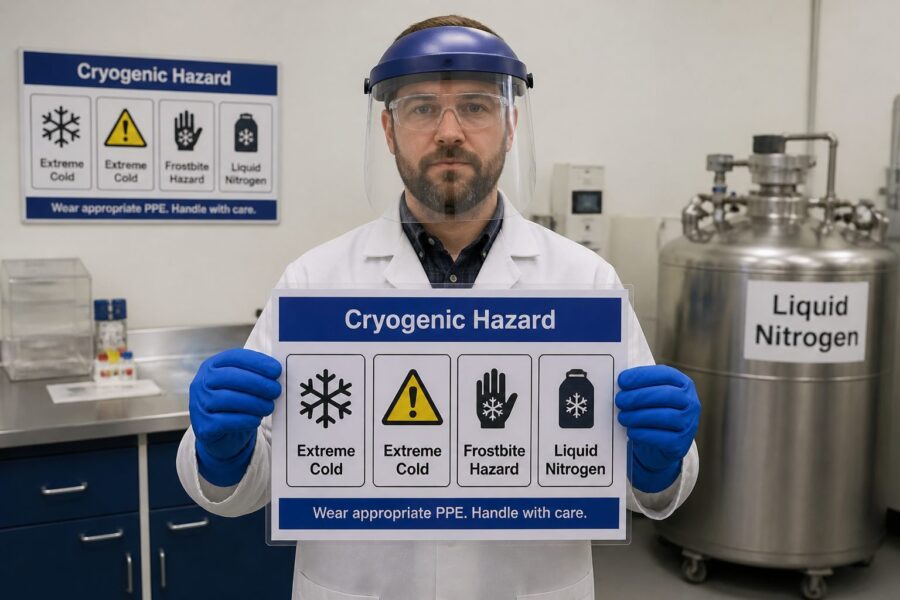
Understanding the specific meanings behind cryogenic hazard pictograms is fundamental for anyone working with extreme cold substances. These symbols are designed for rapid interpretation, communicating complex dangers in a fraction of a second. Each pictogram typically uses a black symbol on a yellow triangle with a black border for warnings, or a white symbol on a blue circle for mandatory actions, following ISO guidelines.
The most common pictogram for cryogenic hazards is the “extreme cold” symbol, often depicted as a hand or face exposed to frost, sometimes with ice crystals. This symbol directly warns of the severe cold burn risk, prompting immediate use of insulated gloves and face shields. Recognizing this symbol immediately triggers awareness of the primary physical danger from direct contact.
Another crucial pictogram is the “asphyxiation hazard,” which might show a person struggling for breath or a gas cylinder with an “O2” symbol crossed out. This symbol alerts to the danger of oxygen displacement by inert cryogenic gases, emphasizing the need for adequate ventilation and atmospheric monitoring. It reminds personnel that many cryogenic gases are odorless and invisible, making this warning critical.
Pictograms indicating “high pressure” or “pressure relief” are also vital, often showing an exploding cylinder or a pressure gauge. These symbols highlight the risk of containers rupturing due to the immense expansion of cryogenic liquids into gas if not properly vented. They underscore the importance of using only pressure-rated equipment and ensuring proper pressure relief mechanisms are in place.
Other relevant symbols include “wear protective gloves” or “wear eye protection,” which are mandatory action signs often accompanying cryogenic hazard warnings. These instruct personnel on the specific PPE required to safely handle the materials, reinforcing the immediate protective measures needed. Correctly interpreting and responding to these specific cryogenic hazard pictograms is a non-negotiable aspect of workplace safety.
Effective Implementation of Cryogenic Safety Labeling
Effective implementation of cryogenic safety labeling goes beyond merely sticking a symbol onto a container; it involves strategic placement, durability, and consistent application. Labels must be clearly visible, unobstructed, and positioned where they can be easily seen by anyone approaching the cryogenic material or equipment. This ensures that the warning is communicated effectively at the point of hazard.
The materials used for cryogenic hazard pictograms must withstand the extreme conditions of cryogenic environments, including very low temperatures, potential moisture, and chemical exposure. Labels should be made from durable, cold-resistant, and adhesive materials that will not crack, peel, or fade over time. Longevity of labeling is crucial for sustained safety, especially in a busy warehouse or laboratory setting.
Consistent labeling practices across an entire facility or organization are also paramount for minimizing confusion and reinforcing safety messages. Every container, piece of equipment, and storage area holding cryogenic materials should display the appropriate and standardized symbols. This uniformity helps build a predictable and reliable safety system for all personnel, regardless of their specific work area.
Regular inspections of safety labeling are necessary to ensure that pictograms remain legible, securely attached, and up-to-date. Damaged or outdated labels should be promptly replaced to prevent any degradation in safety communication. Proactive maintenance of labeling systems is a small but critical investment in preventing serious accidents and maintaining compliance with safety standards.
Furthermore, integrating these physical labels with digital safety documentation and inventory management systems enhances overall safety and logistics. Digital records can track the location and status of cryogenic materials, complementing the visual warnings provided by the pictograms. This combined approach creates a robust safety net, ensuring comprehensive hazard communication from every angle.
Cultivating Safety: Training and Awareness for Cryogenic Hazards
While cryogenic hazard pictograms provide immediate visual warnings, their effectiveness hinges on comprehensive training and ongoing awareness programs for all personnel. Simply displaying symbols is insufficient; every individual working with or near cryogenic materials must understand what each pictogram means and how to respond appropriately. Training transforms passive observation into active safety practice.
Effective training covers not only the identification of specific symbols but also the underlying hazards they represent and the required safety protocols. This includes understanding the properties of different cryogenic liquids, the correct use of personal protective equipment, and emergency procedures. A well-informed workforce is the strongest defense against accidents involving extreme cold.
- Identify all common cryogenic hazard pictograms
- Understand the specific risks associated with each symbol
- Properly select and use personal protective equipment (PPE)
- Follow safe handling and storage procedures for cryogens
- Recognize signs of oxygen depletion and cold burns
- Implement emergency response protocols, including first aid
- Locate safety data sheets (SDS) and emergency contacts
Challenges in Standardizing Cryogenic Symbology
Achieving universal standardization for cryogenic hazard pictograms, while crucial, presents several inherent challenges that persist across industries and regions. One significant hurdle involves the sheer diversity of cryogenic applications, from medical research to aerospace, each with slightly different operational contexts and specific hazards. Developing a single set of symbols that adequately addresses all nuances without becoming overly complex requires careful consideration.
Another challenge lies in the dynamic nature of scientific and industrial processes, where new cryogenic technologies and materials are constantly emerging. Keeping standards current and ensuring new symbols are developed and adopted in a timely manner is an ongoing effort. The process of proposing, reviewing, and registering new ISO symbols can be lengthy, sometimes lagging behind technological advancements.
Furthermore, regional variations in regulatory frameworks and historical safety practices can sometimes impede the rapid global adoption of new ISO standards. While ISO aims for international consensus, national bodies or industry-specific associations might have existing symbols or preferred formats that differ slightly. Harmonizing these differences requires extensive collaboration and negotiation among stakeholders.
Ensuring compliance across a global supply chain and logistics network also poses difficulties, especially for smaller businesses or those operating in less regulated environments. The cost of updating labeling, training, and equipment to meet new standards can be substantial, creating resistance to change. Education and clear communication about the benefits of standardization are essential to overcome these financial and logistical barriers.
Finally, the inherent complexity of some cryogenic hazards, such as the combined risks of extreme cold, high pressure, and asphyxiation, can make it difficult to represent them succinctly with a single pictogram. Sometimes, a combination of symbols or supplementary text is necessary, which can dilute the instant recognition benefit of a single, clear symbol. Continuous efforts in research and human factors engineering are vital to refine and improve these critical safety communication tools.
Beyond Pictograms: Comprehensive Cryogenic Safety Protocols
While cryogenic hazard pictograms are fundamental, they represent just one component of a comprehensive cryogenic safety protocol. A truly robust safety system integrates these visual warnings with a multitude of other measures, creating layers of protection for personnel and assets. Relying solely on symbols, no matter how clear, leaves critical gaps in overall safety. Effective safety requires a holistic approach.
Personal Protective Equipment (PPE) stands as a critical barrier between workers and cryogenic hazards. This includes insulated gloves, face shields, safety glasses, closed-toe shoes, and long-sleeved clothing designed to protect against extreme cold and splashes. Proper selection, maintenance, and mandatory use of this equipment are non-negotiable for anyone handling or working near cryogenic materials.
Engineering controls play a significant role in mitigating risks at the source, reducing the reliance on individual actions. These controls include adequate ventilation systems to prevent oxygen depletion, pressure relief devices on cryogenic containers, and secure storage facilities designed to minimize spills and unauthorized access. Designing safety into the infrastructure provides a passive layer of protection.
Administrative controls, such as detailed operating procedures, permit-to-work systems, and emergency response plans, guide safe work practices and define actions during incidents. These written protocols ensure that tasks are performed consistently and safely, providing clear instructions for routine operations and unexpected events. Regular drills and reviews of these plans are essential for maintaining preparedness.
Furthermore, continuous monitoring of the environment, particularly for oxygen levels in enclosed spaces, is a vital safety measure. Oxygen depletion monitors with audible and visual alarms provide real-time warnings of unsafe atmospheric conditions, complementing the static warnings of cryogenic hazard pictograms. Integrating all these elements creates a resilient safety framework that actively protects against the unique dangers of cryogenic substances.
Future Directions in Cryogenic Safety Symbology and Digital Integration
The field of cryogenic safety symbology is not static; it continually evolves with technological advancements and a deeper understanding of human factors in safety. Future directions point towards more intelligent, integrated, and responsive safety communication systems that enhance the effectiveness of traditional pictograms. These innovations aim to provide even more dynamic and context-aware hazard information.
One promising area involves the integration of smart labeling technologies, where pictograms could be augmented with digital information accessible via QR codes or NFC tags. Scanning a label could instantly provide access to an updated Safety Data Sheet (SDS), specific handling instructions, or real-time sensor data like container pressure or temperature. This digital layer adds depth to the static visual warning, enhancing safety and logistics in complex environments.
Augmented Reality (AR) applications also hold significant potential for cryogenic safety training and real-time hazard identification. Workers wearing AR glasses could see digital overlays on physical equipment, highlighting specific cryogenic hazard pictograms, displaying live sensor readings, or even guiding them through emergency procedures. This interactive approach could revolutionize how safety information is consumed and acted upon, particularly in a warehouse setting.
Further research into cognitive psychology and human perception will likely lead to even more intuitive and universally recognizable pictogram designs. Optimizing symbols for maximum clarity and minimal ambiguity remains an ongoing goal, especially as global workforces become increasingly diverse. International standards bodies like ISO continue to refine their guidelines based on such research, ensuring symbols are as effective as possible.
Ultimately, the future of cryogenic safety symbology will likely involve a blend of robust, standardized physical pictograms combined with dynamic digital tools that provide richer, context-specific information. This synergistic approach will empower workers with unprecedented levels of safety awareness and operational intelligence. The goal is to move towards predictive safety, where potential hazards are identified and mitigated even before they fully materialize.
Ensuring Compliance and Best Practices in Cryogenic Environments
Ensuring compliance with international standards for cryogenic hazard pictograms and implementing best practices are non-negotiable for any organization handling extreme cold materials. Adherence to standards like ISO 7010 is not just a regulatory requirement; it is a fundamental commitment to the safety and well-being of personnel and the operational integrity of facilities. Proactive compliance minimizes risks and fosters a culture of responsibility.
Regular audits and inspections of safety labeling, equipment, and procedures are essential components of maintaining high safety standards. These assessments help identify any deficiencies in pictogram application, training gaps, or deviations from established safety protocols. Consistent oversight ensures that safety measures remain effective and up-to-date, especially in dynamic warehouse or laboratory settings.
Establishing clear lines of responsibility for safety management, from top-level executives to frontline workers, reinforces accountability across the organization. Every individual must understand their role in maintaining a safe cryogenic environment, including recognizing and respecting all safety symbols. This shared responsibility strengthens the overall safety culture and promotes vigilance.
Furthermore, continuous improvement initiatives, driven by incident analysis and feedback from personnel, are crucial for evolving safety practices. Learning from near misses and actual incidents helps refine existing protocols and develop new ones, ensuring that the safety system adapts to emerging challenges. This iterative process allows organizations to constantly enhance their safety posture, particularly concerning cryogenic hazard pictograms and their application.
Ultimately, a deep commitment to international standards, rigorous training, and a proactive safety culture creates an environment where the extreme dangers of cryogenic materials are effectively managed. By consistently applying and understanding cryogenic hazard pictograms, organizations protect their most valuable assets: their people. This dedication to safety ensures that the benefits of cryogenic technology can be harnessed without undue risk.
This is where cryogenic hazard pictograms become indispensable tools in any environment handling such materials, from research laboratories to industrial warehouses. These universally recognized symbols cut through language barriers, providing instant visual warnings about the specific dangers associated with cryogenic substances. Understanding and correctly applying these symbols are foundational elements of a robust safety program, safeguarding individuals and operations alike.
Our focus today explores the critical role of these specialized symbols, delving into the standards that govern their design and deployment, and emphasizing their impact on global safety and logistics. We will examine how international standards organizations like ISO have shaped the landscape of safety labeling, making workplaces safer worldwide. Proper use of cryogenic hazard pictograms directly contributes to a culture of vigilance and preparedness.
Understanding the Extreme Risks of Cryogenic Materials
Cryogenic materials, such as liquid nitrogen, liquid oxygen, and liquid helium, exist at incredibly low temperatures, presenting a distinct set of dangers that defy common experience. Direct contact with these substances causes immediate and severe cold burns, akin to thermal burns, destroying skin tissue and underlying cells. Even brief exposure can lead to permanent tissue damage, making protective measures absolutely essential.
Beyond direct contact, the rapid expansion of cryogenic liquids into gas poses significant asphyxiation and overpressure risks. One liter of liquid nitrogen expands to approximately 700 liters of gaseous nitrogen at room temperature, quickly displacing breathable oxygen in enclosed spaces. This rapid expansion can also lead to dangerous pressure buildup in inadequately vented containers, creating explosion hazards.
These inherent properties necessitate stringent safety protocols and clear communication methods to protect workers and facilities. Relying solely on written warnings is insufficient in fast-paced or emergency situations where immediate comprehension is paramount. This is precisely why standardized cryogenic hazard pictograms are not just helpful but truly vital for safety.
The invisible nature of many cryogenic gases further complicates hazard identification, as oxygen depletion cannot be seen or smelled. Therefore, personnel must understand the potential for oxygen-deficient atmospheres, especially when working with large volumes of cryogens. Proper ventilation and atmospheric monitoring systems are crucial supplementary measures to mitigate these risks effectively.
Accidental spills or leaks of cryogenic liquids can also create localized extremely cold zones, affecting equipment and potentially making surfaces brittle. These conditions require specific handling procedures and emergency response plans to prevent widespread damage or injury. Comprehensive safety training must cover all these potential scenarios, reinforcing the importance of every safety symbol.
The Indispensable Role of Cryogenic Hazard Pictograms
Cryogenic hazard pictograms serve as the universal language of safety, conveying critical information instantaneously regardless of linguistic background. Their primary function is to alert individuals to specific dangers associated with cryogenic materials, enabling rapid risk assessment and appropriate protective actions. This immediate recognition capability is crucial in high-stress or emergency situations where every second counts.
These symbols reduce ambiguity and minimize the potential for misinterpretation, which is a common challenge with text-based warnings across diverse workforces. A globally recognized symbol for “cold hazard” or “asphyxiation risk” communicates its message effectively to anyone, anywhere. This consistency is a cornerstone of international safety standards and logistics.
Effective labeling using these pictograms helps enforce compliance with safety regulations and promotes a proactive safety culture within organizations. When containers, equipment, and storage areas prominently display appropriate cryogenic hazard pictograms, it constantly reminds personnel of the inherent dangers. This visual reinforcement helps embed safety practices into daily routines, making them second nature.
Beyond immediate hazard identification, these symbols also guide the selection of appropriate personal protective equipment (PPE) and emergency procedures. For instance, a pictogram indicating cold hazard implicitly suggests the need for insulated gloves and eye protection. Clear symbols streamline operations by making safety information readily accessible at the point of need, whether in a laboratory or a warehouse.
Ultimately, the widespread adoption and correct application of cryogenic hazard pictograms significantly reduce the incidence of accidents and injuries in cryogenic environments. They are a fundamental component of a comprehensive safety management system, working in tandem with training, engineering controls, and administrative procedures. Investing in clear, compliant safety labeling is an investment in human life and operational continuity.
Navigating ISO Standards for Cryogenic Labeling
International standardization plays a pivotal role in ensuring that cryogenic hazard pictograms are universally understood and applied consistently. The International Organization for Standardization (ISO) develops and publishes these crucial standards, providing a common framework for safety symbols worldwide. ISO 7010, “Graphical symbols – Safety colours and safety signs – Registered safety signs,” stands as the primary reference for general safety pictograms, including many relevant to cryogenic hazards.
This standard specifies the design principles and registration procedures for safety signs, ensuring that symbols are clear, unambiguous, and easily recognizable across different cultures and languages. Adherence to ISO standards is not just about compliance; it is about creating a safer global environment for everyone who interacts with hazardous materials. Proper labeling ensures that safety messages are communicated effectively, reducing risks in laboratories, manufacturing plants, and logistics operations.
| ISO Standard Reference | Description | Relevance to Cryogenic Safety |
|---|---|---|
| ISO 7010 | Graphical symbols – Safety colours and safety signs | Primary standard for general safety pictograms, including many used for cold hazards, asphyxiation, and pressure. |
| ISO 17724 | Graphical symbols – Safety colours and safety signs – Properties of safety signs | Specifies performance requirements for safety signs, ensuring durability and visibility in various conditions. |
| ISO 10298 | Gas cylinders – Requirements for toxic gas test mixtures – Determination of the concentration of toxic components | While specific to gas mixtures, it informs the broader context of gas hazard labeling and safe handling. |
| ISO 11623 | Gas cylinders – Composite construction – Periodic inspection and testing | Relates to the integrity of gas cylinders, which often contain cryogens, reinforcing the need for clear labeling on compliant containers. |
Deciphering Specific Cryogenic Hazard Pictograms
Understanding the specific meanings behind cryogenic hazard pictograms is fundamental for anyone working with extreme cold substances. These symbols are designed for rapid interpretation, communicating complex dangers in a fraction of a second. Each pictogram typically uses a black symbol on a yellow triangle with a black border for warnings, or a white symbol on a blue circle for mandatory actions, following ISO guidelines.
The most common pictogram for cryogenic hazards is the “extreme cold” symbol, often depicted as a hand or face exposed to frost, sometimes with ice crystals. This symbol directly warns of the severe cold burn risk, prompting immediate use of insulated gloves and face shields. Recognizing this symbol immediately triggers awareness of the primary physical danger from direct contact.
Another crucial pictogram is the “asphyxiation hazard,” which might show a person struggling for breath or a gas cylinder with an “O2” symbol crossed out. This symbol alerts to the danger of oxygen displacement by inert cryogenic gases, emphasizing the need for adequate ventilation and atmospheric monitoring. It reminds personnel that many cryogenic gases are odorless and invisible, making this warning critical.
Pictograms indicating “high pressure” or “pressure relief” are also vital, often showing an exploding cylinder or a pressure gauge. These symbols highlight the risk of containers rupturing due to the immense expansion of cryogenic liquids into gas if not properly vented. They underscore the importance of using only pressure-rated equipment and ensuring proper pressure relief mechanisms are in place.
Other relevant symbols include “wear protective gloves” or “wear eye protection,” which are mandatory action signs often accompanying cryogenic hazard warnings. These instruct personnel on the specific PPE required to safely handle the materials, reinforcing the immediate protective measures needed. Correctly interpreting and responding to these specific cryogenic hazard pictograms is a non-negotiable aspect of workplace safety.
Effective Implementation of Cryogenic Safety Labeling
Effective implementation of cryogenic safety labeling goes beyond merely sticking a symbol onto a container; it involves strategic placement, durability, and consistent application. Labels must be clearly visible, unobstructed, and positioned where they can be easily seen by anyone approaching the cryogenic material or equipment. This ensures that the warning is communicated effectively at the point of hazard.
The materials used for cryogenic hazard pictograms must withstand the extreme conditions of cryogenic environments, including very low temperatures, potential moisture, and chemical exposure. Labels should be made from durable, cold-resistant, and adhesive materials that will not crack, peel, or fade over time. Longevity of labeling is crucial for sustained safety, especially in a busy warehouse or laboratory setting.
Consistent labeling practices across an entire facility or organization are also paramount for minimizing confusion and reinforcing safety messages. Every container, piece of equipment, and storage area holding cryogenic materials should display the appropriate and standardized symbols. This uniformity helps build a predictable and reliable safety system for all personnel, regardless of their specific work area.
Regular inspections of safety labeling are necessary to ensure that pictograms remain legible, securely attached, and up-to-date. Damaged or outdated labels should be promptly replaced to prevent any degradation in safety communication. Proactive maintenance of labeling systems is a small but critical investment in preventing serious accidents and maintaining compliance with safety standards.
Furthermore, integrating these physical labels with digital safety documentation and inventory management systems enhances overall safety and logistics. Digital records can track the location and status of cryogenic materials, complementing the visual warnings provided by the pictograms. This combined approach creates a robust safety net, ensuring comprehensive hazard communication from every angle.
Cultivating Safety: Training and Awareness for Cryogenic Hazards
While cryogenic hazard pictograms provide immediate visual warnings, their effectiveness hinges on comprehensive training and ongoing awareness programs for all personnel. Simply displaying symbols is insufficient; every individual working with or near cryogenic materials must understand what each pictogram means and how to respond appropriately. Training transforms passive observation into active safety practice.
Effective training covers not only the identification of specific symbols but also the underlying hazards they represent and the required safety protocols. This includes understanding the properties of different cryogenic liquids, the correct use of personal protective equipment, and emergency procedures. A well-informed workforce is the strongest defense against accidents involving extreme cold.
- Identify all common cryogenic hazard pictograms
- Understand the specific risks associated with each symbol
- Properly select and use personal protective equipment (PPE)
- Follow safe handling and storage procedures for cryogens
- Recognize signs of oxygen depletion and cold burns
- Implement emergency response protocols, including first aid
- Locate safety data sheets (SDS) and emergency contacts
Challenges in Standardizing Cryogenic Symbology
Achieving universal standardization for cryogenic hazard pictograms, while crucial, presents several inherent challenges that persist across industries and regions. One significant hurdle involves the sheer diversity of cryogenic applications, from medical research to aerospace, each with slightly different operational contexts and specific hazards. Developing a single set of symbols that adequately addresses all nuances without becoming overly complex requires careful consideration.
Another challenge lies in the dynamic nature of scientific and industrial processes, where new cryogenic technologies and materials are constantly emerging. Keeping standards current and ensuring new symbols are developed and adopted in a timely manner is an ongoing effort. The process of proposing, reviewing, and registering new ISO symbols can be lengthy, sometimes lagging behind technological advancements.
Furthermore, regional variations in regulatory frameworks and historical safety practices can sometimes impede the rapid global adoption of new ISO standards. While ISO aims for international consensus, national bodies or industry-specific associations might have existing symbols or preferred formats that differ slightly. Harmonizing these differences requires extensive collaboration and negotiation among stakeholders.
Ensuring compliance across a global supply chain and logistics network also poses difficulties, especially for smaller businesses or those operating in less regulated environments. The cost of updating labeling, training, and equipment to meet new standards can be substantial, creating resistance to change. Education and clear communication about the benefits of standardization are essential to overcome these financial and logistical barriers.
Finally, the inherent complexity of some cryogenic hazards, such as the combined risks of extreme cold, high pressure, and asphyxiation, can make it difficult to represent them succinctly with a single pictogram. Sometimes, a combination of symbols or supplementary text is necessary, which can dilute the instant recognition benefit of a single, clear symbol. Continuous efforts in research and human factors engineering are vital to refine and improve these critical safety communication tools.
Beyond Pictograms: Comprehensive Cryogenic Safety Protocols
While cryogenic hazard pictograms are fundamental, they represent just one component of a comprehensive cryogenic safety protocol. A truly robust safety system integrates these visual warnings with a multitude of other measures, creating layers of protection for personnel and assets. Relying solely on symbols, no matter how clear, leaves critical gaps in overall safety. Effective safety requires a holistic approach.
Personal Protective Equipment (PPE) stands as a critical barrier between workers and cryogenic hazards. This includes insulated gloves, face shields, safety glasses, closed-toe shoes, and long-sleeved clothing designed to protect against extreme cold and splashes. Proper selection, maintenance, and mandatory use of this equipment are non-negotiable for anyone handling or working near cryogenic materials.
Engineering controls play a significant role in mitigating risks at the source, reducing the reliance on individual actions. These controls include adequate ventilation systems to prevent oxygen depletion, pressure relief devices on cryogenic containers, and secure storage facilities designed to minimize spills and unauthorized access. Designing safety into the infrastructure provides a passive layer of protection.
Administrative controls, such as detailed operating procedures, permit-to-work systems, and emergency response plans, guide safe work practices and define actions during incidents. These written protocols ensure that tasks are performed consistently and safely, providing clear instructions for routine operations and unexpected events. Regular drills and reviews of these plans are essential for maintaining preparedness.
Furthermore, continuous monitoring of the environment, particularly for oxygen levels in enclosed spaces, is a vital safety measure. Oxygen depletion monitors with audible and visual alarms provide real-time warnings of unsafe atmospheric conditions, complementing the static warnings of cryogenic hazard pictograms. Integrating all these elements creates a resilient safety framework that actively protects against the unique dangers of cryogenic substances.
Future Directions in Cryogenic Safety Symbology and Digital Integration
The field of cryogenic safety symbology is not static; it continually evolves with technological advancements and a deeper understanding of human factors in safety. Future directions point towards more intelligent, integrated, and responsive safety communication systems that enhance the effectiveness of traditional pictograms. These innovations aim to provide even more dynamic and context-aware hazard information.
One promising area involves the integration of smart labeling technologies, where pictograms could be augmented with digital information accessible via QR codes or NFC tags. Scanning a label could instantly provide access to an updated Safety Data Sheet (SDS), specific handling instructions, or real-time sensor data like container pressure or temperature. This digital layer adds depth to the static visual warning, enhancing safety and logistics in complex environments.
Augmented Reality (AR) applications also hold significant potential for cryogenic safety training and real-time hazard identification. Workers wearing AR glasses could see digital overlays on physical equipment, highlighting specific cryogenic hazard pictograms, displaying live sensor readings, or even guiding them through emergency procedures. This interactive approach could revolutionize how safety information is consumed and acted upon, particularly in a warehouse setting.
Further research into cognitive psychology and human perception will likely lead to even more intuitive and universally recognizable pictogram designs. Optimizing symbols for maximum clarity and minimal ambiguity remains an ongoing goal, especially as global workforces become increasingly diverse. International standards bodies like ISO continue to refine their guidelines based on such research, ensuring symbols are as effective as possible.
Ultimately, the future of cryogenic safety symbology will likely involve a blend of robust, standardized physical pictograms combined with dynamic digital tools that provide richer, context-specific information. This synergistic approach will empower workers with unprecedented levels of safety awareness and operational intelligence. The goal is to move towards predictive safety, where potential hazards are identified and mitigated even before they fully materialize.
Ensuring Compliance and Best Practices in Cryogenic Environments
Ensuring compliance with international standards for cryogenic hazard pictograms and implementing best practices are non-negotiable for any organization handling extreme cold materials. Adherence to standards like ISO 7010 is not just a regulatory requirement; it is a fundamental commitment to the safety and well-being of personnel and the operational integrity of facilities. Proactive compliance minimizes risks and fosters a culture of responsibility.
Regular audits and inspections of safety labeling, equipment, and procedures are essential components of maintaining high safety standards. These assessments help identify any deficiencies in pictogram application, training gaps, or deviations from established safety protocols. Consistent oversight ensures that safety measures remain effective and up-to-date, especially in dynamic warehouse or laboratory settings.
Establishing clear lines of responsibility for safety management, from top-level executives to frontline workers, reinforces accountability across the organization. Every individual must understand their role in maintaining a safe cryogenic environment, including recognizing and respecting all safety symbols. This shared responsibility strengthens the overall safety culture and promotes vigilance.
Furthermore, continuous improvement initiatives, driven by incident analysis and feedback from personnel, are crucial for evolving safety practices. Learning from near misses and actual incidents helps refine existing protocols and develop new ones, ensuring that the safety system adapts to emerging challenges. This iterative process allows organizations to constantly enhance their safety posture, particularly concerning cryogenic hazard pictograms and their application.
Ultimately, a deep commitment to international standards, rigorous training, and a proactive safety culture creates an environment where the extreme dangers of cryogenic materials are effectively managed. By consistently applying and understanding cryogenic hazard pictograms, organizations protect their most valuable assets: their people. This dedication to safety ensures that the benefits of cryogenic technology can be harnessed without undue risk.
Working with extremely cold substances like liquid nitrogen presents unique and severe hazards that demand immediate attention. These cryogenic materials, with temperatures often below -150°C (-238°F), pose risks ranging from severe frostbite and cold burns to rapid asphyxiation and explosive pressure buildup. Effective communication of these dangers is not merely a recommendation; it is an absolute necessity for preventing accidents and ensuring the safety of personnel.
This is where cryogenic hazard pictograms become indispensable tools in any environment handling such materials, from research laboratories to industrial warehouses. These universally recognized symbols cut through language barriers, providing instant visual warnings about the specific dangers associated with cryogenic substances. Understanding and correctly applying these symbols are foundational elements of a robust safety program, safeguarding individuals and operations alike.
Our focus today explores the critical role of these specialized symbols, delving into the standards that govern their design and deployment, and emphasizing their impact on global safety and logistics. We will examine how international standards organizations like ISO have shaped the landscape of safety labeling, making workplaces safer worldwide. Proper use of cryogenic hazard pictograms directly contributes to a culture of vigilance and preparedness.
Understanding the Extreme Risks of Cryogenic Materials
Cryogenic materials, such as liquid nitrogen, liquid oxygen, and liquid helium, exist at incredibly low temperatures, presenting a distinct set of dangers that defy common experience. Direct contact with these substances causes immediate and severe cold burns, akin to thermal burns, destroying skin tissue and underlying cells. Even brief exposure can lead to permanent tissue damage, making protective measures absolutely essential.
Beyond direct contact, the rapid expansion of cryogenic liquids into gas poses significant asphyxiation and overpressure risks. One liter of liquid nitrogen expands to approximately 700 liters of gaseous nitrogen at room temperature, quickly displacing breathable oxygen in enclosed spaces. This rapid expansion can also lead to dangerous pressure buildup in inadequately vented containers, creating explosion hazards.
These inherent properties necessitate stringent safety protocols and clear communication methods to protect workers and facilities. Relying solely on written warnings is insufficient in fast-paced or emergency situations where immediate comprehension is paramount. This is precisely why standardized cryogenic hazard pictograms are not just helpful but truly vital for safety.
The invisible nature of many cryogenic gases further complicates hazard identification, as oxygen depletion cannot be seen or smelled. Therefore, personnel must understand the potential for oxygen-deficient atmospheres, especially when working with large volumes of cryogens. Proper ventilation and atmospheric monitoring systems are crucial supplementary measures to mitigate these risks effectively.
Accidental spills or leaks of cryogenic liquids can also create localized extremely cold zones, affecting equipment and potentially making surfaces brittle. These conditions require specific handling procedures and emergency response plans to prevent widespread damage or injury. Comprehensive safety training must cover all these potential scenarios, reinforcing the importance of every safety symbol.
The Indispensable Role of Cryogenic Hazard Pictograms
Cryogenic hazard pictograms serve as the universal language of safety, conveying critical information instantaneously regardless of linguistic background. Their primary function is to alert individuals to specific dangers associated with cryogenic materials, enabling rapid risk assessment and appropriate protective actions. This immediate recognition capability is crucial in high-stress or emergency situations where every second counts.
These symbols reduce ambiguity and minimize the potential for misinterpretation, which is a common challenge with text-based warnings across diverse workforces. A globally recognized symbol for “cold hazard” or “asphyxiation risk” communicates its message effectively to anyone, anywhere. This consistency is a cornerstone of international safety standards and logistics.
Effective labeling using these pictograms helps enforce compliance with safety regulations and promotes a proactive safety culture within organizations. When containers, equipment, and storage areas prominently display appropriate cryogenic hazard pictograms, it constantly reminds personnel of the inherent dangers. This visual reinforcement helps embed safety practices into daily routines, making them second nature.
Beyond immediate hazard identification, these symbols also guide the selection of appropriate personal protective equipment (PPE) and emergency procedures. For instance, a pictogram indicating cold hazard implicitly suggests the need for insulated gloves and eye protection. Clear symbols streamline operations by making safety information readily accessible at the point of need, whether in a laboratory or a warehouse.
Ultimately, the widespread adoption and correct application of cryogenic hazard pictograms significantly reduce the incidence of accidents and injuries in cryogenic environments. They are a fundamental component of a comprehensive safety management system, working in tandem with training, engineering controls, and administrative procedures. Investing in clear, compliant safety labeling is an investment in human life and operational continuity.
Navigating ISO Standards for Cryogenic Labeling
International standardization plays a pivotal role in ensuring that cryogenic hazard pictograms are universally understood and applied consistently. The International Organization for Standardization (ISO) develops and publishes these crucial standards, providing a common framework for safety symbols worldwide. ISO 7010, “Graphical symbols – Safety colours and safety signs – Registered safety signs,” stands as the primary reference for general safety pictograms, including many relevant to cryogenic hazards.
This standard specifies the design principles and registration procedures for safety signs, ensuring that symbols are clear, unambiguous, and easily recognizable across different cultures and languages. Adherence to ISO standards is not just about compliance; it is about creating a safer global environment for everyone who interacts with hazardous materials. Proper labeling ensures that safety messages are communicated effectively, reducing risks in laboratories, manufacturing plants, and logistics operations.
| ISO Standard Reference | Description | Relevance to Cryogenic Safety |
|---|---|---|
| ISO 7010 | Graphical symbols – Safety colours and safety signs | Primary standard for general safety pictograms, including many used for cold hazards, asphyxiation, and pressure. |
| ISO 17724 | Graphical symbols – Safety colours and safety signs – Properties of safety signs | Specifies performance requirements for safety signs, ensuring durability and visibility in various conditions. |
| ISO 10298 | Gas cylinders – Requirements for toxic gas test mixtures – Determination of the concentration of toxic components | While specific to gas mixtures, it informs the broader context of gas hazard labeling and safe handling. |
| ISO 11623 | Gas cylinders – Composite construction – Periodic inspection and testing | Relates to the integrity of gas cylinders, which often contain cryogens, reinforcing the need for clear labeling on compliant containers. |
Deciphering Specific Cryogenic Hazard Pictograms
Understanding the specific meanings behind cryogenic hazard pictograms is fundamental for anyone working with extreme cold substances. These symbols are designed for rapid interpretation, communicating complex dangers in a fraction of a second. Each pictogram typically uses a black symbol on a yellow triangle with a black border for warnings, or a white symbol on a blue circle for mandatory actions, following ISO guidelines.
The most common pictogram for cryogenic hazards is the “extreme cold” symbol, often depicted as a hand or face exposed to frost, sometimes with ice crystals. This symbol directly warns of the severe cold burn risk, prompting immediate use of insulated gloves and face shields. Recognizing this symbol immediately triggers awareness of the primary physical danger from direct contact.
Another crucial pictogram is the “asphyxiation hazard,” which might show a person struggling for breath or a gas cylinder with an “O2” symbol crossed out. This symbol alerts to the danger of oxygen displacement by inert cryogenic gases, emphasizing the need for adequate ventilation and atmospheric monitoring. It reminds personnel that many cryogenic gases are odorless and invisible, making this warning critical.
Pictograms indicating “high pressure” or “pressure relief” are also vital, often showing an exploding cylinder or a pressure gauge. These symbols highlight the risk of containers rupturing due to the immense expansion of cryogenic liquids into gas if not properly vented. They underscore the importance of using only pressure-rated equipment and ensuring proper pressure relief mechanisms are in place.
Other relevant symbols include “wear protective gloves” or “wear eye protection,” which are mandatory action signs often accompanying cryogenic hazard warnings. These instruct personnel on the specific PPE required to safely handle the materials, reinforcing the immediate protective measures needed. Correctly interpreting and responding to these specific cryogenic hazard pictograms is a non-negotiable aspect of workplace safety.
Effective Implementation of Cryogenic Safety Labeling
Effective implementation of cryogenic safety labeling goes beyond merely sticking a symbol onto a container; it involves strategic placement, durability, and consistent application. Labels must be clearly visible, unobstructed, and positioned where they can be easily seen by anyone approaching the cryogenic material or equipment. This ensures that the warning is communicated effectively at the point of hazard.
The materials used for cryogenic hazard pictograms must withstand the extreme conditions of cryogenic environments, including very low temperatures, potential moisture, and chemical exposure. Labels should be made from durable, cold-resistant, and adhesive materials that will not crack, peel, or fade over time. Longevity of labeling is crucial for sustained safety, especially in a busy warehouse or laboratory setting.
Consistent labeling practices across an entire facility or organization are also paramount for minimizing confusion and reinforcing safety messages. Every container, piece of equipment, and storage area holding cryogenic materials should display the appropriate and standardized symbols. This uniformity helps build a predictable and reliable safety system for all personnel, regardless of their specific work area.
Regular inspections of safety labeling are necessary to ensure that pictograms remain legible, securely attached, and up-to-date. Damaged or outdated labels should be promptly replaced to prevent any degradation in safety communication. Proactive maintenance of labeling systems is a small but critical investment in preventing serious accidents and maintaining compliance with safety standards.
Furthermore, integrating these physical labels with digital safety documentation and inventory management systems enhances overall safety and logistics. Digital records can track the location and status of cryogenic materials, complementing the visual warnings provided by the pictograms. This combined approach creates a robust safety net, ensuring comprehensive hazard communication from every angle.
Cultivating Safety: Training and Awareness for Cryogenic Hazards
While cryogenic hazard pictograms provide immediate visual warnings, their effectiveness hinges on comprehensive training and ongoing awareness programs for all personnel. Simply displaying symbols is insufficient; every individual working with or near cryogenic materials must understand what each pictogram means and how to respond appropriately. Training transforms passive observation into active safety practice.
Effective training covers not only the identification of specific symbols but also the underlying hazards they represent and the required safety protocols. This includes understanding the properties of different cryogenic liquids, the correct use of personal protective equipment, and emergency procedures. A well-informed workforce is the strongest defense against accidents involving extreme cold.
- Identify all common cryogenic hazard pictograms
- Understand the specific risks associated with each symbol
- Properly select and use personal protective equipment (PPE)
- Follow safe handling and storage procedures for cryogens
- Recognize signs of oxygen depletion and cold burns
- Implement emergency response protocols, including first aid
- Locate safety data sheets (SDS) and emergency contacts
Challenges in Standardizing Cryogenic Symbology
Achieving universal standardization for cryogenic hazard pictograms, while crucial, presents several inherent challenges that persist across industries and regions. One significant hurdle involves the sheer diversity of cryogenic applications, from medical research to aerospace, each with slightly different operational contexts and specific hazards. Developing a single set of symbols that adequately addresses all nuances without becoming overly complex requires careful consideration.
Another challenge lies in the dynamic nature of scientific and industrial processes, where new cryogenic technologies and materials are constantly emerging. Keeping standards current and ensuring new symbols are developed and adopted in a timely manner is an ongoing effort. The process of proposing, reviewing, and registering new ISO symbols can be lengthy, sometimes lagging behind technological advancements.
Furthermore, regional variations in regulatory frameworks and historical safety practices can sometimes impede the rapid global adoption of new ISO standards. While ISO aims for international consensus, national bodies or industry-specific associations might have existing symbols or preferred formats that differ slightly. Harmonizing these differences requires extensive collaboration and negotiation among stakeholders.
Ensuring compliance across a global supply chain and logistics network also poses difficulties, especially for smaller businesses or those operating in less regulated environments. The cost of updating labeling, training, and equipment to meet new standards can be substantial, creating resistance to change. Education and clear communication about the benefits of standardization are essential to overcome these financial and logistical barriers.
Finally, the inherent complexity of some cryogenic hazards, such as the combined risks of extreme cold, high pressure, and asphyxiation, can make it difficult to represent them succinctly with a single pictogram. Sometimes, a combination of symbols or supplementary text is necessary, which can dilute the instant recognition benefit of a single, clear symbol. Continuous efforts in research and human factors engineering are vital to refine and improve these critical safety communication tools.
Beyond Pictograms: Comprehensive Cryogenic Safety Protocols
While cryogenic hazard pictograms are fundamental, they represent just one component of a comprehensive cryogenic safety protocol. A truly robust safety system integrates these visual warnings with a multitude of other measures, creating layers of protection for personnel and assets. Relying solely on symbols, no matter how clear, leaves critical gaps in overall safety. Effective safety requires a holistic approach.
Personal Protective Equipment (PPE) stands as a critical barrier between workers and cryogenic hazards. This includes insulated gloves, face shields, safety glasses, closed-toe shoes, and long-sleeved clothing designed to protect against extreme cold and splashes. Proper selection, maintenance, and mandatory use of this equipment are non-negotiable for anyone handling or working near cryogenic materials.
Engineering controls play a significant role in mitigating risks at the source, reducing the reliance on individual actions. These controls include adequate ventilation systems to prevent oxygen depletion, pressure relief devices on cryogenic containers, and secure storage facilities designed to minimize spills and unauthorized access. Designing safety into the infrastructure provides a passive layer of protection.
Administrative controls, such as detailed operating procedures, permit-to-work systems, and emergency response plans, guide safe work practices and define actions during incidents. These written protocols ensure that tasks are performed consistently and safely, providing clear instructions for routine operations and unexpected events. Regular drills and reviews of these plans are essential for maintaining preparedness.
Furthermore, continuous monitoring of the environment, particularly for oxygen levels in enclosed spaces, is a vital safety measure. Oxygen depletion monitors with audible and visual alarms provide real-time warnings of unsafe atmospheric conditions, complementing the static warnings of cryogenic hazard pictograms. Integrating all these elements creates a resilient safety framework that actively protects against the unique dangers of cryogenic substances.
Future Directions in Cryogenic Safety Symbology and Digital Integration
The field of cryogenic safety symbology is not static; it continually evolves with technological advancements and a deeper understanding of human factors in safety. Future directions point towards more intelligent, integrated, and responsive safety communication systems that enhance the effectiveness of traditional pictograms. These innovations aim to provide even more dynamic and context-aware hazard information.
One promising area involves the integration of smart labeling technologies, where pictograms could be augmented with digital information accessible via QR codes or NFC tags. Scanning a label could instantly provide access to an updated Safety Data Sheet (SDS), specific handling instructions, or real-time sensor data like container pressure or temperature. This digital layer adds depth to the static visual warning, enhancing safety and logistics in complex environments.
Augmented Reality (AR) applications also hold significant potential for cryogenic safety training and real-time hazard identification. Workers wearing AR glasses could see digital overlays on physical equipment, highlighting specific cryogenic hazard pictograms, displaying live sensor readings, or even guiding them through emergency procedures. This interactive approach could revolutionize how safety information is consumed and acted upon, particularly in a warehouse setting.
Further research into cognitive psychology and human perception will likely lead to even more intuitive and universally recognizable pictogram designs. Optimizing symbols for maximum clarity and minimal ambiguity remains an ongoing goal, especially as global workforces become increasingly diverse. International standards bodies like ISO continue to refine their guidelines based on such research, ensuring symbols are as effective as possible.
Ultimately, the future of cryogenic safety symbology will likely involve a blend of robust, standardized physical pictograms combined with dynamic digital tools that provide richer, context-specific information. This synergistic approach will empower workers with unprecedented levels of safety awareness and operational intelligence. The goal is to move towards predictive safety, where potential hazards are identified and mitigated even before they fully materialize.
Ensuring Compliance and Best Practices in Cryogenic Environments
Ensuring compliance with international standards for cryogenic hazard pictograms and implementing best practices are non-negotiable for any organization handling extreme cold materials. Adherence to standards like ISO 7010 is not just a regulatory requirement; it is a fundamental commitment to the safety and well-being of personnel and the operational integrity of facilities. Proactive compliance minimizes risks and fosters a culture of responsibility.
Regular audits and inspections of safety labeling, equipment, and procedures are essential components of maintaining high safety standards. These assessments help identify any deficiencies in pictogram application, training gaps, or deviations from established safety protocols. Consistent oversight ensures that safety measures remain effective and up-to-date, especially in dynamic warehouse or laboratory settings.
Establishing clear lines of responsibility for safety management, from top-level executives to frontline workers, reinforces accountability across the organization. Every individual must understand their role in maintaining a safe cryogenic environment, including recognizing and respecting all safety symbols. This shared responsibility strengthens the overall safety culture and promotes vigilance.
Furthermore, continuous improvement initiatives, driven by incident analysis and feedback from personnel, are crucial for evolving safety practices. Learning from near misses and actual incidents helps refine existing protocols and develop new ones, ensuring that the safety system adapts to emerging challenges. This iterative process allows organizations to constantly enhance their safety posture, particularly concerning cryogenic hazard pictograms and their application.
Ultimately, a deep commitment to international standards, rigorous training, and a proactive safety culture creates an environment where the extreme dangers of cryogenic materials are effectively managed. By consistently applying and understanding cryogenic hazard pictograms, organizations protect their most valuable assets: their people. This dedication to safety ensures that the benefits of cryogenic technology can be harnessed without undue risk.