

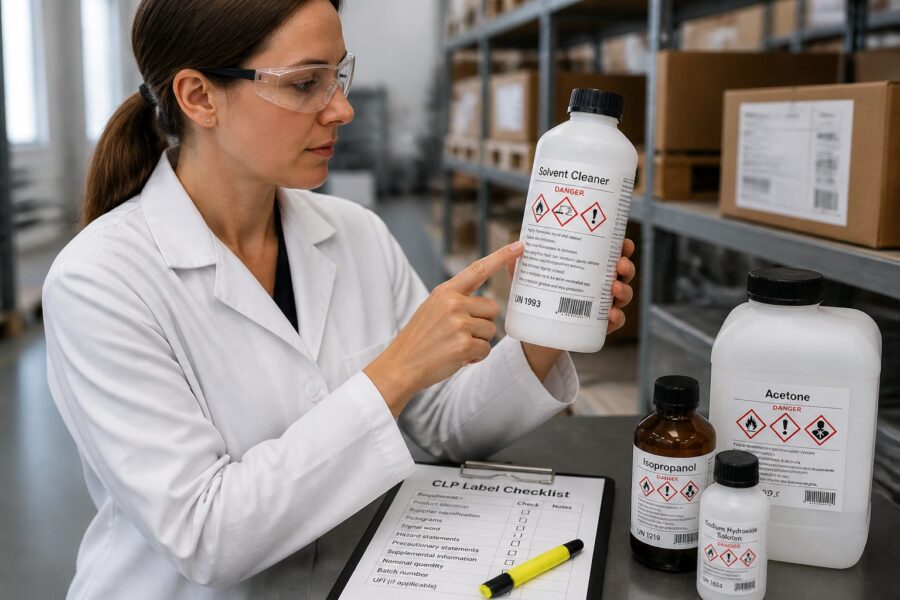
Navigating the complex world of chemical product labeling within the European Union requires a precise understanding of the CLP Regulation. This critical framework ensures that hazardous chemicals are classified, packaged, and labeled correctly before they reach consumers or professional users. Proper CLP regulation labels are not merely a bureaucratic hurdle; they are the cornerstone of chemical safety across the continent.
Companies operating in the EU must adhere strictly to these guidelines to protect human health and the environment. Mislabeling can lead to severe penalties, product recalls, and, most importantly, serious accidents. This article breaks down the essentials of CLP regulation labels, providing clarity for businesses and safety professionals.
Understanding the requirements for chemical product labeling is a fundamental aspect of responsible manufacturing and distribution. We will explore the various components of these labels, from pictograms to precautionary statements, ensuring you have the knowledge to implement robust safety standards.
What Exactly is the CLP Regulation?
The CLP Regulation, standing for Classification, Labelling and Packaging, is the European Union’s implementation of the United Nations’ Globally Harmonized System (GHS) for classifying and labeling chemicals. It entered into force in 2009, aiming to ensure a high level of protection for human health and the environment. This regulation directly impacts how hazardous substances and mixtures are communicated throughout the supply chain.
Before CLP, various national and European directives governed chemical classification and labeling, leading to inconsistencies and potential safety gaps. The CLP Regulation replaced these older systems, such as the Dangerous Substances Directive (67/548/EEC) and the Dangerous Preparations Directive (1999/45/EC), creating a unified approach. Its primary goal is to make chemical hazards clear and understandable, regardless of language barriers, through standardized symbols and phrases.
The regulation applies to substances on their own, in mixtures, and in certain articles, requiring manufacturers, importers, and downstream users to classify their chemicals. This classification process determines the hazards of a substance or mixture, which then dictates the necessary elements on the clp regulation labels. The European Chemicals Agency (ECHA) manages the CLP Regulation, providing guidance and maintaining the Classification and Labelling Inventory.
Adherence to CLP is not optional for companies placing chemicals on the EU market; it is a legal obligation with significant implications for product compliance and market access. Proper classification under CLP is the first crucial step, as it directly informs the content of the safety data sheet and the product label. This foundational step ensures that all subsequent safety measures are built on accurate hazard information.
The CLP Regulation harmonizes the criteria for classification and the rules for labeling and packaging hazardous chemicals. This harmonization makes it easier for businesses to trade chemicals across EU borders and helps consumers and workers understand the risks associated with these products. It represents a major step forward in global chemical safety standards.
Every company involved in the supply chain of chemical products within the EU must understand their specific responsibilities under CLP. This includes not only manufacturers but also distributors and retailers, all of whom play a role in ensuring accurate information reaches the end-user. The regulation is a comprehensive framework designed to mitigate risks from hazardous chemicals at every stage of their lifecycle.
Decoding CLP Pictograms for Chemical Safety
CLP pictograms are perhaps the most recognizable element of clp regulation labels, providing an immediate visual warning about specific hazards. These diamond-shaped symbols with a red border, white background, and black symbol are universally understood within the GHS framework. Each pictogram represents a distinct type of hazard, from flammability to acute toxicity.
Understanding these symbols is fundamental for anyone handling chemical products, as they convey critical safety information at a glance. Correctly identifying and applying the appropriate pictograms on labels is a mandatory requirement under the CLP Regulation. Misuse or omission of these symbols can lead to serious safety incidents and regulatory non-compliance.
| Pictogram | Hazard Category | Example Hazard |
|---|---|---|
| Flame | Flammables | Highly flammable liquids, gases, aerosols |
| Exploding Bomb | Explosives | Explosive substances and mixtures |
| Skull & Crossbones | Acute Toxicity | Fatal or toxic if swallowed, inhaled, or in contact with skin |
| Corrosion | Corrosives | Causes severe skin burns and eye damage |
| Gas Cylinder | Gases Under Pressure | Compressed, liquefied, refrigerated liquefied, or dissolved gases |
| Health Hazard | Specific Target Organ Toxicity | May cause damage to organs, respiratory sensitization |
Understanding Signal Words, Hazard, and Precautionary Statements
Beyond the visual impact of pictograms, clp regulation labels rely on specific text elements to provide detailed hazard information and guidance. These include signal words, hazard statements, and precautionary statements, all working together to ensure comprehensive safety communication. Each of these components plays a distinct role in informing users about potential risks and how to manage them.
Signal words are short, attention-grabbing terms that indicate the relative level of severity of a hazard. The CLP Regulation uses two signal words: “Danger” for more severe hazards and “Warning” for less severe hazards. Only one signal word appears on a label, corresponding to the most severe hazard present in the chemical product.
Hazard statements are standardized phrases that describe the nature of the hazard and, where appropriate, the degree of hazard. For example, H225 indicates “Highly flammable liquid and vapor,” while H314 states “Causes severe skin burns and eye damage.” These statements are assigned based on the classification of the substance or mixture, providing specific details about the risks involved.
Precautionary statements offer advice on how to minimize or prevent adverse effects from exposure to a hazardous chemical or improper storage or handling. These statements are categorized into five types: Prevention (P-statements), Response (P-statements), Storage (P-statements), Disposal (P-statements), and General (P-statements). An example is P261, “Avoid breathing dust/fume/gas/mist/vapours/spray,” which advises on preventive measures.
The combination of these textual elements with the pictograms creates a robust system for communicating chemical hazards effectively. Companies must ensure that all relevant hazard and precautionary statements are present and accurate on their clp regulation labels. This detailed textual information complements the visual symbols, offering a complete picture of the risks and necessary safety actions.
The specific phrases for hazard and precautionary statements are standardized and listed in the annexes of the CLP Regulation. Manufacturers and suppliers cannot create their own statements; they must select the appropriate phrases directly from the regulation. This standardization ensures consistency and clarity across all EU chemical products, enhancing overall safety and understanding.
Choosing the correct statements requires careful attention to the chemical’s classification, which is derived from testing or existing data. Incorrect statements can mislead users, potentially leading to unsafe handling practices or inadequate protective measures. Accurate labeling is a direct reflection of a company’s commitment to safety standards.
Essential Product Identification and Supplier Details
Beyond hazard communication, clp regulation labels must also include crucial information for product identification and traceability, as well as details about the supplier. These elements ensure that users can identify the specific chemical product and know who is responsible for its safety information. Proper identification is vital for inventory management, emergency response, and supply chain logistics.
Each label must clearly display the product identifier, which is the name or numerical designation of the substance or mixture. For substances, this typically includes the IUPAC name, EC number, and CAS number if available, providing a unique chemical identity. For mixtures, a trade name or designation is required, along with the names of all hazardous ingredients contributing to the mixture’s classification.
The label must also include the nominal quantity of the substance or mixture in the package, unless this quantity is specified elsewhere on the package. This information helps users understand the volume or weight of the product they are handling. Accurate quantity information is especially important for bulk storage and warehouse operations, where large volumes of chemicals are managed.
Supplier identification is another mandatory element, requiring the name, address, and telephone number of the supplier(s). The supplier is the manufacturer, importer, downstream user, or distributor placing the substance or mixture on the market. This contact information is essential for obtaining further safety data, reporting incidents, or seeking clarification on product use.
If the chemical product is supplied from outside the EU, the label must include the details of the EU-based importer responsible for placing it on the market. This ensures accountability within the EU regulatory framework, regardless of the product’s origin. Clear supplier details are a key part of the transparency demanded by the CLP Regulation.
The unique formula identifier (UFI) is a relatively newer addition to CLP regulation labels for mixtures, required since 2021 for consumer and professional use products. The UFI is a 16-character alphanumeric code that links the specific mixture to information held in a poison center database. This helps poison centers provide rapid and accurate advice in case of an emergency, significantly improving response times.
The placement and readability of all these elements are also critical; they must be clearly visible and legible on the packaging. Poorly printed or obscured information defeats the purpose of the labeling requirements. Adhering to these specifications ensures that all necessary data is readily accessible to anyone interacting with the chemical product.
Ensuring CLP Compliance: Practical Steps for Businesses
Achieving and maintaining compliance with the CLP Regulation is an ongoing process that requires diligent attention from businesses handling chemical products. It involves more than just slapping a label on a container; it necessitates a deep understanding of classification, packaging, and communication requirements. Companies must implement robust internal processes to ensure every product meets the stringent EU standards.
The first step towards compliance is accurate classification of all substances and mixtures, which forms the foundation for all subsequent labeling decisions. This often involves toxicological data analysis, understanding mixture rules, and consulting the ECHA C&L Inventory for harmonized classifications. Neglecting this crucial initial step can lead to a cascade of errors throughout the entire labeling process.
- Classify all chemicals accurately according to CLP criteria.
- Generate correct clp regulation labels using appropriate pictograms, signal words, and statements.
- Ensure packaging meets CLP and transport regulations.
- Maintain up-to-date Safety Data Sheets (SDS) for all products.
- Submit UFI codes to relevant EU Poison Centres for mixtures.
- Train staff on CLP requirements and safe chemical handling.
- Regularly review and update labels for regulatory changes.
- Keep thorough records of classification and labeling decisions.
The Global Harmonization System and ISO Standards
The CLP Regulation is not an isolated set of rules; it is the European Union’s implementation of a broader international initiative known as the Globally Harmonized System of Classification and Labelling of Chemicals (GHS). The GHS, developed by the United Nations, aims to standardize chemical hazard communication worldwide, making it easier to understand chemical risks across borders. This global effort significantly improves safety standards.
The GHS provides a consistent framework for classifying chemicals and communicating their hazards through labels and safety data sheets. While the core principles are harmonized, individual countries and regions, like the EU with its CLP Regulation, adopt and implement the GHS according to their specific legal and administrative structures. This means there can be slight variations in application, but the underlying symbols and hazard categories remain consistent.
International Organization for Standardization (ISO) standards also play a significant, complementary role in supporting chemical safety and logistics. While ISO does not directly regulate chemical labeling like CLP, many of its standards provide best practices for quality management, environmental management, and occupational health and safety systems. For example, ISO 9001 for quality management can help ensure consistent label production processes.
Furthermore, ISO standards related to graphical symbols, such as ISO 7010 for graphical symbols for safety signs, contribute to the broader ecosystem of safety communication. These standards ensure that safety signs and symbols are universally recognizable and effective in diverse environments, including industrial settings and warehouses. The synergy between GHS-based regulations like CLP and ISO standards strengthens overall safety protocols.
Companies that integrate ISO management systems often find it easier to manage their CLP compliance obligations. These systems provide a structured approach to identifying hazards, assessing risks, and implementing controls, including proper labeling and documentation. The focus on continuous improvement in ISO standards aligns well with the ongoing need to review and update chemical safety information.
The widespread adoption of GHS and the support of ISO standards contribute to a global effort to enhance chemical safety and logistics. This harmonization reduces trade barriers and improves worker protection by providing a common language for chemical hazards. It is a testament to international cooperation in managing hazardous materials effectively.
CLP’s Role in Safe Logistics and Warehouse Management
The impact of clp regulation labels extends far beyond the point of sale, playing a critical role in safe logistics and warehouse management. Chemical products move through complex supply chains, from manufacturing facilities to distribution centers and eventually to end-users. Accurate and compliant labeling is essential at every stage to prevent accidents, ensure proper handling, and facilitate efficient storage.
In a warehouse environment, where numerous chemicals are stored and handled, clear and consistent labeling is paramount for worker safety. Employees need to quickly identify hazards to apply appropriate personal protective equipment (PPE) and follow safe handling procedures. Mislabeling can lead to incorrect storage, incompatible chemicals being stored together, or improper emergency response, all with potentially catastrophic consequences.
Logistics operations, including transportation by road, rail, sea, and air, also rely heavily on correct labeling. While transport regulations (like ADR for road transport) have their own specific labeling requirements for dangerous goods, CLP labels provide the foundational hazard information. The consistent symbols and statements help transport personnel understand the inherent risks of the cargo they are moving, even if they are not chemical experts.
Proper clp regulation labels facilitate efficient inventory management and stock rotation within warehouses. Clear identification of products allows for accurate tracking and ensures that older stock is used first, reducing the risk of expired or degraded chemicals. This contributes to both operational efficiency and overall safety within the storage facility.
Emergency preparedness is significantly enhanced by compliant labeling. In the event of a spill, fire, or other incident, first responders can quickly assess the hazards by reading the labels. The pictograms, signal words, and hazard statements provide immediate information needed to deploy the correct containment, fire suppression, or medical response measures, protecting both responders and the surrounding environment.
Furthermore, the integration of CLP information into warehouse management systems helps automate safety checks and storage protocols. Digital systems can flag incompatible chemicals or products requiring special storage conditions based on their CLP classification. This technological integration represents a modern approach to maintaining high safety standards in logistics.
Ultimately, robust labeling practices under the CLP Regulation are indispensable for maintaining a safe and compliant supply chain. They reduce risks, improve operational efficiency, and protect everyone involved in the handling and transportation of chemical products. Investing in accurate labeling is an investment in the safety and smooth operation of your entire logistics network.
Navigating Updates and Amendments to CLP
The chemical industry is dynamic, with new substances, scientific discoveries, and evolving understanding of hazards constantly emerging. Consequently, the CLP Regulation is not a static document; it undergoes regular updates and amendments to reflect new information and improve its effectiveness. Staying informed about these changes is crucial for maintaining continuous compliance with clp regulation labels.
The European Chemicals Agency (ECHA) plays a central role in managing and updating the CLP Regulation, publishing guidance documents, and maintaining the Classification and Labelling Inventory. ECHA also facilitates the process for proposing and adopting harmonized classifications for certain hazardous substances, which are then legally binding across the EU. These harmonized classifications directly impact the content of clp regulation labels for those specific substances.
Amendments to the CLP Regulation are typically introduced through “Adaptations to Technical Progress” (ATPs), which are published as Commission Regulations. These ATPs can introduce new hazard classes, revise existing classification criteria, update the list of harmonized classifications, or modify labeling and packaging requirements. For example, the introduction of the UFI code was a significant amendment implemented through an ATP.
Businesses must actively monitor ECHA’s publications and subscribe to relevant regulatory updates to ensure they are aware of upcoming changes. A proactive approach allows companies to adjust their classification processes, update their safety data sheets, and revise their clp regulation labels before new requirements become mandatory. Failure to adapt can result in non-compliant products on the market.
The phased implementation of some amendments, particularly for mixtures, often provides transition periods. These periods allow companies time to update their product documentation and labeling, but it requires careful planning and resource allocation. Understanding the deadlines for different product types and uses is essential to avoid last-minute compliance rushes.
Engaging with industry associations and regulatory experts can also be invaluable for navigating the complexities of CLP updates. These resources often provide summarized information and practical advice on how to implement new requirements effectively. Collaboration within the industry helps foster a collective understanding of evolving safety standards.
Maintaining a robust system for managing chemical data and generating labels is key to adapting to regulatory changes efficiently. Companies using specialized software for chemical management can often update their systems to reflect new CLP requirements more quickly. This technological approach streamlines the compliance process and reduces the risk of human error.
The Unwavering Importance of Accurate CLP Labeling
The precise application of clp regulation labels is not merely a bureaucratic exercise; it is a fundamental pillar of chemical safety within the European Union. These labels serve as the primary communication tool for conveying critical hazard information to everyone who encounters a chemical product. From manufacturers to end-users, accurate labeling protects lives and the environment.
Incorrect or incomplete labels can have severe repercussions, leading to accidents, injuries, or environmental contamination. Imagine a warehouse worker mishandling a corrosive substance because its label lacked the proper pictogram, or a consumer unknowingly mixing incompatible household chemicals. These scenarios underscore the very real dangers of non-compliance with labeling standards.
Beyond immediate safety, compliant clp regulation labels also ensure market access and legal certainty for businesses operating in the EU. Products that do not meet CLP requirements can be blocked from entering the market, recalled, or subject to significant fines. Adhering to these standards is a prerequisite for legitimate trade and responsible business conduct.
The harmonized nature of CLP, derived from the global GHS, facilitates international trade by creating a common language for chemical hazards. This consistency reduces barriers and confusion, allowing products to move more smoothly across borders while maintaining high safety levels. It represents a significant step towards truly global safety standards.
Furthermore, robust labeling practices build trust among consumers and professional users. When individuals see clear, standardized clp regulation labels, they feel more confident in handling and using the products safely. This trust is invaluable for brand reputation and customer loyalty in a competitive market.
The ongoing commitment to accurate labeling reflects a company’s dedication to corporate social responsibility. It demonstrates a proactive approach to protecting employees, customers, and the planet from potential chemical hazards. This commitment extends beyond mere compliance, embodying a genuine concern for safety and sustainability.
In conclusion, mastering the intricacies of clp regulation labels is indispensable for any entity involved with chemical products in the EU. It is a continuous process of classification, communication, and adaptation to evolving standards. Prioritizing correct labeling is an investment in safety, compliance, and responsible business operations for the long term.