

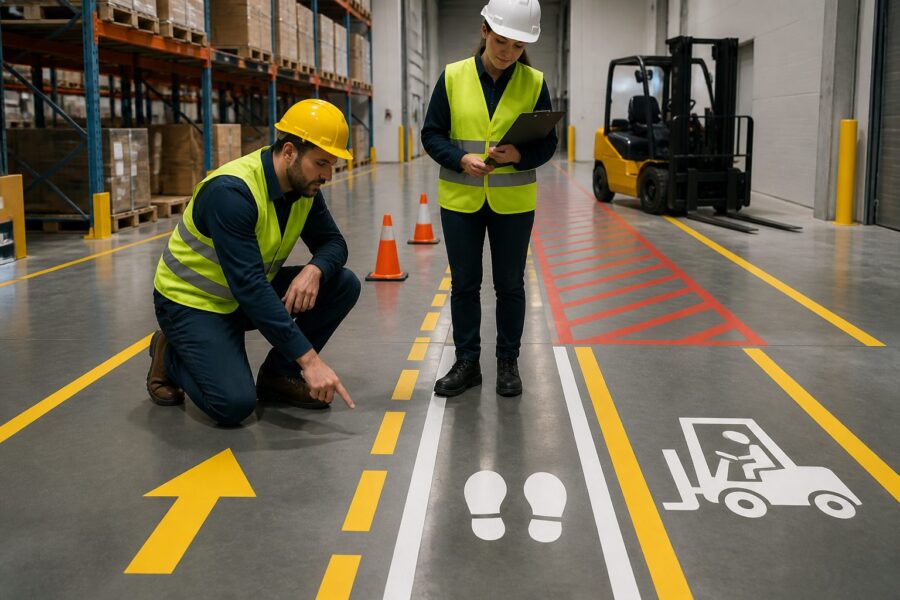
Navigating complex industrial environments, whether a bustling warehouse or a manufacturing plant, demands clear communication. Floor marking symbols provide that essential visual language, guiding personnel and equipment safely through designated areas.
These visual codes are far more than just painted lines; they are critical components of an effective safety and logistics strategy. Proper floor marking symbols prevent accidents, streamline operations, and enhance overall productivity within any facility.
Understanding the principles behind these symbols and adhering to international standards ensures a universally recognized system. This article explores the importance, implementation, and future of floor marking symbols in modern workplaces.
The Indispensable Role of Floor Marking Symbols in Modern Facilities
Floor marking symbols are fundamental to maintaining order and safety in industrial and commercial settings. They act as silent guides, directing traffic flow and delineating specific zones for various activities.
A well-planned system of floor marking symbols drastically reduces the risk of collisions between pedestrians and vehicles. It also minimizes confusion about permissible access routes and storage locations.
These visual cues are especially important in dynamic environments like warehouses where forklifts, pallet jacks, and human workers share the same space. Clear floor marking ensures everyone understands their boundaries and safe operating zones.
Effective floor marking contributes directly to improved operational efficiency by organizing workflows. Designated areas for raw materials, work-in-progress, and finished goods prevent clutter and delays.
The consistent application of standardized floor marking symbols across different facilities fosters a culture of safety. This consistency helps new employees quickly adapt to the site’s layout and safety protocols.
Ultimately, investing in a robust floor marking system is an investment in both worker safety and the smooth functioning of logistics. It prevents costly accidents and enhances the overall organization of the workspace.
Understanding the Language of Color: Common Floor Marking Standards
The specific colors used for floor marking symbols are not arbitrary; they follow established standards to convey immediate meaning. These color codes help workers quickly identify the nature of a particular area or hazard.
For instance, yellow lines commonly define aisles, traffic lanes, and work cell boundaries, indicating areas where caution is necessary. Red lines often signify fire protection equipment, emergency exits, or areas requiring immediate attention due to danger.
White lines typically designate equipment storage, workstations, or areas that are clear for general movement. Blue lines might indicate areas for raw materials, work-in-progress, or quality control points.
Green lines are frequently used for safety equipment, first aid stations, and safe passage ways. These specific color conventions are often guided by national and international safety standards, ensuring consistent interpretation.
The ANSI Z535 series and OSHA standards in the United States provide detailed guidance on safety color codes, including those for floor marking. Adhering to these guidelines is crucial for legal compliance and effective communication.
By standardizing the use of color, facilities create an intuitive visual system that transcends language barriers, making floor marking symbols universally understandable. This standardization is a cornerstone of effective safety labeling.
Essential Floor Marking Symbols for Pedestrian and Vehicle Safety
Beyond simple lines, various floor marking symbols communicate complex instructions and warnings visually. These symbols are critical for preventing accidents and ensuring smooth traffic flow in busy environments.
Common examples include pedestrian walkways, forklift traffic lanes, and specific hazard warnings marked directly on the floor. Understanding these symbols is essential for anyone operating within a facility.
| Symbol Type | Common Appearance | Purpose/Meaning |
|---|---|---|
| Pedestrian Walkway | White or yellow solid lines, sometimes with footstep icons | Designates safe paths for walking personnel, separating them from vehicle traffic. |
| Forklift Traffic Lane | Yellow or white solid lines, often with forklift icons | Indicates dedicated routes for industrial vehicles, improving logistics flow. |
| Stop/Yield | Large “STOP” or “YIELD” text, often within a red or yellow octagon/triangle | Mandates vehicles or pedestrians to stop or yield at intersections or hazardous points. |
| Hazard Warning | Yellow and black striped lines, exclamation marks, or specific hazard pictograms | Alerts to potential dangers like electrical panels, low clearances, or slippery surfaces. |
| Emergency Exit Route | Green lines with directional arrows, sometimes combined with “EXIT” text | Guides personnel to the nearest emergency exit during evacuations. |
| Storage Area | White lines forming a box, often with product-specific icons | Defines designated zones for storing materials, tools, or finished products. |
International Standards and Best Practices for Floor Marking
Adherence to international standards ensures that floor marking symbols are universally understood, which is particularly important for global logistics and multinational operations. Organizations like ISO play a significant role in establishing these benchmarks.
The ISO 7010 standard, for instance, specifies graphical symbols for safety signs, including those that can be adapted for floor marking. This standard promotes consistent safety labeling across different countries and industries.
Implementing best practices involves more than just applying tape; it requires careful planning and regular review. A comprehensive site assessment helps identify critical areas for floor marking symbols and potential hazards.
Training employees on the meaning of various floor marking symbols is also a best practice that reinforces safety protocols. Everyone on site must understand what each color and symbol signifies.
Many companies follow Lean manufacturing principles, which emphasize visual management, making floor marking an integral part of their operational strategy. This approach uses visual cues to reduce waste and improve efficiency.
By aligning with ISO and other relevant national standards, businesses enhance their safety compliance and create a more efficient, safer working environment. These standards provide a framework for effective communication through symbols.
Implementing Effective Floor Marking Strategies in Warehouses
Warehouses present unique challenges for floor marking symbols due to constant movement, heavy loads, and diverse operations. A strategic approach is essential for maximizing safety and efficiency in these environments.
Begin by mapping out all pedestrian walkways, forklift traffic lanes, and material storage areas. This initial planning phase helps identify potential conflict points and areas requiring clear delineation.
Clearly define loading and unloading zones with distinct floor marking symbols to prevent congestion and ensure smooth material flow. These zones often require specific instructions for vehicle positioning.
Use floor marking symbols to create “keep clear” zones around electrical panels, fire extinguishers, and emergency exits. This ensures unimpeded access to critical safety equipment.
Consider the type of floor surface and expected traffic when selecting floor marking materials. Durable tapes or paints designed for industrial use will withstand heavy wear and tear.
Regularly inspect and maintain your floor marking system to ensure its visibility and effectiveness. Faded or damaged floor marking symbols lose their communicative power and can lead to confusion.
Specialized Floor Marking for Hazardous Zones and Emergency Exits
Certain areas within a facility demand specialized floor marking symbols to communicate heightened risks or critical escape routes. These markings are paramount for protecting personnel during routine operations and emergencies.
Hazardous zones, such as areas with chemical storage, high voltage equipment, or robotic machinery, require explicit warnings. Emergency exit routes must be clearly delineated to facilitate rapid evacuation.
- Red and white striped lines for restricted access areas
- Yellow and black striped lines for trip hazards or caution zones
- Glow-in-the-dark or phosphorescent markings for emergency egress paths
- Specific pictograms for chemical spill kits or eyewash stations
- Directional arrows indicating the nearest emergency exit
- “DO NOT BLOCK” labels for fire doors and electrical panels
- Designated assembly points outside the facility
Beyond Lines: Advanced Floor Marking Techniques and Materials
Traditional painted lines are just one option for floor marking symbols; modern facilities benefit from a range of advanced techniques and materials. These innovations offer increased durability, visibility, and versatility.
Industrial floor marking tapes provide a quick and easy solution, often featuring strong adhesives and bevelled edges to resist lifting. Many tapes come in vibrant colors and pre-printed symbols, simplifying application.
Projected floor markings use high-intensity projectors to display virtual symbols onto the floor, eliminating the need for physical tape or paint. This method is ideal for temporary warnings or areas where physical markings would quickly degrade.
Embedded floor marking systems involve integrating durable materials directly into the concrete, offering extreme longevity and resistance to heavy traffic. These are often used for permanent installations in high-wear areas.
Photoluminescent floor markings absorb ambient light and glow in the dark, providing crucial guidance during power outages or smoke-filled emergency situations. These markings are essential for emergency egress paths.
Choosing the right material depends on the specific environment, traffic volume, and desired lifespan of the floor marking symbols. Evaluating these factors ensures the most effective and durable solution for your facility.
The Economic and Safety Benefits of Standardized Floor Marking
Implementing a standardized system of floor marking symbols yields significant economic and safety advantages for any organization. These benefits extend beyond immediate accident prevention.
From a safety perspective, clear floor marking reduces workplace accidents, minimizing injuries and associated costs like medical expenses and lost productivity. A safer workplace also boosts employee morale and retention.
Economically, effective floor marking symbols streamline logistics and material handling, leading to improved operational efficiency. Reduced clutter and clear pathways mean faster movement of goods and less wasted time.
Standardized labeling and symbols also reduce training time for new employees, as the visual cues are consistent and easily understandable. This consistency applies whether they are in a warehouse or a manufacturing plant.
Compliance with safety standards, often enforced by regulatory bodies, helps avoid costly fines and legal liabilities. Proactive floor marking demonstrates a commitment to workplace safety.
Ultimately, the initial investment in quality floor marking symbols pays dividends through enhanced safety records, increased productivity, and a more organized, compliant work environment. It is a fundamental aspect of modern industrial management.
Maintaining Your Floor Marking System for Long-Term Effectiveness
The effectiveness of floor marking symbols depends heavily on their ongoing maintenance and upkeep. A neglected system quickly loses its communicative power and can become a safety hazard itself.
Regular inspections are crucial to identify faded, chipped, or damaged floor markings that require repair or replacement. High-traffic areas typically need more frequent attention.
Cleaning protocols should be established to ensure that floor markings remain visible and free from dirt, grease, or debris. The type of cleaning agent must be compatible with the marking material.
When replacing or repairing floor marking symbols, always use materials that match the original specifications for color and durability. This consistency maintains the integrity of your visual communication system.
Consider the impact of heavy machinery and pallet traffic, which can quickly wear down even durable floor marking. Proactive reinforcement or use of more robust materials in these areas can extend lifespan.
A well-maintained floor marking system continuously reinforces safety protocols and operational efficiency, providing clear guidance for all personnel. This commitment to maintenance is key for long-term success.
The Future of Floor Marking: Smart Symbology and Digital Integration
The evolution of floor marking symbols is moving beyond static lines and into the realm of smart symbology and digital integration. These advancements promise even greater flexibility and responsiveness in dynamic environments.
Augmented reality (AR) applications could overlay virtual floor markings onto real-world views, providing dynamic guidance for temporary tasks or reconfigurable layouts. This technology offers incredible adaptability.
Sensor-integrated floor marking could detect approaching vehicles or pedestrians and trigger alerts or activate dynamic lighting. This creates a highly responsive safety system, particularly in blind spots.
Programmable LED floor tiles are already in use in some advanced facilities, allowing for instant changes to traffic flow, zone definitions, or emergency egress routes. These offer unparalleled flexibility for logistics.
The integration of floor marking symbols with facility management software allows for real-time monitoring of traffic patterns and optimization of layouts. This data-driven approach enhances both safety and efficiency.
While traditional floor marking will remain a staple, these emerging technologies represent an exciting future for visual communication in industrial settings. They promise more adaptive and intelligent safety and logistics solutions.