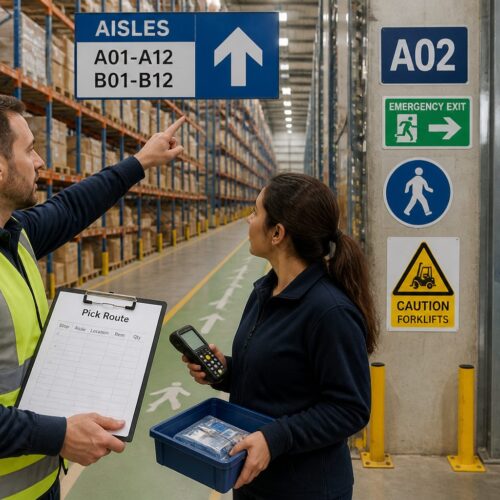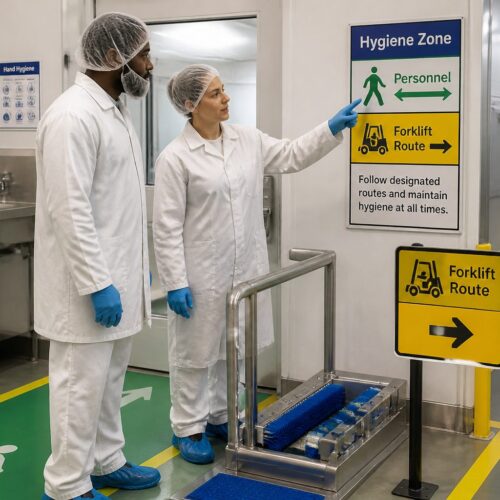

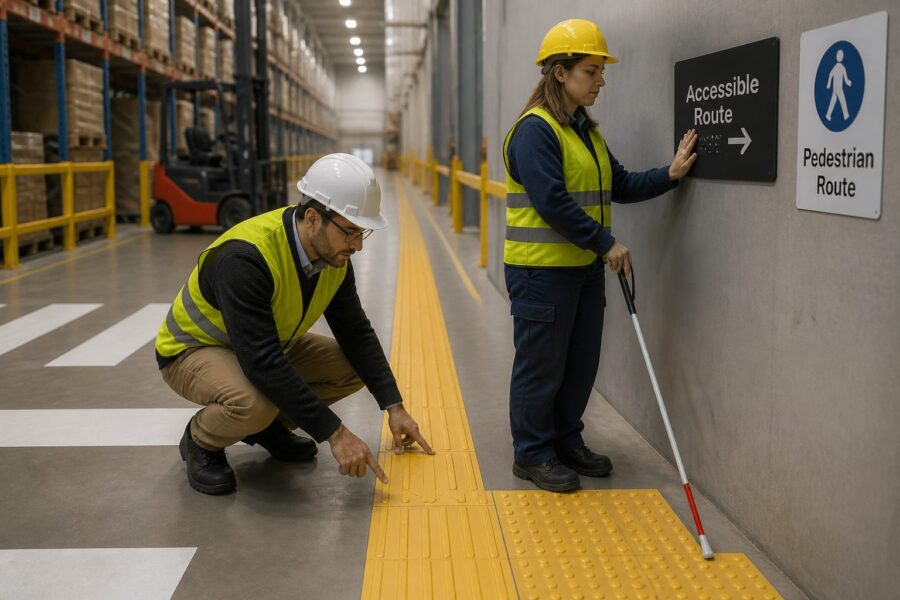
Warehouses, often bustling hubs of activity, can present significant challenges for individuals with disabilities. Traditional wayfinding systems, relying heavily on visual cues, create barriers for those with visual impairments or cognitive differences. Tactile wayfinding for warehouses offers a practical solution, promoting inclusivity and ensuring everyone can navigate these spaces safely and efficiently.
By incorporating elements like tactile signage, accessible maps, and universal design principles, warehouses can become more welcoming and user-friendly for all employees and visitors. This not only fosters a more equitable environment but also enhances overall safety and productivity.
This article examines the importance of tactile wayfinding in warehouses, exploring implementation strategies and compliance with accessibility standards. Discover how to make your warehouse accessible to everyone through thoughtful and effective design.
Understanding the Need for Tactile Wayfinding
Warehouses are complex environments, filled with potential hazards such as forklifts, heavy machinery, and stacked inventory. For individuals with visual impairments, navigating these spaces presents unique challenges that can compromise their safety and independence.
Tactile wayfinding systems address these challenges by providing a non-visual means of orientation and navigation. These systems use raised characters, Braille, and tactile symbols to convey information about routes, hazards, and key locations within the warehouse.
Beyond visual impairments, tactile wayfinding also benefits individuals with cognitive disabilities, learning differences, and those who are unfamiliar with the warehouse layout. The simplicity and universality of tactile cues make them easily understandable, regardless of a person’s background or abilities.
Implementing tactile wayfinding demonstrates a commitment to inclusivity and accessibility, creating a work environment where everyone can participate fully and safely. It’s not just about compliance with regulations; it’s about fostering a culture of respect and equal opportunity.
Consider the impact on employees who may experience temporary disabilities due to injury or illness. A warehouse equipped with tactile wayfinding offers continued independence and productivity, even during periods of limited vision or mobility.
Furthermore, tactile wayfinding can improve the overall efficiency of warehouse operations. By providing clear and accessible navigation, it reduces the time and effort required to locate specific items or areas, leading to faster order fulfillment and improved customer satisfaction.
The benefits extend to visitors as well, ensuring a positive and safe experience for clients, vendors, and other stakeholders. A welcoming and accessible environment can enhance your company’s reputation and demonstrate your commitment to social responsibility.
Ultimately, the need for tactile wayfinding stems from a fundamental principle: everyone deserves the right to navigate their environment with dignity and independence. By embracing this principle, warehouses can become more inclusive and equitable spaces for all.
Implementing Tactile Signage for Key Areas
Strategic placement of tactile signage is essential for effective wayfinding in warehouses. Key areas such as entrances, exits, restrooms, break rooms, and emergency exits should be clearly identified with tactile signs that are easily accessible to all.
ADA Compliant Signage requires specific mounting heights and locations to ensure accessibility. Signs should be positioned at a consistent height, typically between 48 and 60 inches from the floor, and located adjacent to the door or opening they identify.
Consider using tactile signs to indicate changes in elevation, such as ramps or stairs, to prevent accidents. These signs should include a tactile symbol representing the change in elevation, along with directional arrows indicating the direction of travel.
In areas with high noise levels, consider supplementing tactile signage with audible signals, such as voice announcements or beeping indicators. This multi-sensory approach enhances accessibility for individuals with both visual and auditory impairments.
Beyond the basics, think about incorporating tactile signage to identify specific departments, product storage zones, and loading docks. This level of detail can significantly improve navigation and efficiency within the warehouse.
For large warehouses, consider implementing a grid system with tactile signage to help users pinpoint their location and navigate to specific areas. This system can be particularly helpful for new employees or visitors who are unfamiliar with the layout.
Pay attention to the tactile characteristics of the signage itself. The raised characters and symbols should be easy to feel and differentiate, even for individuals with limited tactile sensitivity.
Remember to regularly inspect and maintain your tactile signage to ensure that it remains in good condition and easily accessible. Damaged or missing signs can create confusion and pose safety hazards.
Choosing Appropriate Materials and Placement
Selecting the right materials for tactile signage is crucial for durability and accessibility. Signs should be made from materials that are resistant to wear and tear, as well as easy to clean and maintain.
Consider using materials with high contrast to ensure that the tactile elements are easily discernible. Dark characters on a light background, or vice versa, provide optimal visibility for individuals with low vision.
| Material | Pros | Cons |
|---|---|---|
| Photopolymer | Durable, weather-resistant, ADA compliant | Can be expensive for large quantities |
| Acrylic | Lightweight, versatile, easy to fabricate | Less durable than photopolymer |
| Metal | Highly durable, vandal-resistant, aesthetically pleasing | Can be heavy and expensive |
| Wood | Sustainable, natural appearance, tactile feel | Requires regular maintenance, not suitable for all environments |
The placement of tactile signage should take into account the typical flow of traffic within the warehouse. Signs should be positioned in locations where they are easily visible and accessible, without obstructing pathways or creating hazards.
Ensure that tactile signs are securely mounted to prevent them from being damaged or removed. Use tamper-resistant hardware and mounting methods to deter vandalism and ensure the long-term integrity of the wayfinding system.
Consider the environmental conditions within the warehouse when selecting materials. For example, in areas with high humidity or temperature fluctuations, choose materials that are resistant to warping or fading.
The size of the tactile characters and symbols should be appropriate for the viewing distance. Larger characters are easier to read from a distance, while smaller characters may be more suitable for close-up viewing.
Think about the overall aesthetic of the warehouse when selecting materials and finishes. Tactile signage can be integrated seamlessly into the existing design, enhancing both accessibility and visual appeal.
Don’t forget to consider the potential for glare when positioning tactile signage. Avoid placing signs in direct sunlight or near bright light sources, as this can make it difficult to read the tactile elements.
Integrating Tactile Maps and Floor Plans
Tactile maps and floor plans provide a comprehensive overview of the warehouse layout, enabling individuals to orient themselves and plan their routes effectively. These maps use raised lines, textures, and symbols to represent different areas, pathways, and features within the building.
Tactile maps should be strategically located at key decision points, such as entrances, intersections, and elevator lobbies. This allows individuals to quickly grasp the overall layout and make informed decisions about their direction of travel.
Consider incorporating Braille labels and legends on tactile maps to provide additional information about specific areas and features. This ensures that individuals who read Braille can fully understand the map’s content.
Tactile floor plans can be particularly useful in complex warehouses with multiple levels or interconnected spaces. These plans provide a detailed representation of each floor, highlighting key landmarks and points of interest.
Ensure that tactile maps and floor plans are easy to interpret and understand. Use clear and consistent symbols, and avoid overcrowding the map with too much information.
Consider using different textures to represent different types of surfaces, such as smooth for walkways and rough for storage areas. This can help individuals differentiate between different areas of the warehouse.
The size of the tactile map should be appropriate for the viewing distance. Larger maps are easier to read from a distance, while smaller maps may be more suitable for close-up viewing.
Regularly update tactile maps and floor plans to reflect any changes in the warehouse layout. Outdated maps can be confusing and potentially dangerous.
Consider adding audible components to the tactile maps, such as recorded descriptions of key areas or directions. This can further enhance accessibility for individuals with visual impairments.
Ensuring Compliance with Accessibility Standards
Compliance with accessibility standards, such as the Americans with Disabilities Act (ADA), is essential for creating a truly inclusive warehouse environment. The ADA sets specific requirements for tactile signage, including character height, stroke width, and Braille specifications.
Ensure that all tactile signage in your warehouse meets these requirements to avoid potential legal issues and demonstrate your commitment to accessibility. Consult with an accessibility expert or signage professional to ensure compliance with all applicable standards.
- Character height: Minimum 5/8 inch, maximum 2 inches
- Stroke width: Proportional to character height
- Braille: Grade 2 Braille, meeting specific cell dimensions
- Mounting height: 48 to 60 inches from the floor
- Sign placement: Adjacent to the door or opening
Regularly inspect and maintain your tactile wayfinding system to ensure that it remains in good condition and continues to meet accessibility standards. Replace damaged or missing signs promptly to maintain the integrity of the system.
Consider conducting accessibility audits to identify areas for improvement and ensure ongoing compliance with evolving standards. These audits can help you proactively address potential accessibility issues and create a more inclusive warehouse environment.
Stay informed about any updates or revisions to accessibility standards. The ADA is periodically updated to reflect new technologies and best practices.
Document your compliance efforts to demonstrate your commitment to accessibility. This documentation can be helpful in the event of an audit or legal challenge.
Engage with disability advocacy groups to gain valuable insights and feedback on your accessibility initiatives. These groups can provide valuable guidance and support.
Remember that compliance is an ongoing process, not a one-time event. Regularly review and update your accessibility policies and practices to ensure that they remain effective and relevant.
The Benefits of Universal Design
Universal Design principles extend the benefits of tactile wayfinding beyond individuals with disabilities, creating a more user-friendly environment for everyone. Universal Design focuses on creating products and environments that are usable by people of all abilities, ages, and backgrounds, to the greatest extent possible.
By incorporating Universal Design principles into your warehouse, you can create a space that is not only accessible but also more efficient, safe, and enjoyable for all. This approach can lead to improved productivity, reduced errors, and increased employee satisfaction.
For example, clear and consistent signage benefits not only individuals with visual impairments but also those who are unfamiliar with the warehouse layout or who speak a different language. Similarly, well-lit and clutter-free pathways improve safety for everyone, regardless of their abilities.
Universal Design is not just about compliance; it’s about creating a more inclusive and equitable society where everyone has the opportunity to participate fully. By embracing these principles, you can transform your warehouse into a model of accessibility and innovation.
Consider the placement of frequently used items within easy reach of everyone. Adjustable shelving and workstations can accommodate individuals of different heights and abilities.
Implement ergonomic principles to reduce the risk of injuries and improve comfort for all employees. This includes providing adjustable chairs, proper lifting techniques, and regular breaks.
Use color-coding to help individuals quickly identify different areas or items within the warehouse. This can be particularly helpful for individuals with cognitive disabilities.
Provide a variety of seating options to accommodate different preferences and needs. This includes chairs with and without armrests, as well as standing desks.
Training and Awareness Programs
Implementing tactile wayfinding is only part of the solution; it’s also important to educate employees and visitors about how to use the system effectively. Training programs can help individuals understand the purpose of tactile signage, how to interpret tactile symbols, and how to navigate the warehouse using tactile maps and floor plans.
These programs should be tailored to the specific needs of different user groups, taking into account their individual abilities and learning styles. Consider offering training in multiple formats, such as in-person workshops, online tutorials, and printed materials.
Raise awareness about the importance of accessibility and inclusivity through internal communications and events. This can help foster a culture of respect and understanding, encouraging employees to support and assist individuals with disabilities.
Encourage feedback from employees and visitors about the effectiveness of the tactile wayfinding system. Use this feedback to identify areas for improvement and make ongoing adjustments to the system as needed.
Include accessibility training as part of your onboarding process for new employees. This will ensure that everyone is aware of the company’s commitment to inclusivity and how to support individuals with disabilities.
Partner with disability advocacy groups to provide training and resources for your employees. These groups can offer valuable expertise and insights.
Create a culture of open communication where employees feel comfortable discussing accessibility concerns and suggesting improvements. This can help you identify and address potential issues proactively.
Recognize and reward employees who champion accessibility and inclusivity. This will help reinforce the importance of these values within your organization.
The Future of Tactile Wayfinding
As technology continues to evolve, the future of tactile wayfinding holds exciting possibilities. Innovations such as smart signage, augmented reality, and personalized navigation apps have the potential to further enhance accessibility and independence for individuals with disabilities.
Smart signage can provide real-time information about routes, hazards, and points of interest, adapting to the user’s specific needs and preferences. Augmented reality apps can overlay tactile information onto the user’s view of the physical environment, providing a seamless and intuitive navigation experience.
Personalized navigation apps can use GPS and other sensors to guide users through the warehouse, providing turn-by-turn directions and alerting them to potential obstacles. These apps can also be customized to accommodate the user’s individual abilities and preferences.
The future of tactile wayfinding is about creating a more connected and responsive environment that adapts to the needs of all users. By embracing these innovations, warehouses can become truly accessible and inclusive spaces for everyone.
Consider the potential of integrating tactile wayfinding with other assistive technologies, such as voice recognition and screen readers. This can create a more seamless and integrated experience for individuals with disabilities.
Explore the use of 3D printing to create custom tactile signage and maps that are tailored to the specific needs of your warehouse. This can be a cost-effective way to create accessible wayfinding solutions.
Invest in research and development to explore new and innovative approaches to tactile wayfinding. This can help you stay ahead of the curve and create truly cutting-edge accessibility solutions.
Collaborate with other organizations and researchers to share knowledge and best practices in tactile wayfinding. This can help accelerate the development and adoption of accessible wayfinding solutions.
Conclusion
Implementing tactile wayfinding for warehouses is a critical step towards creating a more inclusive and accessible environment. By providing non-visual means of orientation and navigation, tactile signage, maps, and floor plans empower individuals with disabilities to navigate these spaces safely and independently.
Embracing Universal Design principles and complying with accessibility standards like the ADA are essential for ensuring that your warehouse is welcoming and user-friendly for all. It’s about more than just compliance; it’s about fostering a culture of respect and equal opportunity.
By investing in tactile wayfinding, you not only improve the lives of individuals with disabilities but also enhance overall safety, productivity, and employee satisfaction. Make the move to tactile wayfinding for warehouses today.
Create a workplace where everyone can thrive, regardless of their abilities, by implementing tactile wayfinding for warehouses. Your efforts will contribute to a more equitable and inclusive society for all.
Remember that creating an accessible warehouse is an ongoing journey. Continue to learn, adapt, and improve your accessibility practices to ensure that your warehouse remains welcoming and inclusive for all.
By taking these steps, you can create a warehouse that is not only accessible but also a model of innovation and social responsibility. Your commitment to accessibility will inspire others and help create a more inclusive world for everyone.