
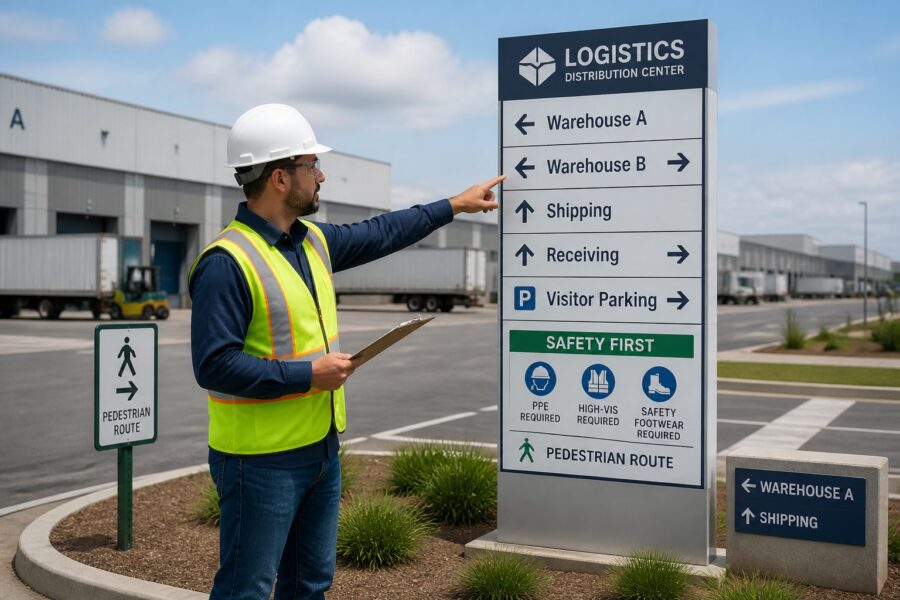
Outdoor logistics park navigation presents unique challenges due to the inherent scale and complexity of these vast environments. The vastness of multi-building campuses requires effective wayfinding systems that are not only user-friendly but also strategically placed to ensure smooth operations across all areas of the park.
As industrial campuses continue to expand, the need for clear and effective signage becomes even more critical for the safety of all users. Efficient navigation can significantly enhance operational efficiency, reduce the likelihood of accidents, and ultimately improve safety in outdoor logistics parks, making it imperative for organizations to prioritize these navigational aids.
Scale and Complexity Challenges in Outdoor Logistics Park Navigation
Large outdoor logistics parks often feature multiple buildings along with extensive road networks, which complicates navigation and requires careful planning. These complexities can lead to increased transit times, operational inefficiencies, and frustration for personnel if not properly managed, highlighting the importance of a strategic approach to wayfinding.
Effective wayfinding solutions are essential to direct personnel, vehicles, and goods efficiently throughout the logistics park. Without a robust industrial campus sign system, confusion and delays can arise, negatively impacting productivity and potentially resulting in costly operational disruptions.
Furthermore, the geographical layout of these facilities can be particularly challenging, with access points and infrastructure spread over vast areas that can confuse even seasoned employees. This necessitates the implementation of a comprehensive signage strategy that is tailored to guide users effectively through the intricacies of the park’s layout.
By incorporating well-designed signs at strategic locations throughout the logistics park, management can effectively overcome the challenges posed by scale and complexity. This thoughtful approach enhances the overall logistics park navigation experience for all users, ensuring that they can locate their destinations with ease.
Ultimately, investing in a clear and effective outdoor warehouse complex signage system can lead to improved safety and efficiency across the entire facility. It is essential for all stakeholders, from management to personnel, to understand the critical importance of these navigational aids in promoting a well-organized work environment.
Entrance Monument Signs and Campus Overview Maps at Entry Points
Entrance monument signs serve as the first point of contact for visitors and employees entering the logistics park, making a strong first impression. They establish a clear identity for the logistics park while providing essential information at entry points, which is crucial for guiding newcomers through the facility.
Campus overview maps displayed near these signs help users orient themselves upon arrival, showcasing the layout of the park and the locations of key buildings and facilities. These maps are particularly crucial for guiding newcomers through the intricate layout of multi-building campuses, helping them to navigate without frustration.
Placing these signs at strategic locations enhances visibility, making them easily readable from a distance as visitors approach the entrance. Clear graphics and concise information are vital for effective communication at entry points, ensuring that users can quickly grasp the necessary directions.
Incorporating directional arrows and key landmarks related to the facilities can further assist users in navigating the campus effectively. This thoughtful approach minimizes confusion and sets a positive tone for their experience, which can encourage repeat visits and foster a sense of belonging.
Overall, well-designed entrance monument signs and overview maps are essential elements in outdoor logistics park wayfinding. They lay the foundation for a seamless navigation experience that promotes safety, efficiency, and a positive interaction for everyone involved.
Building Identification Signs Visible From Access Roads and Parking Areas
Building identification signs are vital for directing traffic within a logistics park, serving as key navigational aids for both drivers and pedestrians. They should be clearly visible from access roads and parking areas to assist everyone in locating their destinations without confusion.
A well-placed identification sign can significantly reduce confusion and improve the flow of both personnel and vehicles throughout the park. This is especially important in a multi-building campus where numerous facilities may look similar and could easily lead to misdirection if not clearly marked.
Using contrasting colors and large fonts can enhance visibility and readability from a distance, ensuring that visitors can quickly find their destination without unnecessary delays. This attention to detail in design helps to facilitate efficient movement and contributes to a smoother workflow across the logistics park.
Moreover, including logos or branding elements adds a professional touch while reinforcing the identity of each building within the park. This practice not only contributes to a cohesive outdoor warehouse complex signage strategy but also helps to create a sense of community and brand presence.
Overall, effective building identification signs are crucial for improving logistics park navigation experiences. They play a significant role in enhancing operational efficiency and ensuring a safe environment for all users, making them an integral component of the overall signage strategy.
Internal Road Network Signs for Truck and Personnel Traffic Flows
Internal road network signs are essential for managing traffic flows within outdoor logistics parks, ensuring that both trucks and personnel can navigate the complex road systems safely. They guide these different types of traffic effectively while minimizing the risk of accidents and ensuring a smooth operational flow.
Properly designed signs can effectively separate pedestrian and vehicle traffic, enhancing safety for all users in the park. This is particularly important in busy logistics environments where both types of traffic are prevalent, necessitating clear communication through signage to prevent mishaps.
| Sign Type | Usage | Visibility Features |
|---|---|---|
| Directional Signs | Guide trucks and personnel | High contrast colors |
| Speed Limit Signs | Regulate vehicle speed | Large fonts |
| Pedestrian Crossing Signs | Alert drivers to crossings | Reflective materials |
| Stop Signs | Control traffic flow | Bright colors |
Signage should also include clear instructions and warnings to ensure compliance with necessary safety protocols. This reduces the likelihood of accidents and helps maintain an orderly environment within the logistics park, contributing to a safer workplace.
Incorporating technology, such as digital signs, can further enhance the effectiveness of internal road network signs, providing real-time updates on traffic conditions or changes in routes. These signs can be updated dynamically to respond to changing conditions, thereby improving logistics park navigation and facilitating smoother operations.
Parking Lot and Bay Door Numbering Systems for Large Campus Facilities
A clear numbering system for parking lots and bay doors is essential in large logistics facilities, as it enables quick identification of locations for drivers and personnel. This system significantly speeds up operations by allowing users to locate their designated areas with minimal hassle.
Effective numbering helps prevent confusion, especially in busy outdoor logistics parks where time is of the essence and efficiency is paramount. A systematic approach to numbering ensures that drivers can quickly locate their assigned parking or loading areas, reducing idle time.
Developing a logical numbering scheme that corresponds to the layout of the facility enhances user experience and promotes a sense of order. Consistency in sign design and placement is crucial for maximizing visibility and usability, allowing users to navigate the campus intuitively.
In addition, using color coding or symbols can further aid in quick recognition of specific areas within the logistics park. This multi-faceted approach allows users to navigate the campus with ease and efficiency, ultimately improving the overall operational workflow.
Ultimately, a well-implemented parking lot and bay door numbering system can significantly improve logistics park navigation and overall operational efficiency. This is a key component of an effective industrial campus sign system, playing a vital role in the smooth functioning of logistics operations.
Wayfinding Signs for Night Operations: Retroreflective and Illuminated Options
Wayfinding signs are crucial for night operations in outdoor logistics parks, where visibility can be compromised after dark. They must be designed to remain visible and legible in low-light conditions, ensuring that personnel can navigate safely and efficiently.
Utilizing retroreflective materials can enhance visibility significantly after dark, allowing signs to catch light from vehicles and remain legible. Additionally, illuminated signs can be strategically placed to provide guidance where necessary, ensuring that users can find their way easily even in nighttime conditions.
- LED-lit directional signs are effective in guiding traffic after dark.
- Retroreflective safety markers enhance visibility on pathways.
- Illuminated building identifiers help users locate facilities.
- Ground-level lighting for pathways ensures safe navigation.
- Emergency exit signs with backlighting are crucial for safety.
Incorporating these elements into an outdoor warehouse complex signage strategy ensures safe navigation for both personnel and vehicles, particularly during operations that extend into the night. This commitment to night visibility is essential for enhancing safety and operational efficiency across the logistics park.
By addressing night visibility, logistics parks can significantly improve safety and operational efficiency, reducing the risks associated with low-light navigation. This commitment to effective wayfinding supports the overall success of the facility and ensures a safer working environment for all personnel.
Seasonal Adjustments to Outdoor Wayfinding Signs in Snow and Low-Visibility Conditions
Seasonal changes can significantly affect the visibility and effectiveness of outdoor wayfinding signs, especially during winter months. Snow and low-visibility conditions necessitate adjustments to signage to ensure users can navigate safely and efficiently through the park.
Regular maintenance and updates to signage are essential during winter months, including the removal of snow accumulation and ensuring that signs remain unobstructed. This proactive approach is crucial for maintaining effective logistics park navigation and preventing accidents due to obscured signs.
Implementing temporary signage or additional markers can also help during adverse weather conditions, providing users with clear directions despite challenging visibility. These adjustments are crucial for maintaining effective logistics park navigation and ensuring that all personnel can find their way.
Moreover, using higher mounting heights for signs can prevent them from being covered by snow, which is a common issue in winter conditions. This proactive approach ensures that wayfinding remains effective regardless of seasonal challenges, allowing users to navigate confidently.
Ultimately, adapting outdoor wayfinding signs to seasonal conditions is vital for maintaining safety and efficiency within the logistics park. As such, logistics parks must prioritize these adjustments to support operations year-round and ensure the safety of all users.
Wayfinding for Emergency Vehicle Access Across Multi-Building Sites
Emergency vehicle access is a critical consideration in the planning of logistics parks, as it directly impacts the safety and effectiveness of emergency response. Effective wayfinding ensures that emergency services can quickly locate and access multi-building sites without unnecessary delays.
Signage should clearly indicate routes for emergency vehicles, avoiding potential obstructions and guiding responders through the facility. This is essential for ensuring rapid response times during emergencies, which can save lives and protect valuable property from damage.
Incorporating dedicated emergency routes into the overall signage strategy can enhance safety and ensure that emergency responders have clear paths to follow. Clear markings and instructions help guide emergency responders through complex layouts, allowing for quick access to critical areas of the park.
Additionally, regular drills and reviews can help ensure that all personnel are familiar with emergency protocols and evacuation routes. This preparedness is essential for maintaining safety in outdoor logistics parks, as it equips employees with the knowledge needed to respond effectively in various situations.
Overall, prioritizing wayfinding for emergency vehicle access is crucial for the safety and efficiency of multi-building campuses. This commitment can significantly enhance the operational integrity of logistics parks, ensuring that emergency services can respond promptly and effectively when needed.
Sign Material and Mounting Choices for Long-Term Outdoor Durability
Selecting appropriate materials for outdoor signage is essential for ensuring long-term durability in the face of environmental challenges. Weather-resistant materials can withstand harsh conditions while maintaining visibility over time, making them an ideal choice for logistics parks.
Choosing the right mounting techniques also contributes to the longevity of outdoor wayfinding signs, as secure and stable installations can prevent damage from wind, snow, and other environmental factors. This careful consideration helps to prolong the life of the signage and ensures that it remains effective for years to come.
Options such as aluminum, high-density polyethylene, and weather-resistant vinyl are popular choices for outdoor signs, as these materials offer both durability and versatility. These materials not only withstand the elements but can also be customized for branding and visibility, enhancing their effectiveness in guiding users.
Additionally, using corrosion-resistant fasteners and supports enhances the stability of signs, which is essential for maintaining their integrity over time. This attention to detail in the installation process can significantly prolong the life of the signage and ensure it serves its purpose effectively.
Ultimately, investing in high-quality materials and proper mounting techniques is vital for outdoor signage in logistics parks. This commitment ensures that wayfinding systems remain effective over time, contributing to a safer and more efficient environment for all users.