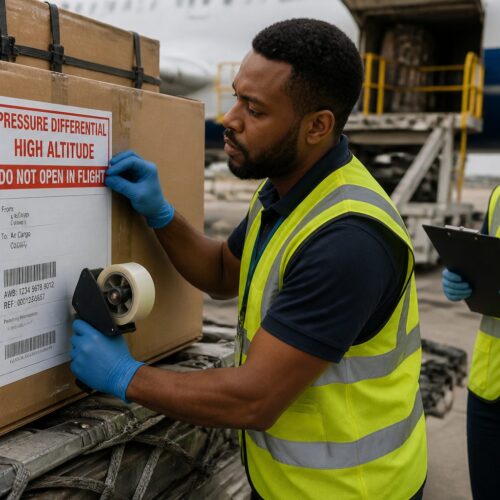


Moving dangerous goods across continents or even across town requires more than just careful handling; it demands an intricate system of universally understood symbols and regulations. Without precise adr, imdg, and iata dangerous goods labeling, the risks of accidents, environmental damage, and supply chain disruptions escalate dramatically. These international standards ensure that everyone involved in the transport chain, from manufacturers to emergency responders, speaks the same safety language.
The complexity arises because different modes of transport – road, sea, and air – operate under distinct regulatory bodies, each with specific requirements for dangerous goods labeling. Understanding these nuances is not merely a matter of compliance; it is fundamental to global safety and efficient logistics. Incorrect labeling can lead to significant penalties, shipment delays, and, most critically, severe safety hazards for personnel and the public.
Our goal today is to demystify the key differences between ADR, IMDG, and IATA dangerous goods labeling, providing clarity on how these standards impact the safe movement of hazardous materials. We will examine the specific demands of each transport mode, emphasizing why adherence to these detailed labeling protocols is non-negotiable for anyone involved in international trade. Proper symbols and clear labeling prevent confusion and protect lives.
The Universal Need for Dangerous Goods Labeling Standards
The global movement of goods includes countless items classified as dangerous, ranging from everyday aerosols to industrial chemicals and radioactive materials. Effective dangerous goods labeling provides immediate visual cues about the hazards contained within a package or container. This immediate recognition is paramount for preventing incidents during handling, storage, and transit.
Standardized symbols and labeling systems allow workers in any country to quickly identify potential dangers, regardless of language barriers. This universal understanding is a cornerstone of international safety and efficient logistics operations worldwide. Without common standards, the risk of misinterpretation and subsequent accidents would be unmanageable.
The United Nations Economic Commission for Europe (UNECE) developed the Model Regulations on the Transport of Dangerous Goods, often called the “Orange Book.” This foundational document provides the framework for classifying dangerous goods and dictates the principles for their labeling and marking. ADR, IMDG, and IATA dangerous goods labeling regulations all derive their core principles from these UN Model Regulations.
These regulations ensure consistent application of hazard symbols, packaging requirements, and documentation across various transport modes. Harmonization reduces complexity for shippers and enhances overall safety across the supply chain. A robust system of standards is essential for maintaining integrity in global trade.
Implementing these standards effectively protects not only the goods themselves but also the personnel handling them and the environment they traverse. A well-labeled package is a safer package, minimizing risks for everyone involved in its journey. This commitment to safety through clear labeling is a shared responsibility across the entire logistics network.
Understanding the Regulatory Frameworks: ADR, IMDG, and IATA DGR
Different transport modes necessitate distinct regulatory frameworks, each tailored to the unique risks and operational environments of road, sea, and air travel. These regulations ensure that dangerous goods are transported safely and compliantly, minimizing hazards inherent to each specific mode. Understanding these distinctions is fundamental for anyone involved in shipping hazardous materials.
ADR (Accord européen relatif au transport international des marchandises Dangereuses par Route) governs the international carriage of dangerous goods by road in Europe and some non-European countries. It specifies requirements for packaging, labeling, vehicle construction, and driver training. Compliance with ADR is mandatory for road transport within its signatory states, impacting numerous warehouse and distribution centers.
The IMDG Code (International Maritime Dangerous Goods Code) applies to the international carriage of dangerous goods by sea. Developed by the International Maritime Organization (IMO), it covers packaging, container stowage, segregation, and documentation for ocean freight. This code is crucial for global trade, as a vast majority of dangerous goods travel by sea.
IATA DGR (International Air Transport Association Dangerous Goods Regulations) outlines the requirements for transporting dangerous goods by air. While based on the International Civil Aviation Organization (ICAO) Technical Instructions, IATA DGR often includes more restrictive conditions due to the unique safety challenges of air travel. Air cargo operations demand the highest level of precision in adr, imdg, and iata dangerous goods labeling.
Each regulation, while sharing common principles from the UN Model Regulations, introduces specific provisions that address the particular vulnerabilities and operational practices of its respective transport mode. Shippers must identify the correct regulation for their chosen transport method and ensure full compliance with its specific labeling and documentation requirements. This layered approach to safety ensures comprehensive coverage across the entire logistics chain.
Core Principles of Dangerous Goods Classification and Hazard Symbols
All three major regulations—ADR, IMDG, and IATA—adhere to the UN system for classifying dangerous goods into nine distinct classes based on the primary hazard they present. This standardized classification is the bedrock of all dangerous goods labeling and safety protocols. Each class corresponds to specific hazard symbols designed for immediate visual recognition.
These hazard symbols, often referred to as placards or labels, are square-on-point (diamond-shaped) and convey critical information about the nature of the danger. They feature pictograms, colors, and class numbers to ensure universal understanding across languages and borders. Consistent application of these symbols is vital for safety and logistics efficiency.
| UN Hazard Class | Description | Example Hazard Symbol Element |
|---|---|---|
| Class 1 | Explosives | Exploding bomb pictogram |
| Class 2 | Gases | Gas cylinder pictogram |
| Class 3 | Flammable Liquids | Flame pictogram |
| Class 4 | Flammable Solids | Flame pictogram |
| Class 5 | Oxidizing Substances & Organic Peroxides | Flame over circle pictogram |
| Class 6 | Toxic & Infectious Substances | Skull & crossbones or Biohazard pictogram |
| Class 7 | Radioactive Material | Trefoil pictogram |
| Class 8 | Corrosive Substances | Corrosion pictogram |
| Class 9 | Miscellaneous Dangerous Goods | Black and white stripes, sometimes with text |
ADR Road Transport: Specific Labeling Demands
ADR regulations impose specific and highly visible labeling requirements for dangerous goods transported by road, focusing on both individual packages and the transport units themselves. This dual approach ensures that hazards are clearly communicated at every stage of the journey. Road transport demands robust and easily identifiable markings.
Packages containing dangerous goods must display the appropriate hazard labels (diamond-shaped pictograms) corresponding to their UN hazard class. These labels must be durable, weather-resistant, and applied to at least two opposite sides of the package. The size of these labels is also prescribed, ensuring they remain visible even on larger containers.
Vehicles carrying dangerous goods under ADR must display orange plates, which are rectangular and typically feature a hazard identification number (HIN) and the UN number of the substance. These orange plates are crucial for emergency responders, providing immediate information about the specific dangers involved. The HIN indicates the nature of the hazard, such as flammability or corrosivity.
In addition to hazard labels and orange plates, ADR requires specific markings for certain types of dangerous goods, such as environmentally hazardous substances. These additional symbols ensure that all potential risks are communicated effectively to those handling or encountering the cargo. Proper adr, imdg, and iata dangerous goods labeling is a cornerstone of road safety.
Compliance also extends to the physical condition of the labels and placards, which must remain legible throughout the entire transport operation. Damaged or obscured labels are considered non-compliant and can lead to fines or delays. The integrity of these safety symbols is paramount for preventing accidents and ensuring swift emergency response.
IMDG Code for Maritime Shipping: Unique Labeling Requirements
Maritime transport under the IMDG Code presents its own set of challenges and, consequently, unique dangerous goods labeling requirements. The vast scale of vessels and the harsh marine environment necessitate robust and resilient marking systems. Labels must withstand prolonged exposure to saltwater, sun, and extreme weather conditions.
Similar to ADR, individual packages must bear appropriate hazard labels, but the IMDG Code also places a strong emphasis on the marking of freight containers and cargo transport units (CTUs). Large placards, identical in design to the package labels but significantly larger, must be displayed on all four sides of a container. These placards are critical for identifying hazards during loading, unloading, and at sea.
A distinctive requirement under IMDG is the marine pollutant mark, which is a specific symbol for substances harmful to the marine environment. This mark is crucial for environmental safety, alerting handlers and responders to potential ecological damage in case of a spill. It features a fish and a tree, clearly indicating environmental hazard.
The IMDG Code also dictates specific marking for “limited quantities” and “excepted quantities” of dangerous goods, which may have reduced labeling requirements under certain conditions. However, even with these exceptions, clear identification remains necessary for proper segregation and stowage on board vessels. Understanding these nuances is key to compliant shipping.
Proper segregation of incompatible dangerous goods within a container and on the vessel itself is a major safety concern for sea transport. Accurate adr, imdg, and iata dangerous goods labeling ensures that incompatible materials are never stowed together, preventing dangerous reactions. The IMDG Code provides detailed tables and diagrams for safe segregation, relying heavily on the information conveyed by labels and placards.
IATA DGR for Air Cargo: Stringent Labeling and Handling
Air transport, governed by IATA DGR, imposes the most stringent and detailed dangerous goods labeling requirements due to the unique environment and high-stakes nature of air travel. Even small errors can have catastrophic consequences, making precision and strict adherence to rules absolutely essential. Air cargo demands unparalleled attention to detail in its labeling and handling protocols.
Packages for air freight must display not only the primary hazard labels but also subsidiary risk labels if applicable, along with the UN number, proper shipping name, and the consignor’s and consignee’s details. Orientation arrows are also mandatory for liquid dangerous goods, ensuring packages are kept upright throughout transit. These specific symbols and markings are non-negotiable for air transport safety.
- Clear and legible hazard labels
- UN number and proper shipping name
- Consignor and consignee details
- Shipper’s Declaration for Dangerous Goods
- Orientation arrows for liquids
- Cargo Aircraft Only label (if restricted)
- Lithium battery handling label (if applicable)
- Overpack marking (if used)
Harmonization Efforts and the UN Model Regulations
Despite the specific differences in adr, imdg, and iata dangerous goods labeling, a significant effort exists to harmonize these international standards through the UN Model Regulations. This “Orange Book” provides a common foundation for the classification, labeling, and documentation of dangerous goods across all transport modes. Its principles aim to simplify compliance for shippers and enhance global safety.
The UN Model Regulations establish the nine hazard classes and the universal hazard symbols that are recognized worldwide. By adhering to these core principles, each modal regulation can then build upon them with specific requirements tailored to its unique operational environment. This layered approach ensures both consistency and specificity in safety protocols.
Updates to the UN Model Regulations occur biennially, and ADR, IMDG, and IATA DGR then incorporate these changes into their respective codes. This continuous update process ensures that the regulations remain relevant and responsive to new types of dangerous goods and evolving safety best practices. Staying current with these revisions is a constant challenge for logistics professionals.
Harmonization reduces the burden on international shippers by providing a common language for dangerous goods. While modal-specific rules still exist, the underlying classification and labeling principles remain consistent. This consistency minimizes the potential for misinterpretation and improves overall supply chain safety and efficiency.
The goal is not to eliminate all differences, but to ensure that the fundamental safety information conveyed by dangerous goods labeling is universally understood, regardless of whether the package travels by road, sea, or air. This shared understanding is critical for effective emergency response and preventing accidents globally. Continual adherence to these standards is essential for maintaining a safe international trade environment.
The Critical Role of ISO Standards in Safety Symbology
Beyond the regulatory frameworks of ADR, IMDG, and IATA, International Organization for Standardization (ISO) standards play a crucial, often overlooked, role in reinforcing safety and logistics symbology. ISO standards provide detailed specifications for the design, application, and performance of various safety signs and symbols, enhancing clarity and consistency. These standards support and complement the transport regulations.
For example, ISO 7010 specifies graphical symbols for public information safety signs, including those used in industrial settings and warehouses, which often interact with dangerous goods. This standard ensures that prohibition signs, mandatory action signs, and warning signs are universally recognizable. Consistent symbols reduce confusion and improve safety awareness in operational areas.
ISO standards also address the quality and durability of labeling materials, which is essential for dangerous goods labels to remain legible throughout their journey. A label that fades or peels off mid-transit defeats its entire purpose, creating significant safety risks. Adherence to ISO material specifications helps ensure the longevity and effectiveness of safety markings.
The development of standardized pictograms and symbols by ISO contributes significantly to the visual language of safety, extending beyond just transport to encompass workplace safety and emergency information. This broader application reinforces the meaning of hazard symbols, making them more intuitive for a wider audience. Effective symbology is a global imperative for safety.
Integrating ISO principles into the design and application of adr, imdg, and iata dangerous goods labeling enhances their effectiveness and reliability. These standards provide a robust framework for ensuring that safety information is communicated clearly and consistently, supporting global logistics operations. A well-designed symbol is a powerful tool for preventing accidents and protecting lives.
Ensuring Compliance: Training, Documentation, and Audits
Achieving and maintaining compliance with adr, imdg, and iata dangerous goods labeling requirements is a complex, ongoing process that extends far beyond simply sticking a label on a package. It involves comprehensive training, meticulous documentation, and regular internal and external audits. These elements form the backbone of a robust safety management system.
Training is arguably the most critical component, as personnel involved at every stage—from classification and packaging to loading and documentation—must possess the necessary knowledge. This includes understanding the specific labeling requirements for each transport mode and the potential consequences of non-compliance. Regular refresher training ensures that knowledge remains current and practices are up-to-date.
Accurate and complete documentation, such as the Shipper’s Declaration for Dangerous Goods, is essential for demonstrating compliance and providing critical information to carriers and authorities. These documents must precisely reflect the dangerous goods labeling applied to packages and containers. Any discrepancy can lead to delays, fines, or even serious safety incidents.
Internal audits allow companies to proactively identify potential gaps or non-conformities in their dangerous goods handling processes before they become major issues. External audits by regulatory bodies or third-party experts provide an independent assessment of compliance. These checks are vital for verifying that all safety protocols, including correct labeling, are consistently followed.
Investing in robust compliance programs protects not only the company from legal and financial penalties but also safeguards employees, the public, and the environment. A proactive approach to safety and logistics, driven by thorough training and diligent oversight, is indispensable for any organization handling dangerous goods. This commitment ensures that all dangerous goods labeling is accurate and effective.
The Future of Dangerous Goods Labeling and Logistics Safety
The landscape of dangerous goods labeling and logistics safety is continually evolving, driven by technological advancements, new types of hazardous materials, and an increasing emphasis on environmental protection. Future developments will likely focus on enhancing the efficiency, accuracy, and resilience of current labeling systems. Innovation will play a key role in improving safety standards.
Digitalization and smart labeling technologies are emerging trends that promise to revolutionize how dangerous goods information is managed and communicated. QR codes, RFID tags, and NFC chips could embed comprehensive safety data directly onto packages, accessible instantly via handheld devices. This could provide richer information than traditional hazard symbols alone.
Further harmonization efforts are expected to continue, aiming to reduce the remaining discrepancies between ADR, IMDG, and IATA dangerous goods labeling. The goal is to create an even more seamless and universally understood system for classifying and communicating hazards across all transport modes. This ongoing work simplifies compliance for global businesses.
The rise of e-commerce and the increasing complexity of global supply chains also present new challenges, particularly for smaller shipments and direct-to-consumer dangerous goods. Regulations will need to adapt to ensure that safety standards are maintained across these diversified distribution channels. The warehouse environment will see more sophisticated handling protocols.
Ultimately, the future points towards more integrated, intelligent, and adaptable dangerous goods labeling systems that leverage technology to improve safety and logistics efficiency. These advancements will continue to build upon the foundational principles established by the UN Model Regulations and enforced by ADR, IMDG, and IATA. A commitment to continuous improvement is essential for global safety.