
In any emergency, clear communication saves lives. When seconds count, there is no time for language barriers or ambiguity about what to do or where to find help. This is where first aid pictograms become absolutely essential for global safety.
These universal graphic symbols provide immediate instructions and information, guiding people through critical moments without needing to read a single word. They are a silent, yet powerful, language understood by almost everyone, regardless of their native tongue or literacy level. Understanding these emergency pictograms can empower individuals to act quickly and correctly in a crisis.
From identifying a first aid station to indicating the proper procedure for CPR, these medical symbols streamline emergency responses. This guide explores the most common first aid signs, their meanings, and why their standardization is so important for public safety around the world.
The Importance of Standardized First Aid Pictograms
Standardized first aid pictograms are not merely decorative elements; they form a critical component of public health and safety infrastructure. Their consistent use across different countries and cultures ensures that emergency information remains universally understandable. This consistency is particularly important in places with diverse populations or high tourist traffic.
Imagine a tourist in a foreign country facing a medical emergency; a clearly understood first aid sign could make all the difference. These emergency pictograms cut through language barriers, allowing for rapid comprehension during stressful situations. People can instantly grasp the meaning of a symbol like a stretcher or an automated external defibrillator (AED).
International organizations like the International Organization for Standardization (ISO) work hard to develop and maintain these universal medical symbols. Their efforts mean that a symbol for “emergency exit” looks the same in Tokyo as it does in Toronto. This global alignment prevents confusion and speeds up response times when every moment matters.
Without such standardization, each region might develop its own unique first aid signs, leading to chaos and misunderstanding in cross-border travel or multinational workplaces. The risk of misinterpreting critical instructions increases exponentially without a unified system. That alone makes the push for universal pictograms a priority.
These first aid pictograms also serve an educational purpose, subtly teaching people about safety procedures and equipment locations. Over time, repeated exposure to these symbols makes their meanings instinctive. This builds a collective understanding that strengthens emergency preparedness for everyone.
I believe that investing in the widespread adoption and clear display of these standardized medical symbols is a direct investment in human lives. It reduces anxiety during emergencies and empowers individuals to respond effectively. We all benefit from this shared visual language.
Understanding Universal Medical Symbols
Universal medical symbols represent a powerful tool for immediate communication in health and safety contexts. These first aid pictograms convey complex information with simple, graphic representations. Their design prioritizes clarity and instant recognition, even by those with limited literacy.
Many of these symbols are so common that we encounter them daily without consciously thinking about their meaning. The white cross on a green background, for instance, immediately tells you where to find a first aid station. This symbol is widely recognized as a universal first aid sign.
Other emergency pictograms indicate specific medical services or equipment. A red cross, while often associated with medical aid, has specific protections under international law and should only be used by authorized organizations. Most general first aid signs use the white cross on green.
You often see medical symbols for emergency telephones or stretchers in public spaces. These symbols guide people directly to necessary resources during an incident. Their consistent appearance helps reduce panic and improve efficiency when time is short.
These visual cues also extend to pharmaceutical products, indicating proper dosage, storage, or potential hazards. For example, a pictogram of a sun with a line through it tells you to keep medication out of direct sunlight. This ensures patient safety and proper product handling.
Understanding these universal medical symbols empowers individuals to navigate emergency situations more confidently. It removes the guesswork from critical decisions, allowing people to focus on helping themselves or others. I think this foundational knowledge is a must for everyone.
Pictograms for Injury Types
Certain first aid pictograms specifically illustrate common injury types, providing quick visual cues for responders and affected individuals. These emergency pictograms help to quickly identify the nature of a medical problem. They guide people toward appropriate immediate actions or direct them to specific medical assistance.
These medical symbols are often found in safety manuals, training materials, and on certain first aid kits. They aim to simplify the initial assessment of an injury. Knowing these symbols can help you understand what kind of help someone might need.
| Pictogram Description | Meaning | Context/Example |
|---|---|---|
| Bandaged Head | Head Injury, Concussion Risk | Display near hard hat areas or where falls are possible. |
| Arm in Sling | Fracture, Sprain, or Dislocation | Common in sports facilities or construction sites. |
| Bleeding Wound | Serious Cut, Laceration, or Hemorrhage | Indicates need for direct pressure and immediate medical attention. |
| Burn Hand | Burns (Thermal, Chemical, Electrical) | Found near heat sources, chemical storage, or electrical panels. |
| Choking Person | Choking Hazard, Airway Obstruction | Often seen in dining areas or places with small objects. |
| Eye Injury | Eye Contamination or Trauma | Prominently displayed near eyewash stations or chemical labs. |
Identifying Medical Equipment Through Symbols
Knowing where to find essential medical equipment in an emergency can be the difference between a minor incident and a severe one. First aid pictograms make this identification straightforward and quick. These specialized emergency pictograms point directly to life-saving devices.
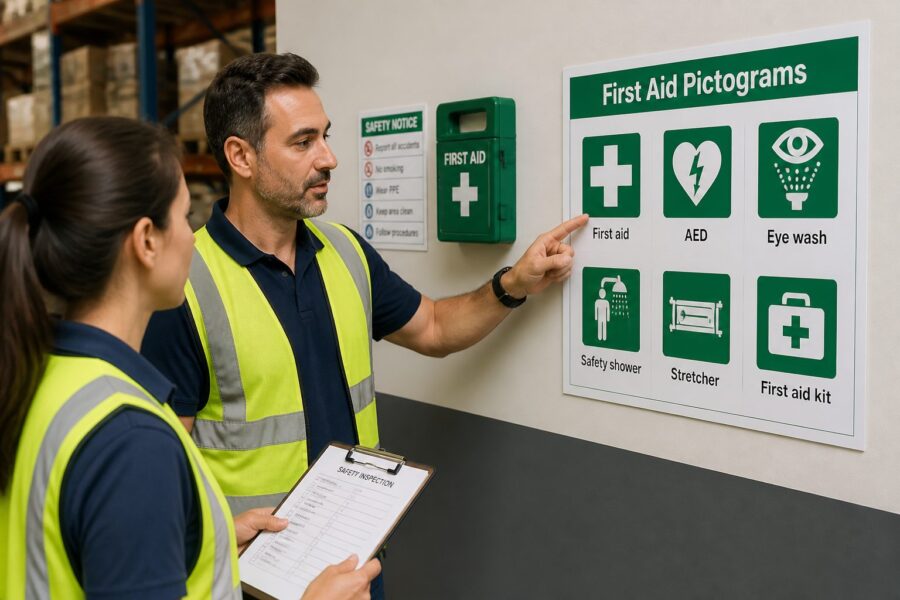
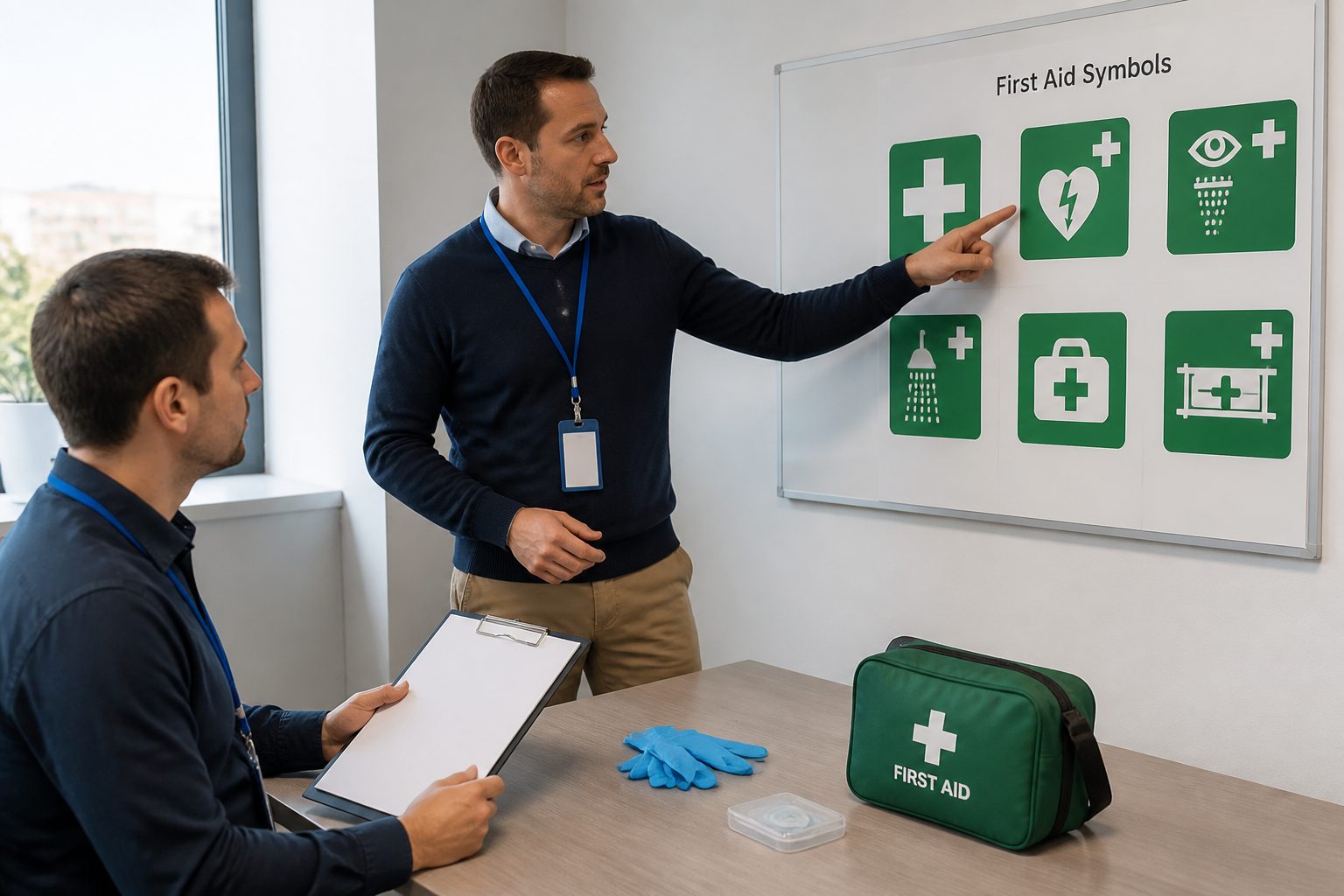
The most recognizable of these medical symbols is often for the Automated External Defibrillator, or AED. This pictogram usually shows a heart with a lightning bolt or a cross, clearly indicating the location of this device. You will see these first aid signs in public buildings, airports, and sports arenas.
Another common symbol points to an emergency shower or eyewash station. These are often found in industrial settings or laboratories where chemical exposure is a risk. The symbol typically depicts a person under a shower or washing their eyes, making its purpose immediately clear.
First aid kits themselves often have dedicated pictograms, usually the white cross on a green background, sometimes with a stretcher or a hand symbol. These first aid signs ensure that anyone can locate the supplies needed for immediate care. Their consistent design helps prevent confusion.
Sometimes you see pictograms for stretchers, wheelchairs, or emergency oxygen supplies. These medical symbols are especially important in larger facilities like hospitals, care homes, or large event venues. They guide staff and visitors to critical mobility and respiratory support equipment.
I think these specific equipment pictograms streamline emergency response by eliminating the need to search or ask for directions. They are a silent guide in chaotic moments, ensuring that help arrives precisely where it is needed. We all benefit from this clear guidance.
Recognizing Hazard Warnings in Emergency Settings
Beyond indicating first aid supplies or procedures, many emergency pictograms serve a crucial role in warning people about potential hazards. These medical symbols are designed to grab attention immediately and convey danger without any words. They give people time to react and protect themselves.
Common hazard symbols include the skull and crossbones for poison, the flame for flammable materials, or the radiation symbol for radioactive substances. While not strictly first aid signs, they directly relate to preventing injuries that would require first aid. Knowing these prevents accidents.
You also find pictograms for electrical shock risk, often showing a lightning bolt. These are particularly important in industrial environments or near high-voltage equipment. They warn people to maintain a safe distance and avoid contact.
Biohazard symbols, typically a three-crescent shape, warn of biological risks from infectious agents or contaminated materials. These emergency pictograms are essential in healthcare settings, laboratories, and waste disposal areas. They protect both workers and the public from exposure.
Corrosive substance symbols, showing a hand being eaten away or a substance dripping onto a surface, alert people to chemicals that can cause severe burns. These medical symbols are often found on containers and in storage areas. They prompt careful handling and the use of personal protective equipment.
I find these hazard pictograms to be a proactive form of first aid, as they aim to prevent injuries before they happen. They are a critical part of a comprehensive safety strategy, ensuring that everyone understands potential dangers. Recognizing them is a basic safety skill.
Pictograms for Emergency Procedures
Emergency pictograms extend beyond identifying locations and equipment; they also visually guide people through critical procedures during a crisis. These medical symbols break down complex actions into simple, sequential steps. This helps ensure that anyone can follow them under pressure.
One of the most important sets of first aid pictograms relates to cardiopulmonary resuscitation, or CPR. These symbols often show a person performing chest compressions and mouth-to-mouth resuscitation. They provide a quick reminder of the correct technique for this life-saving intervention.
- Administering CPR (chest compressions, rescue breaths)
- Using an AED (attach pads, deliver shock)
- Performing the Heimlich maneuver (abdominal thrusts)
- Applying a tourniquet (stop severe bleeding)
- Calling emergency services (phone symbol, 911/112)
- Evacuation routes (running person, arrow)
- Shelter-in-place instructions (person inside building)
Global Standards for First Aid Signs
The development of global standards for first aid signs is a testament to international collaboration aimed at enhancing safety worldwide. Organizations like the International Organization for Standardization (ISO) play a leading role in this effort. They work to ensure that first aid pictograms are consistent across borders.
ISO 7010, for example, specifies graphical symbols for safety signs, including those related to first aid and emergency exits. This standard covers shape, color, and graphical content, ensuring uniformity. Adherence to ISO 7010 means that an emergency pictogram carries the same meaning everywhere.
This global harmonization is not just about convenience; it is about saving lives. In a world where people travel frequently and work in multinational environments, universally understood medical symbols are indispensable. They eliminate confusion during critical moments.
National and regional bodies often adopt or adapt these international standards into their own regulations. This ensures that first aid signs in a local hospital or factory align with global best practices. It creates a seamless safety language that transcends linguistic differences.
The process of creating these standards involves extensive research, testing, and consensus-building among experts from various countries. This rigorous approach ensures that the chosen symbols are truly intuitive and effective. It really is a massive undertaking.
I believe that these global efforts create a safer, more predictable environment for everyone. They empower individuals with the knowledge to respond correctly to emergencies, no matter where they are. This shared understanding is a powerful force for good.
Effective Placement of First Aid Pictograms
Even the most perfectly designed first aid pictograms lose their effectiveness if they are not displayed correctly. Strategic placement is as important as the design itself in ensuring that emergency pictograms are seen and understood when needed most. Visibility and accessibility are key considerations.
First aid signs should always be placed in highly visible locations, free from obstructions. This means clear sightlines in corridors, near exits, and in common areas. You want people to spot them quickly, even in a crowded or chaotic environment.
The height at which medical symbols are mounted also matters. They should be at eye level for the average person, typically between 1.6 and 1.8 meters (approximately 5 to 6 feet) from the floor. This makes them easy to see without having to look up or down excessively.
Proper lighting is another critical factor. First aid pictograms should be well-lit, either by ambient light or dedicated illumination. In areas prone to power outages, photoluminescent or internally illuminated signs ensure visibility in the dark. This is non-negotiable for safety.
Furthermore, signs indicating emergency equipment, like an AED or fire extinguisher, should be directly above or adjacent to the equipment itself. This leaves no doubt about what the symbol refers to. It helps reduce any potential delays in accessing critical tools.
Regular maintenance and cleaning of first aid signs are also important. Dust, dirt, or damage can obscure their meaning and reduce their impact. A faded or dirty sign is a less effective sign. This reflects poorly on an organization’s commitment to safety.
Conclusion
First aid pictograms are a powerful, silent language that transcends cultural and linguistic barriers in emergency situations. These universal medical symbols provide immediate, actionable information when every second counts. They are a fundamental tool in global safety and logistics.
From guiding people to a first aid station to instructing them on life-saving procedures, these emergency pictograms empower individuals to act decisively. Their standardized design, backed by international efforts, ensures consistent understanding across the globe. This builds a safer world for everyone.
Understanding these first aid signs is not just for emergency responders; it is a basic life skill for everyone. Whether identifying an injury type or locating an AED, these symbols equip us with vital knowledge. I believe this knowledge makes communities more resilient.
The commitment to clear, standardized symbology reflects a deep understanding of human behavior under stress. Simple, unambiguous graphics cut through panic and confusion. They direct attention to what truly matters in a crisis situation.
We should all make an effort to familiarize ourselves with these critical first aid pictograms. Taking a few moments to learn their meanings can make a profound difference. It contributes to a collective readiness that benefits us all.
Ultimately, these medical symbols are more than just pictures on a sign; they are beacons of hope and instruction in moments of vulnerability. They represent a shared human commitment to mutual aid and safety. That is something truly remarkable.