

Improved inventory accuracy at all stages, from manufacturing to the warehouse and retail, is another tangible benefit. Real-time tracking of individual units reduces stockouts, minimizes waste from expired products, and optimizes warehousing space. This efficiency directly impacts the bottom line, showcasing the economic advantages of precise pharmaceutical serialization labels.
Patient safety stands as the paramount concern driving the adoption of serialization technologies worldwide. Falsified medicines can contain incorrect ingredients, improper dosages, or no active pharmaceutical ingredient at all, leading to ineffective treatments or severe adverse reactions. By enabling precise tracking, serialization helps remove these dangerous products from circulation before they reach patients.
Beyond direct patient harm, counterfeit drugs inflict significant economic damage on legitimate pharmaceutical companies. They erode brand reputation, reduce sales, and necessitate costly recalls and investigations. Effective pharmaceutical serialization labels protect intellectual property and ensure that only authentic products reach the market.
The ability to trace products throughout their lifecycle also empowers faster and more efficient recalls when legitimate issues arise. If a specific batch of medication is found to have a defect, the unique serial numbers on pharmaceutical serialization labels allow for pinpoint identification and removal of affected units. This precision minimizes disruption and enhances public safety responses.
Moreover, serialization fosters greater transparency across the entire supply chain, benefiting all participants. Manufacturers gain better visibility into product distribution, while distributors can verify the authenticity of incoming goods. This enhanced oversight strengthens trust and collaboration among supply chain partners.
The move towards serialization represents a fundamental shift in how the pharmaceutical industry manages product integrity and logistics. It transforms traditional batch-level tracking into item-level traceability, offering unprecedented control and insight. This granular data is invaluable for both regulatory compliance and operational efficiency.
Companies are increasingly recognizing that investing in robust pharmaceutical serialization labels and systems is not just a regulatory burden but a strategic advantage. It enhances brand protection, streamlines inventory management, and ultimately strengthens consumer confidence. The long-term benefits far outweigh the initial implementation challenges.
Global Regulatory Mandates Driving Serialization
Governments and regulatory bodies across the globe have responded to the threat of counterfeit drugs by enacting comprehensive serialization mandates. These regulations compel pharmaceutical manufacturers to implement item-level traceability for their products. The United States and the European Union lead the way with some of the most influential requirements for pharmaceutical serialization labels.
In the United States, the Drug Supply Chain Security Act (DSCSA) outlines a phased approach to achieving full interoperable electronic tracing of products at the package level. This legislation requires manufacturers, repackagers, wholesale distributors, and dispensers to exchange product transaction information, including the serial number, for most prescription drugs. The DSCSA’s final phase, requiring full unit-level traceability, significantly impacts how pharmaceutical serialization labels are generated and managed.
Similarly, the European Union’s Falsified Medicines Directive (EU FMD) introduced strict rules for verifying the authenticity of medicines. This directive mandates a unique identifier (UI) on the packaging of most prescription medicines, which must be scanned and verified at the point of dispense. The EU FMD specifically dictates the data elements and symbology required on pharmaceutical serialization labels, emphasizing the use of 2D DataMatrix codes.
Beyond these major markets, many other countries have developed or are developing their own serialization regulations. Nations like Brazil, China, India, South Korea, and Russia have introduced varying degrees of serialization requirements, often aligning with global standards but with local nuances. This patchwork of regulations necessitates flexible and adaptable pharmaceutical serialization labels that can meet diverse compliance needs.
Adherence to these global mandates is non-negotiable for pharmaceutical companies operating internationally. Failure to comply can result in significant fines, product seizure, and market access restrictions. Therefore, understanding and implementing robust systems for pharmaceutical serialization labels is a fundamental business requirement.
These regulations are not static; they evolve as technology advances and new threats emerge. Companies must stay informed about ongoing regulatory changes and updates to ensure their serialization strategies remain compliant. Continuous monitoring and adaptation are critical for maintaining market access and avoiding penalties related to pharmaceutical serialization labels.
The push for serialization also encourages greater collaboration among industry stakeholders and regulatory bodies. This shared commitment to patient safety drives the development of common standards and best practices for pharmaceutical serialization labels. Such collaboration is vital for creating a truly secure global drug supply chain.
Essential Elements of Pharmaceutical Serialization Labels
Pharmaceutical serialization labels are more than just a barcode; they are a sophisticated data carrier designed to convey crucial product information in a machine-readable format. These labels typically include both human-readable text and machine-readable data elements, ensuring accessibility and verifiability. Understanding each component is key to appreciating their role in traceability.
The core of any pharmaceutical serialization label is the unique serial number, which distinguishes each individual package of medication. This number, combined with other product identifiers, forms the basis for item-level traceability. The data elements are carefully chosen to provide comprehensive information about the product’s identity and provenance.
| Data Element | Description | Purpose |
|---|---|---|
| Global Trade Item Number (GTIN) | Globally unique product identifier for trade items. | Identifies the product and its packaging level. |
| Serial Number (SN) | Randomly or sequentially assigned unique number. | Distinguishes individual saleable units. |
| Batch/Lot Number (LOT) | Identifier for a specific manufacturing run. | Links to manufacturing records and quality control. |
| Expiration Date (EXP) | Date after which the product should not be used. | Ensures product efficacy and safety. |
| Application Identifiers (AIs) | Prefixes indicating the type of data that follows. | Standardizes data interpretation by scanners. |
| National Reimbursement Number | Country-specific identifier for reimbursement. | Facilitates healthcare system administration. |
These elements are encoded into a 2D DataMatrix barcode, which is the preferred symbology for pharmaceutical serialization labels due to its high data capacity and error correction capabilities. The DataMatrix allows for efficient scanning and data capture at various points in the supply chain. This robust symbology is critical for maintaining data integrity even if the label sustains minor damage.
In addition to the DataMatrix, many pharmaceutical serialization labels also feature human-readable information printed directly on the package. This includes the product name, strength, dosage form, manufacturer, and the same GTIN, serial number, lot number, and expiration date found in the barcode. This redundancy ensures that critical information is accessible even without a scanner.
The precise placement and print quality of these elements on pharmaceutical serialization labels are also subject to strict standards. Poor print quality or incorrect placement can render the label unreadable, defeating the purpose of serialization. Manufacturers invest heavily in advanced printing and vision inspection systems to ensure label integrity.
The combination of these standardized data elements, robust symbology, and quality control measures makes pharmaceutical serialization labels a powerful tool for traceability. They provide a comprehensive digital footprint for every single product unit. This meticulous approach to labeling underpins the entire framework of modern drug safety and logistics.
Each component on the label serves a distinct but interconnected purpose, contributing to the overall integrity of the pharmaceutical supply chain. From the unique serial number to the batch details, every piece of information is vital. These labels are designed to withstand various environmental conditions encountered during shipping and storage.
International Standards Shaping Labeling Practices
The effectiveness of pharmaceutical serialization labels hinges on the adoption of globally recognized standards that ensure consistency and interoperability. Without these common rules, different systems would struggle to communicate, leading to significant bottlenecks and errors in the supply chain. International standards for safety and logistics symbology are therefore foundational to successful serialization.
GS1 is arguably the most influential organization in setting these standards for the pharmaceutical industry. Their global standards provide a framework for identifying, capturing, and sharing product information across the supply chain. The GS1 System defines the structure for the Global Trade Item Number (GTIN), the serial number, lot number, and expiration date, which are all critical components of pharmaceutical serialization labels.
GS1 also specifies the use of Application Identifiers (AIs), which are prefixes used in barcodes to define the meaning and format of the data that follows. For example, AI (01) precedes the GTIN, AI (17) precedes the expiration date, and AI (21) precedes the serial number. This standardization ensures that scanners and software interpret the data on pharmaceutical serialization labels correctly, regardless of their origin.
The ISO (International Organization for Standardization) plays a crucial role in standardizing the symbology itself. ISO/IEC 15434 specifies the syntax for transferring data encoded in barcodes, while ISO/IEC 15418 defines the application identifiers for GS1 composite symbols. These technical standards ensure that the 2D DataMatrix barcode used on pharmaceutical serialization labels is universally readable and decodable.
Compliance with these ISO and GS1 standards is often a prerequisite for meeting regulatory mandates like the DSCSA and EU FMD. Regulators explicitly reference these standards to ensure a harmonized approach to pharmaceutical serialization labels. This global alignment reduces the burden on manufacturers who operate in multiple markets.
Beyond the technical specifications, these standards also promote best practices for labeling processes, quality control, and data management. They guide companies in designing robust systems for generating and applying pharmaceutical serialization labels accurately and efficiently. Adherence to these guidelines minimizes errors and ensures data integrity throughout the supply chain.
The ongoing development and refinement of international standards reflect the industry’s commitment to continuous improvement in traceability and patient safety. Experts from around the world collaborate to ensure these standards remain relevant and effective against evolving threats. This collaborative effort is essential for maintaining the security of the global drug supply.
These standards provide a common language for logistics and safety, enabling seamless information exchange. They are the backbone of any effective serialization strategy, allowing diverse systems to interact without friction. Without strong international standards, the entire traceability framework for pharmaceutical serialization labels would collapse.
Data Carriers and Symbology for Traceability
The choice of data carrier and symbology is fundamental to the functionality of pharmaceutical serialization labels. These elements are responsible for holding and conveying the unique product identifiers and other critical information. The industry has largely converged on specific types of barcodes to ensure maximum efficiency and reliability.
The 2D DataMatrix barcode is the standard symbology for pharmaceutical serialization labels globally. Its compact size allows it to fit on even small drug packages, while its high data density can store all necessary serialization data, including GTIN, serial number, lot number, and expiration date. This efficiency is crucial for space-constrained packaging.
One of the key advantages of the DataMatrix is its robust error correction capability. Even if a portion of the barcode is damaged or obscured, the remaining data can often be reconstructed, ensuring successful scanning. This resilience is vital in dynamic environments like manufacturing lines and busy warehouse operations, where labels can be subject to wear and tear.
While DataMatrix is predominant, linear barcodes like GS1-128 are still used for higher-level packaging, such as cases and pallets. These barcodes typically carry aggregate information, linking the contents to the individual serialized items within. This hierarchical approach to labeling supports efficient handling and inventory management in logistics.
The symbology chosen for pharmaceutical serialization labels must also be compatible with a wide range of scanning and vision systems. This ensures that data can be read accurately and quickly at every point in the supply chain, from the factory floor to the pharmacy counter. Interoperability across different hardware and software platforms is a non-negotiable requirement.
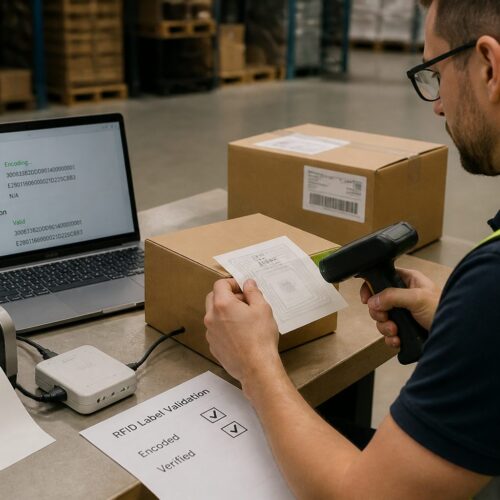
Beyond barcodes, some emerging technologies like RFID (Radio-Frequency Identification) are being explored for future applications in pharmaceutical traceability. RFID tags can store more data and allow for faster, non-line-of-sight scanning, potentially offering further efficiencies in warehouse and logistics operations. However, cost and infrastructure requirements currently limit their widespread adoption for individual pharmaceutical serialization labels.
The consistent application of standardized symbology ensures that pharmaceutical serialization labels can be read and interpreted by any compliant system worldwide. This universality is a cornerstone of global traceability, preventing data silos and facilitating seamless information exchange. The careful selection of data carriers directly impacts the efficiency and reliability of the entire serialization process.
Proper implementation of these data carriers requires strict quality control during the printing process. Poor contrast, smudging, or incorrect sizing can render the symbology unreadable, compromising the entire traceability system. Manufacturers must invest in high-quality printers and vision inspection systems to guarantee the integrity of every pharmaceutical serialization label.
Implementing Serialization: Technology and Best Practices
Implementing a robust serialization system for pharmaceutical serialization labels involves integrating advanced technologies and adhering to industry best practices. This complex undertaking requires careful planning, significant investment, and cross-functional collaboration within an organization. The goal is to create an end-to-end traceability solution that is both compliant and operationally efficient.
At the core of implementation are specialized serialization software solutions that manage the generation, assignment, and reporting of unique serial numbers. These systems integrate with manufacturing execution systems (MES), enterprise resource planning (ERP) software, and warehouse management systems (WMS) to ensure seamless data flow. The integration ensures that every pharmaceutical serialization label is correctly generated and tracked.
- **Serialization Software:** Manages unique serial number generation and assignment.
- **Printing and Vision Systems:** Applies and verifies pharmaceutical serialization labels on packaging lines.
- **Data Management Platforms:** Stores and exchanges serialization data with trading partners and regulators.
- **Aggregating Equipment:** Links individual serialized items to their higher-level packaging.
- **Scanner and Reader Technology:** Captures data from pharmaceutical serialization labels at various checkpoints.
- **Integration with ERP/MES/WMS:** Ensures seamless data flow across enterprise systems.
- **Training and Change Management:** Prepares personnel for new processes and technologies.
- **Quality Control Protocols:** Verifies the accuracy and readability of all pharmaceutical serialization labels.
Best practices for implementation emphasize a phased approach, starting with pilot programs to test and refine processes before full-scale deployment. This allows companies to identify and address potential challenges in a controlled environment. Thorough validation of all hardware and software components is also critical to ensure system reliability and data integrity for pharmaceutical serialization labels.
Another crucial best practice involves establishing clear data exchange protocols with trading partners. This ensures that serialization data, often in the form of Electronic Product Code Information Services (EPCIS) events, can be accurately transmitted and received. Secure and standardized data exchange is paramount for maintaining end-to-end traceability of pharmaceutical serialization labels.
Investing in high-quality printing and vision inspection systems is non-negotiable for producing readable and accurate pharmaceutical serialization labels. These systems ensure that barcodes are consistently printed with sufficient contrast and clarity, and that any defective labels are immediately identified and rejected. The integrity of the physical label directly impacts the success of the entire serialization program.
Training personnel across all relevant departments, from manufacturing to quality control and logistics, is also a key best practice. Employees must understand their roles in the serialization process and be proficient in using the new technologies. Effective training minimizes human error and maximizes the efficiency of handling pharmaceutical serialization labels.
Finally, continuous monitoring and optimization of the serialization system are essential. As regulations evolve and operational needs change, the system must be adaptable and scalable. Regular audits and performance reviews help ensure that the serialization infrastructure remains effective and compliant, safeguarding the integrity of pharmaceutical serialization labels.
Adopting these best practices helps companies navigate the complexities of serialization, transforming regulatory compliance into a strategic operational advantage. A well-implemented system for pharmaceutical serialization labels enhances efficiency and strengthens supply chain security. This proactive approach ensures long-term success in a highly regulated industry.
Challenges and Solutions in Serialization Deployment
Deploying a comprehensive serialization system for pharmaceutical serialization labels presents several significant challenges for manufacturers and supply chain partners. These hurdles range from technical complexities and financial investments to operational disruptions and global regulatory variations. Addressing these issues effectively is crucial for successful implementation.
One primary challenge is the substantial upfront cost associated with purchasing and integrating new hardware and software. This includes high-speed printers, vision inspection systems, serialization software, and aggregation equipment for packaging lines. Companies must carefully budget and plan for these investments to avoid financial strain when implementing pharmaceutical serialization labels.
Integrating new serialization systems with existing legacy IT infrastructure, such as ERP and MES, often proves to be another complex hurdle. Ensuring seamless data exchange and avoiding system conflicts requires skilled IT professionals and meticulous planning. Poor integration can lead to data inconsistencies and operational bottlenecks, undermining the effectiveness of pharmaceutical serialization labels.
The sheer volume of data generated by item-level serialization also poses a significant challenge for data storage, management, and exchange. Companies need robust data management platforms capable of handling billions of unique serial numbers and associated transaction data. Secure and scalable solutions are essential for managing the vast amounts of information tied to pharmaceutical serialization labels.
Navigating the diverse and evolving regulatory requirements across different countries adds another layer of complexity. Each market may have specific mandates regarding data elements, symbology, and reporting mechanisms for pharmaceutical serialization labels. Companies must ensure their solutions are flexible enough to meet these varied compliance demands without requiring entirely separate systems.
Operational disruption during the implementation phase is also a common concern, as new equipment and processes can temporarily slow down production lines. Careful planning, phased rollouts, and thorough testing in controlled environments can help minimize these interruptions. Maintaining production efficiency while integrating new systems for pharmaceutical serialization labels is a delicate balance.
To overcome these challenges, companies often turn to specialized serialization solution providers who offer expertise in technology integration and regulatory compliance. These partners can provide pre-validated systems and guidance on best practices, streamlining the deployment process. Leveraging external expertise can significantly reduce the internal burden of implementing pharmaceutical serialization labels.
Furthermore, adopting a modular and scalable approach to serialization infrastructure allows companies to adapt to future changes without a complete overhaul. This flexibility is key to long-term success in a dynamic regulatory environment. Proactive planning and strategic partnerships are vital for navigating the complexities of pharmaceutical serialization labels.
Beyond Compliance: The Strategic Value of Serialization
While regulatory compliance is the primary driver for implementing pharmaceutical serialization labels, the benefits extend far beyond simply avoiding penalties. A well-designed serialization system offers significant strategic advantages that can enhance operational efficiency, improve supply chain visibility, and drive business growth. Companies are discovering the true value of item-level traceability.
One major strategic benefit is enhanced supply chain visibility and control. With unique identifiers on every product, companies gain real-time insights into the movement of their goods throughout the entire distribution network. This granular data allows for better inventory management, demand forecasting, and optimized logistics, moving beyond the simple tracking of pharmaceutical serialization labels.
Serialization also significantly improves the speed and accuracy of product recalls. In the event of a quality issue, the ability to pinpoint specific affected units using their unique serial numbers minimizes the scope of a recall, reducing costs and reputational damage. This precision in recall management is a powerful safety and business tool, directly linked to effective pharmaceutical serialization labels.
The data collected from serialized products can also be leveraged for business intelligence and analytics. Companies can analyze product movement patterns, identify bottlenecks, and optimize distribution routes. This data-driven approach leads to more informed decision-making and greater operational efficiency across the entire supply chain, making pharmaceutical serialization labels a source of valuable insights.
Furthermore, serialization acts as a powerful deterrent against counterfeiting and diversion. The difficulty of replicating unique, verifiable serial numbers makes it much harder for illicit products to enter the legitimate supply chain. This enhanced security protects brand integrity and safeguards patient trust, which are invaluable assets for any pharmaceutical company, supported by robust pharmaceutical serialization labels.
Improved inventory accuracy at all stages, from manufacturing to the warehouse and retail, is another tangible benefit. Real-time tracking of individual units reduces stockouts, minimizes waste from expired products, and optimizes warehousing space. This efficiency directly impacts the bottom line, showcasing the economic advantages of precise pharmaceutical serialization labels.
Ultimately, investing in robust pharmaceutical serialization labels and the underlying systems positions a company as a leader in patient safety and supply chain integrity. This commitment can enhance market perception, strengthen relationships with trading partners, and build a more resilient business model. The strategic dividends of serialization extend far beyond mere regulatory checkboxes.
The ability to differentiate authentic products from counterfeits also strengthens consumer confidence, a critical factor in the competitive pharmaceutical market. Patients and healthcare providers can trust that the medicines they receive are genuine and safe. This trust is built upon the verifiable data provided by pharmaceutical serialization labels.
Optimizing Logistics and Warehouse Operations with Serialization
Pharmaceutical serialization labels fundamentally transform logistics and warehouse operations, moving from batch-level handling to item-level precision. This shift introduces both new challenges and significant opportunities for optimization. Companies can leverage serialization data to streamline processes, improve accuracy, and enhance overall supply chain efficiency within the warehouse environment.
In the warehouse, the ability to scan and track individual serialized units provides unprecedented inventory accuracy. Warehouse management systems (WMS) can integrate directly with serialization data, enabling real-time visibility into stock levels and locations. This eliminates the need for manual counts and reduces errors associated with traditional inventory methods, making pharmaceutical serialization labels indispensable.
Receiving and shipping processes become more efficient with serialized products. Incoming goods can be quickly verified against purchase orders and serialization data, flagging any discrepancies or suspicious packages immediately. Outgoing shipments can be accurately assembled and verified, ensuring that the correct products with valid pharmaceutical serialization labels are dispatched to the right destinations.
Aggregation, the process of linking individual serialized items to their higher-level packaging (cases, pallets), is a critical component of warehouse optimization. This allows for efficient scanning of entire containers rather than individual items, significantly speeding up handling times. Proper aggregation supported by pharmaceutical serialization labels reduces labor costs and improves throughput.
Serialization also facilitates more precise expiration date management within the warehouse. WMS can use the expiration date encoded on each pharmaceutical serialization label to implement robust First-Expired, First-Out (FEFO) strategies. This minimizes product waste due to expiry and ensures that products with shorter shelf lives are shipped first, preventing costly write-offs.
The enhanced data from pharmaceutical serialization labels supports better space utilization in the warehouse. With accurate inventory data, companies can optimize storage layouts and reduce the need for buffer stock. This leads to more efficient use of valuable warehouse real estate and improved operational flow.
Furthermore, the detailed audit trail provided by serialization data significantly improves compliance with regulatory requirements for storage and handling. Every movement of a serialized product within the warehouse can be recorded and tracked, providing irrefutable proof of proper chain of custody. This robust documentation is essential for audits and investigations related to pharmaceutical serialization labels.
Ultimately, integrating pharmaceutical serialization labels into logistics and warehouse operations transforms these areas from cost centers into strategic assets. The precision and visibility gained lead to substantial improvements in efficiency, accuracy, and overall supply chain resilience. This modernization is vital for meeting the demands of a complex global market.
The Evolving Future of Pharmaceutical Traceability
The landscape of pharmaceutical traceability, driven by pharmaceutical serialization labels, is continuously evolving, with new technologies and regulatory refinements constantly emerging. The industry is moving towards even greater transparency and security, building upon the foundations established by current serialization mandates. This ongoing evolution promises a more robust and responsive supply chain.
One significant area of development is the exploration of blockchain technology for pharmaceutical traceability. Blockchain offers a decentralized, immutable ledger that could provide an unparalleled level of transparency and trust across the entire supply chain. Integrating blockchain with existing pharmaceutical serialization labels could create a truly tamper-proof record of every product’s journey.
The adoption of advanced analytics and artificial intelligence (AI) is also poised to revolutionize how serialization data is utilized. AI algorithms can analyze vast datasets from pharmaceutical serialization labels to predict supply chain disruptions, identify potential diversion points, and optimize inventory management with greater precision. This predictive capability moves beyond reactive problem-solving.
Further standardization efforts are expected to harmonize global regulatory requirements, making it easier for companies to operate across borders. While significant progress has been made with GS1 and ISO standards, there is still room for greater alignment on specific data elements and reporting formats for pharmaceutical serialization labels. This harmonization will reduce complexity for global manufacturers.
The expansion of serialization to new product categories, such as over-the-counter (OTC) drugs and medical devices, is also on the horizon in many regions. As the benefits of item-level traceability become more apparent, regulators are likely to extend these mandates to a broader range of healthcare products. This will necessitate adapting existing systems for pharmaceutical serialization labels to new product types.
Improvements in printing and labeling technologies will continue to enhance the durability and readability of pharmaceutical serialization labels. Innovations in ink, substrate materials, and application methods will ensure that labels remain intact and scannable throughout their entire lifecycle. These advancements are crucial for maintaining the integrity of the traceability system.
The future also holds the promise of more integrated and intelligent packaging, where pharmaceutical serialization labels are just one component of a broader smart packaging solution. This could include temperature sensors, tamper-evident features, and patient engagement tools directly embedded into the packaging. Such advancements will further enhance product safety and consumer trust.
Ultimately, the future of pharmaceutical traceability is one of continuous innovation aimed at creating an even more secure, transparent, and efficient global supply chain. Pharmaceutical serialization labels will remain at the heart of these efforts, evolving alongside technology and regulatory demands. This ongoing commitment ensures the highest levels of patient safety and product integrity.
Conclusion: Securing the Future with Smart Serialization
Pharmaceutical serialization labels are far more than a regulatory obligation; they represent a fundamental pillar in the global effort to combat counterfeit drugs and ensure patient safety. These small but mighty identifiers provide the critical data necessary for item-level traceability, transforming the pharmaceutical supply chain. The commitment to international standards for safety and logistics symbology has been crucial in this transformation.
From the stringent mandates of the DSCSA and EU FMD to the widely adopted GS1 and ISO standards, a robust framework underpins the creation and application of these labels. The precise encoding of GTINs, serial numbers, lot numbers, and expiration dates into resilient 2D DataMatrix barcodes ensures universal readability and data integrity. This meticulous approach guarantees that every pharmaceutical serialization label contributes to a secure ecosystem.
Implementing serialization involves significant technological investment and careful adherence to best practices, but the benefits extend well beyond mere compliance. Enhanced supply chain visibility, improved inventory management, faster recalls, and powerful business intelligence are all strategic advantages derived from accurate pharmaceutical serialization labels. These operational efficiencies contribute directly to a stronger bottom line.
The impact on logistics and warehouse operations is particularly transformative, enabling greater accuracy, speed, and cost-effectiveness through item-level tracking and aggregation. As the industry looks to the future, emerging technologies like blockchain and AI promise to further enhance the power of pharmaceutical serialization labels. This continuous innovation ensures that traceability systems remain at the forefront of drug safety.
Companies that embrace these standards and technologies are not just meeting regulatory requirements; they are building a more resilient, transparent, and trustworthy supply chain for the benefit of patients worldwide. The role of pharmaceutical serialization labels will only grow in importance as the global pharmaceutical market continues to expand and evolve. This proactive stance is vital for safeguarding public health and maintaining industry integrity.
The journey towards full pharmaceutical traceability is ongoing, but the progress made through standardized pharmaceutical serialization labels is undeniable. These labels are a testament to the industry’s dedication to protecting consumers from harmful, falsified medicines. They are a critical tool in the relentless pursuit of a safer and more secure global drug supply chain.
Patient safety stands as the paramount concern driving the adoption of serialization technologies worldwide. Falsified medicines can contain incorrect ingredients, improper dosages, or no active pharmaceutical ingredient at all, leading to ineffective treatments or severe adverse reactions. By enabling precise tracking, serialization helps remove these dangerous products from circulation before they reach patients.
Beyond direct patient harm, counterfeit drugs inflict significant economic damage on legitimate pharmaceutical companies. They erode brand reputation, reduce sales, and necessitate costly recalls and investigations. Effective pharmaceutical serialization labels protect intellectual property and ensure that only authentic products reach the market.
The ability to trace products throughout their lifecycle also empowers faster and more efficient recalls when legitimate issues arise. If a specific batch of medication is found to have a defect, the unique serial numbers on pharmaceutical serialization labels allow for pinpoint identification and removal of affected units. This precision minimizes disruption and enhances public safety responses.
Moreover, serialization fosters greater transparency across the entire supply chain, benefiting all participants. Manufacturers gain better visibility into product distribution, while distributors can verify the authenticity of incoming goods. This enhanced oversight strengthens trust and collaboration among supply chain partners.
The move towards serialization represents a fundamental shift in how the pharmaceutical industry manages product integrity and logistics. It transforms traditional batch-level tracking into item-level traceability, offering unprecedented control and insight. This granular data is invaluable for both regulatory compliance and operational efficiency.
Companies are increasingly recognizing that investing in robust pharmaceutical serialization labels and systems is not just a regulatory burden but a strategic advantage. It enhances brand protection, streamlines inventory management, and ultimately strengthens consumer confidence. The long-term benefits far outweigh the initial implementation challenges.
Global Regulatory Mandates Driving Serialization
Governments and regulatory bodies across the globe have responded to the threat of counterfeit drugs by enacting comprehensive serialization mandates. These regulations compel pharmaceutical manufacturers to implement item-level traceability for their products. The United States and the European Union lead the way with some of the most influential requirements for pharmaceutical serialization labels.
In the United States, the Drug Supply Chain Security Act (DSCSA) outlines a phased approach to achieving full interoperable electronic tracing of products at the package level. This legislation requires manufacturers, repackagers, wholesale distributors, and dispensers to exchange product transaction information, including the serial number, for most prescription drugs. The DSCSA’s final phase, requiring full unit-level traceability, significantly impacts how pharmaceutical serialization labels are generated and managed.
Similarly, the European Union’s Falsified Medicines Directive (EU FMD) introduced strict rules for verifying the authenticity of medicines. This directive mandates a unique identifier (UI) on the packaging of most prescription medicines, which must be scanned and verified at the point of dispense. The EU FMD specifically dictates the data elements and symbology required on pharmaceutical serialization labels, emphasizing the use of 2D DataMatrix codes.
Beyond these major markets, many other countries have developed or are developing their own serialization regulations. Nations like Brazil, China, India, South Korea, and Russia have introduced varying degrees of serialization requirements, often aligning with global standards but with local nuances. This patchwork of regulations necessitates flexible and adaptable pharmaceutical serialization labels that can meet diverse compliance needs.
Adherence to these global mandates is non-negotiable for pharmaceutical companies operating internationally. Failure to comply can result in significant fines, product seizure, and market access restrictions. Therefore, understanding and implementing robust systems for pharmaceutical serialization labels is a fundamental business requirement.
These regulations are not static; they evolve as technology advances and new threats emerge. Companies must stay informed about ongoing regulatory changes and updates to ensure their serialization strategies remain compliant. Continuous monitoring and adaptation are critical for maintaining market access and avoiding penalties related to pharmaceutical serialization labels.
The push for serialization also encourages greater collaboration among industry stakeholders and regulatory bodies. This shared commitment to patient safety drives the development of common standards and best practices for pharmaceutical serialization labels. Such collaboration is vital for creating a truly secure global drug supply chain.
Essential Elements of Pharmaceutical Serialization Labels
Pharmaceutical serialization labels are more than just a barcode; they are a sophisticated data carrier designed to convey crucial product information in a machine-readable format. These labels typically include both human-readable text and machine-readable data elements, ensuring accessibility and verifiability. Understanding each component is key to appreciating their role in traceability.
The core of any pharmaceutical serialization label is the unique serial number, which distinguishes each individual package of medication. This number, combined with other product identifiers, forms the basis for item-level traceability. The data elements are carefully chosen to provide comprehensive information about the product’s identity and provenance.
| Data Element | Description | Purpose |
|---|---|---|
| Global Trade Item Number (GTIN) | Globally unique product identifier for trade items. | Identifies the product and its packaging level. |
| Serial Number (SN) | Randomly or sequentially assigned unique number. | Distinguishes individual saleable units. |
| Batch/Lot Number (LOT) | Identifier for a specific manufacturing run. | Links to manufacturing records and quality control. |
| Expiration Date (EXP) | Date after which the product should not be used. | Ensures product efficacy and safety. |
| Application Identifiers (AIs) | Prefixes indicating the type of data that follows. | Standardizes data interpretation by scanners. |
| National Reimbursement Number | Country-specific identifier for reimbursement. | Facilitates healthcare system administration. |
These elements are encoded into a 2D DataMatrix barcode, which is the preferred symbology for pharmaceutical serialization labels due to its high data capacity and error correction capabilities. The DataMatrix allows for efficient scanning and data capture at various points in the supply chain. This robust symbology is critical for maintaining data integrity even if the label sustains minor damage.
In addition to the DataMatrix, many pharmaceutical serialization labels also feature human-readable information printed directly on the package. This includes the product name, strength, dosage form, manufacturer, and the same GTIN, serial number, lot number, and expiration date found in the barcode. This redundancy ensures that critical information is accessible even without a scanner.
The precise placement and print quality of these elements on pharmaceutical serialization labels are also subject to strict standards. Poor print quality or incorrect placement can render the label unreadable, defeating the purpose of serialization. Manufacturers invest heavily in advanced printing and vision inspection systems to ensure label integrity.
The combination of these standardized data elements, robust symbology, and quality control measures makes pharmaceutical serialization labels a powerful tool for traceability. They provide a comprehensive digital footprint for every single product unit. This meticulous approach to labeling underpins the entire framework of modern drug safety and logistics.
Each component on the label serves a distinct but interconnected purpose, contributing to the overall integrity of the pharmaceutical supply chain. From the unique serial number to the batch details, every piece of information is vital. These labels are designed to withstand various environmental conditions encountered during shipping and storage.
International Standards Shaping Labeling Practices
The effectiveness of pharmaceutical serialization labels hinges on the adoption of globally recognized standards that ensure consistency and interoperability. Without these common rules, different systems would struggle to communicate, leading to significant bottlenecks and errors in the supply chain. International standards for safety and logistics symbology are therefore foundational to successful serialization.
GS1 is arguably the most influential organization in setting these standards for the pharmaceutical industry. Their global standards provide a framework for identifying, capturing, and sharing product information across the supply chain. The GS1 System defines the structure for the Global Trade Item Number (GTIN), the serial number, lot number, and expiration date, which are all critical components of pharmaceutical serialization labels.
GS1 also specifies the use of Application Identifiers (AIs), which are prefixes used in barcodes to define the meaning and format of the data that follows. For example, AI (01) precedes the GTIN, AI (17) precedes the expiration date, and AI (21) precedes the serial number. This standardization ensures that scanners and software interpret the data on pharmaceutical serialization labels correctly, regardless of their origin.
The ISO (International Organization for Standardization) plays a crucial role in standardizing the symbology itself. ISO/IEC 15434 specifies the syntax for transferring data encoded in barcodes, while ISO/IEC 15418 defines the application identifiers for GS1 composite symbols. These technical standards ensure that the 2D DataMatrix barcode used on pharmaceutical serialization labels is universally readable and decodable.
Compliance with these ISO and GS1 standards is often a prerequisite for meeting regulatory mandates like the DSCSA and EU FMD. Regulators explicitly reference these standards to ensure a harmonized approach to pharmaceutical serialization labels. This global alignment reduces the burden on manufacturers who operate in multiple markets.
Beyond the technical specifications, these standards also promote best practices for labeling processes, quality control, and data management. They guide companies in designing robust systems for generating and applying pharmaceutical serialization labels accurately and efficiently. Adherence to these guidelines minimizes errors and ensures data integrity throughout the supply chain.
The ongoing development and refinement of international standards reflect the industry’s commitment to continuous improvement in traceability and patient safety. Experts from around the world collaborate to ensure these standards remain relevant and effective against evolving threats. This collaborative effort is essential for maintaining the security of the global drug supply.
These standards provide a common language for logistics and safety, enabling seamless information exchange. They are the backbone of any effective serialization strategy, allowing diverse systems to interact without friction. Without strong international standards, the entire traceability framework for pharmaceutical serialization labels would collapse.
Data Carriers and Symbology for Traceability
The choice of data carrier and symbology is fundamental to the functionality of pharmaceutical serialization labels. These elements are responsible for holding and conveying the unique product identifiers and other critical information. The industry has largely converged on specific types of barcodes to ensure maximum efficiency and reliability.
The 2D DataMatrix barcode is the standard symbology for pharmaceutical serialization labels globally. Its compact size allows it to fit on even small drug packages, while its high data density can store all necessary serialization data, including GTIN, serial number, lot number, and expiration date. This efficiency is crucial for space-constrained packaging.
One of the key advantages of the DataMatrix is its robust error correction capability. Even if a portion of the barcode is damaged or obscured, the remaining data can often be reconstructed, ensuring successful scanning. This resilience is vital in dynamic environments like manufacturing lines and busy warehouse operations, where labels can be subject to wear and tear.
While DataMatrix is predominant, linear barcodes like GS1-128 are still used for higher-level packaging, such as cases and pallets. These barcodes typically carry aggregate information, linking the contents to the individual serialized items within. This hierarchical approach to labeling supports efficient handling and inventory management in logistics.
The symbology chosen for pharmaceutical serialization labels must also be compatible with a wide range of scanning and vision systems. This ensures that data can be read accurately and quickly at every point in the supply chain, from the factory floor to the pharmacy counter. Interoperability across different hardware and software platforms is a non-negotiable requirement.
Beyond barcodes, some emerging technologies like RFID (Radio-Frequency Identification) are being explored for future applications in pharmaceutical traceability. RFID tags can store more data and allow for faster, non-line-of-sight scanning, potentially offering further efficiencies in warehouse and logistics operations. However, cost and infrastructure requirements currently limit their widespread adoption for individual pharmaceutical serialization labels.
The consistent application of standardized symbology ensures that pharmaceutical serialization labels can be read and interpreted by any compliant system worldwide. This universality is a cornerstone of global traceability, preventing data silos and facilitating seamless information exchange. The careful selection of data carriers directly impacts the efficiency and reliability of the entire serialization process.
Proper implementation of these data carriers requires strict quality control during the printing process. Poor contrast, smudging, or incorrect sizing can render the symbology unreadable, compromising the entire traceability system. Manufacturers must invest in high-quality printers and vision inspection systems to guarantee the integrity of every pharmaceutical serialization label.
Implementing Serialization: Technology and Best Practices
Implementing a robust serialization system for pharmaceutical serialization labels involves integrating advanced technologies and adhering to industry best practices. This complex undertaking requires careful planning, significant investment, and cross-functional collaboration within an organization. The goal is to create an end-to-end traceability solution that is both compliant and operationally efficient.
At the core of implementation are specialized serialization software solutions that manage the generation, assignment, and reporting of unique serial numbers. These systems integrate with manufacturing execution systems (MES), enterprise resource planning (ERP) software, and warehouse management systems (WMS) to ensure seamless data flow. The integration ensures that every pharmaceutical serialization label is correctly generated and tracked.
- **Serialization Software:** Manages unique serial number generation and assignment.
- **Printing and Vision Systems:** Applies and verifies pharmaceutical serialization labels on packaging lines.
- **Data Management Platforms:** Stores and exchanges serialization data with trading partners and regulators.
- **Aggregating Equipment:** Links individual serialized items to their higher-level packaging.
- **Scanner and Reader Technology:** Captures data from pharmaceutical serialization labels at various checkpoints.
- **Integration with ERP/MES/WMS:** Ensures seamless data flow across enterprise systems.
- **Training and Change Management:** Prepares personnel for new processes and technologies.
- **Quality Control Protocols:** Verifies the accuracy and readability of all pharmaceutical serialization labels.
Best practices for implementation emphasize a phased approach, starting with pilot programs to test and refine processes before full-scale deployment. This allows companies to identify and address potential challenges in a controlled environment. Thorough validation of all hardware and software components is also critical to ensure system reliability and data integrity for pharmaceutical serialization labels.
Another crucial best practice involves establishing clear data exchange protocols with trading partners. This ensures that serialization data, often in the form of Electronic Product Code Information Services (EPCIS) events, can be accurately transmitted and received. Secure and standardized data exchange is paramount for maintaining end-to-end traceability of pharmaceutical serialization labels.
Investing in high-quality printing and vision inspection systems is non-negotiable for producing readable and accurate pharmaceutical serialization labels. These systems ensure that barcodes are consistently printed with sufficient contrast and clarity, and that any defective labels are immediately identified and rejected. The integrity of the physical label directly impacts the success of the entire serialization program.
Training personnel across all relevant departments, from manufacturing to quality control and logistics, is also a key best practice. Employees must understand their roles in the serialization process and be proficient in using the new technologies. Effective training minimizes human error and maximizes the efficiency of handling pharmaceutical serialization labels.
Finally, continuous monitoring and optimization of the serialization system are essential. As regulations evolve and operational needs change, the system must be adaptable and scalable. Regular audits and performance reviews help ensure that the serialization infrastructure remains effective and compliant, safeguarding the integrity of pharmaceutical serialization labels.
Adopting these best practices helps companies navigate the complexities of serialization, transforming regulatory compliance into a strategic operational advantage. A well-implemented system for pharmaceutical serialization labels enhances efficiency and strengthens supply chain security. This proactive approach ensures long-term success in a highly regulated industry.
Challenges and Solutions in Serialization Deployment
Deploying a comprehensive serialization system for pharmaceutical serialization labels presents several significant challenges for manufacturers and supply chain partners. These hurdles range from technical complexities and financial investments to operational disruptions and global regulatory variations. Addressing these issues effectively is crucial for successful implementation.
One primary challenge is the substantial upfront cost associated with purchasing and integrating new hardware and software. This includes high-speed printers, vision inspection systems, serialization software, and aggregation equipment for packaging lines. Companies must carefully budget and plan for these investments to avoid financial strain when implementing pharmaceutical serialization labels.
Integrating new serialization systems with existing legacy IT infrastructure, such as ERP and MES, often proves to be another complex hurdle. Ensuring seamless data exchange and avoiding system conflicts requires skilled IT professionals and meticulous planning. Poor integration can lead to data inconsistencies and operational bottlenecks, undermining the effectiveness of pharmaceutical serialization labels.
The sheer volume of data generated by item-level serialization also poses a significant challenge for data storage, management, and exchange. Companies need robust data management platforms capable of handling billions of unique serial numbers and associated transaction data. Secure and scalable solutions are essential for managing the vast amounts of information tied to pharmaceutical serialization labels.
Navigating the diverse and evolving regulatory requirements across different countries adds another layer of complexity. Each market may have specific mandates regarding data elements, symbology, and reporting mechanisms for pharmaceutical serialization labels. Companies must ensure their solutions are flexible enough to meet these varied compliance demands without requiring entirely separate systems.
Operational disruption during the implementation phase is also a common concern, as new equipment and processes can temporarily slow down production lines. Careful planning, phased rollouts, and thorough testing in controlled environments can help minimize these interruptions. Maintaining production efficiency while integrating new systems for pharmaceutical serialization labels is a delicate balance.
To overcome these challenges, companies often turn to specialized serialization solution providers who offer expertise in technology integration and regulatory compliance. These partners can provide pre-validated systems and guidance on best practices, streamlining the deployment process. Leveraging external expertise can significantly reduce the internal burden of implementing pharmaceutical serialization labels.
Furthermore, adopting a modular and scalable approach to serialization infrastructure allows companies to adapt to future changes without a complete overhaul. This flexibility is key to long-term success in a dynamic regulatory environment. Proactive planning and strategic partnerships are vital for navigating the complexities of pharmaceutical serialization labels.
Beyond Compliance: The Strategic Value of Serialization
While regulatory compliance is the primary driver for implementing pharmaceutical serialization labels, the benefits extend far beyond simply avoiding penalties. A well-designed serialization system offers significant strategic advantages that can enhance operational efficiency, improve supply chain visibility, and drive business growth. Companies are discovering the true value of item-level traceability.
One major strategic benefit is enhanced supply chain visibility and control. With unique identifiers on every product, companies gain real-time insights into the movement of their goods throughout the entire distribution network. This granular data allows for better inventory management, demand forecasting, and optimized logistics, moving beyond the simple tracking of pharmaceutical serialization labels.
Serialization also significantly improves the speed and accuracy of product recalls. In the event of a quality issue, the ability to pinpoint specific affected units using their unique serial numbers minimizes the scope of a recall, reducing costs and reputational damage. This precision in recall management is a powerful safety and business tool, directly linked to effective pharmaceutical serialization labels.
The data collected from serialized products can also be leveraged for business intelligence and analytics. Companies can analyze product movement patterns, identify bottlenecks, and optimize distribution routes. This data-driven approach leads to more informed decision-making and greater operational efficiency across the entire supply chain, making pharmaceutical serialization labels a source of valuable insights.
Furthermore, serialization acts as a powerful deterrent against counterfeiting and diversion. The difficulty of replicating unique, verifiable serial numbers makes it much harder for illicit products to enter the legitimate supply chain. This enhanced security protects brand integrity and safeguards patient trust, which are invaluable assets for any pharmaceutical company, supported by robust pharmaceutical serialization labels.
Improved inventory accuracy at all stages, from manufacturing to the warehouse and retail, is another tangible benefit. Real-time tracking of individual units reduces stockouts, minimizes waste from expired products, and optimizes warehousing space. This efficiency directly impacts the bottom line, showcasing the economic advantages of precise pharmaceutical serialization labels.
Ultimately, investing in robust pharmaceutical serialization labels and the underlying systems positions a company as a leader in patient safety and supply chain integrity. This commitment can enhance market perception, strengthen relationships with trading partners, and build a more resilient business model. The strategic dividends of serialization extend far beyond mere regulatory checkboxes.
The ability to differentiate authentic products from counterfeits also strengthens consumer confidence, a critical factor in the competitive pharmaceutical market. Patients and healthcare providers can trust that the medicines they receive are genuine and safe. This trust is built upon the verifiable data provided by pharmaceutical serialization labels.
Optimizing Logistics and Warehouse Operations with Serialization
Pharmaceutical serialization labels fundamentally transform logistics and warehouse operations, moving from batch-level handling to item-level precision. This shift introduces both new challenges and significant opportunities for optimization. Companies can leverage serialization data to streamline processes, improve accuracy, and enhance overall supply chain efficiency within the warehouse environment.
In the warehouse, the ability to scan and track individual serialized units provides unprecedented inventory accuracy. Warehouse management systems (WMS) can integrate directly with serialization data, enabling real-time visibility into stock levels and locations. This eliminates the need for manual counts and reduces errors associated with traditional inventory methods, making pharmaceutical serialization labels indispensable.
Receiving and shipping processes become more efficient with serialized products. Incoming goods can be quickly verified against purchase orders and serialization data, flagging any discrepancies or suspicious packages immediately. Outgoing shipments can be accurately assembled and verified, ensuring that the correct products with valid pharmaceutical serialization labels are dispatched to the right destinations.
Aggregation, the process of linking individual serialized items to their higher-level packaging (cases, pallets), is a critical component of warehouse optimization. This allows for efficient scanning of entire containers rather than individual items, significantly speeding up handling times. Proper aggregation supported by pharmaceutical serialization labels reduces labor costs and improves throughput.
Serialization also facilitates more precise expiration date management within the warehouse. WMS can use the expiration date encoded on each pharmaceutical serialization label to implement robust First-Expired, First-Out (FEFO) strategies. This minimizes product waste due to expiry and ensures that products with shorter shelf lives are shipped first, preventing costly write-offs.
The enhanced data from pharmaceutical serialization labels supports better space utilization in the warehouse. With accurate inventory data, companies can optimize storage layouts and reduce the need for buffer stock. This leads to more efficient use of valuable warehouse real estate and improved operational flow.
Furthermore, the detailed audit trail provided by serialization data significantly improves compliance with regulatory requirements for storage and handling. Every movement of a serialized product within the warehouse can be recorded and tracked, providing irrefutable proof of proper chain of custody. This robust documentation is essential for audits and investigations related to pharmaceutical serialization labels.
Ultimately, integrating pharmaceutical serialization labels into logistics and warehouse operations transforms these areas from cost centers into strategic assets. The precision and visibility gained lead to substantial improvements in efficiency, accuracy, and overall supply chain resilience. This modernization is vital for meeting the demands of a complex global market.
The Evolving Future of Pharmaceutical Traceability
The landscape of pharmaceutical traceability, driven by pharmaceutical serialization labels, is continuously evolving, with new technologies and regulatory refinements constantly emerging. The industry is moving towards even greater transparency and security, building upon the foundations established by current serialization mandates. This ongoing evolution promises a more robust and responsive supply chain.
One significant area of development is the exploration of blockchain technology for pharmaceutical traceability. Blockchain offers a decentralized, immutable ledger that could provide an unparalleled level of transparency and trust across the entire supply chain. Integrating blockchain with existing pharmaceutical serialization labels could create a truly tamper-proof record of every product’s journey.
The adoption of advanced analytics and artificial intelligence (AI) is also poised to revolutionize how serialization data is utilized. AI algorithms can analyze vast datasets from pharmaceutical serialization labels to predict supply chain disruptions, identify potential diversion points, and optimize inventory management with greater precision. This predictive capability moves beyond reactive problem-solving.
Further standardization efforts are expected to harmonize global regulatory requirements, making it easier for companies to operate across borders. While significant progress has been made with GS1 and ISO standards, there is still room for greater alignment on specific data elements and reporting formats for pharmaceutical serialization labels. This harmonization will reduce complexity for global manufacturers.
The expansion of serialization to new product categories, such as over-the-counter (OTC) drugs and medical devices, is also on the horizon in many regions. As the benefits of item-level traceability become more apparent, regulators are likely to extend these mandates to a broader range of healthcare products. This will necessitate adapting existing systems for pharmaceutical serialization labels to new product types.
Improvements in printing and labeling technologies will continue to enhance the durability and readability of pharmaceutical serialization labels. Innovations in ink, substrate materials, and application methods will ensure that labels remain intact and scannable throughout their entire lifecycle. These advancements are crucial for maintaining the integrity of the traceability system.
The future also holds the promise of more integrated and intelligent packaging, where pharmaceutical serialization labels are just one component of a broader smart packaging solution. This could include temperature sensors, tamper-evident features, and patient engagement tools directly embedded into the packaging. Such advancements will further enhance product safety and consumer trust.
Ultimately, the future of pharmaceutical traceability is one of continuous innovation aimed at creating an even more secure, transparent, and efficient global supply chain. Pharmaceutical serialization labels will remain at the heart of these efforts, evolving alongside technology and regulatory demands. This ongoing commitment ensures the highest levels of patient safety and product integrity.
Conclusion: Securing the Future with Smart Serialization
Pharmaceutical serialization labels are far more than a regulatory obligation; they represent a fundamental pillar in the global effort to combat counterfeit drugs and ensure patient safety. These small but mighty identifiers provide the critical data necessary for item-level traceability, transforming the pharmaceutical supply chain. The commitment to international standards for safety and logistics symbology has been crucial in this transformation.
From the stringent mandates of the DSCSA and EU FMD to the widely adopted GS1 and ISO standards, a robust framework underpins the creation and application of these labels. The precise encoding of GTINs, serial numbers, lot numbers, and expiration dates into resilient 2D DataMatrix barcodes ensures universal readability and data integrity. This meticulous approach guarantees that every pharmaceutical serialization label contributes to a secure ecosystem.
Implementing serialization involves significant technological investment and careful adherence to best practices, but the benefits extend well beyond mere compliance. Enhanced supply chain visibility, improved inventory management, faster recalls, and powerful business intelligence are all strategic advantages derived from accurate pharmaceutical serialization labels. These operational efficiencies contribute directly to a stronger bottom line.
The impact on logistics and warehouse operations is particularly transformative, enabling greater accuracy, speed, and cost-effectiveness through item-level tracking and aggregation. As the industry looks to the future, emerging technologies like blockchain and AI promise to further enhance the power of pharmaceutical serialization labels. This continuous innovation ensures that traceability systems remain at the forefront of drug safety.
Companies that embrace these standards and technologies are not just meeting regulatory requirements; they are building a more resilient, transparent, and trustworthy supply chain for the benefit of patients worldwide. The role of pharmaceutical serialization labels will only grow in importance as the global pharmaceutical market continues to expand and evolve. This proactive stance is vital for safeguarding public health and maintaining industry integrity.
The journey towards full pharmaceutical traceability is ongoing, but the progress made through standardized pharmaceutical serialization labels is undeniable. These labels are a testament to the industry’s dedication to protecting consumers from harmful, falsified medicines. They are a critical tool in the relentless pursuit of a safer and more secure global drug supply chain.
The pharmaceutical industry faces immense pressure to ensure product authenticity and patient safety across a complex global supply chain. Counterfeit drugs pose a severe public health risk and erode trust in legitimate medicines, making robust traceability systems absolutely essential. This is where pharmaceutical serialization labels step in, providing a critical mechanism to track individual drug packages from manufacturing to dispensing. These labels are not merely stickers; they represent a sophisticated data carrier system integral to modern pharmaceutical logistics.
Implementing effective serialization requires adherence to stringent international standards for safety and logistics symbology. These standards dictate how data is encoded, presented, and read, ensuring interoperability across diverse systems and geographical borders. Without standardized approaches to labeling, the goal of a truly secure and transparent drug supply chain would remain out of reach.
Understanding the intricacies of pharmaceutical serialization labels, from their regulatory drivers to the underlying technical specifications, is crucial for manufacturers, distributors, and healthcare providers alike. This article explores the vital role these labels play in meeting traceability requirements and safeguarding public health. We will examine the various components, standards, and technologies that underpin this critical safety measure in the pharmaceutical sector.
The drive towards comprehensive serialization is a direct response to the escalating threat of falsified medicines entering the legitimate supply chain. Robust pharmaceutical serialization labels provide the necessary tools to combat this threat effectively. They are a cornerstone of modern pharmaceutical safety protocols, ensuring every product can be verified at multiple points.
The Imperative for Pharmaceutical Serialization
The global pharmaceutical supply chain is incredibly vast and intricate, involving numerous stakeholders from raw material suppliers to pharmacies. This complexity creates vulnerabilities that criminal organizations exploit to introduce counterfeit or substandard drugs. Pharmaceutical serialization labels are the industry’s primary defense against these illicit activities, providing a unique identifier for every saleable unit.
Patient safety stands as the paramount concern driving the adoption of serialization technologies worldwide. Falsified medicines can contain incorrect ingredients, improper dosages, or no active pharmaceutical ingredient at all, leading to ineffective treatments or severe adverse reactions. By enabling precise tracking, serialization helps remove these dangerous products from circulation before they reach patients.
Beyond direct patient harm, counterfeit drugs inflict significant economic damage on legitimate pharmaceutical companies. They erode brand reputation, reduce sales, and necessitate costly recalls and investigations. Effective pharmaceutical serialization labels protect intellectual property and ensure that only authentic products reach the market.
The ability to trace products throughout their lifecycle also empowers faster and more efficient recalls when legitimate issues arise. If a specific batch of medication is found to have a defect, the unique serial numbers on pharmaceutical serialization labels allow for pinpoint identification and removal of affected units. This precision minimizes disruption and enhances public safety responses.
Moreover, serialization fosters greater transparency across the entire supply chain, benefiting all participants. Manufacturers gain better visibility into product distribution, while distributors can verify the authenticity of incoming goods. This enhanced oversight strengthens trust and collaboration among supply chain partners.
The move towards serialization represents a fundamental shift in how the pharmaceutical industry manages product integrity and logistics. It transforms traditional batch-level tracking into item-level traceability, offering unprecedented control and insight. This granular data is invaluable for both regulatory compliance and operational efficiency.
Companies are increasingly recognizing that investing in robust pharmaceutical serialization labels and systems is not just a regulatory burden but a strategic advantage. It enhances brand protection, streamlines inventory management, and ultimately strengthens consumer confidence. The long-term benefits far outweigh the initial implementation challenges.
Global Regulatory Mandates Driving Serialization
Governments and regulatory bodies across the globe have responded to the threat of counterfeit drugs by enacting comprehensive serialization mandates. These regulations compel pharmaceutical manufacturers to implement item-level traceability for their products. The United States and the European Union lead the way with some of the most influential requirements for pharmaceutical serialization labels.
In the United States, the Drug Supply Chain Security Act (DSCSA) outlines a phased approach to achieving full interoperable electronic tracing of products at the package level. This legislation requires manufacturers, repackagers, wholesale distributors, and dispensers to exchange product transaction information, including the serial number, for most prescription drugs. The DSCSA’s final phase, requiring full unit-level traceability, significantly impacts how pharmaceutical serialization labels are generated and managed.
Similarly, the European Union’s Falsified Medicines Directive (EU FMD) introduced strict rules for verifying the authenticity of medicines. This directive mandates a unique identifier (UI) on the packaging of most prescription medicines, which must be scanned and verified at the point of dispense. The EU FMD specifically dictates the data elements and symbology required on pharmaceutical serialization labels, emphasizing the use of 2D DataMatrix codes.
Beyond these major markets, many other countries have developed or are developing their own serialization regulations. Nations like Brazil, China, India, South Korea, and Russia have introduced varying degrees of serialization requirements, often aligning with global standards but with local nuances. This patchwork of regulations necessitates flexible and adaptable pharmaceutical serialization labels that can meet diverse compliance needs.
Adherence to these global mandates is non-negotiable for pharmaceutical companies operating internationally. Failure to comply can result in significant fines, product seizure, and market access restrictions. Therefore, understanding and implementing robust systems for pharmaceutical serialization labels is a fundamental business requirement.
These regulations are not static; they evolve as technology advances and new threats emerge. Companies must stay informed about ongoing regulatory changes and updates to ensure their serialization strategies remain compliant. Continuous monitoring and adaptation are critical for maintaining market access and avoiding penalties related to pharmaceutical serialization labels.
The push for serialization also encourages greater collaboration among industry stakeholders and regulatory bodies. This shared commitment to patient safety drives the development of common standards and best practices for pharmaceutical serialization labels. Such collaboration is vital for creating a truly secure global drug supply chain.
Essential Elements of Pharmaceutical Serialization Labels
Pharmaceutical serialization labels are more than just a barcode; they are a sophisticated data carrier designed to convey crucial product information in a machine-readable format. These labels typically include both human-readable text and machine-readable data elements, ensuring accessibility and verifiability. Understanding each component is key to appreciating their role in traceability.
The core of any pharmaceutical serialization label is the unique serial number, which distinguishes each individual package of medication. This number, combined with other product identifiers, forms the basis for item-level traceability. The data elements are carefully chosen to provide comprehensive information about the product’s identity and provenance.
| Data Element | Description | Purpose |
|---|---|---|
| Global Trade Item Number (GTIN) | Globally unique product identifier for trade items. | Identifies the product and its packaging level. |
| Serial Number (SN) | Randomly or sequentially assigned unique number. | Distinguishes individual saleable units. |
| Batch/Lot Number (LOT) | Identifier for a specific manufacturing run. | Links to manufacturing records and quality control. |
| Expiration Date (EXP) | Date after which the product should not be used. | Ensures product efficacy and safety. |
| Application Identifiers (AIs) | Prefixes indicating the type of data that follows. | Standardizes data interpretation by scanners. |
| National Reimbursement Number | Country-specific identifier for reimbursement. | Facilitates healthcare system administration. |
These elements are encoded into a 2D DataMatrix barcode, which is the preferred symbology for pharmaceutical serialization labels due to its high data capacity and error correction capabilities. The DataMatrix allows for efficient scanning and data capture at various points in the supply chain. This robust symbology is critical for maintaining data integrity even if the label sustains minor damage.
In addition to the DataMatrix, many pharmaceutical serialization labels also feature human-readable information printed directly on the package. This includes the product name, strength, dosage form, manufacturer, and the same GTIN, serial number, lot number, and expiration date found in the barcode. This redundancy ensures that critical information is accessible even without a scanner.
The precise placement and print quality of these elements on pharmaceutical serialization labels are also subject to strict standards. Poor print quality or incorrect placement can render the label unreadable, defeating the purpose of serialization. Manufacturers invest heavily in advanced printing and vision inspection systems to ensure label integrity.
The combination of these standardized data elements, robust symbology, and quality control measures makes pharmaceutical serialization labels a powerful tool for traceability. They provide a comprehensive digital footprint for every single product unit. This meticulous approach to labeling underpins the entire framework of modern drug safety and logistics.
Each component on the label serves a distinct but interconnected purpose, contributing to the overall integrity of the pharmaceutical supply chain. From the unique serial number to the batch details, every piece of information is vital. These labels are designed to withstand various environmental conditions encountered during shipping and storage.
International Standards Shaping Labeling Practices
The effectiveness of pharmaceutical serialization labels hinges on the adoption of globally recognized standards that ensure consistency and interoperability. Without these common rules, different systems would struggle to communicate, leading to significant bottlenecks and errors in the supply chain. International standards for safety and logistics symbology are therefore foundational to successful serialization.
GS1 is arguably the most influential organization in setting these standards for the pharmaceutical industry. Their global standards provide a framework for identifying, capturing, and sharing product information across the supply chain. The GS1 System defines the structure for the Global Trade Item Number (GTIN), the serial number, lot number, and expiration date, which are all critical components of pharmaceutical serialization labels.
GS1 also specifies the use of Application Identifiers (AIs), which are prefixes used in barcodes to define the meaning and format of the data that follows. For example, AI (01) precedes the GTIN, AI (17) precedes the expiration date, and AI (21) precedes the serial number. This standardization ensures that scanners and software interpret the data on pharmaceutical serialization labels correctly, regardless of their origin.
The ISO (International Organization for Standardization) plays a crucial role in standardizing the symbology itself. ISO/IEC 15434 specifies the syntax for transferring data encoded in barcodes, while ISO/IEC 15418 defines the application identifiers for GS1 composite symbols. These technical standards ensure that the 2D DataMatrix barcode used on pharmaceutical serialization labels is universally readable and decodable.
Compliance with these ISO and GS1 standards is often a prerequisite for meeting regulatory mandates like the DSCSA and EU FMD. Regulators explicitly reference these standards to ensure a harmonized approach to pharmaceutical serialization labels. This global alignment reduces the burden on manufacturers who operate in multiple markets.
Beyond the technical specifications, these standards also promote best practices for labeling processes, quality control, and data management. They guide companies in designing robust systems for generating and applying pharmaceutical serialization labels accurately and efficiently. Adherence to these guidelines minimizes errors and ensures data integrity throughout the supply chain.
The ongoing development and refinement of international standards reflect the industry’s commitment to continuous improvement in traceability and patient safety. Experts from around the world collaborate to ensure these standards remain relevant and effective against evolving threats. This collaborative effort is essential for maintaining the security of the global drug supply.
These standards provide a common language for logistics and safety, enabling seamless information exchange. They are the backbone of any effective serialization strategy, allowing diverse systems to interact without friction. Without strong international standards, the entire traceability framework for pharmaceutical serialization labels would collapse.
Data Carriers and Symbology for Traceability
The choice of data carrier and symbology is fundamental to the functionality of pharmaceutical serialization labels. These elements are responsible for holding and conveying the unique product identifiers and other critical information. The industry has largely converged on specific types of barcodes to ensure maximum efficiency and reliability.
The 2D DataMatrix barcode is the standard symbology for pharmaceutical serialization labels globally. Its compact size allows it to fit on even small drug packages, while its high data density can store all necessary serialization data, including GTIN, serial number, lot number, and expiration date. This efficiency is crucial for space-constrained packaging.
One of the key advantages of the DataMatrix is its robust error correction capability. Even if a portion of the barcode is damaged or obscured, the remaining data can often be reconstructed, ensuring successful scanning. This resilience is vital in dynamic environments like manufacturing lines and busy warehouse operations, where labels can be subject to wear and tear.
While DataMatrix is predominant, linear barcodes like GS1-128 are still used for higher-level packaging, such as cases and pallets. These barcodes typically carry aggregate information, linking the contents to the individual serialized items within. This hierarchical approach to labeling supports efficient handling and inventory management in logistics.
The symbology chosen for pharmaceutical serialization labels must also be compatible with a wide range of scanning and vision systems. This ensures that data can be read accurately and quickly at every point in the supply chain, from the factory floor to the pharmacy counter. Interoperability across different hardware and software platforms is a non-negotiable requirement.
Beyond barcodes, some emerging technologies like RFID (Radio-Frequency Identification) are being explored for future applications in pharmaceutical traceability. RFID tags can store more data and allow for faster, non-line-of-sight scanning, potentially offering further efficiencies in warehouse and logistics operations. However, cost and infrastructure requirements currently limit their widespread adoption for individual pharmaceutical serialization labels.
The consistent application of standardized symbology ensures that pharmaceutical serialization labels can be read and interpreted by any compliant system worldwide. This universality is a cornerstone of global traceability, preventing data silos and facilitating seamless information exchange. The careful selection of data carriers directly impacts the efficiency and reliability of the entire serialization process.
Proper implementation of these data carriers requires strict quality control during the printing process. Poor contrast, smudging, or incorrect sizing can render the symbology unreadable, compromising the entire traceability system. Manufacturers must invest in high-quality printers and vision inspection systems to guarantee the integrity of every pharmaceutical serialization label.
Implementing Serialization: Technology and Best Practices
Implementing a robust serialization system for pharmaceutical serialization labels involves integrating advanced technologies and adhering to industry best practices. This complex undertaking requires careful planning, significant investment, and cross-functional collaboration within an organization. The goal is to create an end-to-end traceability solution that is both compliant and operationally efficient.
At the core of implementation are specialized serialization software solutions that manage the generation, assignment, and reporting of unique serial numbers. These systems integrate with manufacturing execution systems (MES), enterprise resource planning (ERP) software, and warehouse management systems (WMS) to ensure seamless data flow. The integration ensures that every pharmaceutical serialization label is correctly generated and tracked.
- **Serialization Software:** Manages unique serial number generation and assignment.
- **Printing and Vision Systems:** Applies and verifies pharmaceutical serialization labels on packaging lines.
- **Data Management Platforms:** Stores and exchanges serialization data with trading partners and regulators.
- **Aggregating Equipment:** Links individual serialized items to their higher-level packaging.
- **Scanner and Reader Technology:** Captures data from pharmaceutical serialization labels at various checkpoints.
- **Integration with ERP/MES/WMS:** Ensures seamless data flow across enterprise systems.
- **Training and Change Management:** Prepares personnel for new processes and technologies.
- **Quality Control Protocols:** Verifies the accuracy and readability of all pharmaceutical serialization labels.
Best practices for implementation emphasize a phased approach, starting with pilot programs to test and refine processes before full-scale deployment. This allows companies to identify and address potential challenges in a controlled environment. Thorough validation of all hardware and software components is also critical to ensure system reliability and data integrity for pharmaceutical serialization labels.
Another crucial best practice involves establishing clear data exchange protocols with trading partners. This ensures that serialization data, often in the form of Electronic Product Code Information Services (EPCIS) events, can be accurately transmitted and received. Secure and standardized data exchange is paramount for maintaining end-to-end traceability of pharmaceutical serialization labels.
Investing in high-quality printing and vision inspection systems is non-negotiable for producing readable and accurate pharmaceutical serialization labels. These systems ensure that barcodes are consistently printed with sufficient contrast and clarity, and that any defective labels are immediately identified and rejected. The integrity of the physical label directly impacts the success of the entire serialization program.
Training personnel across all relevant departments, from manufacturing to quality control and logistics, is also a key best practice. Employees must understand their roles in the serialization process and be proficient in using the new technologies. Effective training minimizes human error and maximizes the efficiency of handling pharmaceutical serialization labels.
Finally, continuous monitoring and optimization of the serialization system are essential. As regulations evolve and operational needs change, the system must be adaptable and scalable. Regular audits and performance reviews help ensure that the serialization infrastructure remains effective and compliant, safeguarding the integrity of pharmaceutical serialization labels.
Adopting these best practices helps companies navigate the complexities of serialization, transforming regulatory compliance into a strategic operational advantage. A well-implemented system for pharmaceutical serialization labels enhances efficiency and strengthens supply chain security. This proactive approach ensures long-term success in a highly regulated industry.
Challenges and Solutions in Serialization Deployment
Deploying a comprehensive serialization system for pharmaceutical serialization labels presents several significant challenges for manufacturers and supply chain partners. These hurdles range from technical complexities and financial investments to operational disruptions and global regulatory variations. Addressing these issues effectively is crucial for successful implementation.
One primary challenge is the substantial upfront cost associated with purchasing and integrating new hardware and software. This includes high-speed printers, vision inspection systems, serialization software, and aggregation equipment for packaging lines. Companies must carefully budget and plan for these investments to avoid financial strain when implementing pharmaceutical serialization labels.
Integrating new serialization systems with existing legacy IT infrastructure, such as ERP and MES, often proves to be another complex hurdle. Ensuring seamless data exchange and avoiding system conflicts requires skilled IT professionals and meticulous planning. Poor integration can lead to data inconsistencies and operational bottlenecks, undermining the effectiveness of pharmaceutical serialization labels.
The sheer volume of data generated by item-level serialization also poses a significant challenge for data storage, management, and exchange. Companies need robust data management platforms capable of handling billions of unique serial numbers and associated transaction data. Secure and scalable solutions are essential for managing the vast amounts of information tied to pharmaceutical serialization labels.
Navigating the diverse and evolving regulatory requirements across different countries adds another layer of complexity. Each market may have specific mandates regarding data elements, symbology, and reporting mechanisms for pharmaceutical serialization labels. Companies must ensure their solutions are flexible enough to meet these varied compliance demands without requiring entirely separate systems.
Operational disruption during the implementation phase is also a common concern, as new equipment and processes can temporarily slow down production lines. Careful planning, phased rollouts, and thorough testing in controlled environments can help minimize these interruptions. Maintaining production efficiency while integrating new systems for pharmaceutical serialization labels is a delicate balance.
To overcome these challenges, companies often turn to specialized serialization solution providers who offer expertise in technology integration and regulatory compliance. These partners can provide pre-validated systems and guidance on best practices, streamlining the deployment process. Leveraging external expertise can significantly reduce the internal burden of implementing pharmaceutical serialization labels.
Furthermore, adopting a modular and scalable approach to serialization infrastructure allows companies to adapt to future changes without a complete overhaul. This flexibility is key to long-term success in a dynamic regulatory environment. Proactive planning and strategic partnerships are vital for navigating the complexities of pharmaceutical serialization labels.
Beyond Compliance: The Strategic Value of Serialization
While regulatory compliance is the primary driver for implementing pharmaceutical serialization labels, the benefits extend far beyond simply avoiding penalties. A well-designed serialization system offers significant strategic advantages that can enhance operational efficiency, improve supply chain visibility, and drive business growth. Companies are discovering the true value of item-level traceability.
One major strategic benefit is enhanced supply chain visibility and control. With unique identifiers on every product, companies gain real-time insights into the movement of their goods throughout the entire distribution network. This granular data allows for better inventory management, demand forecasting, and optimized logistics, moving beyond the simple tracking of pharmaceutical serialization labels.
Serialization also significantly improves the speed and accuracy of product recalls. In the event of a quality issue, the ability to pinpoint specific affected units using their unique serial numbers minimizes the scope of a recall, reducing costs and reputational damage. This precision in recall management is a powerful safety and business tool, directly linked to effective pharmaceutical serialization labels.
The data collected from serialized products can also be leveraged for business intelligence and analytics. Companies can analyze product movement patterns, identify bottlenecks, and optimize distribution routes. This data-driven approach leads to more informed decision-making and greater operational efficiency across the entire supply chain, making pharmaceutical serialization labels a source of valuable insights.
Furthermore, serialization acts as a powerful deterrent against counterfeiting and diversion. The difficulty of replicating unique, verifiable serial numbers makes it much harder for illicit products to enter the legitimate supply chain. This enhanced security protects brand integrity and safeguards patient trust, which are invaluable assets for any pharmaceutical company, supported by robust pharmaceutical serialization labels.
Improved inventory accuracy at all stages, from manufacturing to the warehouse and retail, is another tangible benefit. Real-time tracking of individual units reduces stockouts, minimizes waste from expired products, and optimizes warehousing space. This efficiency directly impacts the bottom line, showcasing the economic advantages of precise pharmaceutical serialization labels.
Ultimately, investing in robust pharmaceutical serialization labels and the underlying systems positions a company as a leader in patient safety and supply chain integrity. This commitment can enhance market perception, strengthen relationships with trading partners, and build a more resilient business model. The strategic dividends of serialization extend far beyond mere regulatory checkboxes.
The ability to differentiate authentic products from counterfeits also strengthens consumer confidence, a critical factor in the competitive pharmaceutical market. Patients and healthcare providers can trust that the medicines they receive are genuine and safe. This trust is built upon the verifiable data provided by pharmaceutical serialization labels.
Optimizing Logistics and Warehouse Operations with Serialization
Pharmaceutical serialization labels fundamentally transform logistics and warehouse operations, moving from batch-level handling to item-level precision. This shift introduces both new challenges and significant opportunities for optimization. Companies can leverage serialization data to streamline processes, improve accuracy, and enhance overall supply chain efficiency within the warehouse environment.
In the warehouse, the ability to scan and track individual serialized units provides unprecedented inventory accuracy. Warehouse management systems (WMS) can integrate directly with serialization data, enabling real-time visibility into stock levels and locations. This eliminates the need for manual counts and reduces errors associated with traditional inventory methods, making pharmaceutical serialization labels indispensable.
Receiving and shipping processes become more efficient with serialized products. Incoming goods can be quickly verified against purchase orders and serialization data, flagging any discrepancies or suspicious packages immediately. Outgoing shipments can be accurately assembled and verified, ensuring that the correct products with valid pharmaceutical serialization labels are dispatched to the right destinations.
Aggregation, the process of linking individual serialized items to their higher-level packaging (cases, pallets), is a critical component of warehouse optimization. This allows for efficient scanning of entire containers rather than individual items, significantly speeding up handling times. Proper aggregation supported by pharmaceutical serialization labels reduces labor costs and improves throughput.
Serialization also facilitates more precise expiration date management within the warehouse. WMS can use the expiration date encoded on each pharmaceutical serialization label to implement robust First-Expired, First-Out (FEFO) strategies. This minimizes product waste due to expiry and ensures that products with shorter shelf lives are shipped first, preventing costly write-offs.
The enhanced data from pharmaceutical serialization labels supports better space utilization in the warehouse. With accurate inventory data, companies can optimize storage layouts and reduce the need for buffer stock. This leads to more efficient use of valuable warehouse real estate and improved operational flow.
Furthermore, the detailed audit trail provided by serialization data significantly improves compliance with regulatory requirements for storage and handling. Every movement of a serialized product within the warehouse can be recorded and tracked, providing irrefutable proof of proper chain of custody. This robust documentation is essential for audits and investigations related to pharmaceutical serialization labels.
Ultimately, integrating pharmaceutical serialization labels into logistics and warehouse operations transforms these areas from cost centers into strategic assets. The precision and visibility gained lead to substantial improvements in efficiency, accuracy, and overall supply chain resilience. This modernization is vital for meeting the demands of a complex global market.
The Evolving Future of Pharmaceutical Traceability
The landscape of pharmaceutical traceability, driven by pharmaceutical serialization labels, is continuously evolving, with new technologies and regulatory refinements constantly emerging. The industry is moving towards even greater transparency and security, building upon the foundations established by current serialization mandates. This ongoing evolution promises a more robust and responsive supply chain.
One significant area of development is the exploration of blockchain technology for pharmaceutical traceability. Blockchain offers a decentralized, immutable ledger that could provide an unparalleled level of transparency and trust across the entire supply chain. Integrating blockchain with existing pharmaceutical serialization labels could create a truly tamper-proof record of every product’s journey.
The adoption of advanced analytics and artificial intelligence (AI) is also poised to revolutionize how serialization data is utilized. AI algorithms can analyze vast datasets from pharmaceutical serialization labels to predict supply chain disruptions, identify potential diversion points, and optimize inventory management with greater precision. This predictive capability moves beyond reactive problem-solving.
Further standardization efforts are expected to harmonize global regulatory requirements, making it easier for companies to operate across borders. While significant progress has been made with GS1 and ISO standards, there is still room for greater alignment on specific data elements and reporting formats for pharmaceutical serialization labels. This harmonization will reduce complexity for global manufacturers.
The expansion of serialization to new product categories, such as over-the-counter (OTC) drugs and medical devices, is also on the horizon in many regions. As the benefits of item-level traceability become more apparent, regulators are likely to extend these mandates to a broader range of healthcare products. This will necessitate adapting existing systems for pharmaceutical serialization labels to new product types.
Improvements in printing and labeling technologies will continue to enhance the durability and readability of pharmaceutical serialization labels. Innovations in ink, substrate materials, and application methods will ensure that labels remain intact and scannable throughout their entire lifecycle. These advancements are crucial for maintaining the integrity of the traceability system.
The future also holds the promise of more integrated and intelligent packaging, where pharmaceutical serialization labels are just one component of a broader smart packaging solution. This could include temperature sensors, tamper-evident features, and patient engagement tools directly embedded into the packaging. Such advancements will further enhance product safety and consumer trust.
Ultimately, the future of pharmaceutical traceability is one of continuous innovation aimed at creating an even more secure, transparent, and efficient global supply chain. Pharmaceutical serialization labels will remain at the heart of these efforts, evolving alongside technology and regulatory demands. This ongoing commitment ensures the highest levels of patient safety and product integrity.
Conclusion: Securing the Future with Smart Serialization
Pharmaceutical serialization labels are far more than a regulatory obligation; they represent a fundamental pillar in the global effort to combat counterfeit drugs and ensure patient safety. These small but mighty identifiers provide the critical data necessary for item-level traceability, transforming the pharmaceutical supply chain. The commitment to international standards for safety and logistics symbology has been crucial in this transformation.
From the stringent mandates of the DSCSA and EU FMD to the widely adopted GS1 and ISO standards, a robust framework underpins the creation and application of these labels. The precise encoding of GTINs, serial numbers, lot numbers, and expiration dates into resilient 2D DataMatrix barcodes ensures universal readability and data integrity. This meticulous approach guarantees that every pharmaceutical serialization label contributes to a secure ecosystem.
Implementing serialization involves significant technological investment and careful adherence to best practices, but the benefits extend well beyond mere compliance. Enhanced supply chain visibility, improved inventory management, faster recalls, and powerful business intelligence are all strategic advantages derived from accurate pharmaceutical serialization labels. These operational efficiencies contribute directly to a stronger bottom line.
The impact on logistics and warehouse operations is particularly transformative, enabling greater accuracy, speed, and cost-effectiveness through item-level tracking and aggregation. As the industry looks to the future, emerging technologies like blockchain and AI promise to further enhance the power of pharmaceutical serialization labels. This continuous innovation ensures that traceability systems remain at the forefront of drug safety.
Companies that embrace these standards and technologies are not just meeting regulatory requirements; they are building a more resilient, transparent, and trustworthy supply chain for the benefit of patients worldwide. The role of pharmaceutical serialization labels will only grow in importance as the global pharmaceutical market continues to expand and evolve. This proactive stance is vital for safeguarding public health and maintaining industry integrity.
The journey towards full pharmaceutical traceability is ongoing, but the progress made through standardized pharmaceutical serialization labels is undeniable. These labels are a testament to the industry’s dedication to protecting consumers from harmful, falsified medicines. They are a critical tool in the relentless pursuit of a safer and more secure global drug supply chain.