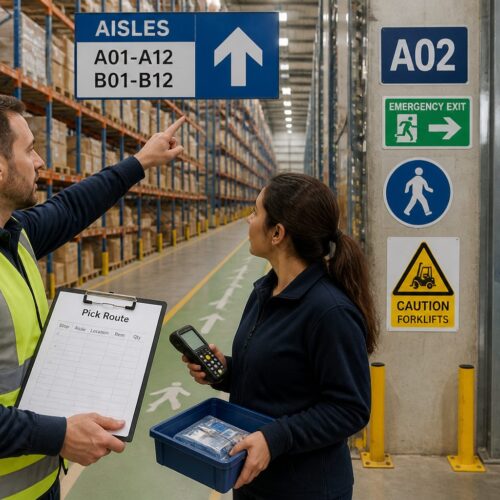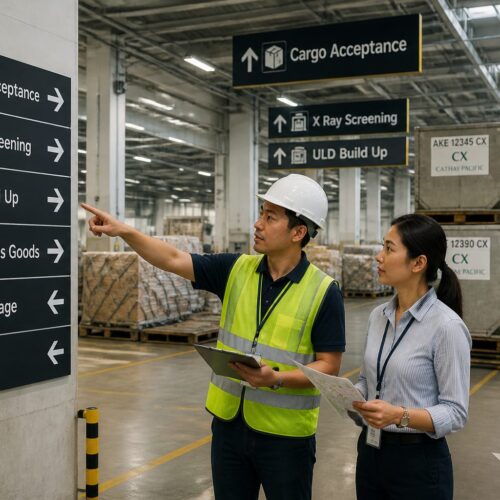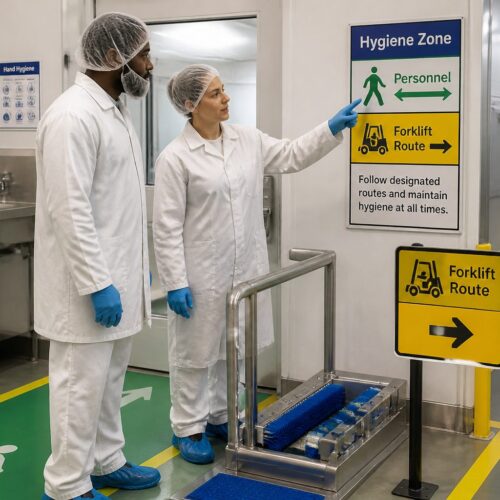

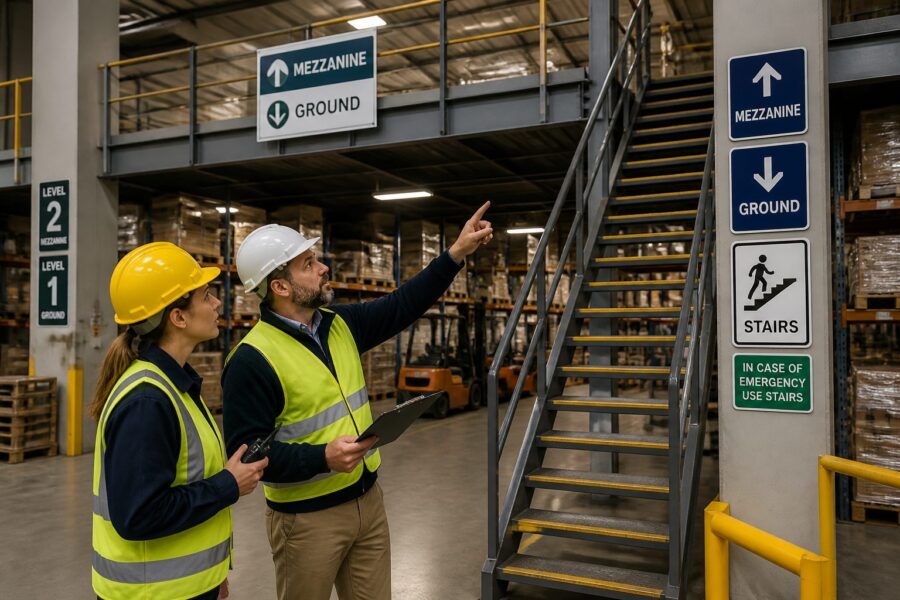
The routing of personnel and equipment on mezzanines often involves tighter turns and narrower aisles than on the main floor. Directional arrows and floor markings become even more critical here to manage traffic flow and prevent collisions. These markings should clearly delineate pedestrian paths from areas where equipment operates.
Lighting conditions on mezzanines can also differ from the main warehouse floor, sometimes being less illuminated or having more shadows. Signage materials should be reflective or internally illuminated to ensure readability in all conditions. Adequate lighting directly impacts the effectiveness of any visual wayfinding system.
Consider the height at which signs are mounted on mezzanines, especially in areas with lower ceilings or overhead obstacles. Signs should be positioned to avoid head injuries while remaining visible to all personnel. This careful placement ensures both safety and legibility.
Emergency procedures and muster points specific to the mezzanine level must be clearly communicated through dedicated signage. Evacuation maps should show routes from the mezzanine to safe ground-level exits, accounting for all stairwells and emergency exits. This specialized information is vital for rapid and safe evacuation.
Finally, the integration of mezzanine signage with the overall warehouse wayfinding system needs careful planning. Consistency in symbology, color schemes, and font styles across all levels reinforces the system’s effectiveness. This unified approach makes the entire facility easier to navigate, regardless of the floor level.
Regular inspections of mezzanine signage are also crucial to ensure its integrity and visibility. Damage from forklift impacts, fading from sunlight, or accumulation of dust can compromise its effectiveness. Proactive maintenance ensures that this critical safety and navigation information remains clear and reliable.
Leveraging Technology for Enhanced Wayfinding
While physical signage forms the backbone of wayfinding for multi-floor warehouses, integrating technology can significantly enhance its capabilities. Digital solutions offer dynamic, real-time information that static signs simply cannot provide. These technological advancements make navigation more precise and adaptable.
Indoor positioning systems (IPS) using Wi-Fi, Bluetooth beacons, or RFID tags can provide precise location tracking for both personnel and assets. This technology allows for turn-by-turn navigation on handheld devices, guiding workers directly to specific racks or bins across multiple levels. Such systems drastically reduce search times and improve accuracy.
- Real-time indoor positioning systems (IPS)
- Augmented Reality (AR) navigation overlays
- Digital signage and interactive kiosks
- Voice-guided picking systems
- Automated Guided Vehicle (AGV) path optimization
- RFID-enabled asset tracking
- Wearable technology for directional cues
Training and Maintenance: Sustaining Wayfinding Effectiveness
Even the most meticulously designed wayfinding system becomes ineffective without proper training and ongoing maintenance. Employees must understand how to interpret the various signs, labels, and symbols used throughout the multi-floor warehouse. Comprehensive training ensures that everyone, from new hires to seasoned veterans, can navigate the facility efficiently and safely.
Initial training sessions should cover all aspects of the wayfinding system, including color-coding schemes, numbering conventions, and the meaning of international safety symbols. Practical exercises, such as mock picking routes or emergency drills, can reinforce learning and build confidence. Regular refreshers are also important to address any changes or to simply keep the information fresh in employees’ minds.
Maintenance of the physical signage and labeling is equally critical for sustained effectiveness. Signs can become dirty, damaged, or faded over time due to environmental factors or accidental impacts. A scheduled inspection routine helps identify and address these issues before they compromise clarity and safety.
Regular cleaning of signs ensures they remain legible, especially in dusty or high-traffic areas. Prompt replacement of damaged or missing signs prevents confusion and maintains the integrity of the overall system. This proactive approach avoids situations where critical information is missing when it is most needed.
When the warehouse layout changes, whether through re-racking, new equipment installation, or the addition of another mezzanine, the wayfinding system must be updated immediately. Outdated signage leads to significant operational inefficiencies and safety risks. This requires a robust change management process that includes updating all relevant wayfinding elements.
Feedback from employees who regularly use the wayfinding system can provide valuable insights for continuous improvement. They often identify areas of confusion or opportunities for clearer signage that management might overlook. Establishing a channel for this feedback ensures the system remains user-centric and highly effective.
Integrating wayfinding training into broader safety and logistics protocols reinforces its importance. When employees understand the direct link between clear navigation and their own safety and productivity, they are more likely to engage with the system properly. This holistic approach embeds effective wayfinding into the company culture.
For technologically advanced wayfinding systems, ongoing IT support and software updates are essential. Indoor positioning systems and digital signage require regular calibration and maintenance to ensure accuracy and functionality. Neglecting these aspects can quickly render sophisticated solutions useless, undermining the investment.
Finally, maintaining a centralized database or digital map of the warehouse layout and its wayfinding elements is a best practice. This resource facilitates quick updates, provides a reference for new installations, and helps in planning future expansions. Such documentation is invaluable for consistent management of the entire system for wayfinding for multi-floor warehouses.
A well-maintained and understood wayfinding system reduces errors, saves time, and significantly enhances the safety of all personnel. It represents a continuous commitment to operational excellence rather than a one-time installation. This sustained effort pays dividends in a highly dynamic multi-floor warehouse environment.
The Business Impact of Superior Wayfinding
Implementing superior wayfinding for multi-floor warehouses delivers a profound positive business impact that extends far beyond simple navigation. It directly translates into measurable improvements in productivity, safety, and overall operational efficiency. Companies that prioritize clear vertical navigation experience fewer bottlenecks and smoother workflows.
Increased picking accuracy and speed are immediate benefits, as workers spend less time searching for items across multiple levels. This efficiency reduces labor costs and improves order fulfillment rates, directly impacting customer satisfaction. A well-designed system ensures that every movement is purposeful and productive.
Safety improvements are another critical business advantage, leading to a reduction in workplace accidents and injuries. Fewer incidents mean lower insurance premiums, reduced worker’s compensation claims, and less downtime due to investigations or recovery. A safer environment also boosts employee morale and retention.
Enhanced safety and clear logistics pathways also contribute to compliance with regulatory bodies and industry standards. Avoiding penalties and maintaining a strong safety record protects the company’s reputation and avoids costly legal entanglements. This proactive approach demonstrates a commitment to responsible operations.
Optimized space utilization becomes more achievable with effective wayfinding, as it supports efficient storage and retrieval across all vertical levels. When personnel and automated systems can access any part of the warehouse quickly, the effective capacity of the facility increases. This maximizes the return on investment for the physical infrastructure.
Reduced operational errors, such as mispicks, misdeliveries, or lost inventory, save significant costs related to rework, returns, and inventory adjustments. A clear wayfinding system minimizes human error by providing unambiguous directions at every step. This precision is invaluable in complex logistics operations.
Furthermore, a well-organized and easy-to-navigate warehouse projects an image of professionalism and efficiency to clients and partners. This positive impression can strengthen business relationships and attract new opportunities. It signifies a company that values order and precision in its operations.
The ability to quickly adapt to changes in inventory, layout, or operational demands is also improved with a flexible wayfinding system. When changes occur, clear labeling and updated digital maps allow for rapid adjustments without significant disruption. This agility is a competitive advantage in a fast-paced market.
Ultimately, investing in robust wayfinding for multi-floor warehouses is not an expense but a strategic investment in the future of the business. It underpins a safer, more efficient, and more profitable logistics operation. The cumulative benefits significantly outweigh the initial implementation costs.
Companies that neglect this crucial aspect often face higher operational costs, increased safety risks, and diminished productivity. Superior wayfinding acts as a foundational element for achieving operational excellence in any vertical warehouse environment. It is a non-negotiable component of modern logistics management.
Future Trends in Warehouse Navigation and Symbology
The future of wayfinding for multi-floor warehouses promises even more sophisticated and integrated solutions, driven by advancements in technology and evolving logistics demands. We are moving beyond static signs towards dynamic, intelligent navigation systems. These trends aim to make warehouse environments even more intuitive and responsive.
One significant trend involves the widespread adoption of Augmented Reality (AR) for navigation. Workers wearing smart glasses or using tablets could see real-time directional overlays directly onto their view of the warehouse environment. This technology offers highly personalized and context-aware guidance, showing optimal routes to specific items or locations.
Further integration of Artificial Intelligence (AI) will optimize routes in real-time, considering factors like traffic congestion, equipment availability, and priority orders. AI-powered systems can dynamically update navigation instructions, guiding personnel and robots along the most efficient paths. This level of optimization significantly enhances overall logistics performance.
The evolution of indoor positioning systems will lead to even greater accuracy and reliability, potentially down to centimeter-level precision. This will be crucial for the seamless operation of increasingly autonomous warehouse robots and drones. Such precision minimizes errors and maximizes the efficiency of automated tasks.
Digital twins of warehouses, which are virtual replicas of the physical facility, will become standard tools for planning and optimizing wayfinding. These digital models allow managers to simulate different scenarios, test new layouts, and refine navigation strategies before implementing them physically. This reduces risk and improves decision-making.
Voice-activated navigation and picking systems will also become more prevalent, allowing workers to receive instructions and confirm tasks hands-free. This improves ergonomics and efficiency, particularly in complex multi-level picking operations. It represents a natural evolution in human-machine interaction within the warehouse.
The development of new international standards for emerging symbology, particularly for autonomous systems and digital interfaces, will be critical. As technology advances, the need for universally understood symbols and communication protocols will grow. ISO and other bodies will continue to play a vital role in this standardization.
Sustainable wayfinding solutions, utilizing energy-efficient digital displays and environmentally friendly materials for physical signage, will gain prominence. Companies will increasingly seek solutions that align with their broader sustainability goals. This reflects a growing awareness of environmental impact in all operational aspects.
Predictive analytics will also play a role, anticipating potential bottlenecks or areas of confusion based on historical data and real-time conditions. This allows for proactive adjustments to wayfinding instructions or even temporary digital signage. Such foresight prevents problems before they impact operations.
Finally, the convergence of physical and digital wayfinding elements will create a truly seamless navigation experience. Static signs will complement dynamic digital displays and personal devices, forming a cohesive and highly adaptable system. This integrated approach represents the pinnacle of effective wayfinding for multi-floor warehouses.
Navigating the sprawling, often multi-story environments of modern warehouses presents unique challenges for efficiency and safety. Effective wayfinding for multi-floor warehouses is not merely a convenience; it stands as a critical operational necessity. Without clear guidance, personnel and automated systems alike can experience delays, errors, and increased risks.
The complexity amplifies dramatically when vertical space comes into play, introducing mezzanines, elevated platforms, and multi-level racking systems. Proper signage and intuitive navigation are essential to ensure smooth logistics and protect everyone working within these dynamic spaces. This article explores the specific demands of vertical navigation and mezzanine signage, emphasizing the role of international standards.
We will examine how standardized symbols, consistent labeling, and strategic placement improve safety and streamline operations across all levels of a sophisticated warehouse. Adopting robust wayfinding strategies directly impacts productivity and reduces the potential for costly mistakes or accidents. Understanding and implementing these principles is key to optimizing any multi-floor warehouse operation.
The Complexities of Vertical Warehouse Environments
Modern warehouses increasingly utilize vertical space to maximize storage density, creating intricate multi-level structures. These environments, featuring mezzanines, catwalks, and towering rack systems, demand a sophisticated approach to navigation. Traditional floor-level wayfinding methods simply do not translate effectively to these elevated areas.
The sheer scale and repetitive nature of storage aisles can disorient workers, especially those new to a facility. This disorientation directly impacts picking accuracy and overall operational speed. Without clear guidance, the risk of personnel becoming lost or misinterpreting directions escalates significantly.
Vertical transitions, such as stairwells, ramps, and elevators, also introduce their own set of navigational puzzles. Workers need immediate, unambiguous information about where these access points lead and their operational status. Poorly marked vertical pathways can cause bottlenecks and delay critical logistics movements.
Furthermore, the integration of automated guided vehicles (AGVs) and autonomous mobile robots (AMRs) adds another layer of complexity. These automated systems rely heavily on precise location data and clear environmental markers for efficient operation. Any ambiguity in the physical wayfinding for multi-floor warehouses can disrupt their programmed routes and cause system errors.
Safety considerations are paramount in these elevated spaces, where falls from height or collisions pose serious threats. Clear signage indicating load limits, restricted areas, and emergency exits becomes absolutely critical. A well-designed wayfinding system actively mitigates these hazards by providing constant, reliable information.
The Imperative for Clear Vertical Wayfinding
Effective vertical wayfinding for multi-floor warehouses directly contributes to operational efficiency and worker safety. When employees can quickly and accurately locate specific items or destinations across different levels, productivity naturally improves. This efficiency minimizes wasted time searching and reduces the potential for mispicks.
Safety gains are equally significant, as clear signage prevents accidents related to confusion or misdirection. Workers understand designated pathways, emergency exits, and potential hazards on every floor and mezzanine. This proactive approach to safety protects personnel and reduces incident rates within the warehouse.
Proper wayfinding also streamlines the onboarding process for new employees, allowing them to become productive much faster. They can orient themselves within the complex layout without constant supervision or repeated instructions. This reduces training overhead and accelerates their integration into the workflow.
Moreover, a robust wayfinding system supports compliance with various health and safety regulations. Regulators expect clear demarcation of safety equipment, emergency routes, and operational zones. Demonstrating a commitment to comprehensive vertical navigation shows due diligence in protecting the workforce.
Ultimately, investing in superior wayfinding for multi-floor warehouses yields tangible returns through reduced errors, improved throughput, and a safer working environment. It represents a foundational element of a well-managed and high-performing logistics operation. The benefits extend far beyond simple navigation, touching every aspect of warehouse management.
International Standards for Warehouse Symbology and Labeling
Adhering to international standards for symbology and labeling ensures universal understanding and consistency across diverse workforces and automated systems. Organizations like ISO (International Organization for Standardization) provide guidelines that are critical for effective communication in a globalized logistics industry. These standards dictate everything from safety symbols to asset identification.
Utilizing standardized symbols, such as those found in ISO 7010 for graphical symbols for safety signs, means that a “fire exit” sign looks the same whether you are in Berlin or Beijing. This consistency is paramount for safety, especially in emergency situations where immediate comprehension saves lives. Consistent labeling also aids in inventory management and asset tracking, reducing errors across the supply chain.
| Standard Body/Type | Purpose | Relevance to Wayfinding |
|---|---|---|
| ISO 7010 | Graphical symbols for safety signs | Ensures universal understanding of emergency exits, hazards, and safety equipment across all warehouse levels. |
| ISO 3864 Series | Safety colours and safety signs | Defines colors and design principles for safety signs, crucial for high visibility and rapid recognition in complex spaces. |
| ANSI/TIA-606-C | Administration Standard for Telecommunications Infrastructure | Provides guidelines for labeling telecommunications cabling and infrastructure, indirectly supporting IT-dependent wayfinding systems. |
| GS1 Standards (e.g., Barcodes, RFID) | Global identification and communication standards | Essential for unique identification of locations, assets, and inventory, enabling precise navigation for automated systems and personnel. |
| OSHA Regulations (e.g., 1910.145) | Specifications for accident prevention signs and tags | Mandates specific sign characteristics for hazard communication, directly impacting safety wayfinding elements within US warehouses. |
Designing Effective Vertical Navigation Systems
Designing an effective vertical navigation system requires a comprehensive understanding of human factors and the specific layout of the multi-floor warehouse. The process begins with a thorough audit of existing pathways, potential bottlenecks, and areas prone to confusion. This initial assessment helps identify critical points where clear guidance is most needed.
Visibility is a key principle; all signage must be clearly legible from a distance and under various lighting conditions. This often means using large fonts, contrasting colors, and strategically placed lighting fixtures. Signs should be free from obstructions, ensuring they are always in the line of sight for approaching personnel or equipment.
Hierarchical signage provides layers of information, guiding users from general areas to specific locations. For instance, large overhead signs might indicate “Levels 1-3,” while smaller signs at stairwells direct to “Level 2: Picking Area A.” This layered approach prevents information overload while still providing necessary detail.
Color-coding different levels or zones within the warehouse can significantly enhance intuitive wayfinding for multi-floor warehouses. Assigning a distinct color to each floor or a specific mezzanine area helps workers quickly associate their location with a visual cue. This simple yet powerful technique reduces the cognitive load required for navigation.
Directional arrows and floor markings are invaluable for guiding traffic flow and indicating one-way paths or restricted zones. These visual cues prevent collisions and ensure orderly movement, particularly around vertical access points like elevators or ramps. Consistent application of these markings across all levels is crucial for clarity.
Utilizing consistent terminology for different areas and levels is another fundamental aspect of effective design. Avoid using different names for the same location, as this creates unnecessary confusion and slows down operations. Standardized language reinforces the overall clarity of the wayfinding system.
Consider the perspective of both pedestrians and equipment operators when placing signs. What is clear to a person on foot might be obscured to someone operating a forklift or an AGV. Signage needs to be strategically positioned at multiple heights to accommodate all types of warehouse traffic and improve overall safety.
Regular review and adaptation of the wayfinding system are essential, especially after layout changes or new equipment integration. A static system quickly becomes outdated and ineffective, leading to renewed confusion. Continuous improvement ensures the system remains relevant and functional in a dynamic warehouse environment.
Incorporating floor plans or maps at key decision points, such as near elevators or at the entrance to a mezzanine, provides a comprehensive overview. These maps should clearly indicate “You Are Here” and highlight important destinations or safety features. Such visual aids are particularly helpful for new visitors or in emergency situations.
Finally, durability and maintenance of signage cannot be overlooked in a busy warehouse setting. Signs must withstand dust, impacts, and cleaning processes without fading or becoming damaged. Investing in high-quality materials ensures the longevity and continued effectiveness of the entire wayfinding system.
Mezzanine Signage: Specific Challenges and Solutions
Mezzanines present a distinct set of challenges for wayfinding due to their often-compact nature and proximity to the main warehouse floor. These elevated platforms require signage that clearly distinguishes them from the ground level while providing specific directions for their unique layouts. The visual clutter from below can easily obscure crucial mezzanine information.
One primary challenge involves ensuring visibility of mezzanine signage from both the ground floor and within the mezzanine itself. Signs indicating access points, specific departments, or safety equipment must be prominent and easily identifiable from multiple angles. This often necessitates larger signs or overhead banners at transition points.
Clear demarcation of the mezzanine level is paramount, using distinct numbering or naming conventions that avoid confusion with ground-level locations. For example, “Mezzanine Level 1” is much clearer than simply “Level 2” if the ground floor is “Level 1.” This distinction prevents misdirection and improves overall wayfinding for multi-floor warehouses.
Safety signage on mezzanines must explicitly address hazards unique to elevated platforms, such as fall protection requirements, load limits for the mezzanine structure, and emergency exit routes specific to that level. These signs need to be strategically placed near edges, access points, and work areas. Compliance with local safety regulations, like OSHA standards in the US, is non-negotiable for these areas.
The routing of personnel and equipment on mezzanines often involves tighter turns and narrower aisles than on the main floor. Directional arrows and floor markings become even more critical here to manage traffic flow and prevent collisions. These markings should clearly delineate pedestrian paths from areas where equipment operates.
Lighting conditions on mezzanines can also differ from the main warehouse floor, sometimes being less illuminated or having more shadows. Signage materials should be reflective or internally illuminated to ensure readability in all conditions. Adequate lighting directly impacts the effectiveness of any visual wayfinding system.
Consider the height at which signs are mounted on mezzanines, especially in areas with lower ceilings or overhead obstacles. Signs should be positioned to avoid head injuries while remaining visible to all personnel. This careful placement ensures both safety and legibility.
Emergency procedures and muster points specific to the mezzanine level must be clearly communicated through dedicated signage. Evacuation maps should show routes from the mezzanine to safe ground-level exits, accounting for all stairwells and emergency exits. This specialized information is vital for rapid and safe evacuation.
Finally, the integration of mezzanine signage with the overall warehouse wayfinding system needs careful planning. Consistency in symbology, color schemes, and font styles across all levels reinforces the system’s effectiveness. This unified approach makes the entire facility easier to navigate, regardless of the floor level.
Regular inspections of mezzanine signage are also crucial to ensure its integrity and visibility. Damage from forklift impacts, fading from sunlight, or accumulation of dust can compromise its effectiveness. Proactive maintenance ensures that this critical safety and navigation information remains clear and reliable.
Leveraging Technology for Enhanced Wayfinding
While physical signage forms the backbone of wayfinding for multi-floor warehouses, integrating technology can significantly enhance its capabilities. Digital solutions offer dynamic, real-time information that static signs simply cannot provide. These technological advancements make navigation more precise and adaptable.
Indoor positioning systems (IPS) using Wi-Fi, Bluetooth beacons, or RFID tags can provide precise location tracking for both personnel and assets. This technology allows for turn-by-turn navigation on handheld devices, guiding workers directly to specific racks or bins across multiple levels. Such systems drastically reduce search times and improve accuracy.
- Real-time indoor positioning systems (IPS)
- Augmented Reality (AR) navigation overlays
- Digital signage and interactive kiosks
- Voice-guided picking systems
- Automated Guided Vehicle (AGV) path optimization
- RFID-enabled asset tracking
- Wearable technology for directional cues
Training and Maintenance: Sustaining Wayfinding Effectiveness
Even the most meticulously designed wayfinding system becomes ineffective without proper training and ongoing maintenance. Employees must understand how to interpret the various signs, labels, and symbols used throughout the multi-floor warehouse. Comprehensive training ensures that everyone, from new hires to seasoned veterans, can navigate the facility efficiently and safely.
Initial training sessions should cover all aspects of the wayfinding system, including color-coding schemes, numbering conventions, and the meaning of international safety symbols. Practical exercises, such as mock picking routes or emergency drills, can reinforce learning and build confidence. Regular refreshers are also important to address any changes or to simply keep the information fresh in employees’ minds.
Maintenance of the physical signage and labeling is equally critical for sustained effectiveness. Signs can become dirty, damaged, or faded over time due to environmental factors or accidental impacts. A scheduled inspection routine helps identify and address these issues before they compromise clarity and safety.
Regular cleaning of signs ensures they remain legible, especially in dusty or high-traffic areas. Prompt replacement of damaged or missing signs prevents confusion and maintains the integrity of the overall system. This proactive approach avoids situations where critical information is missing when it is most needed.
When the warehouse layout changes, whether through re-racking, new equipment installation, or the addition of another mezzanine, the wayfinding system must be updated immediately. Outdated signage leads to significant operational inefficiencies and safety risks. This requires a robust change management process that includes updating all relevant wayfinding elements.
Feedback from employees who regularly use the wayfinding system can provide valuable insights for continuous improvement. They often identify areas of confusion or opportunities for clearer signage that management might overlook. Establishing a channel for this feedback ensures the system remains user-centric and highly effective.
Integrating wayfinding training into broader safety and logistics protocols reinforces its importance. When employees understand the direct link between clear navigation and their own safety and productivity, they are more likely to engage with the system properly. This holistic approach embeds effective wayfinding into the company culture.
For technologically advanced wayfinding systems, ongoing IT support and software updates are essential. Indoor positioning systems and digital signage require regular calibration and maintenance to ensure accuracy and functionality. Neglecting these aspects can quickly render sophisticated solutions useless, undermining the investment.
Finally, maintaining a centralized database or digital map of the warehouse layout and its wayfinding elements is a best practice. This resource facilitates quick updates, provides a reference for new installations, and helps in planning future expansions. Such documentation is invaluable for consistent management of the entire system for wayfinding for multi-floor warehouses.
A well-maintained and understood wayfinding system reduces errors, saves time, and significantly enhances the safety of all personnel. It represents a continuous commitment to operational excellence rather than a one-time installation. This sustained effort pays dividends in a highly dynamic multi-floor warehouse environment.
The Business Impact of Superior Wayfinding
Implementing superior wayfinding for multi-floor warehouses delivers a profound positive business impact that extends far beyond simple navigation. It directly translates into measurable improvements in productivity, safety, and overall operational efficiency. Companies that prioritize clear vertical navigation experience fewer bottlenecks and smoother workflows.
Increased picking accuracy and speed are immediate benefits, as workers spend less time searching for items across multiple levels. This efficiency reduces labor costs and improves order fulfillment rates, directly impacting customer satisfaction. A well-designed system ensures that every movement is purposeful and productive.
Safety improvements are another critical business advantage, leading to a reduction in workplace accidents and injuries. Fewer incidents mean lower insurance premiums, reduced worker’s compensation claims, and less downtime due to investigations or recovery. A safer environment also boosts employee morale and retention.
Enhanced safety and clear logistics pathways also contribute to compliance with regulatory bodies and industry standards. Avoiding penalties and maintaining a strong safety record protects the company’s reputation and avoids costly legal entanglements. This proactive approach demonstrates a commitment to responsible operations.
Optimized space utilization becomes more achievable with effective wayfinding, as it supports efficient storage and retrieval across all vertical levels. When personnel and automated systems can access any part of the warehouse quickly, the effective capacity of the facility increases. This maximizes the return on investment for the physical infrastructure.
Reduced operational errors, such as mispicks, misdeliveries, or lost inventory, save significant costs related to rework, returns, and inventory adjustments. A clear wayfinding system minimizes human error by providing unambiguous directions at every step. This precision is invaluable in complex logistics operations.
Furthermore, a well-organized and easy-to-navigate warehouse projects an image of professionalism and efficiency to clients and partners. This positive impression can strengthen business relationships and attract new opportunities. It signifies a company that values order and precision in its operations.
The ability to quickly adapt to changes in inventory, layout, or operational demands is also improved with a flexible wayfinding system. When changes occur, clear labeling and updated digital maps allow for rapid adjustments without significant disruption. This agility is a competitive advantage in a fast-paced market.
Ultimately, investing in robust wayfinding for multi-floor warehouses is not an expense but a strategic investment in the future of the business. It underpins a safer, more efficient, and more profitable logistics operation. The cumulative benefits significantly outweigh the initial implementation costs.
Companies that neglect this crucial aspect often face higher operational costs, increased safety risks, and diminished productivity. Superior wayfinding acts as a foundational element for achieving operational excellence in any vertical warehouse environment. It is a non-negotiable component of modern logistics management.
Future Trends in Warehouse Navigation and Symbology
The future of wayfinding for multi-floor warehouses promises even more sophisticated and integrated solutions, driven by advancements in technology and evolving logistics demands. We are moving beyond static signs towards dynamic, intelligent navigation systems. These trends aim to make warehouse environments even more intuitive and responsive.
One significant trend involves the widespread adoption of Augmented Reality (AR) for navigation. Workers wearing smart glasses or using tablets could see real-time directional overlays directly onto their view of the warehouse environment. This technology offers highly personalized and context-aware guidance, showing optimal routes to specific items or locations.
Further integration of Artificial Intelligence (AI) will optimize routes in real-time, considering factors like traffic congestion, equipment availability, and priority orders. AI-powered systems can dynamically update navigation instructions, guiding personnel and robots along the most efficient paths. This level of optimization significantly enhances overall logistics performance.
The evolution of indoor positioning systems will lead to even greater accuracy and reliability, potentially down to centimeter-level precision. This will be crucial for the seamless operation of increasingly autonomous warehouse robots and drones. Such precision minimizes errors and maximizes the efficiency of automated tasks.
Digital twins of warehouses, which are virtual replicas of the physical facility, will become standard tools for planning and optimizing wayfinding. These digital models allow managers to simulate different scenarios, test new layouts, and refine navigation strategies before implementing them physically. This reduces risk and improves decision-making.
Voice-activated navigation and picking systems will also become more prevalent, allowing workers to receive instructions and confirm tasks hands-free. This improves ergonomics and efficiency, particularly in complex multi-level picking operations. It represents a natural evolution in human-machine interaction within the warehouse.
The development of new international standards for emerging symbology, particularly for autonomous systems and digital interfaces, will be critical. As technology advances, the need for universally understood symbols and communication protocols will grow. ISO and other bodies will continue to play a vital role in this standardization.
Sustainable wayfinding solutions, utilizing energy-efficient digital displays and environmentally friendly materials for physical signage, will gain prominence. Companies will increasingly seek solutions that align with their broader sustainability goals. This reflects a growing awareness of environmental impact in all operational aspects.
Predictive analytics will also play a role, anticipating potential bottlenecks or areas of confusion based on historical data and real-time conditions. This allows for proactive adjustments to wayfinding instructions or even temporary digital signage. Such foresight prevents problems before they impact operations.
Finally, the convergence of physical and digital wayfinding elements will create a truly seamless navigation experience. Static signs will complement dynamic digital displays and personal devices, forming a cohesive and highly adaptable system. This integrated approach represents the pinnacle of effective wayfinding for multi-floor warehouses.