

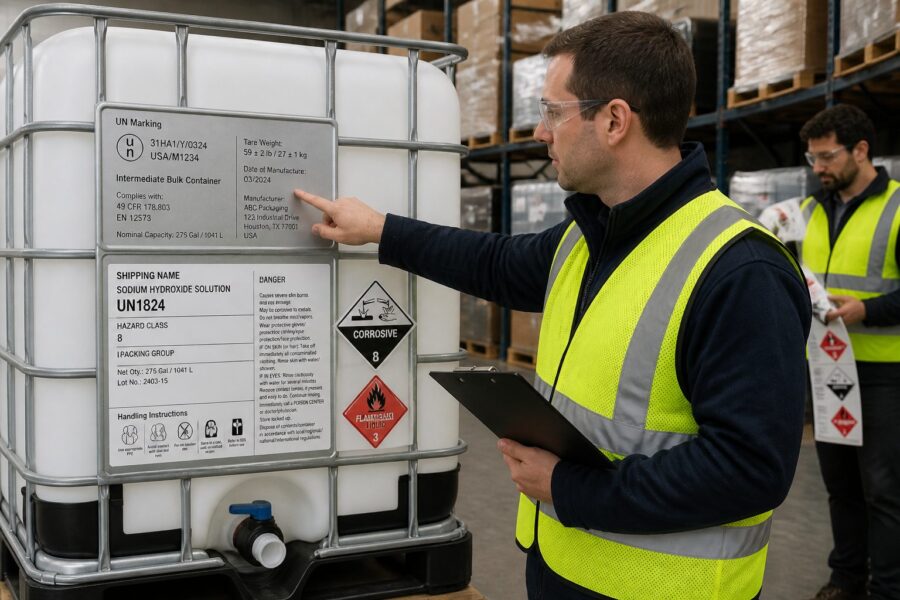
Intermediate Bulk Containers (IBCs) are essential for transporting and storing a variety of liquids and hazardous materials that are often integral to various industries. Because of their unique applications and the diverse nature of their contents, IBCs have specific labeling needs that must be meticulously met to ensure not only safety but also regulatory compliance in various jurisdictions.
Understanding the IBC tote label requirements is critical for businesses involved in logistics, safety, and the transportation of hazardous materials. Proper labeling not only ensures compliance with stringent regulations but also significantly enhances safety during transport and storage, thereby protecting workers and the environment.
This article will delve into the various aspects of IBC labeling, including UN certification marks, DOT and IATA rules, and best practices for maintaining compliance and ensuring safety. By following these comprehensive guidelines, businesses can avoid costly violations and enhance the safe handling and transport of their products, which is crucial for operational success.
What IBCs Are and Why They Have Unique Labeling Needs
Intermediate Bulk Containers, or IBCs, are large containers specifically designed for the transport and storage of bulk liquids, including chemicals, food products, and various hazardous materials. Their unique design and intended applications require specialized labeling to effectively convey important safety information that is critical for safe handling and compliance with regulations.
The unique labeling needs of IBCs arise from their frequent use in transporting hazardous materials, which are subject to strict regulatory requirements set forth by governing bodies. Proper labeling serves the essential purpose of identifying the contents and alerting handlers to potential hazards, thereby minimizing the risk of accidents during transport and storage.
Each IBC must display information that is not only easily visible but also legible, even from a distance, to facilitate proper identification. Labels should include key details such as UN numbers, hazard symbols, and other critical information that provide immediate context regarding the container’s contents and associated risks.
The specific design of IBCs, which can vary significantly in shape and size, also affects how labels are applied, making it vital for businesses to understand the layout and dimensions of their containers. Thus, achieving compliance with IBC UN certification label standards requires careful consideration of these variables to ensure that labels are appropriately positioned and displayed.
Labeling must be durable enough to withstand the rigors of transport and storage, including exposure to harsh environmental conditions, which further complicates the labeling requirements. This durability ensures that the information remains intact and visible throughout the container’s lifecycle, which is essential for ongoing compliance and safety.
UN Certification Marks and What Each Element on an IBC Label Means
UN certification marks are vital for demonstrating that an IBC meets international safety standards for transporting hazardous materials, which is crucial for global trade. Each element of the UN certification label provides critical information about the container’s capabilities and safety features, facilitating safe handling and regulatory compliance.
The UN certification label typically includes a UN number, which identifies the specific hazardous material contained within, ensuring that handlers are aware of the necessary precautions. Additionally, it features a type code that indicates the design and construction standards met by the IBC, providing assurance of its integrity during transport.
Another important element of the UN certification label is the maximum allowable gross mass, which informs handlers of the maximum weight the container can safely hold. This information is crucial for preventing overloading during transport, which can lead to accidents, spills, or other hazardous incidents.
Furthermore, the label will indicate the date of manufacture and any necessary retesting schedules, which are essential for maintaining the integrity of the IBC and ensuring ongoing compliance with safety regulations. This information is vital for organizations that rely on the safe transport of hazardous materials and seek to avoid potential liabilities.
Understanding these elements is vital for anyone involved in the logistics of hazardous materials, as they play a critical role in ensuring safety and compliance. Proper interpretation of the UN certification marks can significantly impact safe handling and transportation practices, reinforcing the need for thorough training and awareness in the workforce.
DOT and IATA Labeling Rules for Hazardous Materials in Bulk Containers
The Department of Transportation (DOT) and the International Air Transport Association (IATA) have established specific labeling rules for transporting hazardous materials in bulk containers, which must be strictly adhered to for compliance. Compliance with these regulations is essential for ensuring safe transport and avoiding legal penalties that can arise from non-compliance.
Diverse materials may require different labels depending on their classification, which can include flammable, corrosive, or toxic substances that pose various levels of risk. Accurate labeling helps to inform handlers about the risks and necessary precautions when dealing with these materials, ultimately fostering a safer working environment.
| Hazard Class | Label Color | Example Symbol |
|---|---|---|
| Flammable Liquids | Red | Flame |
| Corrosive Materials | Yellow | Test Tube |
| Explosives | Orange | Explosion |
| Radioactive Materials | White | Radiation Symbol |
In addition to hazard class labels, IBCs must also display specific identification numbers corresponding to the materials being transported, which adds another layer of safety. Adhering to DOT and IATA labeling rules helps to ensure that all parties involved in the transport process are aware of the risks associated with the materials, thereby enhancing safety protocols.
Failure to comply with these regulations can result in severe penalties, including hefty fines and legal action that can damage a business’s reputation. Therefore, businesses must remain vigilant in maintaining accurate and up-to-date labeling on all their IBCs to mitigate these risks and ensure operational continuity.
Maximum Capacity and Gross Weight Markings: Where and How to Apply Them
Maximum capacity and gross weight markings are crucial for ensuring the safe use of IBCs, as they inform users of the limits for each container. These markings play an essential role in preventing accidents during handling and transport, thereby protecting workers and ensuring compliance with safety regulations.
Markings should be clearly visible and placed on the sides of the IBC, where they can be easily seen by handlers and transport personnel. Additionally, these markings must be durable enough to withstand outdoor conditions without fading or becoming illegible, ensuring that the information remains intact throughout the container’s lifecycle.
It is also essential to ensure that maximum capacity and gross weight markings comply with the relevant regulations that govern labeling practices. This includes adhering to the specific font size and color requirements as outlined by safety standards, as well as ensuring that the markings are placed in accordance with industry best practices.
Proper placement of these markings is integral to achieving compliance and ensuring safety during the handling and transport of IBCs. Always verify that the markings are not obstructed by other labels or components of the container, as this could lead to confusion and potential safety hazards.
Regular inspections should be conducted to ensure that these markings remain intact and visible, which is crucial for maintaining compliance with safety standards. This proactive approach can help to avoid potential violations during safety inspections by regulatory agencies, thereby safeguarding the business against fines and legal repercussions.
Label Placement Zones on Cubic, Cylindrical and Flexible IBCs
Label placement is essential for ensuring that all necessary information is visible and compliant with regulations, as improper placement can lead to safety risks. Different types of IBCs, including cubic, cylindrical, and flexible, have specific placement zones that must be adhered to in order to effectively communicate information to handlers.
For cubic IBCs, labels should typically be placed on two opposing sides to ensure visibility from multiple angles, as this allows handlers to quickly identify the contents. Cylindrical IBCs may require labels to be wrapped around their circumference for optimal visibility, ensuring that critical information is accessible regardless of the container’s orientation.
- Labels on top or sides for cubic IBCs to enhance visibility
- Wrap-around labels for cylindrical IBCs to maximize exposure
- Flat surfaces for flexible IBCs to ensure label integrity
- Ensure compliance with visibility requirements to meet safety regulations
- Consider environmental factors during placement to maintain label durability
Flexible IBCs should have labels affixed to flat surfaces to maintain their integrity and ensure that vital information is easily accessible. It’s also important to consider the environmental conditions, such as exposure to sunlight and moisture, when determining label placement zones to ensure that the labels remain legible throughout the container’s use.
By following these guidelines, businesses can enhance safety and compliance while minimizing the risk of violations that could lead to costly penalties. Proper label placement not only ensures that handlers can quickly identify the contents and associated hazards but also contributes to a culture of safety within the organization.
Retest Date Labels and Inspection Markings for Reused Containers
Retest date labels are essential for reused IBCs, as they indicate when a container must be inspected for safety compliance, thus ensuring its continued usability. These labels play a critical role in maintaining the safety of IBCs throughout their lifecycle, particularly when they are used multiple times for transporting hazardous materials.
Inspection markings must be prominently displayed to inform handlers of the last inspection date and any relevant results, thereby promoting transparency and accountability within the handling process. This transparency helps to maintain safety standards and compliance with regulations, which is crucial for protecting both employees and the environment.
- Clearly visible retest date to facilitate timely inspections
- Last inspection results must be documented and accessible
- Compliance with safety standards is essential for operational integrity
- Regular inspection schedule should be established and adhered to
- Documentation of inspection history aids in accountability and compliance
Regular inspections are critical for identifying any potential issues before they become serious problems, which can lead to significant safety hazards. By following a strict inspection schedule and ensuring that retest date labels are current, businesses can avoid costly fines and ensure their IBCs remain compliant with regulatory standards.
Not adhering to retest date and inspection marking requirements can lead to severe penalties that could impact the bottom line of any business. Therefore, maintaining accurate and up-to-date labels is crucial for any organization utilizing reused containers, as it underscores their commitment to safety and regulatory adherence.
Choosing Label Materials That Survive Outdoor Stacking and Filling
Selecting the right label materials is critical for ensuring that IBC labels can withstand outdoor conditions, which can vary dramatically based on the environment. Labels must endure various environmental factors such as sunlight, moisture, and temperature fluctuations while maintaining visibility and legibility over time.
Durable materials such as weather-resistant vinyl or polyester are highly recommended for outdoor use, as they provide excellent resistance to fading, tearing, and moisture. These materials ensure that essential information remains intact over time, which is vital for maintaining regulatory compliance and ensuring safety during transport and storage.
- Weather-resistant vinyl for enhanced durability in outdoor applications
- Durable polyester that withstands various environmental conditions
- UV-resistant coatings to prevent fading from sun exposure
- Adhesives that withstand moisture to ensure labels remain affixed
- Reflective materials can enhance visibility in low-light conditions
Considering the stacking and filling processes is also essential when choosing label materials, as labels should be positioned to avoid damage during handling and storage. Careful attention to label placement can prevent wear and tear that might compromise the effectiveness of the information conveyed.
By selecting appropriate materials, businesses can enhance the longevity and effectiveness of their IBC labels, which ultimately supports compliance and ensures safety during transport and storage. This careful consideration underscores the importance of investing in quality labeling solutions that can withstand the demands of industrial applications.
Cleaning and Reconditioning IBCs Without Destroying Certification Marks
Cleaning and reconditioning IBCs is vital for maintaining their usability and safety, especially when they are reused for transporting hazardous materials. However, it’s essential to perform these cleaning processes without damaging any certification marks or labels present on the containers, as this could lead to compliance issues.
Using gentle cleaning agents and methods can help preserve the integrity of labels while effectively removing contaminants. Avoiding harsh chemicals and abrasive tools is crucial for preventing damage to certification marks, which are essential for ensuring regulatory compliance.
Regular maintenance of IBCs ensures compliance with safety standards and prolongs the life of the containers, which is important for operational efficiency. By following proper cleaning protocols, businesses can avoid violations during inspections and maintain a safe working environment for all employees.
Additionally, having a documented cleaning procedure helps to maintain consistency across operations, allowing for effective training and compliance adherence. This can provide peace of mind not only to handlers but also to regulatory agencies that monitor compliance.
Ultimately, maintaining the integrity of certification marks during cleaning is essential for compliance and safety, as it ensures that IBCs continue to meet necessary regulations and standards. This unwavering commitment to best practices reinforces the importance of safety and compliance in the handling of hazardous materials.
Common IBC Labeling Violations Found During DOT Inspections
During DOT inspections, several common labeling violations can occur, which can lead to significant penalties for businesses that are not compliant. Understanding these violations is crucial for maintaining compliance and ensuring the safe transport of hazardous materials, which is a responsibility that cannot be taken lightly.
Some frequent issues include missing or illegible labels, incorrect hazard class markings, and failure to update retest dates, all of which can compromise safety. Addressing these problems proactively can help businesses avoid costly fines and enhance overall operational safety and compliance.
Inadequate label placement or failure to follow specific size and visibility requirements are also common violations that can easily be rectified through regular audits. Conducting thorough checks of labeling practices can help identify and rectify these issues before inspections occur, thus ensuring compliance and safety.
Ensuring compliance with IBC tote label requirements is not just a regulatory obligation but a critical component of safety that protects workers and the environment. By addressing common violations and implementing best practices, businesses can foster a safer environment for all workers involved in the handling and transport of hazardous materials.
In conclusion, adherence to IBC labeling regulations is essential for compliance and safety in the transport of hazardous materials, which can have serious consequences if mishandled. A proactive approach to labeling, regular inspections, and employee training can mitigate risks and enhance operational efficiency, ultimately contributing to the success of the organization.