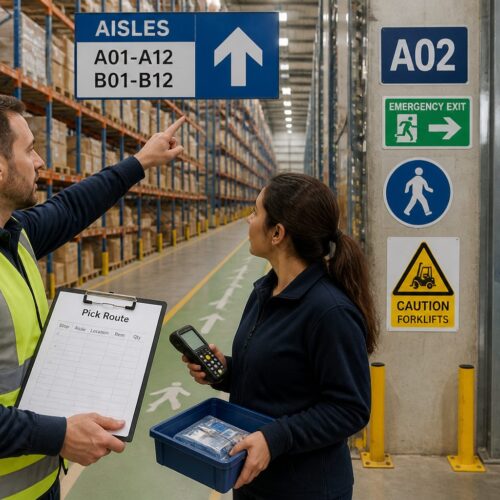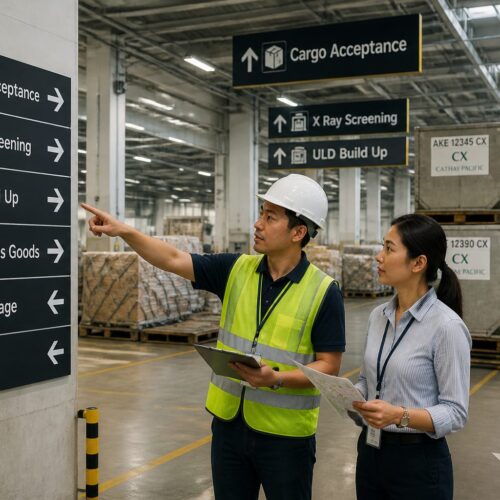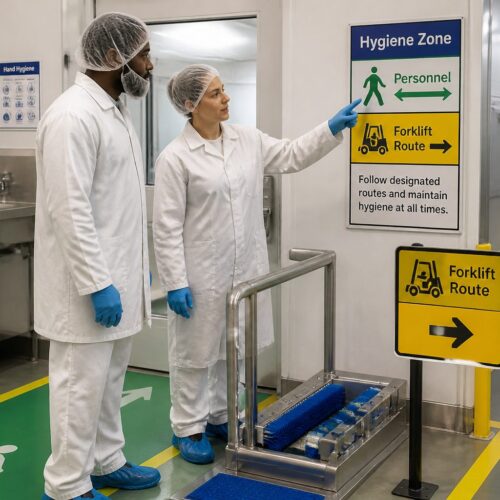

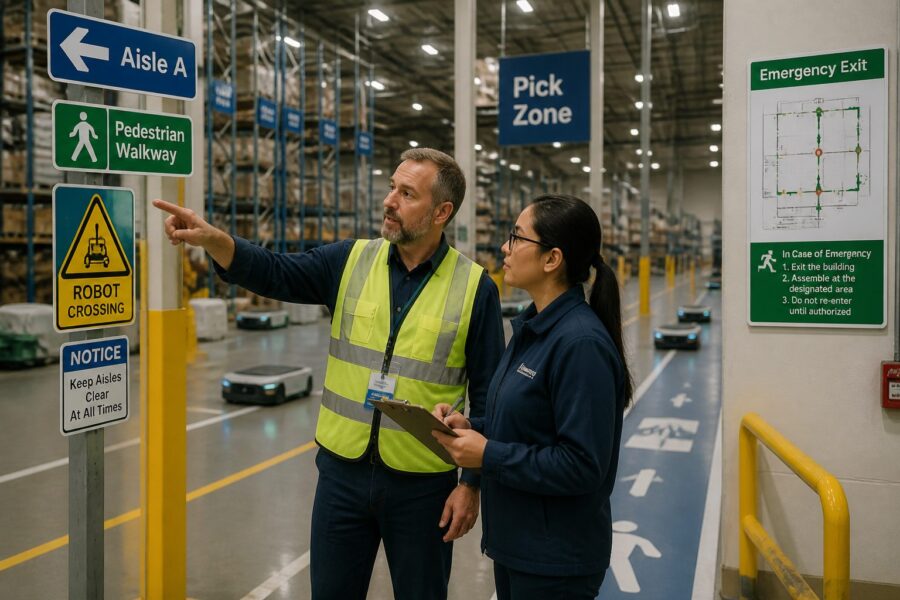
In the fast-evolving world of logistics, automated warehouses are becoming increasingly common. These high-tech environments present unique challenges for personnel wayfinding, requiring innovative solutions that go beyond traditional signage.
Effective wayfinding for automated warehouses is essential for maintaining safety, optimizing workflows, and ensuring seamless human-machine collaboration. This article will examine the specific challenges and solutions related to wayfinding in these complex settings, focusing on strategies to enhance both safety and efficiency.
We’ll explore how integrating signage with automation systems, providing clear instructions for human-machine interaction, and utilizing visual cues to indicate robot movement can significantly improve the warehouse environment. Additionally, we will discuss the importance of implementing safety protocols and adapting wayfinding to evolving automation technologies.
Unique Challenges of Wayfinding in Automated Warehouses
Automated warehouses differ significantly from traditional warehouses, presenting a range of new challenges for personnel navigation. The presence of autonomous robots, conveyor systems, and automated storage and retrieval systems (AS/RS) creates a dynamic and often unpredictable environment.
Traditional signage may not be sufficient to guide personnel safely and efficiently through these complex spaces. The constant movement of automated equipment and the changing layout of storage areas require a more adaptive and integrated wayfinding system.
One of the primary challenges is the potential for collisions between human workers and automated equipment. Robots moving at high speeds and in unpredictable patterns can pose a significant risk if workers are not aware of their presence or intended path.
Another challenge is the need for clear and concise instructions for interacting with automated systems. Workers need to understand how to operate machinery, report malfunctions, and respond to emergency situations, all while navigating the warehouse environment.
The reliance on automated systems also changes the flow of personnel within the warehouse. Instead of moving goods directly, workers may be focused on monitoring systems, performing maintenance, or handling exceptions. This requires wayfinding systems that guide them to specific equipment or control panels.
Limited visibility can be a significant problem in automated warehouses, especially in areas with high storage density. Tall racks and tightly packed inventory can obstruct sightlines, making it difficult for workers to see approaching robots or other hazards.
The noise levels in automated warehouses can also be higher than in traditional warehouses, making it difficult to hear auditory warnings or instructions. This requires wayfinding systems that rely more on visual cues and less on auditory signals.
Furthermore, the layout of automated warehouses is often subject to change as storage needs evolve and new equipment is introduced. This means that wayfinding systems must be flexible and easily adaptable to these changes.
The lack of familiarity with the environment can also be a challenge, especially for new employees or visitors. Clear and intuitive wayfinding systems are essential for helping these individuals navigate the warehouse safely and efficiently.
Finally, the integration of different automation systems from various vendors can create inconsistencies in the way information is displayed and communicated. Standardized wayfinding systems can help to bridge these gaps and ensure that all workers have access to the information they need.
Integrating Signage with Automation Systems
To address the challenges of wayfinding in automated warehouses, it’s crucial to integrate signage with the existing automation systems. This integration allows for real-time updates and dynamic signage that adapts to changes in the warehouse environment.
Digital signage can be used to display information about robot movements, safety alerts, and changes in storage locations. These signs can be updated remotely, providing workers with the most current information available.
Another effective strategy is to incorporate sensors and tracking systems into the wayfinding system. Sensors can detect the presence of workers and robots, triggering alerts or adjusting signage to prevent collisions.
For example, if a worker enters a zone where a robot is operating, a visual or auditory alert could be activated to warn both the worker and the robot. This type of integration can significantly improve safety and reduce the risk of accidents.
Consider using augmented reality (AR) applications on mobile devices or wearable technology. AR can overlay digital information onto the real world, providing workers with real-time guidance and instructions as they navigate the warehouse.
Integrating the warehouse management system (WMS) with the wayfinding system can provide workers with personalized navigation instructions. The WMS can track the worker’s location and task, providing them with the most efficient route to their destination.
Implementing geofencing can create virtual boundaries within the warehouse, triggering alerts when workers or robots enter or exit specific zones. This can be used to enforce safety protocols and prevent unauthorized access to restricted areas.
Utilize data analytics to identify areas where wayfinding is particularly challenging or where accidents are more likely to occur. This data can be used to optimize the wayfinding system and improve safety.
Consider using interactive kiosks throughout the warehouse to provide workers with access to information about the warehouse layout, robot schedules, and safety procedures. These kiosks can also be used to report malfunctions or request assistance.
Regularly review and update the wayfinding system to ensure that it is aligned with the latest automation technologies and warehouse layout. This includes updating signage, maps, and AR applications to reflect any changes in the environment.
Providing Clear Instructions for Human-Machine Interaction
Effective wayfinding in automated warehouses also requires providing clear instructions for human-machine interaction. Workers need to understand how to operate equipment, report issues, and respond to emergencies.
This can be achieved through a combination of visual aids, training programs, and standardized procedures. Clear and concise signage should be placed near all automated equipment, providing step-by-step instructions for operation and troubleshooting.
| Interaction Type | Signage Content | Training Focus |
|---|---|---|
| Equipment Startup | Power On Sequence, Safety Checks | Proper Procedures, Emergency Shutdown |
| Malfunction Reporting | Contact Information, Reporting Steps | Troubleshooting, Escalation Protocols |
| Emergency Shutdown | Emergency Stop Button Location, Procedure | Emergency Response, Evacuation Routes |
| Routine Maintenance | Maintenance Schedule, Checklist | Safety Precautions, Tool Usage |
Training programs should supplement the signage, providing workers with hands-on experience and the opportunity to ask questions. Standardized procedures ensure that all workers follow the same protocols, reducing the risk of errors and accidents.
Use pictograms and universally understood symbols to convey instructions, minimizing language barriers. This is especially important in warehouses with a diverse workforce.
Implement a system for workers to easily report equipment malfunctions or safety hazards. This could involve a mobile app, a dedicated phone line, or a simple form that can be filled out and submitted online.
Provide regular refresher training on human-machine interaction procedures. This helps to reinforce best practices and ensure that workers are up-to-date on the latest safety protocols.
Create interactive simulations or virtual reality (VR) training programs to allow workers to practice interacting with automated equipment in a safe and controlled environment. This can help them to develop the skills and confidence they need to handle real-world situations.
Develop a clear escalation process for handling complex or unusual situations. This ensures that workers know who to contact and what steps to take when they encounter a problem they cannot resolve on their own.
Gather feedback from workers on the effectiveness of the human-machine interaction procedures. This feedback can be used to identify areas for improvement and ensure that the procedures are meeting the needs of the workforce.
Utilizing Visual Cues to Indicate Robot Movement
Visual cues are essential for indicating robot movement and preventing collisions in automated warehouses. These cues can include floor markings, light projections, and color-coded zones.
Floor markings can be used to designate robot pathways, pedestrian walkways, and restricted areas. These markings should be highly visible and easily understood, even in low-light conditions.
Light projections can be used to create dynamic visual cues that indicate the direction and speed of robot movement. For example, a moving line of light could be projected onto the floor to show the path of an approaching robot.
Color-coded zones can be used to differentiate between areas with varying levels of automation. For instance, areas with high robot traffic could be designated with a specific color, alerting workers to exercise extra caution.
Consider using flashing lights or strobe lights to draw attention to moving robots, especially in areas with high noise levels. These lights should be bright and easily visible from a distance.
Implement virtual reality (VR) or augmented reality (AR) applications that overlay visual cues onto the real world. This can provide workers with real-time information about robot movements and potential hazards.
Use projected images or videos to display safety messages or instructions on the floor or walls. This can be a more engaging and effective way to communicate important information than traditional signage.
Install mirrors or cameras in blind spots to improve visibility and reduce the risk of collisions. This is especially important in areas where robots and workers share the same space.
Use audible alerts in conjunction with visual cues to provide a multi-sensory warning system. This can be particularly effective in areas with high noise levels or where workers may be wearing hearing protection.
Regularly inspect and maintain visual cues to ensure that they are in good condition and easily visible. This includes cleaning floor markings, replacing burned-out lights, and updating outdated signage.
Implementing Safety Protocols for Working Near Automated Equipment
Safety protocols are paramount when working near automated equipment in a warehouse setting. These protocols should be clearly defined, communicated, and enforced to minimize the risk of accidents.
One essential protocol is the establishment of designated safety zones around automated equipment. Workers should be trained to avoid entering these zones unless absolutely necessary, and they should always be aware of their surroundings.
- Regular safety training sessions
- Mandatory use of personal protective equipment (PPE)
- Clearly marked emergency stop buttons
- Established procedures for reporting safety hazards
- Regular audits of safety protocols
Regular safety training sessions are crucial for ensuring that workers are aware of the latest safety protocols and best practices. These sessions should cover topics such as hazard identification, emergency response, and proper use of personal protective equipment (PPE).
Implement a lockout/tagout (LOTO) procedure to ensure that automated equipment is properly de-energized and secured before maintenance or repair work is performed. This prevents accidental startup of the equipment, which could cause serious injury.
Establish a clear communication protocol between workers and robot operators. This ensures that everyone is aware of the robot’s movements and intentions, reducing the risk of collisions.
Conduct regular risk assessments to identify potential hazards associated with automated equipment. This helps to proactively address safety concerns and prevent accidents before they occur.
Enforce strict rules regarding the use of personal electronic devices in areas with automated equipment. Distractions can increase the risk of accidents, so it’s important to minimize them.
Provide workers with access to a confidential reporting system where they can report safety concerns without fear of retaliation. This encourages workers to speak up about potential hazards and helps to create a culture of safety.
Regularly review and update safety protocols to ensure that they are aligned with the latest automation technologies and industry best practices. This helps to keep the workplace safe and prevent accidents.
Implement a system for tracking and analyzing safety incidents. This data can be used to identify trends and patterns, which can then be used to improve safety protocols and prevent future incidents.
Adapting Wayfinding to Changes in Automation Technology
Automation technology is constantly evolving, so wayfinding systems must be adaptable to these changes. As new robots and systems are introduced, wayfinding strategies must be updated to reflect the new environment.
This requires a flexible and scalable approach to wayfinding, one that can be easily modified to accommodate new technologies and layouts. Regular assessments of the wayfinding system should be conducted to identify areas for improvement.
One way to ensure adaptability is to use modular signage systems that can be easily reconfigured. Digital signage can also be updated remotely, allowing for quick adjustments to reflect changes in the warehouse environment.
Another important aspect of adaptability is involving workers in the wayfinding design process. Workers can provide valuable insights into the challenges they face and suggest improvements that can enhance safety and efficiency. Their feedback is invaluable.
Embrace cloud-based wayfinding solutions that can be easily updated and managed remotely. This allows for quick deployment of new features and updates without requiring on-site intervention.
Utilize machine learning algorithms to analyze worker movement patterns and identify areas where wayfinding can be improved. This can help to optimize routes and reduce congestion.
Consider using location-based services (LBS) to provide workers with real-time navigation assistance. LBS can track the worker’s location and provide them with turn-by-turn directions to their destination.
Develop a comprehensive change management plan to ensure that workers are properly trained and informed about any changes to the wayfinding system. This helps to minimize disruption and ensure a smooth transition.
Establish a feedback loop with automation technology vendors to stay informed about upcoming changes and new features. This allows you to proactively adapt the wayfinding system to accommodate these changes.
Regularly benchmark your wayfinding system against industry best practices to identify areas where you can improve. This helps to ensure that your wayfinding system is state-of-the-art and effective.
The Role of Robotics Wayfinding
Robotics wayfinding plays a crucial role in the efficient operation of automated warehouses. It involves the use of advanced technologies to guide robots and other automated vehicles through the warehouse, optimizing their routes and minimizing congestion.
One of the key components of robotics wayfinding is the use of mapping and localization technologies. Robots need to be able to accurately map their environment and determine their location within it.
This can be achieved through a variety of methods, including LiDAR, computer vision, and inertial measurement units (IMUs). LiDAR uses laser beams to create a 3D map of the environment, while computer vision uses cameras to identify landmarks and track movement.
IMUs use accelerometers and gyroscopes to measure the robot’s acceleration and orientation. By combining these technologies, robots can create a highly accurate map of their surroundings and navigate safely and efficiently.
Path planning algorithms are essential for robots to determine the optimal route to their destination, considering factors such as obstacles, traffic, and distance. These algorithms must be efficient and robust to handle dynamic changes in the warehouse environment.
Collision avoidance systems are crucial for preventing robots from colliding with each other, workers, or other objects in the warehouse. These systems typically use sensors to detect obstacles and adjust the robot’s path accordingly.
Fleet management software is used to coordinate the movements of multiple robots in the warehouse, ensuring that they operate efficiently and avoid conflicts. This software can also be used to monitor the performance of the robots and identify areas for improvement.
Wireless communication is essential for robots to communicate with each other and with the fleet management system. Reliable and secure wireless communication is crucial for ensuring the smooth operation of the automated warehouse.
Robotics wayfinding systems must be integrated with the warehouse management system (WMS) to ensure that robots are assigned tasks efficiently and that their movements are coordinated with other warehouse operations.
Automated System Signage Best Practices
Implementing effective automated system signage requires careful planning and attention to detail. It’s not enough to simply put up signs; the signage must be designed to be clear, concise, and easily understood by all workers.
One of the best practices for automated system signage is to use standardized symbols and terminology. This ensures that workers can quickly and easily understand the meaning of the signs, regardless of their language or background.
Another best practice is to use high-contrast colors and large fonts to make the signs easily visible. The signs should also be placed in locations where they are easily seen and not obstructed by equipment or other objects.
In addition to visual signage, auditory alerts can also be used to provide warnings and instructions. These alerts should be clear and distinguishable from other sounds in the warehouse, and they should be used sparingly to avoid desensitizing workers.
Use multilingual signage to accommodate workers who speak different languages. This ensures that everyone can understand the safety instructions and operating procedures.
Incorporate QR codes or augmented reality (AR) markers into the signage. Workers can scan these codes with their mobile devices to access more detailed information or interactive training materials.
Use dynamic signage that can be updated remotely to reflect changes in the warehouse layout or operating procedures. This ensures that the signage is always accurate and up-to-date.
Conduct regular audits of the signage to ensure that it is in good condition and easily visible. Replace damaged or faded signs promptly.
Involve workers in the design and review of the signage. Their feedback can help to ensure that the signage is effective and meets their needs.
Consider using tactile signage for workers who are visually impaired. This can help them to navigate the warehouse safely and independently.
Human-Machine Interface Design Considerations
The design of the human-machine interface (HMI) is critical for ensuring effective communication and collaboration between workers and automated systems. A well-designed HMI can improve efficiency, reduce errors, and enhance safety.
One of the key considerations in HMI design is usability. The interface should be intuitive and easy to use, even for workers with limited technical skills. Information should be presented in a clear and concise manner, and the interface should be responsive and reliable.
Another important consideration is accessibility. The HMI should be accessible to workers with disabilities, including those with visual, auditory, or motor impairments. This may involve using alternative input methods, such as voice control or touch screens, and providing alternative output methods, such as screen readers or haptic feedback.
In addition to usability and accessibility, the HMI should also be designed to promote safety. The interface should provide clear warnings and alerts when potential hazards are detected, and it should allow workers to easily shut down automated systems in case of emergency. Clear is better than clever.
Use consistent design patterns and terminology throughout the HMI. This helps workers to learn the interface more quickly and reduces the risk of errors.
Provide clear and concise feedback to workers about their actions. This helps them to understand what is happening and to correct any mistakes they may make.
Design the HMI to be adaptable to different levels of user expertise. This allows experienced workers to access advanced features while still providing a simple and intuitive interface for novice users.
Conduct usability testing with workers to identify areas where the HMI can be improved. This helps to ensure that the HMI is meeting the needs of the workforce.
Consider using gamification techniques to make the HMI more engaging and motivating. This can help to improve worker performance and reduce boredom.
Regularly review and update the HMI to ensure that it is aligned with the latest automation technologies and user interface design principles. This helps to keep the HMI effective and user-friendly.
Conclusion
Effective wayfinding is essential for ensuring safety and efficiency in automated warehouses. By integrating signage with automation systems, providing clear instructions for human-machine interaction, and utilizing visual cues to indicate robot movement, warehouses can create a safer and more productive environment.
Implementing safety protocols and adapting wayfinding to changes in automation technology are also crucial for maintaining a safe and efficient workplace. As automation continues to evolve, it is essential to prioritize wayfinding to ensure seamless human-machine collaboration.