
Creating a welcoming and efficient workplace involves more than just desks and computers. Thoughtful design and strategic wayfinding play a crucial role in employee satisfaction and productivity. One often overlooked, yet essential, aspect is the provision and clear marking of employee rest areas.
Effective wayfinding for rest areas ensures that employees can easily locate these spaces, promoting well-being and maximizing break times. By implementing clear and consistent signage, companies can demonstrate their commitment to employee welfare and create a more supportive work environment.
This article explores the importance of wayfinding for rest areas, offering practical strategies for creating accessible, comfortable, and well-marked spaces. Prioritizing employee needs through thoughtful design and clear communication can lead to a more engaged and productive workforce.
Importance of Accessible and Well-Marked Rest Areas
Rest areas are a vital component of a healthy and productive work environment. They provide employees with a space to relax, recharge, and take a break from their work tasks.
When rest areas are easily accessible and well-marked, employees are more likely to utilize them effectively. This can lead to reduced stress, improved focus, and increased overall job satisfaction.
Conversely, if rest areas are difficult to find or poorly maintained, employees may be less inclined to use them. This can result in burnout, decreased productivity, and a negative impact on employee morale.
Investing in clear wayfinding for rest areas is an investment in employee well-being. It shows employees that their comfort and needs are valued, fostering a more positive and supportive workplace culture.
Think of rest areas as essential refueling stations for your workforce. Just as a car needs fuel to run efficiently, employees need breaks to maintain their energy and focus.
A well-designed and easily accessible rest area can be a powerful tool for boosting morale. It communicates to employees that their employer cares about their well-being and is willing to invest in their comfort.
Consider the impact of a poorly marked or difficult-to-find rest area. Employees may feel frustrated and undervalued, leading to decreased motivation and a negative impact on their overall work experience.
Accessibility extends beyond physical location; it also includes factors such as cleanliness, comfort, and availability. A rest area that is clean, comfortable, and well-stocked with amenities will be more likely to be used and appreciated by employees.
The benefits of investing in accessible and well-marked rest areas extend beyond individual employee well-being. A more relaxed and focused workforce is a more productive workforce, leading to improved business outcomes.
Moreover, providing adequate rest areas can help reduce the risk of workplace accidents and injuries. Employees who are well-rested and alert are less likely to make mistakes or suffer from fatigue-related incidents.
Therefore, prioritizing the accessibility and visibility of rest areas is not just a matter of employee comfort; it’s a strategic investment in the overall health and success of your organization. It is an investment that pays dividends in improved morale, productivity, and safety.
Ignoring the needs of employees in this area can lead to a decline in performance and an increase in employee turnover. Creating a supportive environment is crucial for long-term success.
Providing Clear Signage to Rest Areas from All Parts of the Facility
Effective wayfinding begins with clear and consistent signage throughout the facility. Signs should be strategically placed to guide employees from various locations to the designated rest areas.
Consider the layout of your facility and identify key areas where employees may need directions, such as entrances, hallways, and common work areas. Place signs at these locations to provide clear and concise instructions on how to reach the nearest rest area.
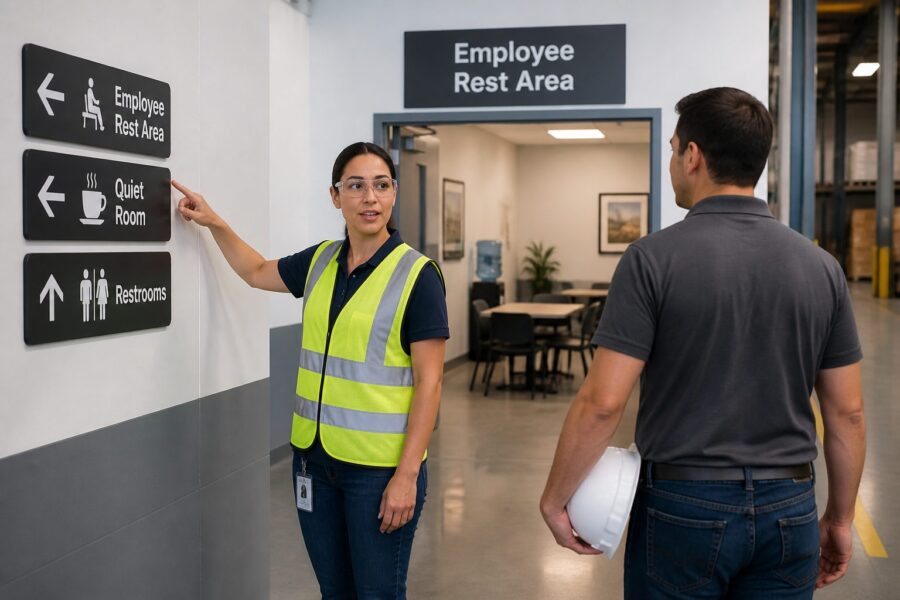
Use standardized symbols and terminology on your signage to ensure consistency and ease of understanding. The use of universal symbols can help overcome language barriers and make the signage more accessible to all employees.
In addition to physical signs, consider incorporating digital wayfinding solutions, such as interactive maps or mobile apps. These tools can provide employees with real-time directions and information about the available rest areas, enhancing the overall wayfinding experience.
Think about the journey an employee takes from their workstation to the rest area. Are there any confusing intersections or long hallways where they might get lost? Place signs at these critical junctures to provide clear guidance.
The signage should be visible from a reasonable distance, allowing employees to plan their route in advance. Consider the size and placement of the signs to ensure maximum visibility.
Consistency is key when it comes to wayfinding. Use the same symbols, colors, and terminology on all signs throughout the facility to avoid confusion.
Regularly review and update your signage to ensure that it is accurate and reflects any changes to the facility layout. Outdated signage can be more confusing than no signage at all.
Consider using a combination of directional signs and maps to provide employees with a comprehensive wayfinding system. Maps can be particularly helpful in larger facilities with multiple rest areas.
Don’t forget about areas outside the main building, such as parking lots or outdoor break areas. Ensure that these areas are also clearly marked with appropriate signage.
Involve employees in the wayfinding process by soliciting their feedback on the effectiveness of the signage. Their insights can help you identify areas for improvement.
A well-designed and implemented wayfinding system can significantly improve the employee experience. It can reduce stress, save time, and create a more welcoming and efficient work environment.
Ensuring Visibility and Accessibility for All Employees
Visibility and accessibility are crucial aspects of effective wayfinding. Signs should be easily visible from a distance and placed at a height that is comfortable for all employees to read.
Consider using high-contrast colors and large, legible fonts to improve visibility, especially for employees with visual impairments. Ensure that signs are well-lit and free from obstructions that could hinder visibility.
Accessibility also means considering the needs of employees with disabilities. Ensure that rest areas are accessible to individuals using wheelchairs or other mobility devices, and that signage is compliant with accessibility standards, such as the Americans with Disabilities Act (ADA).
Braille signage and tactile maps can be helpful for employees with visual impairments. Providing accessible wayfinding solutions demonstrates a commitment to inclusivity and ensures that all employees can easily access rest areas.
Think about the placement of signs in relation to common obstacles, such as furniture or equipment. Make sure that signs are not blocked or obscured by these objects.
Consider the lighting conditions in different areas of the facility. Signs should be well-lit, even in dimly lit areas.
Use fonts that are easy to read and understand. Avoid using overly stylized or decorative fonts that can be difficult to decipher.
Ensure that signs are placed at a consistent height throughout the facility. This will make it easier for employees to locate and read them.
Consider using tactile signage in addition to visual signage. Tactile signs can be particularly helpful for employees with visual impairments.
Provide ramps or elevators to ensure that rest areas are accessible to employees using wheelchairs or other mobility devices. The path to the rest area must also be accessible.
Regularly inspect your signage to ensure that it is in good condition and that it meets all accessibility requirements. Damaged or outdated signs should be replaced promptly.
By prioritizing visibility and accessibility, you can create a wayfinding system that is inclusive and effective for all employees. This demonstrates a commitment to diversity and inclusion and creates a more welcoming and supportive work environment.
Importance of Rest Area Design Standards
Rest area design should adhere to certain standards. This ensures that the space is functional, comfortable, and conducive to relaxation.
Consider factors such as adequate seating, proper ventilation, and appropriate lighting. These elements contribute to a positive and restful experience for employees using the space.
| Design Element | Standard | Rationale |
|---|---|---|
| Seating | Comfortable chairs and sofas | Provides a place for employees to relax |
| Ventilation | Adequate airflow and temperature control | Ensures a comfortable environment |
| Lighting | Adjustable and soft lighting | Reduces eye strain and promotes relaxation |
| Noise Level | Quiet and peaceful atmosphere | Minimizes distractions |
| Cleanliness | Regular cleaning and maintenance | Maintains a hygienic and welcoming space |
Furthermore, the layout of the rest area should be carefully planned to maximize space and functionality. Consider incorporating elements such as plants, artwork, or other decorative items to create a more inviting atmosphere.
Think about the overall ambiance of the rest area. Is it a place where employees can truly relax and recharge, or is it simply a functional space with minimal comfort?
Consider providing a variety of seating options to accommodate different preferences. Some employees may prefer comfortable chairs, while others may prefer sofas or lounge seating.
Pay attention to the acoustics of the rest area. Minimize noise levels by using sound-absorbing materials and creating a quiet and peaceful atmosphere.
Ensure that the rest area is well-ventilated and that the temperature is comfortable. Poor ventilation and extreme temperatures can make it difficult for employees to relax.
Provide adequate lighting, but avoid harsh or glaring lights. Soft, adjustable lighting can create a more relaxing atmosphere.
Consider incorporating natural elements into the rest area design, such as plants or natural light. These elements can help create a more calming and restorative environment.
Ensure that the rest area is regularly cleaned and maintained. A clean and tidy space is essential for creating a welcoming and comfortable environment.
By adhering to these design standards, you can create a rest area that is truly a haven for employees. This can lead to improved morale, productivity, and overall well-being.
Enhancing Break Room Signage with Color-Coding and Symbols
Color-coding and symbols can significantly enhance the effectiveness of break room signage. Using consistent color schemes and recognizable symbols helps employees quickly identify and locate rest areas.
For example, a specific color could be designated for all rest area signage throughout the facility. This visual cue allows employees to easily spot the signs, even from a distance.
Similarly, using a standard symbol, such as a reclining figure or a coffee cup, can further reinforce the purpose of the space. These symbols should be universally recognizable and easy to understand.
Consider incorporating both color-coding and symbols into your break room signage to create a visually appealing and informative wayfinding system. This combination can improve clarity and reduce confusion, ensuring that employees can quickly find the rest areas they need.
Choose colors that are easily distinguishable from each other, especially for employees with color blindness. Consider using a color blindness simulator to test your color choices.
Use symbols that are universally recognized and easy to understand. Avoid using obscure or abstract symbols that may be confusing.
Ensure that the color-coding and symbols are consistent throughout the facility. This will help employees quickly learn and recognize the wayfinding system.
Consider using different colors or symbols to differentiate between different types of rest areas, such as quiet rooms or break rooms with kitchen facilities.
Use color-coding and symbols in conjunction with text to provide a comprehensive wayfinding system. The text should be clear and concise and should reinforce the meaning of the colors and symbols.
Regularly review and update your color-coding and symbols to ensure that they are still effective and relevant. As your facility evolves, your wayfinding system may need to be updated as well.
By incorporating color-coding and symbols into your break room signage, you can create a more visually appealing and informative wayfinding system. This can improve clarity, reduce confusion, and make it easier for employees to find the rest areas they need.
This simple addition can drastically improve the user experience. It helps reinforce the purpose of the space and makes it more inviting.
Creating a Welcoming and Comfortable Environment
The physical environment of a rest area plays a significant role in its effectiveness. A welcoming and comfortable space can encourage employees to take breaks and recharge, leading to improved well-being and productivity.
Consider incorporating comfortable seating, such as plush chairs or sofas, to provide a relaxing space for employees to unwind. Adding plants or artwork can also help create a more inviting and aesthetically pleasing environment.
Providing amenities such as coffee and tea, or even a small kitchenette, can further enhance the appeal of the rest area. These additions can make the space feel more like a home away from home, encouraging employees to take longer and more frequent breaks.
Ensuring that the rest area is clean and well-maintained is also essential. A clean and tidy space demonstrates a commitment to employee well-being and encourages employees to respect and care for the area.
Think about the overall atmosphere you want to create in the rest area. Do you want it to be a quiet and relaxing space, or a more social and interactive environment?
Consider providing a variety of seating options to accommodate different preferences. Some employees may prefer comfortable chairs, while others may prefer sofas or lounge seating.
Adding plants can help create a more calming and restorative environment. Choose plants that are easy to care for and that thrive in indoor environments.
Artwork can also help create a more inviting and aesthetically pleasing space. Choose artwork that is calming and uplifting.
Providing amenities such as coffee and tea can make the rest area more appealing to employees. Consider providing a variety of options to cater to different tastes.
A small kitchenette can be a valuable addition to a rest area. It can allow employees to prepare simple meals and snacks, which can help them stay energized throughout the day.
Ensure that the rest area is well-ventilated and that the temperature is comfortable. Poor ventilation and extreme temperatures can make it difficult for employees to relax.
By creating a welcoming and comfortable environment, you can encourage employees to take breaks and recharge. This can lead to improved well-being, productivity, and overall job satisfaction.
Promoting Employee Well-being and Productivity
The ultimate goal of effective wayfinding for rest areas is to promote employee well-being and productivity. By providing accessible, comfortable, and well-marked spaces, companies can support their employees’ physical and mental health.
When employees feel valued and supported, they are more likely to be engaged and productive in their work. Investing in employee well-being is an investment in the success of the organization as a whole.
- Reduced stress and burnout
- Improved focus and concentration
- Increased job satisfaction
- Enhanced employee engagement
- Greater overall productivity
Furthermore, providing access to rest areas can help reduce absenteeism and presenteeism, as employees are better able to manage their health and well-being. By prioritizing employee needs, companies can create a more sustainable and thriving work environment.
Consider the long-term benefits of investing in employee well-being. A healthy and engaged workforce is a more productive and innovative workforce.
Provide employees with resources and information on how to manage their stress and improve their well-being. This can include workshops, seminars, or access to online resources.
Encourage employees to take regular breaks throughout the day. Even short breaks can help improve focus and concentration.
Create a culture of support and understanding in the workplace. Encourage employees to support each other and to take care of their own well-being.
Recognize and reward employees for their contributions to the organization. This can help boost morale and engagement.
Provide employees with opportunities for professional development and growth. This can help them feel valued and supported.
By prioritizing employee well-being, you can create a more positive and productive work environment. This can lead to improved business outcomes and a more sustainable and thriving organization.
Happy and healthy employees are more likely to be loyal and dedicated. This reduces turnover and saves the company money in the long run.
Leveraging Technology for Improved Wayfinding
Technology offers innovative solutions to improve wayfinding for rest areas. Digital signage and mobile apps can provide dynamic and personalized guidance.
Interactive maps displayed on screens throughout the facility can show employees the location of rest areas in real-time. Mobile apps can offer turn-by-turn directions and even allow employees to book a rest area in advance.
These technological solutions can also provide valuable data on rest area usage. This data can be used to optimize the location and design of rest areas to better meet employee needs.
Consider implementing technology to enhance your wayfinding system and create a more efficient and user-friendly experience for employees. The initial investment can pay off in increased employee satisfaction and productivity.
Think about the possibilities of using augmented reality (AR) to enhance wayfinding. AR apps could overlay directions and information onto the real world, making it even easier for employees to find rest areas.
Consider using sensors to track the occupancy of rest areas in real-time. This information could be displayed on digital signs or in a mobile app, allowing employees to see which rest areas are available before they even start walking.
Use data analytics to understand how employees are using rest areas. This data can be used to optimize the location and design of rest areas to better meet employee needs.
Consider using chatbots to answer employees’ questions about rest areas. Chatbots can provide instant answers to common questions, such as “Where is the nearest rest area?” or “What amenities are available in the rest area?”
Integrate your wayfinding system with other workplace technologies, such as your building management system or your employee communication platform. This can create a more seamless and integrated user experience.
Ensure that your technology is accessible to all employees, including those with disabilities. This may require providing alternative input methods or using assistive technologies.
By leveraging technology, you can create a more efficient, user-friendly, and data-driven wayfinding system. This can improve employee satisfaction, productivity, and overall well-being.
Technology can also help you personalize the wayfinding experience for each employee. This can make it even easier for employees to find the rest areas they need and to take advantage of the amenities that are available.
Break Room Signage: Meeting Legal and Ethical Obligations
Providing clear and accessible break room signage isn’t just a nice thing to do; it can be a legal and ethical obligation. Many jurisdictions have laws requiring employers to provide adequate rest areas for employees.
These laws often specify the minimum requirements for rest areas, such as the availability of seating, ventilation, and sanitation. Failure to comply with these regulations can result in fines and other penalties.
Beyond legal requirements, there is also an ethical obligation to provide employees with a safe and comfortable work environment. Providing accessible and well-marked rest areas is a key component of fulfilling this obligation.
Ensure that your company is meeting its legal and ethical obligations by providing adequate and accessible rest areas for all employees. This demonstrates a commitment to employee well-being and fosters a culture of respect and fairness.
Familiarize yourself with the specific laws and regulations in your jurisdiction regarding rest areas. These laws may vary depending on the industry and the size of your company.
Ensure that your rest areas meet all minimum requirements, such as the availability of seating, ventilation, sanitation, and accessibility.
Provide clear and accessible signage that complies with all applicable accessibility standards, such as the Americans with Disabilities Act (ADA).
Regularly inspect your rest areas to ensure that they are in good condition and that they meet all legal and ethical requirements. Address any issues promptly.
Train your employees on the importance of using rest areas and on the company’s policies regarding rest breaks.
Create a culture of respect and fairness in the workplace. This includes providing employees with a safe and comfortable work environment and ensuring that they have access to adequate rest areas.
By meeting your legal and ethical obligations, you can create a more positive and productive work environment. This can lead to improved employee morale, reduced absenteeism, and increased productivity.
Ignoring these obligations can lead to legal trouble and damage your company’s reputation. It is important to prioritize employee well-being and ensure compliance with all applicable laws and regulations.
Conclusion
Effective wayfinding for rest areas is an essential component of a healthy and productive workplace. By providing accessible, comfortable, and well-marked spaces, companies can demonstrate their commitment to employee well-being and create a more supportive work environment.
Investing in clear signage, comfortable environments, and accessible designs can lead to reduced stress, improved focus, and increased overall job satisfaction. Prioritizing employee needs through thoughtful design and clear communication can lead to a more engaged and productive workforce.
Remember that wayfinding is not a one-time project, but an ongoing process. Regularly review and update your wayfinding system to ensure that it continues to meet the needs of your employees.
Solicit feedback from employees on the effectiveness of your wayfinding system. Their insights can help you identify areas for improvement.
Stay up-to-date on the latest trends and best practices in wayfinding. This will help you ensure that your wayfinding system is as effective as possible.
By prioritizing wayfinding for rest areas, you can create a more positive and productive work environment. This can lead to improved employee morale, reduced absenteeism, and increased productivity.
In conclusion, investing in effective wayfinding for rest areas is a win-win for both employees and employers. It demonstrates a commitment to employee well-being and creates a more supportive and productive work environment.
Take the time to assess your current wayfinding system and identify areas for improvement. The benefits of a well-designed and implemented wayfinding system are well worth the effort.