
Shipping labels fail in boring, expensive ways, and the box does not care that your layout looked perfect on a monitor. When a carrier cannot scan a barcode or read a hazard mark, your freight turns into a manual exception and your costs jump fast.
I have seen teams argue about font size while ignoring the real culprit, the label material that never had a chance in rain, freezer sweat, or conveyor abrasion. If your operation depends on reliable identification, you need to treat label durability standards for shipping like a design requirement, not an afterthought.
This article focuses on practical choices, face stock, adhesives, and print methods, plus simple tests you can run before you buy pallets of the wrong label. The goal is to help you choose materials that stay stuck, stay readable, and stay scannable through real transit conditions.
The real reasons labels fail: moisture, abrasion, and heat
Moisture is the most common label killer because it attacks both the face stock and the adhesive at the same time. Condensation on cold chain cartons, rain on the dock, and humidity inside trailers all turn weak paper into pulp and lift cheap glue at the edges.
Abrasion is the quiet villain that ruins barcodes long before the label looks “destroyed” to the human eye. A label can look fine and still scan poorly after sliding against shrink wrap, corrugate, or metal cage sides for a few hundred feet of conveyor.
Heat creates two different failure modes, the face stock can shrink or soften, and the adhesive can flow and smear. If you ship through hot hubs in summer, labels that passed a room temperature trial can curl, ooze, or flag within hours.
Chemicals matter too, even if you do not ship “chemicals,” because warehouses use cleaners and carriers handle packages after refueling. A little diesel mist or alcohol wipe can turn some inks gray and make direct thermal images fade, which is why label durability standards for shipping often focus on legibility after exposure.
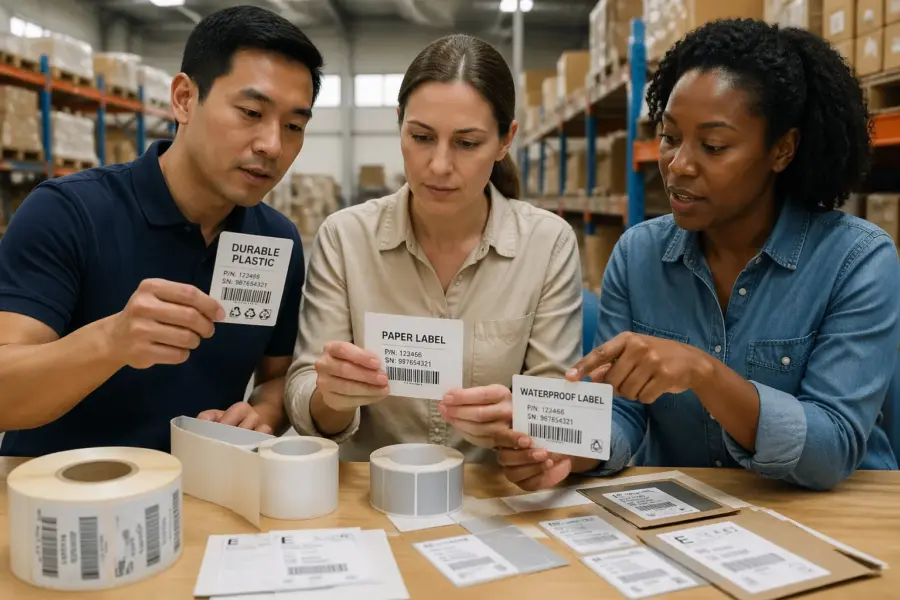
Choosing face stock: paper vs film and when each works
Paper labels are still popular because they print cleanly, cost less, and work well on ordinary corrugate in dry lanes. If your shipments stay indoors and move fast, a good coated paper can meet label durability standards for shipping without paying for film.
The problem is that “paper” covers a wide range, from fragile uncoated stock to top coated grades made for tougher handling. If you want paper to survive, pick a coated or top coated stock that resists scuffing and does not fuzz at the edges.
Film face stocks like polypropylene and polyester handle moisture and abrasion far better than paper, and they stay stable across temperature swings. When you need waterproof labels for totes, pails, or cold chain cartons, film is usually the correct answer.
Polypropylene is a common middle ground because it is flexible and resists water without the cost of polyester. Polyester is stiffer and often chosen for long life labels, metal drums, or harsh handling where you cannot accept stretching or tearing.
Face stock also affects barcode performance because glossy coatings can reflect scanner light at odd angles. If you use high speed tunnel scanners, test the exact finish, matte films often scan more consistently than high gloss.
If you ship internationally, remember that labels can sit in ports and cross climates you did not plan for. That is where label durability standards for shipping stop being theory, and where film plus the right ribbon often pays for itself in fewer relabels.
Adhesives 101: matching glue to cardboard, plastic, and metal
Face stock gets the attention, but label adhesive selection decides whether the label stays on the package at all. You can buy the best film in the world and still fail if the adhesive cannot wet out on dusty corrugate or low energy plastic.
Start by naming the surface you actually label, because “cardboard” can mean recycled corrugate with powdery fibers or a glossy coated carton. A permanent rubber based adhesive often grabs corrugate well, while many acrylics need more time and pressure to build bond.
| Surface type | Adhesive type that usually works | Common failure to watch |
|---|---|---|
| Recycled corrugate cartons | High tack rubber based permanent | Edge lift from dust and fibers |
| Stretch wrap and poly mailers | Hot melt or specialty LSE acrylic | Label slides or peels on slick film |
| HDPE and PP totes | LSE acrylic formulated for plastics | Adhesive never wets out, easy peel |
| Painted metal cages or drums | General purpose acrylic permanent | Failure after temperature cycling |
| Stainless steel or bare aluminum | Acrylic permanent, sometimes high temp | Adhesive cold flow and residue |
| Frozen cartons with condensation | Freezer grade adhesive | Bond loss during thaw and refreeze |
Print methods compared: direct thermal vs thermal transfer
Direct thermal printing is simple and cheap per label, but the image is heat sensitive by design. If a label sits in a hot trailer or gets rubbed, the barcode can fade or darken until scanners struggle.
Thermal transfer labels use a ribbon to put resin, wax, or a mix onto the face stock, and that layer usually resists abrasion better. When people talk about label durability standards for shipping, thermal transfer is often the baseline for long distance and long dwell time.
Wax ribbons are common for paper shipping labels, but they can smear on rough handling and they hate moisture. Wax resin blends improve durability on paper and some films, and they are a practical upgrade when you cannot justify full resin.
Resin ribbons on film are the workhorse for waterproof labels and harsh environments, but you need to set printer heat correctly or the print can look fine and still scratch off. If you want thermal transfer labels that survive conveyors, test scratch resistance with a coin and a gloved thumb after printing.
Direct thermal still has a place for fast moving parcels where the label lives for a few days and stays out of sun and heat. If your returns process depends on the same label weeks later, direct thermal is a gamble you should take only with a top coated direct thermal stock.
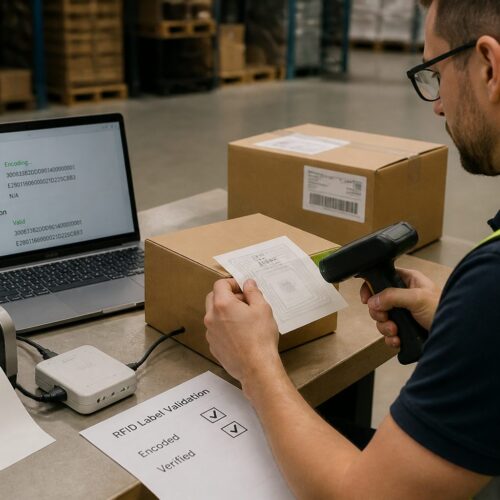
One more detail that gets missed is scanner contrast, because some ribbons and films produce glossy black bars that confuse older scanners. Ask your label supplier for a sample roll and run it through your actual scan points, not a desk scanner in the office.
Moisture resistance: what “waterproof” really means on the dock
Waterproof labels usually refer to a film face stock that does not swell or tear when wet, but that is only half the story. If the adhesive emulsifies or the print smears, the label still fails even if the film looks intact.
Cold chain is the harshest everyday case because you get condensation cycles, not a single splash. A freezer grade adhesive plus film plus resin ribbon is a common combo when you need barcodes to scan after thaw, refreeze, and handling with wet gloves.
For parcel shipments that see rain, a top coated paper can work if you pair it with a strong adhesive and thermal transfer print. That option is cheaper than film, but I only trust it when the label is protected by an overpack or it ships in a poly bag.
If you are labeling plastic pails or drums outdoors, skip paper and go straight to film. The extra cents per label are trivial compared with the labor cost of relabeling and the risk of a misidentified container.
Testing you can do in-house before full rollout
You do not need a lab to catch obvious failures, you need a repeatable torture routine and honest scoring. The point is to see whether your chosen face stock, print method, and label adhesive selection survive the abuse your operation already delivers.
Build a small test set that includes your worst surfaces, dusty corrugate, shrink wrap, cold totes, and any painted metal you label. Print the same barcode and text on each candidate, then track scan rate, edge lift, and smearing over a few days.
- 24-hour dwell after application before scoring
- Water spray and wipe test with a wet glove
- Freezer cycle, 12 hours cold then 2 hours room temp
- Rub test, 20 strokes against corrugate
- Heat soak, 120°F for 4 hours in a closed vehicle
- Scan test at distance on your actual scanners
- Peel test at corners, record first lift point
Abrasion and scan reliability: designing for conveyors and cages
Abrasion is why two labels that both “stick” can perform very differently in transit. If the barcode loses edge definition, scanners read it as noise and your package gets kicked to manual handling.
Start with placement, because putting a label where it scrapes every roller is a self inflicted wound. On corrugate cartons, place the label on the flattest panel away from strap paths, and avoid seams where the face stock bridges air gaps.
Then match the print system to the abuse, because direct thermal images scuff faster than most thermal transfer labels. If you cannot change printers, use a top coated direct thermal stock and accept that your label durability standards for shipping will have a shorter time window.
For reusable plastic totes, abrasion often comes from tote to tote contact and from workers stacking them fast. A matte polypropylene with resin ribbon often outlasts glossy films because it hides scratches and keeps contrast more consistent.
If you need extreme abrasion resistance, consider a clear laminate, but test it with your scanners first. Laminates can add glare and can trap bubbles if application pressure is uneven, which looks minor but breaks scanning in real hubs.
Heat, cold, and time: when transit becomes an environmental test chamber
Transit time is part of durability, because adhesives build bond over hours and then weaken if the package cycles through heat and cold. A label that ships same day may work fine, while the same label on an ocean container sits long enough to show every weakness.
Hot environments can cause adhesive bleed, where glue squeezes out and grabs dust, turning edges into little dirt magnets. That dirt then pries the label up, and once the corner lifts, conveyors do the rest.
Cold environments create brittle face stocks and slow adhesive wet out, especially on plastics. If you apply labels in a chilled room, pick an adhesive rated for low temperature application, not just low temperature service.
Sunlight is a sneaky factor for outbound staging, and it can fade direct thermal images in a single afternoon. If pallets sit near dock doors, thermal transfer labels with a resin rich ribbon are a safer bet for readable codes.
Time also affects facestock stability, particularly for films that shrink under heat. If you see wrinkling around the barcode, scanners may misread because the bars are no longer straight and evenly spaced.
Storage and handling of label rolls to preserve performance
Even the best label fails if you store rolls like shop rags, and many teams do exactly that. Heat, UV, and dust in a warehouse office can age adhesives and dull thermal coatings before the roll ever hits a printer.
Keep rolls in their original packaging until use, and store them in a cool, dry area away from direct sunlight. If you stage rolls on the production floor, rotate stock and do not let partial rolls sit for months collecting grime on the edges.
Printer settings are part of handling, because too much heat can make thermal transfer labels look dark but reduce scratch resistance by over melting the ribbon. Calibrate darkness and speed per material, and write the approved settings on the printer so shifts do not “tune” by guesswork.
Be careful with rewinding and tension, because telescoped rolls and crushed cores create feeding issues that show up as wrinkles and voids in barcodes. Those defects look minor, but they break label durability standards for shipping because the label cannot be scanned reliably.
Finally, control contamination at application, since dusty cartons and oily plastics defeat good label adhesive selection. A quick wipe on plastics and a policy against labeling wet cartons will beat any miracle adhesive you hope to buy.
Conclusion
Durable shipping labels come from boring alignment between face stock, adhesive, and print method, not from a single “premium” upgrade. When you treat label durability standards for shipping as a checklist tied to your lanes, surfaces, and dwell time, failure rates drop fast.
If moisture is common, choose film or top coated stocks and plan for waterproof labels with the right ribbon and adhesive. If abrasion and heat are common, lean toward thermal transfer labels, validate label adhesive selection on your real packages, and run the in house tests before you commit.